
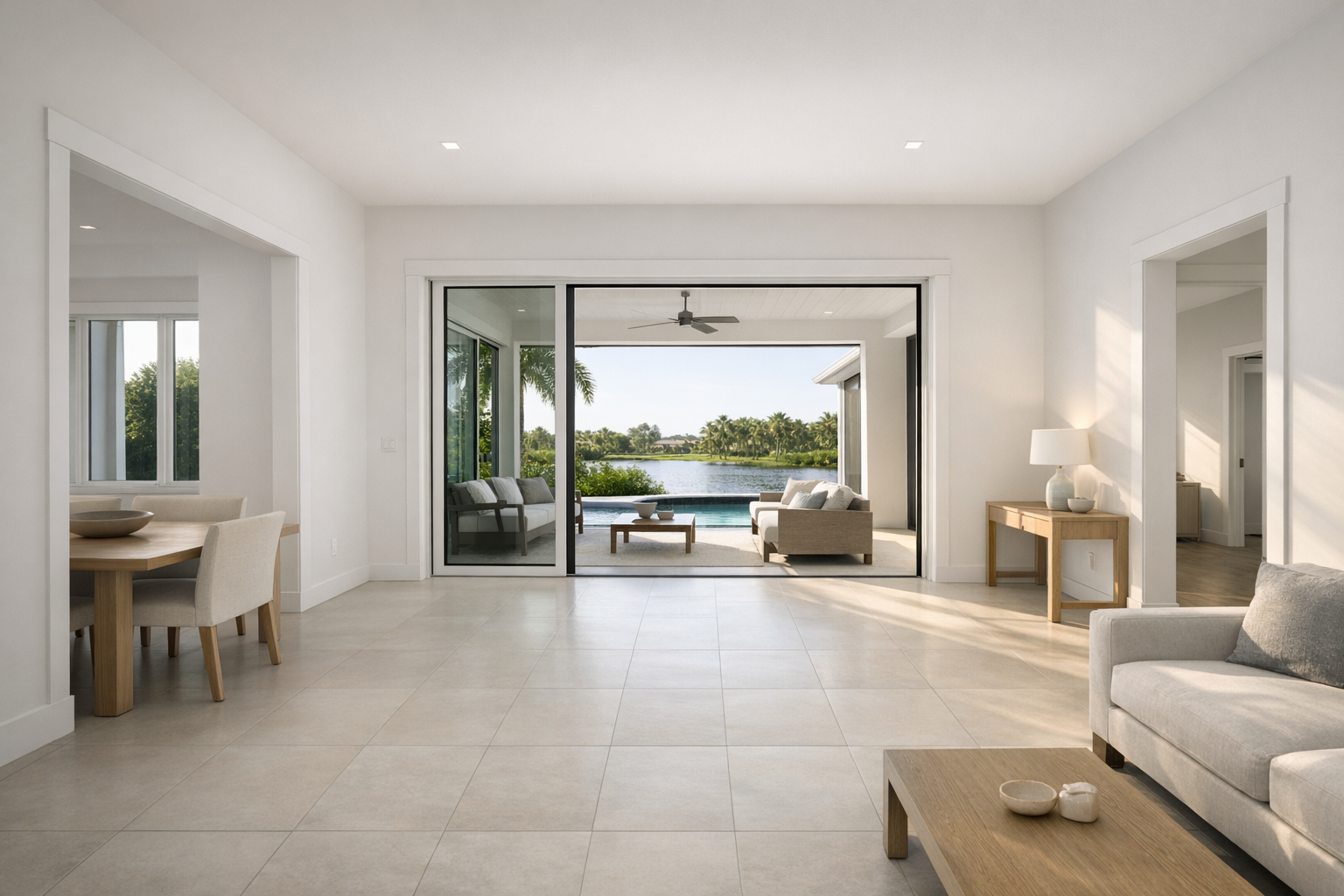

Start at the room's edges: flat baseboards and square door or window casing replace curved profile moulding with straight, square-edged lines. A flat baseboard covers the wall-to-floor joint, while casing frames door and window openings; when those pieces are planned together with clean corners and consistent reveals, the result reads as a coordinated custom system instead of unfinished lumber.
That is why this style feels so natural in updated Florida interiors. Bright rooms, tile floors, and open layouts tend to reward cleaner shadow lines rather than busy trim profiles. A flat baseboard against large-format tile, or square casing around a sunlit window, keeps the eye moving through the room instead of stopping at decorative ridges.
The key is proportion. Modern door and window casing often works in a practical range around 2.5 to 3.5 inches wide, while baseboards should feel related to the casing, door height, and room scale. Too narrow can look builder-basic; too tall without the right casing can feel top-heavy. Good contemporary trim design is less about ornament and more about alignment, spacing, finish quality, and repetition.
In the sections ahead, we'll look at flat-stock baseboards, square door and window casing, simple reveal details, paint choices, and material decisions that help clean-lined trim look intentional in a coastal-modern, transitional, or minimalist Florida home.
The Florida Advantage: Light, Tile, Humidity, and Open Floor Plans
Florida light is not shy, and that matters more than many homeowners expect. Long stretches of sun across a wall can turn every ridge, caulk bead, paint lap, and uneven corner into a shadow line. Ornate profiles create more places for those shadows to collect; modern flat trim keeps the edge quieter, so the wall, floor, and opening feel cleaner instead of visually chopped up.
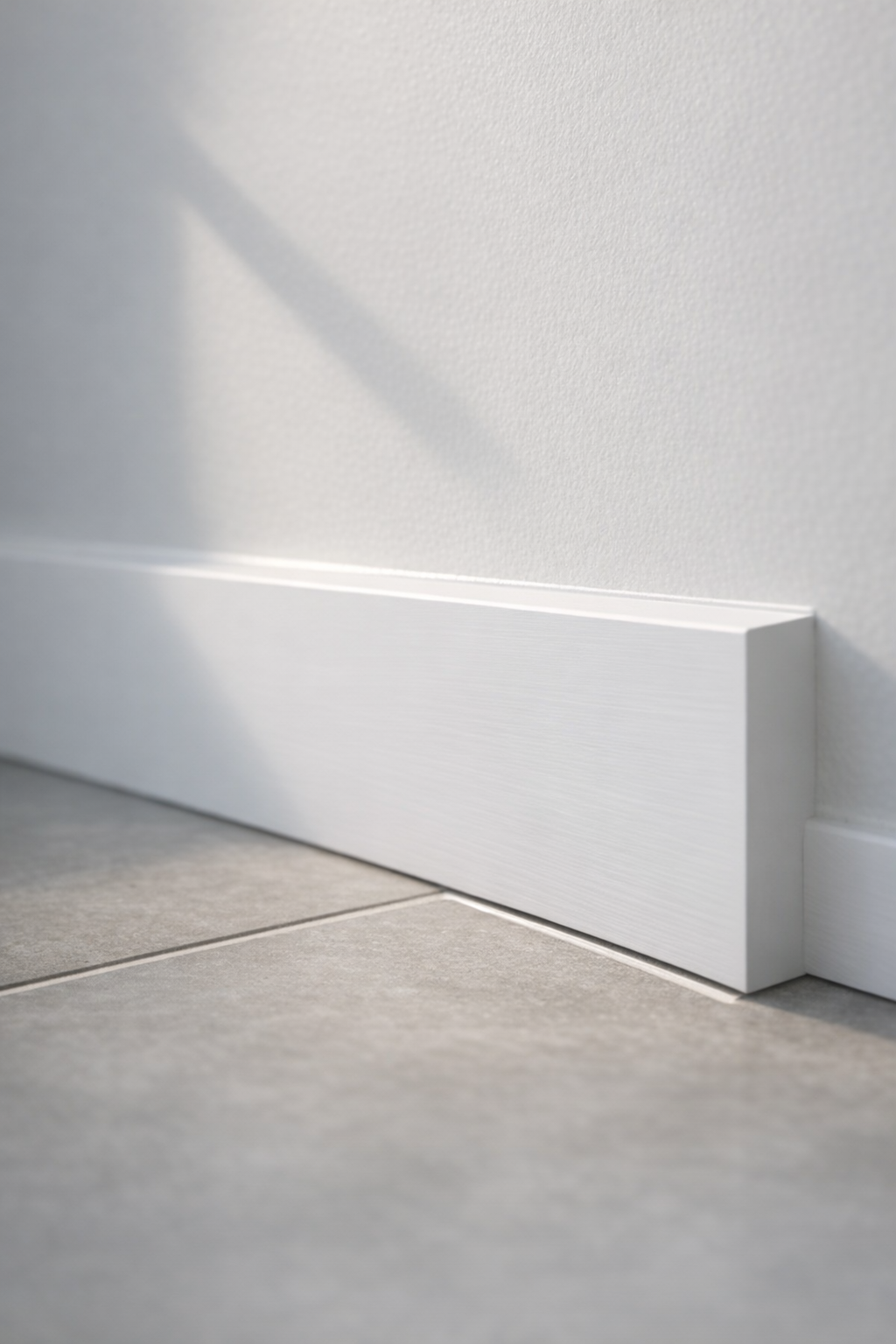
That simplicity also works well with the hard-surface floors common in updated Florida homes. Porcelain tile, stone-look tile, and luxury vinyl plank already bring strong lines through grout joints, plank seams, or large-format edges. A flat baseboard gives those floors a crisp stopping point without adding another decorative pattern. The practical takeaway: if the floor has movement, veining, or plank variation, a simpler baseboard usually helps the room feel calmer.
Open plans are another reason modern flat-stock trim makes sense here. In many homes, the entry, living room, dining area, and kitchen are visible at the same time, so trim cannot behave like a separate design choice in each zone. Consistent flat casing and baseboards act like a visual thread from one area to the next, especially around pantry doors, sliders, hallway openings, and window walls.
The look is not limited to beach-house interiors, either. In a coastal modern room, flat trim for modern interiors can keep white walls, pale oak tones, and soft blue-gray accents feeling breezy without seashell clichés. In a transitional home, the same profile can balance shaker cabinets, simple ceiling details, and warmer wall colors. For more minimalist spaces, the tradeoff is stricter: fewer trim details means the paint finish, corners, and reveals need to be more consistent.
Humidity adds one more Florida-specific filter. It does not mean trim has to look bulky or traditional; it means bathrooms, laundry rooms, coastal entries, and other moisture-prone spots may call for more attention to material choice, sealing, and paint-grade finish. The design goal stays the same: a clean, square profile that looks intentional in bright rooms and holds its line where walls, floors, and openings meet.
Flat-Stock Baseboards: The Cleanest Upgrade With the Biggest Visual Impact
Baseboards are usually the easiest place to see whether a clean trim package feels designed or just stripped down. Flat-stock baseboards work because the board itself becomes the profile: a straight face, a square top edge, and a clean paint line where wall meets floor. That simplicity is the point, but it needs enough scale to look deliberate.
For modern baseboard trim, think in proportion bands. A lower board, roughly in the 3½- to 4½-inch range, stays quiet in bedrooms, smaller hallways, or rooms with standard-height ceilings. A 5¼-inch flat board is a strong middle choice for many updated interiors because it reads cleaner and more substantial than thin builder trim without taking over the wall. In rooms with taller ceilings, larger tile, wide openings, or open living areas, a 7¼-inch board, or a taller custom flat-stock look, can feel more balanced because the wall has enough height to carry it.
Thickness matters, too. Very thin boards can look like an afterthought, especially against tile or LVP where the floor edge is crisp and continuous. A slightly thicker flat board creates a clearer stopping point at the floor and gives the paint finish enough presence to catch light evenly. The practical takeaway: if the floor is visually strong, the baseboard should not be flimsy.
The top edge is where simple trim either looks custom or builder-basic. A square-edge profile gives the cleanest modern line, while a tiny eased edge can soften the board just enough to hold paint better visually. A consistent top reveal, the narrow shadow where the wall meets the top of the baseboard, keeps the room looking intentional, especially along long Florida walls where sunlight can expose waviness.
A good checkpoint is whether the baseboard height feels related to the rest of the room: door height, ceiling height, flooring scale, and nearby casing. If the trim is tall everywhere for no reason, it can feel heavy. If it is too short in a large great room, it can disappear. The cleanest result is not always the tallest board; it is the board that looks proportionate from one open area to the next.
Square Door and Window Casing That Looks Custom, Not Plain
Casing is where the baseboard decision starts to connect to the rest of the room. For many updated interiors, modern door casing and modern window casing look best in the 2½- to 3½-inch range: narrow enough to stay crisp, but wide enough to frame the opening instead of disappearing into the wall. If the baseboards are taller or the doors are oversized, lean toward the wider end so the trim package feels related.
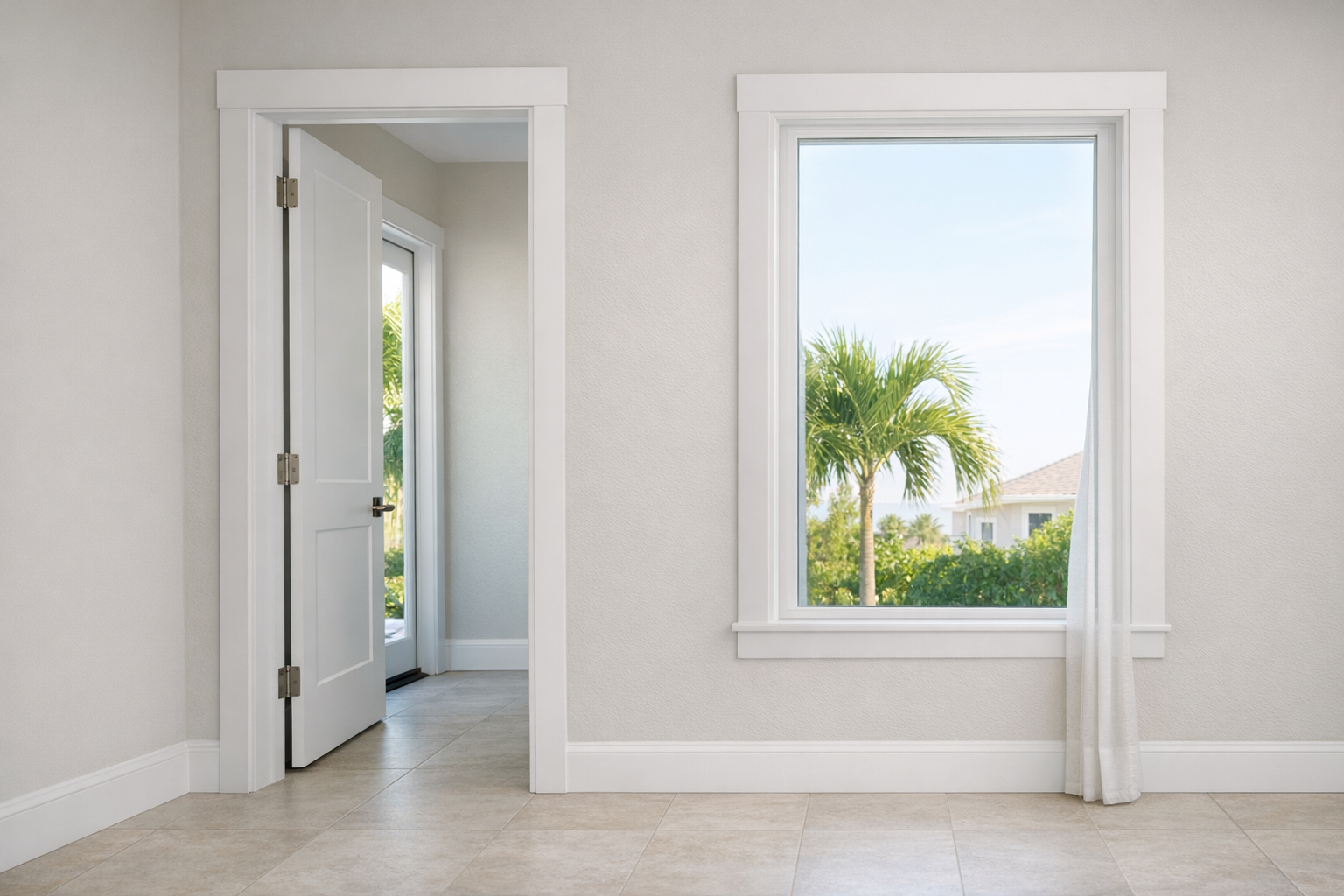
The corner style changes the personality of the opening. Mitered square casing uses 45-degree corners, which gives a cleaner picture-frame effect around doors and windows. Butt-joint casing uses square-cut side pieces with a flat header running across the top, creating a more craftsman-inspired modern look. Neither is automatically better; the custom signal is choosing one approach and repeating it consistently.
Reveal spacing matters just as much as casing width. The reveal is the small setback between the inside edge of the casing and the door jamb or window frame. When that line is even, the trim looks intentional; when it wanders, bright Florida light can make the opening look patched together. A simple, consistent reveal is one of the easiest ways to make square casing feel tailored rather than plain.
Headers give you another design choice. A standard flat header keeps the look minimal and works well when you want doors, windows, and baseboards to stay quiet. A slightly taller header can add emphasis over main interior openings, sliders, or large windows without introducing ornate moulding. The key is restraint: if the header gets heavier, the baseboards and side casing need enough scale to balance it.
For sliders and big window openings, casing should frame the width without making the wall feel chopped up. Full casing can make a large opening feel finished, especially in a great room, while some windows may look cleaner with drywall returns and only a stool or simple lower trim. Around interior door openings, keeping the same casing profile from room to room helps open plans feel calmer and more connected.
In remodels, older openings are not always perfectly square, so flat trim needs careful layout. Butt joints can be a little more forgiving visually because the header and side pieces meet in straight lines, while miters tend to reveal small angle problems more quickly. Before committing, look at the actual opening, the nearby baseboard height, and the sightlines from the main living areas; the best choice is the one that looks clean from normal viewing distance.
Use Simple Reveals and Shadow Lines to Make Flat Trim Feel Architectural
The moment flat trim starts looking architectural is usually not the board itself; it is the negative space around it. Clean reveals and shadow lines give a square profile a controlled edge, so the eye reads a planned detail instead of a gap that happened during installation.
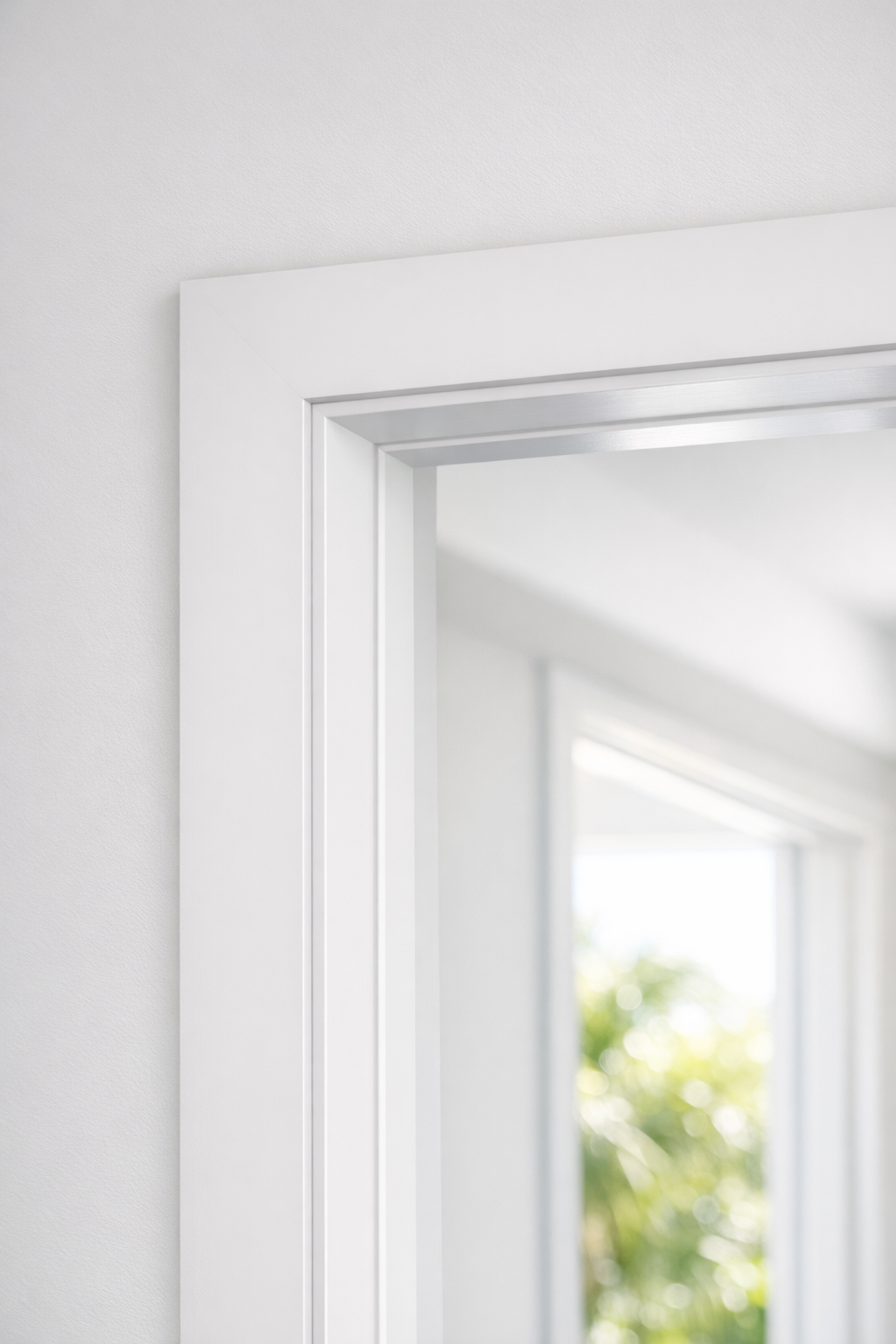
Around doors and windows, the practical move is to choose one reveal and repeat it on every side of the opening. A good reveal looks parallel to the jamb, stays the same at the header and legs, and does not widen or pinch at the corners. That consistency matters more than adding another trim layer, because modern flat-stock trim depends on alignment rather than ornament.
Shadow lines work the same way. An intentional shadow line is straight, even, and repeated; an uneven gap wanders, changes width, or disappears where two surfaces meet. In bright Florida rooms, that difference is easy to see because sunlight emphasizes small edges and transitions. The takeaway: if the line is meant to be visible, make it crisp; if it is not meant to be visible, do not let it become the detail by accident.
Baseboard-to-casing intersections are one of the clearest checkpoints. The baseboard can die into the side casing with a clean square end, align with the casing face, or step back slightly so the casing reads as the stronger vertical frame. Any of those choices can work, but mixing them from room to room makes the trim package feel pieced together.
The same thinking applies where trim meets tile, stair edges, cabinet panels, and built-ins. Flush transitions feel calm when surfaces land on the same plane; small setbacks feel more architectural when they are even and intentional. What looks weak is a transition that is almost flush, almost aligned, or almost centered. Flat trim gives you fewer decorative distractions, so those small decisions carry more visual weight.
A simple field test is to stand back and look for continuous lines: casing edges that line up, baseboards that stop cleanly, and corners that feel resolved without extra moulding. When those relationships are controlled, plain boards stop looking basic and start looking custom.
Choosing Materials That Hold Up in Florida Conditions
The cleanest layout can still disappoint if the board choice is wrong for the room. In Florida homes, material is not just a budget line; it affects how sharp the paint looks, how well edges stay crisp, and how comfortable you can feel using the same trim language near baths, laundry areas, entries, and lanai-adjacent doors.
MDF trim is a common paint-grade choice for air-conditioned living rooms, bedrooms, halls, and other relatively dry spaces. It has a smooth face, takes paint evenly, and can make flat baseboards and square casing look very crisp for the cost. The tradeoff is moisture sensitivity, especially at cut ends, bottom edges, and areas that may get wet from mopping, leaks, or repeated humidity exposure.
PVC trim makes more sense where moisture is part of the room's normal life: bathrooms, laundry rooms, pool-bath entries, and doors near covered outdoor spaces. It is not chosen because it looks more formal; it is chosen because it can support the same square, simple profile in places where water exposure is more likely. The design caution is finish quality: PVC needs the right paint and prep so it does not look plasticky next to smoother wall finishes.
Finger-jointed pine is made from shorter wood pieces joined into longer boards, so it can offer a real-wood option with good fastener holding and a familiar painted finish. It can be a strong choice for door casing, window casing, and baseboards that may take more bumps from daily use. Compared with MDF, it may show grain or joints if the prep is weak, so the finished sample matters more than the raw board label.
"Paint-grade trim" is the broader category, not one single material. It simply means the trim is intended to be painted rather than stained, and it may be MDF, PVC, pine, or another composite. For modern flat-stock trim, the best choice is usually room-specific: smoother and more economical in dry interior spaces, more moisture-conscious in wet or exterior-adjacent zones, and consistent enough in thickness and edge quality that the whole house still reads as one clean trim package.
Paint and Finish Choices That Keep Flat Trim Looking Crisp
Paint is where simple trim either looks tailored or exposes every shortcut. Because Florida light tends to sharpen shadow lines across open rooms, a flat profile leaves very little ornament to distract from wavy caulk, heavy brush marks, or uneven edges. That is why finish quality matters so much with modern flat-stock trim: the color can be simple, but the surface needs to look controlled.
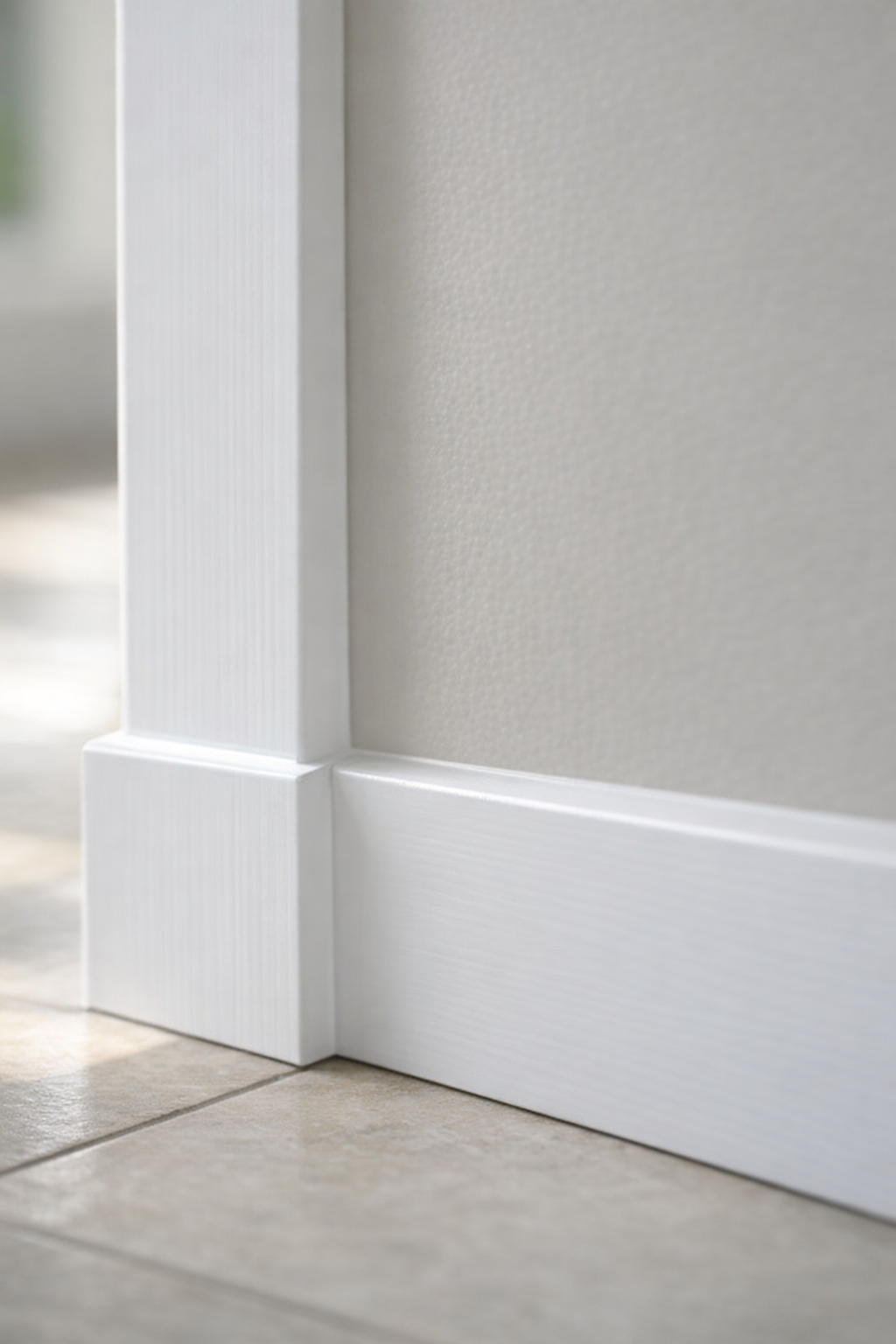
Crisp white trim is the classic choice when you want baseboards, doors, and casing to read as a clean frame against colored or textured walls. In bright rooms, though, a stark white can feel cooler and more reflective than it looked on a small sample. Warm white trim softens that effect, especially beside cream, sand, greige, or pale coastal wall colors.
Wall-matched trim is a more seamless option. Painting the flat baseboards and square casing the same warm white as the walls makes the room feel calmer and less outlined, which can be especially useful in open floor plans with many doors and windows. The tradeoff is that the trim becomes less of a graphic accent, so the reveals, corners, and paint lines have to carry the detail.
Tone-on-tone color sits between those two ideas. A soft greige wall with a slightly lighter greige trim, or a warm white wall with a barely brighter casing, gives subtle contrast without the high outline of bright white. This works well for contemporary trim design because the difference is visible enough to define the architecture but quiet enough to keep the room relaxed.
Darker accent casing can also work, but it is best used selectively: a study, powder room, primary bedroom entry, or a dramatic window wall. Charcoal, deep taupe, muted olive, or warm black casing can make clean-lined trim feel intentional, but using it on every opening may chop up a sunlit Florida interior.
For sheen, satin usually gives a softer, lower-glare finish, while semi-gloss creates a sharper, more washable-looking edge. Durable trim enamels can be a good fit for paint-grade trim because flat boards show scuffs, seams, and touch-ups more plainly than ornate profiles. If the walls have heavy orange-peel texture, keep the trim face smooth and the caulk line neat; texture beside a square edge makes sloppy finish work much easier to see.
Where to Use Flat-Stock Trim for the Most Updated Look
The best places to spend attention are the spots you see in long sightlines: the entry hall, main hallway, great room, and any opening that connects one shared space to another. In those areas, keep the casing profile, reveal width, and corner style consistent so the trim reads as one connected system instead of a room-by-room afterthought.
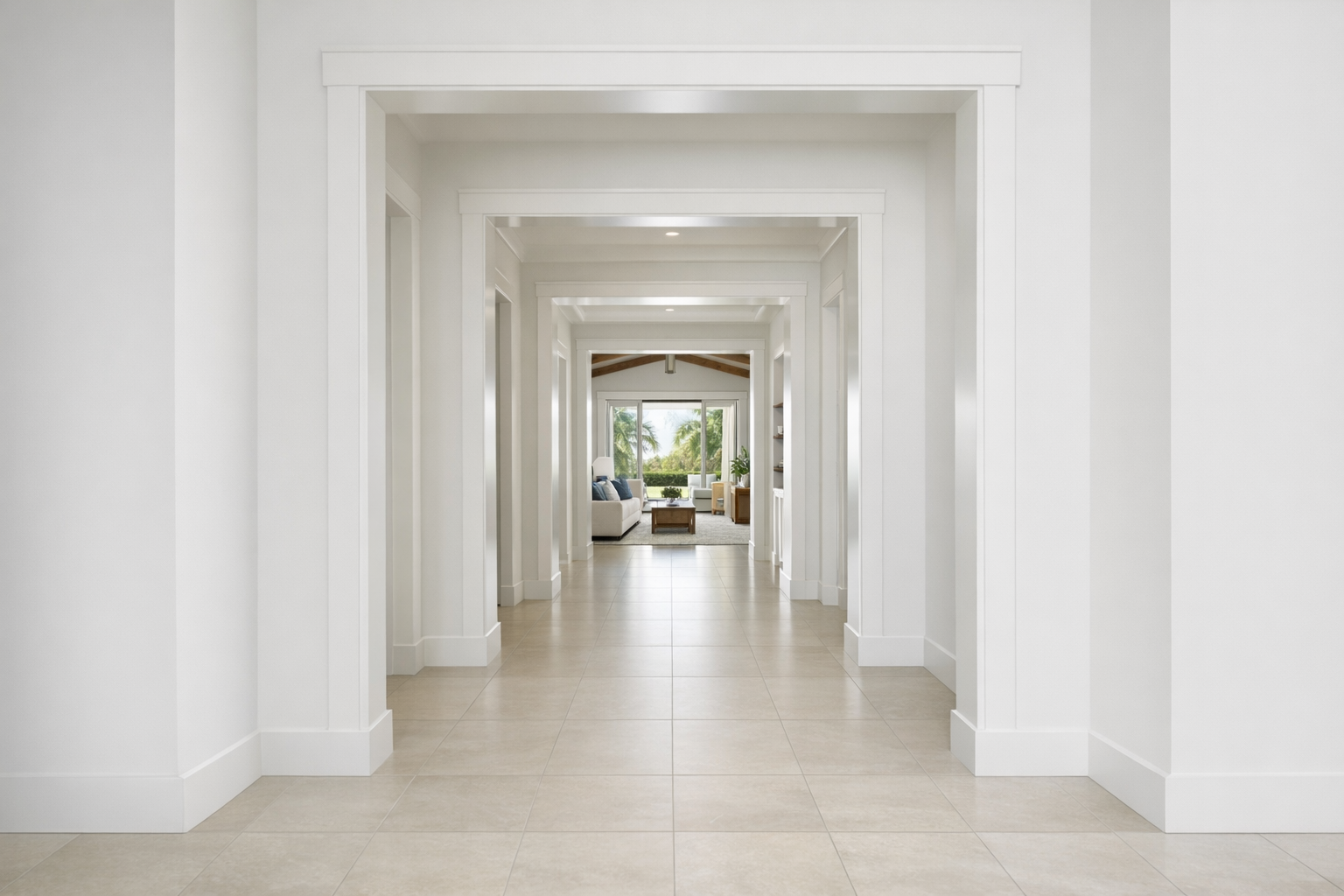
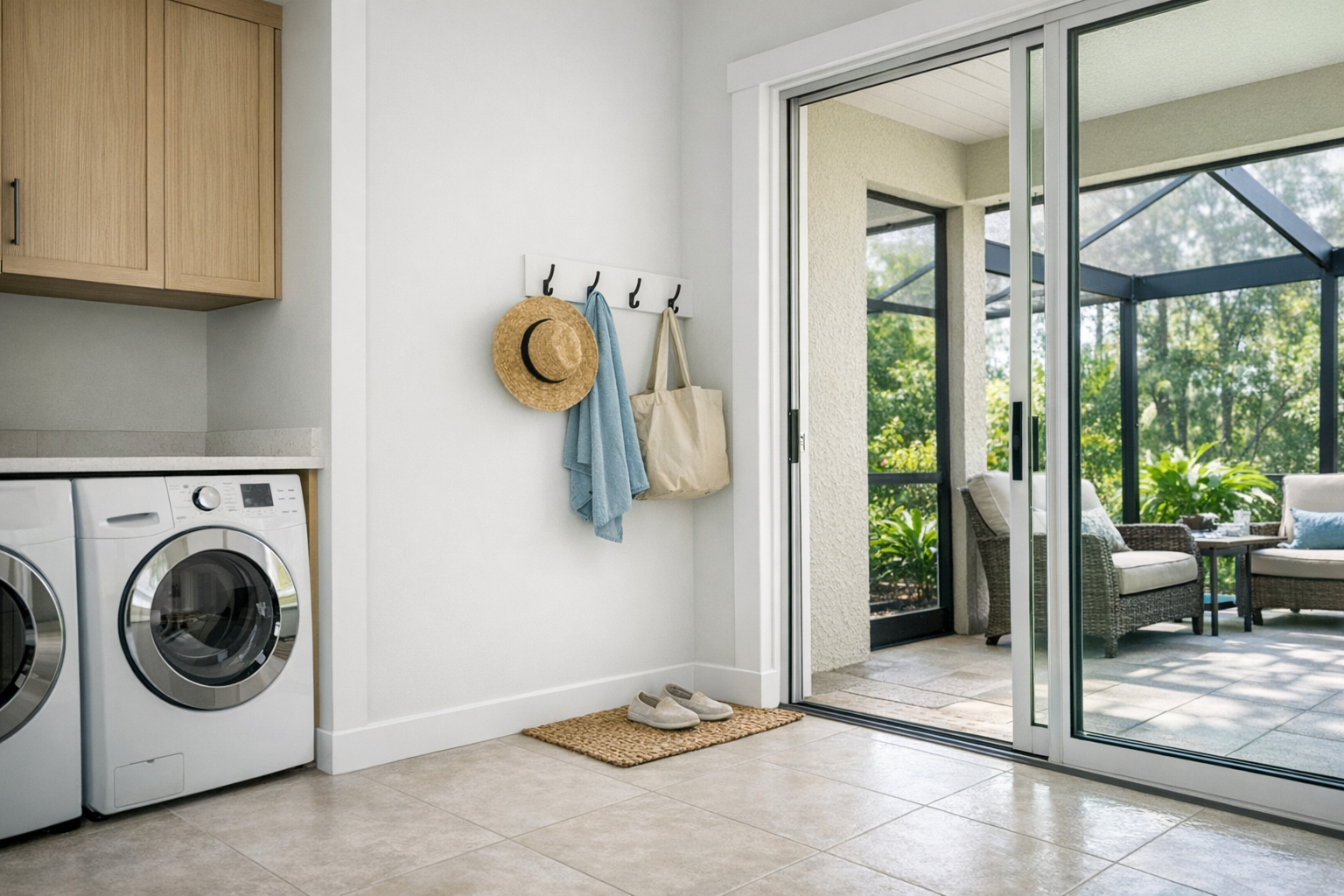
For main living areas, taller flat baseboards can make large walls feel more finished, especially when they relate to the door and window casing rather than competing with it. Bedrooms can use the same profile at a slightly quieter scale if the ceilings are lower or the rooms are smaller; the practical takeaway is to vary height only when the room scale changes, not randomly from one doorway to the next.
- Entries and hallways are high-impact zones because they set the trim rhythm for the rest of the home. A clean square casing around the front door, nearby closet doors, and hallway openings makes these narrow spaces feel more orderly.
- Great rooms benefit from uninterrupted baseboard runs, especially with tile or luxury vinyl plank flooring. The cleaner the floor line, the less visual clutter you get across an open plan.
- Kitchens usually look best when openings, pantry doors, and pass-throughs use the same casing language as the adjacent living area. If cabinets are very simple, flat stock trim ideas should stay equally restrained so the room does not feel over-framed.
- Bathrooms and laundry rooms can keep the same visible profile while changing the hidden material choice if the room needs it. That keeps the design consistent without forcing every room to use the exact same substrate.
- Sliders and window walls often need simplified casing because the glass already dominates the view. A restrained modern window casing can frame the opening without making the wall feel busy.
As interior trim ideas for Florida homes go, this is the balance to aim for: repeat the details people notice from room to room, then make quiet adjustments for scale, moisture-prone spaces, and oversized openings.
Clean Trim, Calmer Rooms, and a More Updated Florida Home
When all of these small choices line up, the room starts to feel calmer without losing detail. Flat-stock baseboards, modern door casing, square window casing, and simple reveals work best as one visual system, so the eye follows clean edges instead of stopping at every doorway, corner, or floor transition. In bright, open Florida interiors, that restraint helps the architecture feel more orderly rather than busy.
The practical filter is straightforward: choose profiles that stay quiet against tile or other hard-surface floors, proportions that make sense for the height of the walls and openings, materials suited to the room's conditions, and paint finishes crisp enough to make simple boards look intentional. A strong result has related widths, steady reveal lines, clean corners, and smooth paint. A weaker result usually shows up as random trim sizes, mismatched casing, bulky transitions, or caulk and paint lines doing too much visual work.
That is the real advantage of modern flat-stock trim: it does not need ornate moulding to feel custom. The custom look comes from thoughtful scale, repeated details, durable choices where they matter, and a finish that lets the clean lines stay clean. Keep those pieces working together, and simple trim feels designed, not plain.