
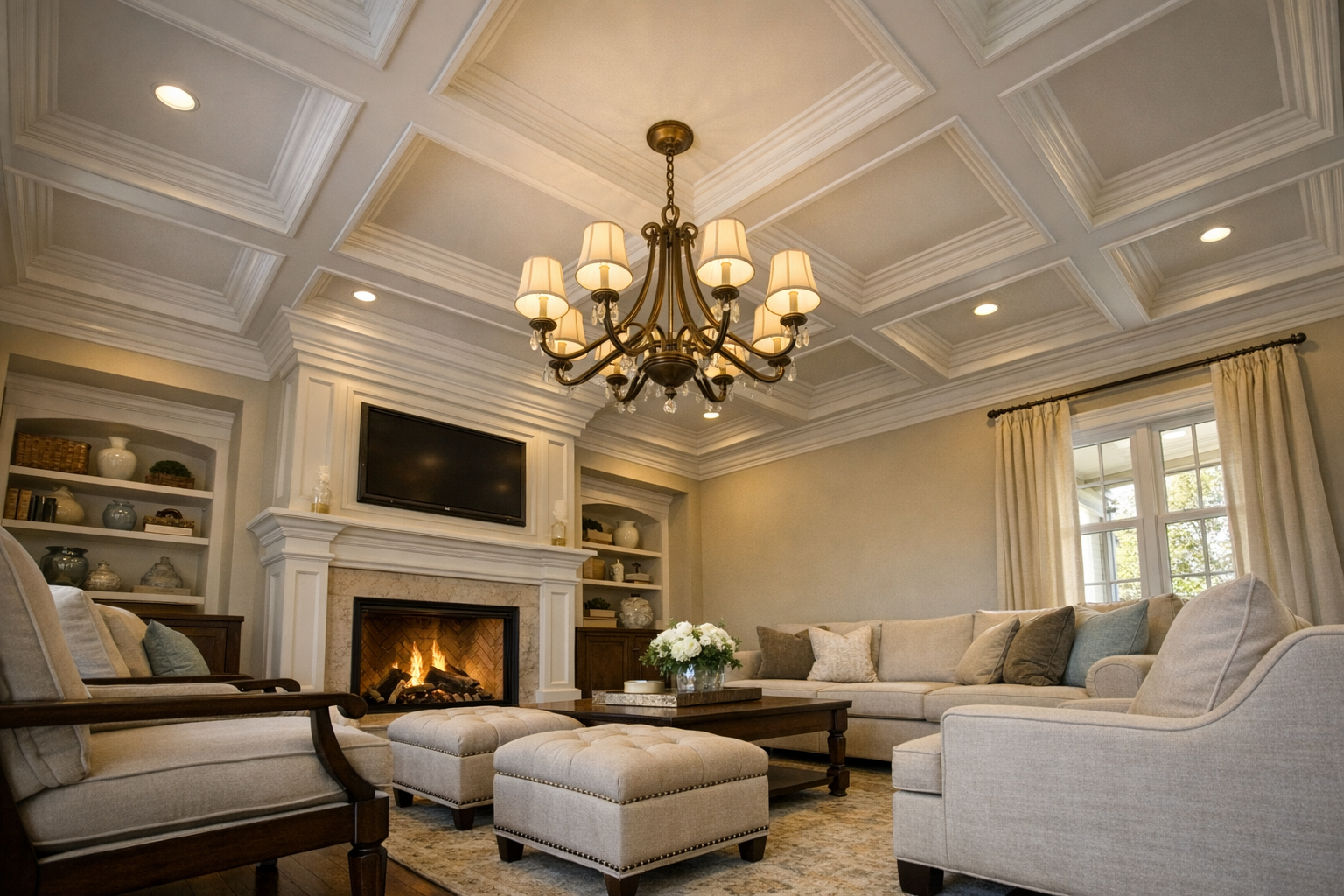
The costly mistake with a coffered ceiling is not usually the paint color; it is a grid that feels out of scale once it is built. Custom coffered ceilings add a structured pattern of beams or trim with recessed panels overhead, so alignment, proportion, and finish quality shape the entire result. Done well, the ceiling can add architectural character, visual depth, and a more intentional feel to the room.
A professional coffered ceiling service is not just trim nailed to a flat surface. It involves a consultation, site measurements, layout planning, carpentry, finish planning, and coordination around existing ceiling conditions such as lighting or electrical locations. Because the pattern has to relate to the room's size and features, the design review happens before installation begins.
This page will help you understand what a coffered ceiling is, why homeowners choose one, which rooms tend to be strong candidates, what design options are available, and what happens after you request a professional review. The goal is to help you move from inspiration photos to a ceiling design that fits your home, your room layout, and the way you want the space to feel.
What Is a Coffered Ceiling?
In practical design terms, a coffered ceiling is built around repetition: beams, trim, or built-up millwork divide the ceiling into a planned grid pattern, and the spaces between those members read as recessed panels. That repetition is what gives the ceiling its rhythm. Instead of one uninterrupted flat surface, the room gets shadow lines, depth, and a stronger architectural frame overhead.
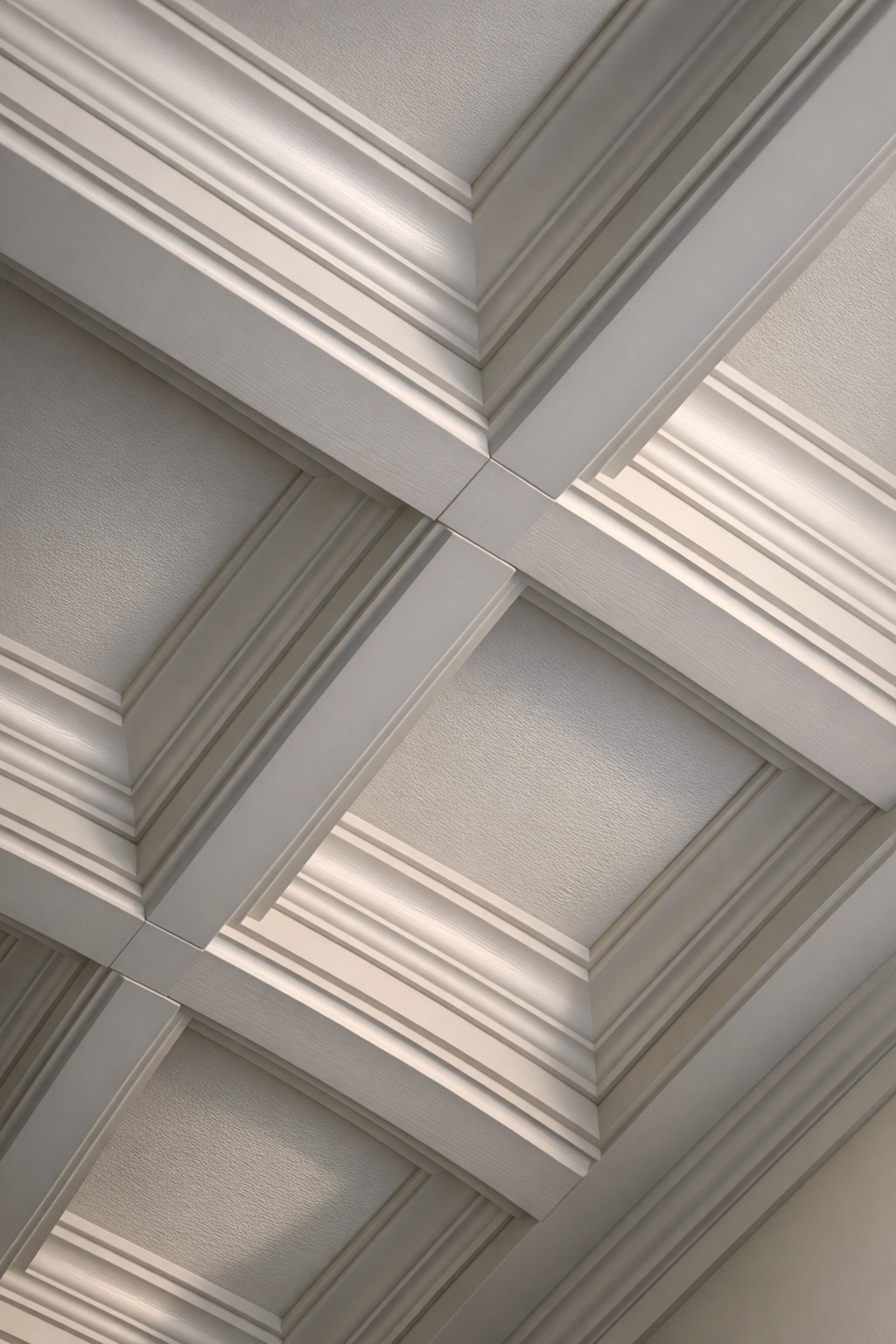
The proportions matter as much as the idea itself. Larger rooms can often support wider beams, deeper coffers, or bigger panel spacing, while smaller rooms may need a lighter profile so the ceiling does not feel crowded. Beam depth changes how much shadow and dimension you see; panel size changes whether the layout feels calm and open or more detailed; molding profile changes the level of formality.
That is why the same basic ceiling concept can look traditional, transitional, or modern. A traditional version may use deeper boxes, layered crown, and a painted or stained finish with a formal feel. A transitional design usually simplifies the molding and keeps the layout balanced without feeling heavy. A modern coffered ceiling may use clean square edges, shallow profiles, and larger recessed panels for a more streamlined look. The takeaway: the style is not determined by the word "coffered" alone; it comes from the layout, depth, trim profile, finish, and how well those choices fit the room.
Why Homeowners Choose a Coffered Ceiling Upgrade
Homeowners usually ask about this upgrade when a room feels finished at eye level but plain overhead. A decorative ceiling design can add architectural character without changing the floor plan, and the grid gives the space a more deliberate sense of order. In a formal dining room, that may mean centering the layout over the table. In a home office, it can create a quieter, more tailored backdrop. In a primary suite or living room coffered ceiling project, it can make a broad ceiling plane feel more composed instead of empty.
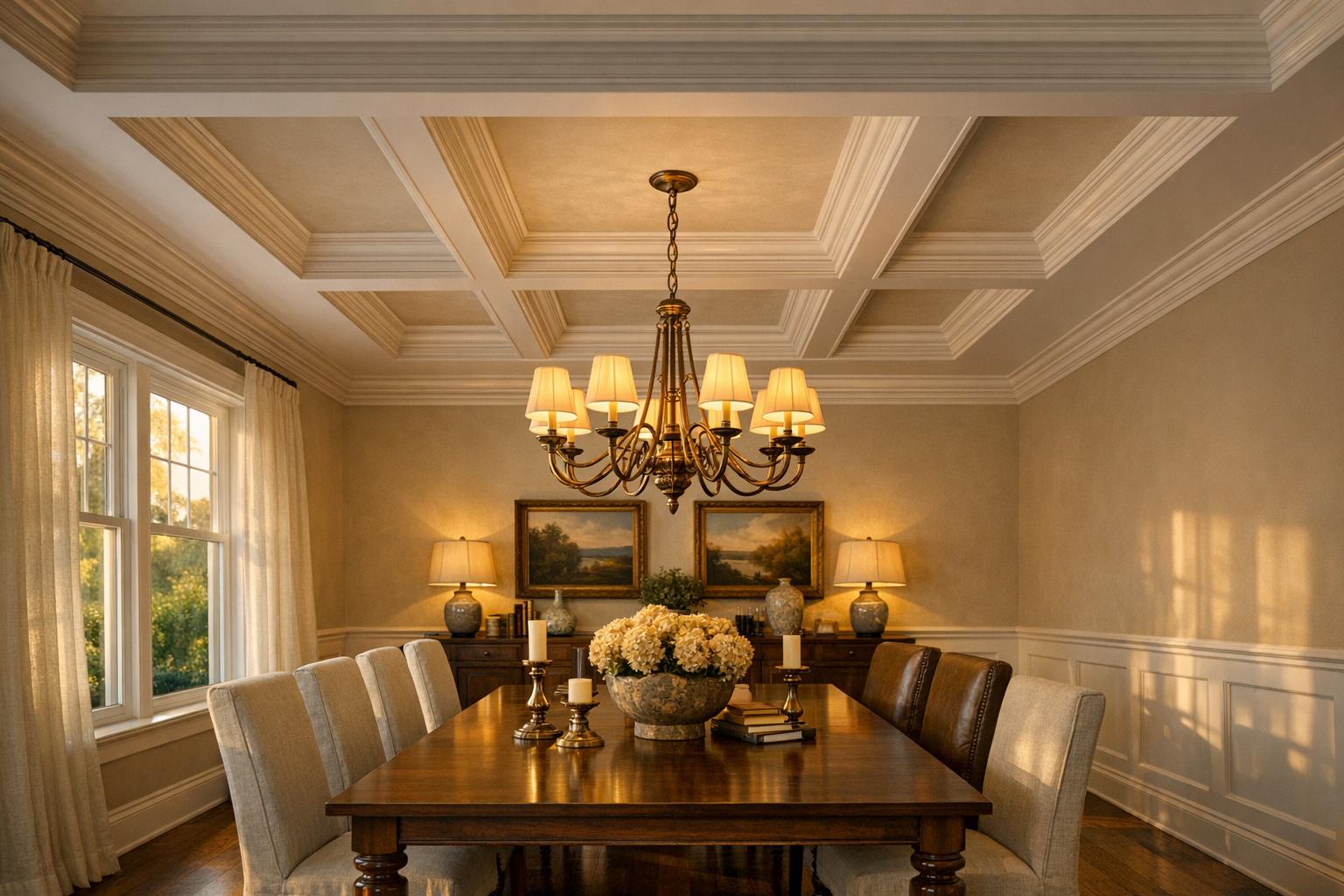
The appeal is not only decorative. Ceiling beams can help define zones in open rooms, reinforce symmetry around fireplaces or built-ins, and create natural places to coordinate recessed lights, chandeliers, or accent lighting. The practical takeaway is that the ceiling should support the room's layout, not fight it; the best designs line up with key features below and feel intentional from the main entry points.
Coffered ceilings are not automatically the right answer for every space. Ceiling height affects how deep the beams can be before the room feels compressed. Room scale affects whether the pattern should be bold or restrained. Existing architecture affects where the grid can align cleanly, and lighting needs affect panel spacing and electrical planning. If a room has a low ceiling, crowded fixtures, or many mechanical interruptions, the design may need a shallower profile, fewer panels, or a different ceiling treatment altogether.
How Coffered Ceilings Differ From Tray, Beam, Crown, and Flat Ceilings
The easiest way to compare ceiling treatments is to look at how much structure they add overhead. A tray ceiling usually creates a raised or recessed perimeter effect, so the eye reads one central field with a border around it. A coffered layout is more segmented: the beams or trim divide the ceiling into repeated panels, which creates a stronger rhythm and usually calls for more careful proportioning, alignment, and finish carpentry.
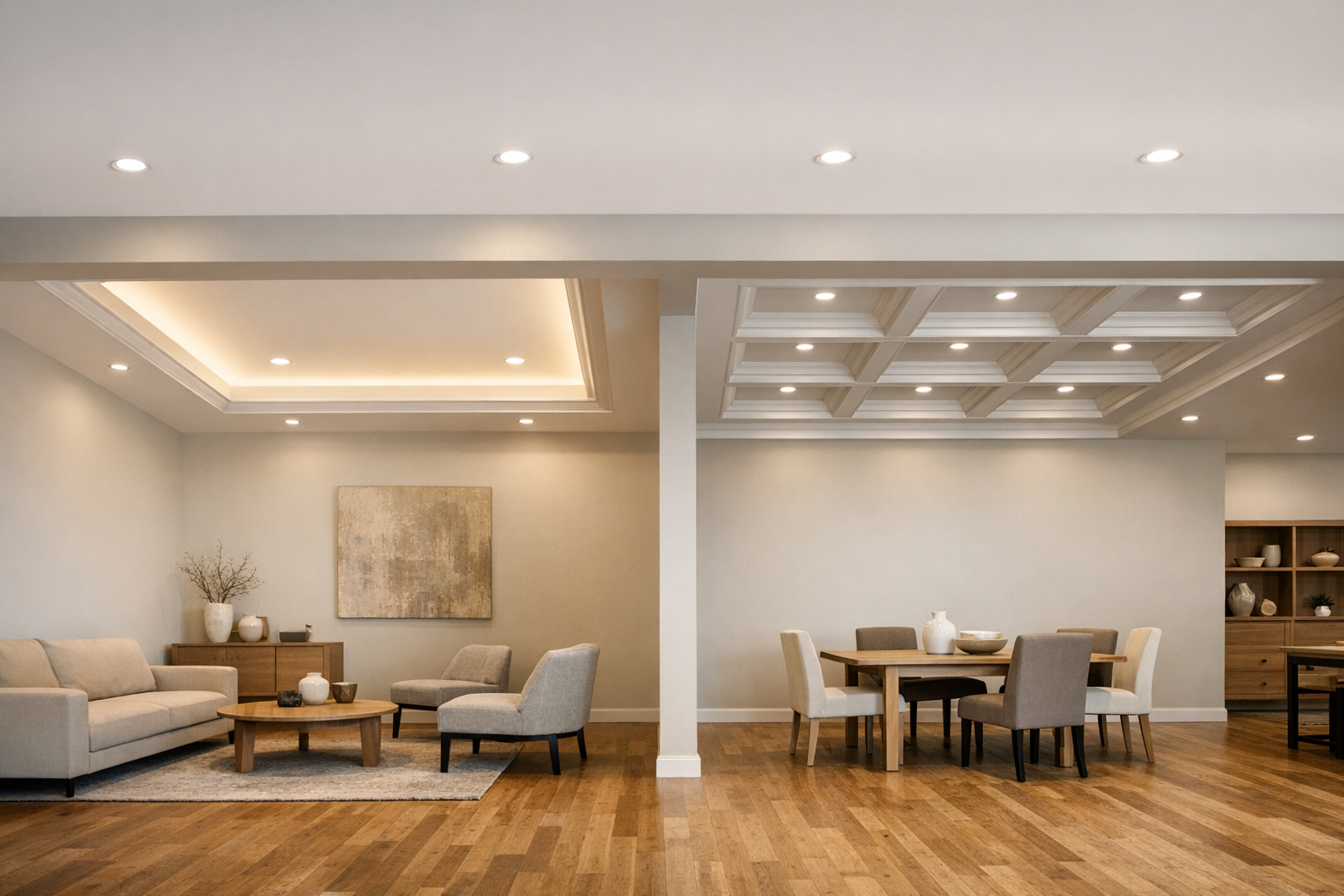
Exposed beam ceilings are different again. They emphasize linear members running in one direction or a simpler crossing pattern, often to add warmth, rustic character, or a stronger architectural line. They do not always create the same recessed-panel grid, so they can feel less formal and may be a better fit when the room needs definition without a full boxed layout.
Crown molding and other ceiling molding are more perimeter-focused. Crown molding frames the transition where the walls meet the ceiling, while ceiling trim can add detail around the edges or selected features. Those choices can sharpen a room nicely, but they do not reshape the entire ceiling plane the way a coffered design does.
A flat ceiling remains the simplest option: clean, understated, and less dimensional. That can be the right call in rooms with lower height, busy lighting, or existing mechanical interruptions. The takeaway is not that one treatment is always better; it is that coffered ceilings make the biggest impact when the room can support a planned grid, balanced panel spacing, and the extra installation precision that comes with it.
Coffered Ceiling Design Options: Layout, Materials, Lighting, and Finish
The design work starts with the ceiling plan, not the trim profile. A square grid gives the room a formal, even rhythm, while a rectangular layout can follow the shape of a longer dining room, hallway-like office, or open living area. Panel size should relate to the room dimensions and the main focal point, such as a fireplace, dining table, island, or chandelier, so the layout feels centered instead of randomly divided.
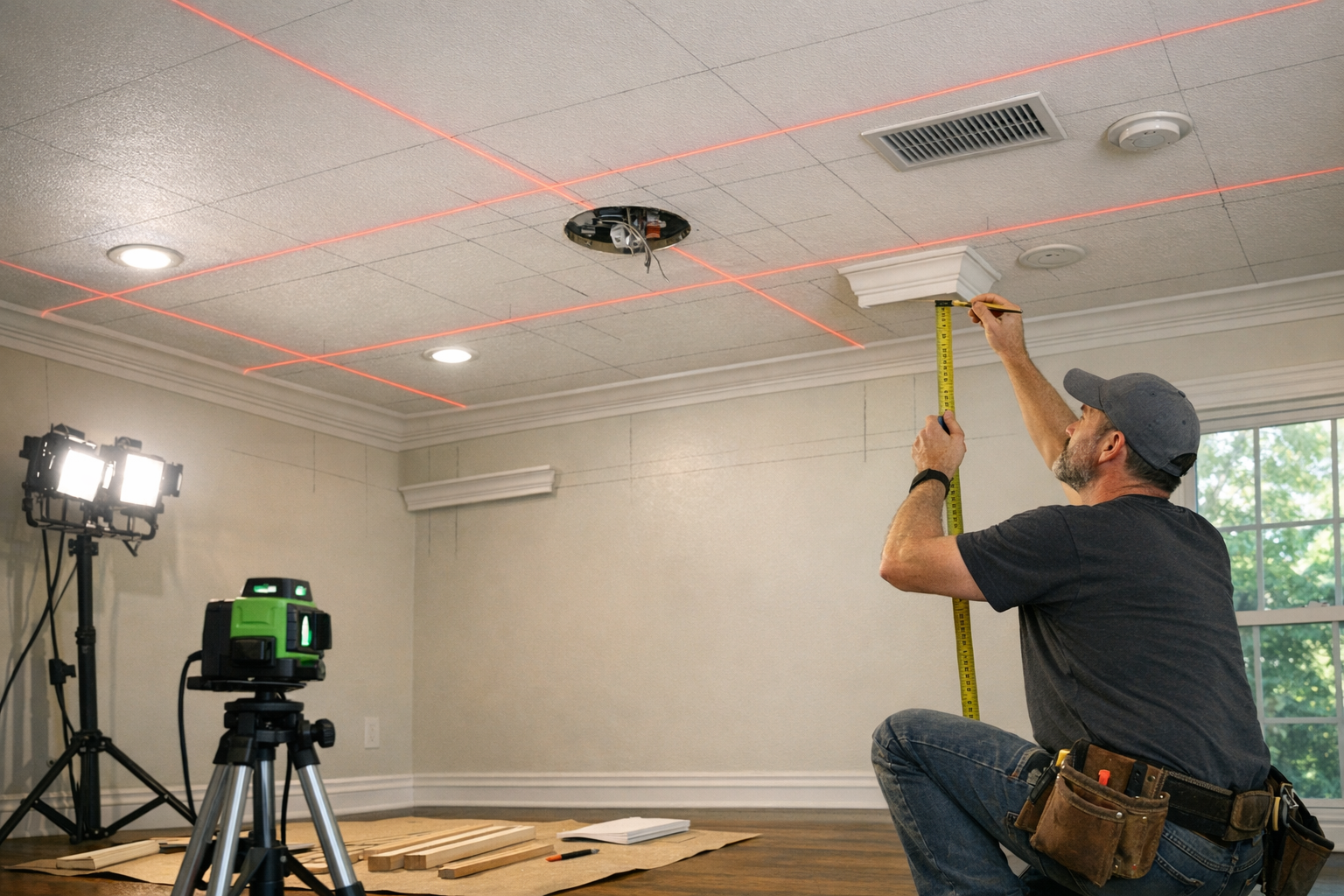
Beam width and depth control the visual weight of the ceiling. Wider or deeper beams create stronger shadow lines and a more substantial architectural look, but they also make the ceiling feel lower and heavier. Shallower beams feel lighter and are often better when the room needs definition without too much overhead bulk. A professional coffered ceiling design balances those proportions before installation so the grid looks intentional from the doorway and from the main seating areas.
Materials and finish shape the personality of the room. Drywall-wrapped or painted millwork often feels clean, built-in, and integrated with the rest of the ceiling and trim. A wood coffered ceiling can emphasize grain, craftsmanship, and warmth, especially when stained rather than painted. Molding profiles add another layer: simple square-edge trim supports a modern coffered ceiling, while layered crown, cove, or panel molding creates a more traditional or transitional effect.
Lighting should be planned before the ceiling is built, because fixture locations need to work with the beams and panels rather than fight them. A chandelier usually looks best when it is centered within the overall grid or within a primary panel over the table or seating area. Recessed lights need spacing that avoids landing directly on beam runs, and electrical conditions should be reviewed early so the final ceiling can combine clean carpentry, balanced lighting, and a finished look.
Where Coffered Ceilings Work Best, and Where They May Need Modification
A good candidate is usually a room where the ceiling has enough visual breathing room for the grid to look planned rather than crowded. Ceiling height affects how much beam depth the room can handle: a taller room may support a stronger profile, while a lower ceiling may need shallow beams, simplified trim, lighter paint, or a different ceiling treatment that gives definition without making the room feel compressed.
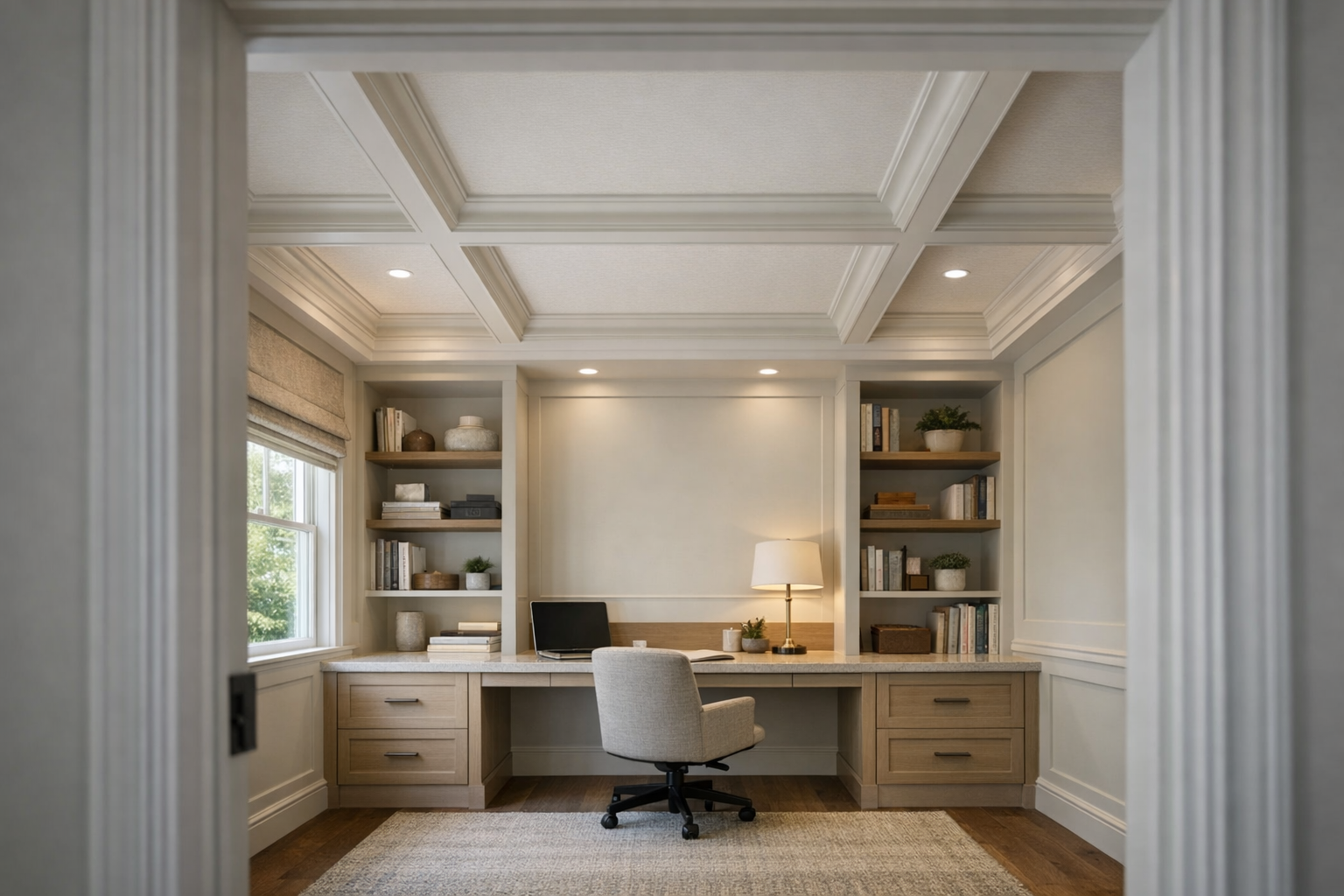
Room size and room proportions matter just as much. Formal living rooms, dining rooms, offices, foyers, and a larger primary suite often work well because they tend to have clear focal points and enough ceiling area for a balanced layout. Narrow rooms, chopped-up ceiling planes, or spaces with awkward offsets may still be possible, but the grid may need fewer panels, rectangular coffers, or a more restrained beam profile.
Door and window heights also shape the design. If the tops of windows, casing, or built-ins sit very close to the ceiling, heavy perimeter beams can feel squeezed. In those rooms, the better solution may be a thinner border, a smaller crown detail, or a layout that keeps the strongest lines away from tight edges.
The ceiling itself needs a practical review before the design is finalized. HVAC registers, plumbing routes, sprinklers, smoke detectors, recessed fixtures, speakers, and other ceiling items can interrupt beam runs or panel centers. When those elements compete with the layout, the plan may need adjusted spacing, relocated fixtures, or a simpler pattern so the finished coffered ceilings look intentional instead of forced.
What to Expect From Professional Coffered Ceiling Installation
Before any trim or millwork goes up, professional coffered ceiling installation starts with a careful site review. That means measuring the room, checking how square the ceiling and walls are, locating existing lights, registers, detectors, speakers, and other ceiling interruptions, then using those details to shape the grid. This planning step is what helps avoid awkward half-panels at the edges, off-center chandeliers, or beam spacing that looks close in one area and stretched in another.
From there, the layout is refined into a design plan. Material and finish selection happen at this stage because they change the look and weight of the ceiling: a painted assembly can feel integrated with existing crown and casing, while a stained wood direction reads more like a feature. The practical takeaway is simple: the design should be settled before carpentry begins, especially if lighting locations or electrical adjustments need to coordinate with the panel centers.
During installation, experienced coffered ceiling contractors focus on alignment, proportion, and clean transitions into the existing ceiling conditions. Beam runs need to stay straight, corners need to meet cleanly, and the grid should relate to the room instead of fighting doorways, windows, or fixtures. This is where professional carpentry makes a visible difference, because small layout errors tend to become more noticeable once the ceiling is painted or stained.
The finishing phase is just as important as the build. Caulk lines, seams, nail holes, paint coverage, stain consistency, and touch-ups all affect whether the ceiling looks custom or pieced together. A final walkthrough should review the overall symmetry, fixture placement, surface finish, and edge details so the completed coffered ceilings feel intentional from both the doorway and the main seating or gathering area.
Cost Factors to Review Before Starting a Coffered Ceiling Project
The most useful budget conversation starts with scope, not a flat guess. Room size changes how many beam runs, panels, seams, and finish transitions are needed. Ceiling height affects beam depth and working access. Layout complexity matters too, because a simple symmetrical grid is different from a pattern that has to center on a chandelier, fireplace, island, or irregular room shape.
Material and finish choices also shape the estimate. Paint-grade trim or millwork is selected for a smooth painted look, while stain-grade wood needs attractive grain and more finish control. Deeper beams, layered molding, and a stain finish generally require more cutting, fitting, sanding, and detail work than a shallow, painted coffered ceiling design.
Lighting and existing ceiling conditions can change the scope before finish carpentry begins. If recessed lights, speakers, registers, detectors, or a chandelier need to shift so they land cleanly within the panels, the project may involve electrical coordination, drywall repair, or ceiling surface corrections.
For custom coffered ceilings, the best estimate is based on actual measurements, the selected layout, beam depth, material, finish requirements, access, and any ceiling or electrical adjustments found during the site review. That gives you a realistic project scope instead of a generic number that misses the details that affect the work.
Start With a Professional Coffered Ceiling Consultation
If you are ready to explore the project, the next step is a professional consultation focused on your actual room, not a one-size-fits-all ceiling pattern. A coffered ceiling service should look at the space, discuss your design goals, and translate those ideas into a layout that fits the room's proportions, ceiling height, existing conditions, and desired finish quality.
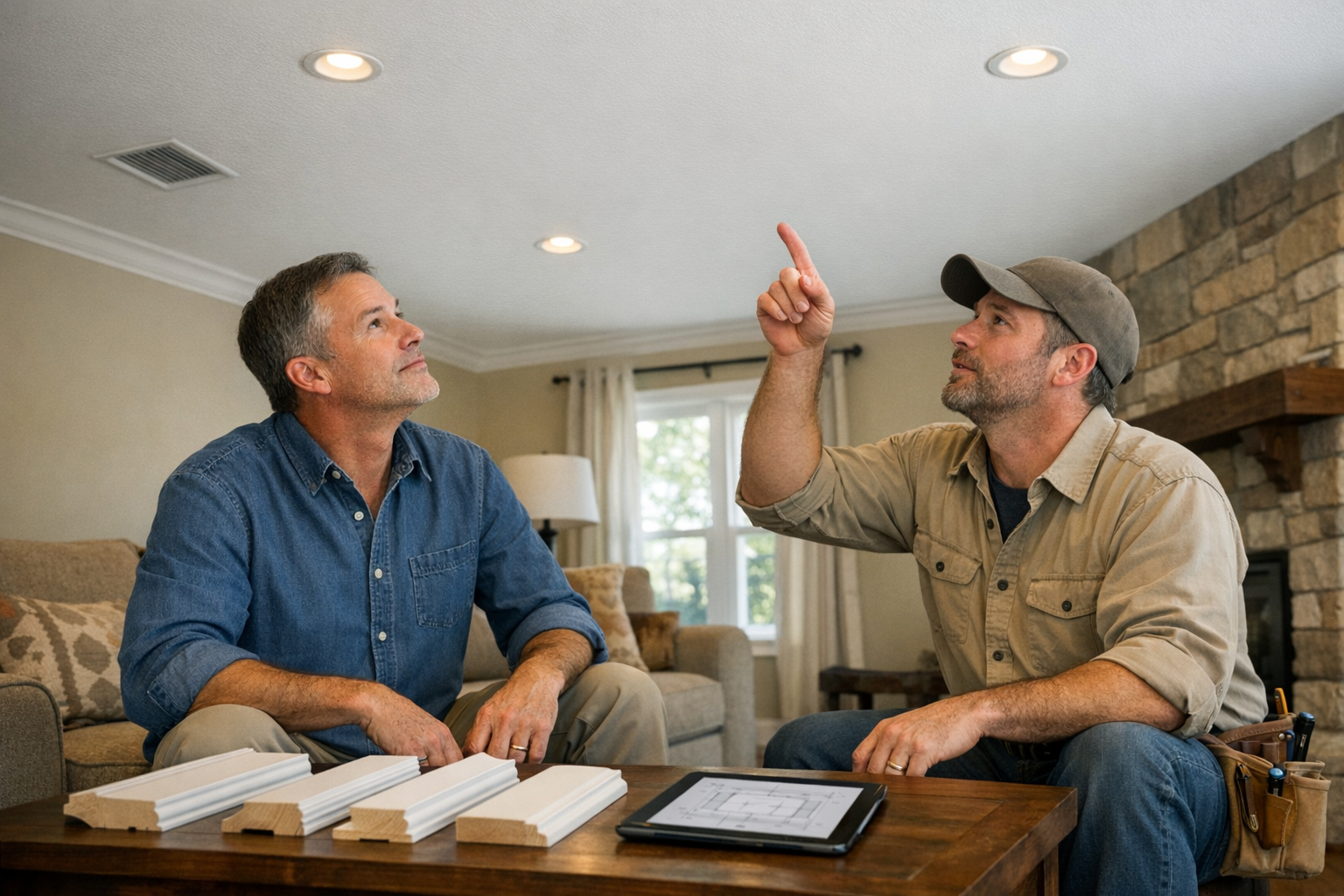
Before the appointment, it helps to gather a few basics: room dimensions, ceiling height, clear photos from multiple angles, current fixture locations, inspiration images, lighting goals, and whether you prefer a painted, stained, traditional, transitional, or cleaner modern look. Those details make it easier to compare a shallow grid against a deeper beam profile, or a simple painted layout against a more detailed millwork design.
From there, experienced coffered ceiling contractors can recommend the right scale, materials, layout, installation approach, and any lighting or ceiling adjustments needed before work begins. To move forward with coffered ceilings designed for your home, schedule a consultation or request an estimate and start with a plan built around your space.
FAQs
What is a coffered ceiling?
A coffered ceiling uses beams, trim, or built-up millwork to divide the ceiling into a planned grid of recessed panels. The effect adds repetition, shadow lines, depth, and architectural structure to an otherwise flat ceiling.
Are coffered ceilings still in style?
Yes, coffered ceilings can fit traditional, transitional, or modern rooms depending on the layout, beam depth, molding profile, and finish. Deeper boxes and layered crown feel formal, while clean square edges, shallow profiles, and larger panels create a more modern look.
How much height do you need for a coffered ceiling?
The needed height depends on how much beam depth the room can handle without feeling compressed. Taller rooms can support wider or deeper beams, while lower ceilings usually need shallow beams, simplified trim, lighter paint, or a different ceiling treatment.
Can recessed lights be added to a coffered ceiling?
Yes, recessed lights can be added, but their locations should be planned before the ceiling is built. The lights need to land within panels and avoid beam runs, and electrical conditions may need review or adjustment during the design stage.
What is the difference between a coffered ceiling and a tray ceiling?
A tray ceiling creates a raised or recessed perimeter effect with one central ceiling field. A coffered ceiling divides the whole ceiling into repeated recessed panels, which requires more planning for proportion, alignment, lighting, and finish carpentry.