
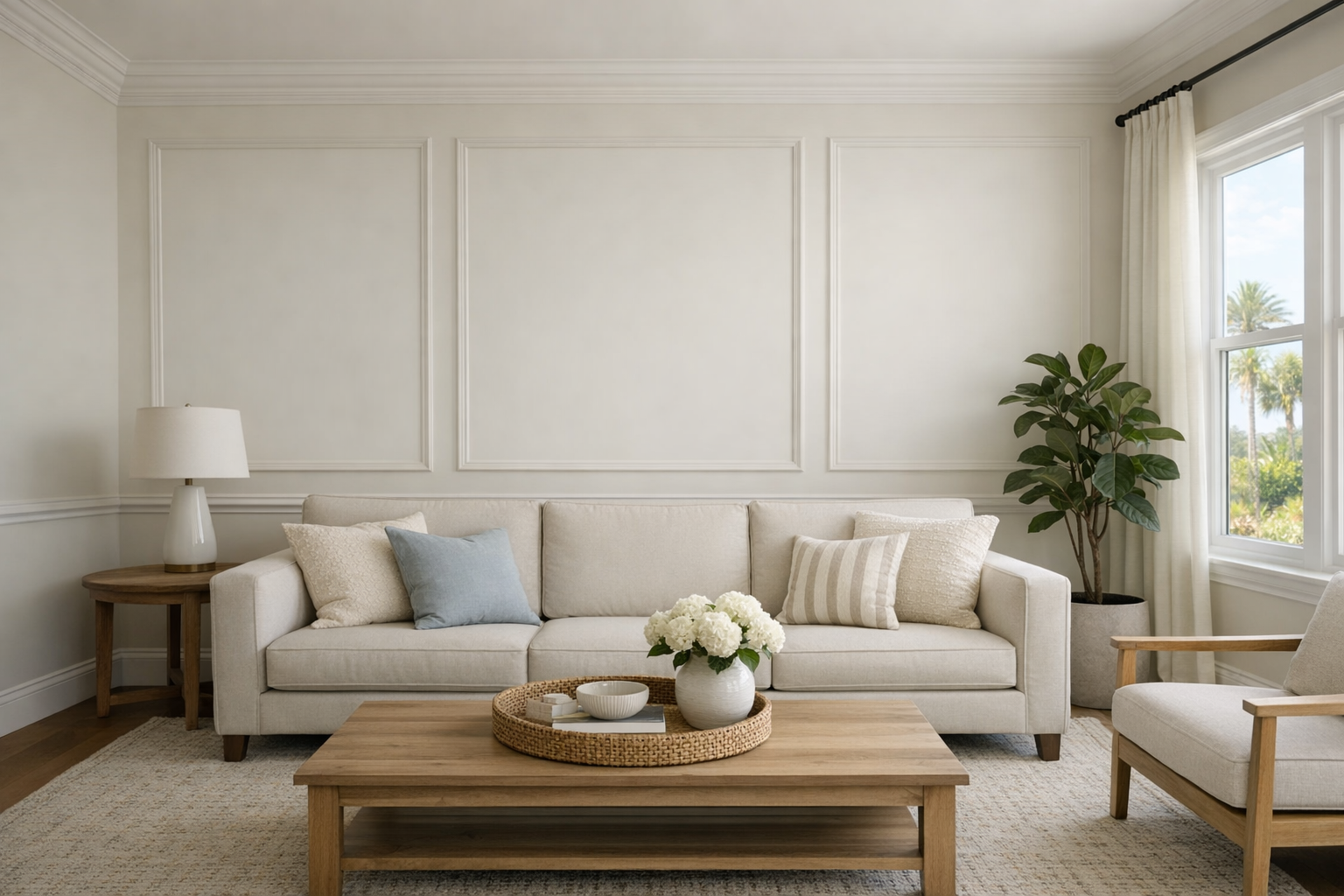
Custom feature walls give homeowners a way to add a clear focal point, texture, and architectural character without turning the whole room into a statement. For custom feature walls Sarasota County homeowners request, the goal is usually restraint: one wall that feels finished, intentional, and connected to the rest of the space.
A strong wall treatment starts with proportion. The right design responds to the wall size, ceiling height, furniture placement, existing trim, and how much visual weight the room can handle. A bedroom headboard wall, dining room backdrop, entryway niche, living room media wall, or home office background may benefit from added detail; another wall in the same home may look better left simple.
The main custom accent walls Sarasota County homeowners consider each create a different effect. Accent molding adds raised trim for a polished architectural look. Picture frame molding uses framed rectangles for classic detail, while box molding tends to feel a little bolder and more structured. Geometric trim creates a modern pattern with angled or asymmetrical lines. Slat walls add repeated wood strips for linear texture. Shiplap introduces casual horizontal or vertical boards, and tongue-and-groove gives a more substantial paneled appearance.
The takeaway is simple: the best feature wall is not just the most dramatic option. It is the one that fits the room's scale, supports the furniture layout, and adds interest without competing with every other surface.
What a Custom Feature Wall Adds to a Space
A blank wall can do more than hold paint or artwork; it can help organize the room visually. A well-planned treatment gives the eye a natural place to land, adds architectural detail where the room feels flat, and introduces texture and depth without requiring every surface to be decorated.
The strongest applications usually have a clear job. Behind a bed, the wall treatment can frame the sleeping area. In a dining room, it can give the table a finished backdrop. In an entry, it can make a small pass-through space feel intentional. The common thread is restraint: one improved wall supports the room instead of competing with windows, cabinetry, art, rugs, or furniture.
Scale is where many designs succeed or fail. Trim that is too thin on a tall wall can look timid, while oversized panels in a compact room can feel heavy. Symmetrical molding can make a plain wall feel more architectural, but only when the spacing, panel size, and surrounding trim relate to the room. The practical takeaway is that the layout matters as much as the material.
That is why professional planning is part of the service, not an afterthought. For custom wall treatments Sarasota County homeowners are considering, the conversation should include the room's purpose, wall dimensions, furniture placement, existing trim style, preferred finish, and how bold or quiet the focal point should feel.
A feature wall can feel unnecessary when the room already has several strong focal points or when the pattern is forced onto the largest wall simply because it is empty. It works best when the design feels built in, proportionate, and cleanly finished, more like part of the home's architecture than an added decoration.
Accent Molding, Picture Frame Molding, and Box Molding
For homeowners who want a polished, architectural look, an accent molding wall is often the most classic place to start. It uses applied trim over a flat wall to create framed shapes, usually rectangles or squares, so the surface feels more finished without adding heavy cabinetry or changing the room layout.
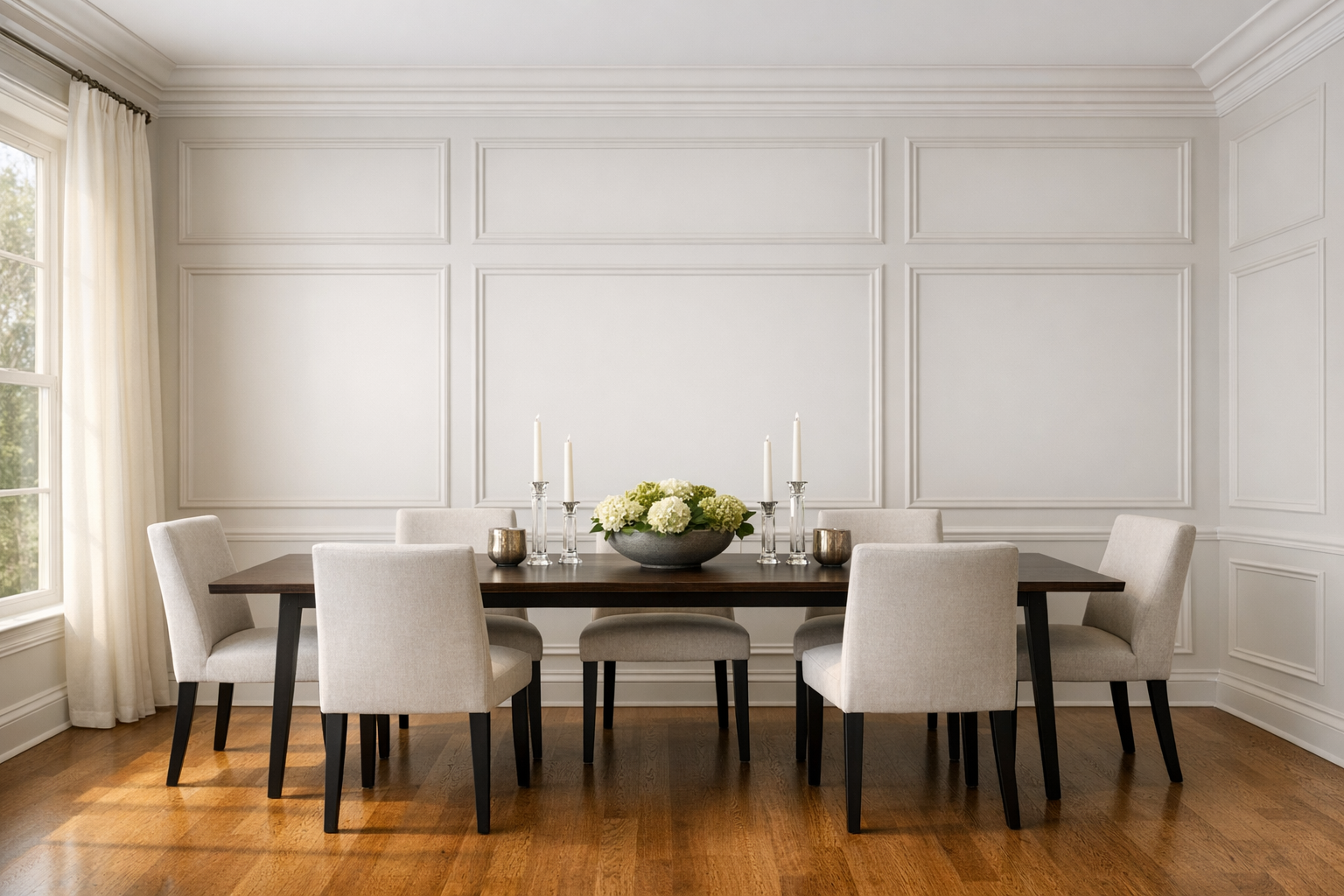
Picture frame molding is the more delicate version. Thin molding is arranged like frames on the wall, often in a balanced series of panels. It works especially well when the goal is refinement: a dining room wall behind a table, a bedroom wall behind the headboard, an entryway that needs definition, or a hallway that could use subtle detail instead of more artwork.
Box molding has a similar paneled effect, but it usually reads a little bolder and more structured. The "boxes" may be larger, deeper, or more grid-like, which can make a living room or dining room feel grounded and formal. The practical difference is scale: picture frame molding installation tends to feel lighter and more decorative, while box molding can give the wall a stronger architectural rhythm.
The best layouts are measured around the room's real conditions, not just copied from a photo. Panel spacing should stay consistent, molding profiles should relate to the existing baseboards and any chair rail, and the design needs to handle outlets, inside corners, outside corners, door casing, and window trim without looking squeezed or interrupted. A strong signal is when every panel looks intentional; a weak signal is when one box gets noticeably narrower just to dodge an outlet.
Finish also changes the mood. Painting the wall and trim the same color creates a subtle, built-in effect, while a contrast color makes the molding more noticeable. Satin or semi-satin trim can add a refined edge, but the caulk lines, filled nail holes, aligned joints, and paint-ready surfaces have to be clean for the look to feel custom. That level of planning is what separates well-designed custom trim walls Sarasota County homeowners can live with for years from a wall that feels like a short-lived trend.
Geometric Trim Walls for a Modern Focal Point
Where framed rectangles feel too traditional, a geometric trim wall takes applied trim in a more graphic direction. Instead of balanced boxes, the pattern may use diagonal lines, angled sections, tall vertical breaks, or asymmetrical shapes to create movement across one surface. The result reads more like a modern accent wall: sharper, more energetic, and more design-forward than classic molding.
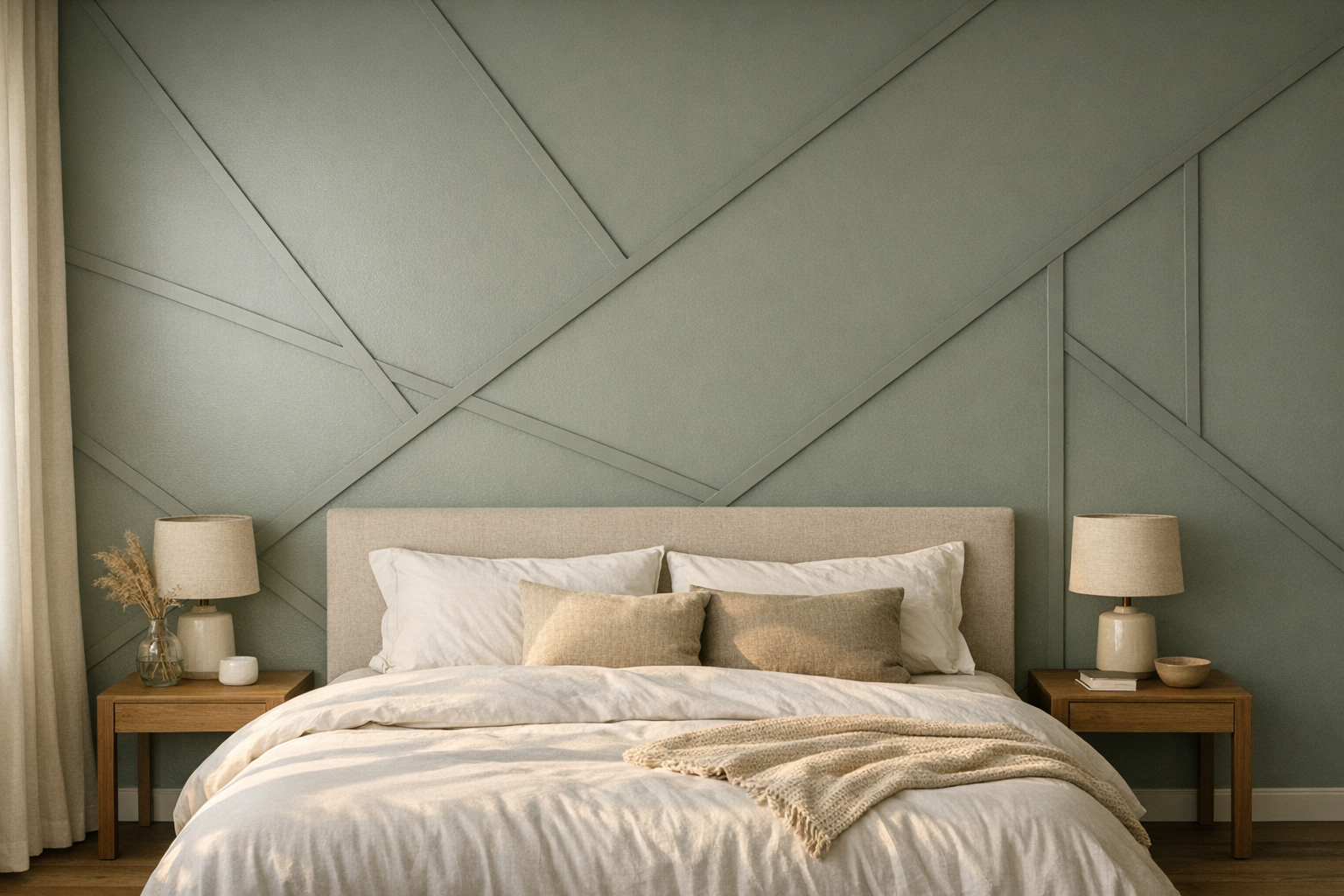
This style works best when the wall already has a clear purpose. Behind a bed, the pattern can center around the headboard and nightstands. On a media wall, the trim layout should support the TV instead of slicing awkwardly behind it. In a home office, vertical or angled trim can frame the desk area and make the background feel finished for daily use. Nurseries and bedrooms can also handle softer geometric patterns when the paint color stays calm and the furniture is simple.
The planning matters more than the complexity. A strong layout has a clear rhythm, clean trim intersections, and a sensible stopping point at baseboards, corners, door casing, or ceiling lines. A weak layout looks like leftover angles were added wherever they fit. Before installation, the pattern should be scaled to the wall so the largest shapes do not overpower the room and the smallest pieces do not become busy once painted.
Choose a bold geometric wall when the room has simple furnishings, limited competing patterns, and a homeowner who wants a noticeable focal point. If the space already has ornate furniture, strong artwork, detailed flooring, or a more traditional architecture, a quieter picture-frame treatment or a cleaner linear design may feel more timeless. For custom feature walls Sarasota County homeowners plan to enjoy long term, the best modern pattern is still the one that feels intentional after the trend moment passes.
Slat Wall Installation for Linear Texture and Warmth
A slat wall brings the pattern back to rhythm rather than angles. In slat wall installation, repeated vertical or horizontal wood slats create narrow shadow lines, texture, and depth across one surface. Vertical lines can make a wall feel taller and more architectural, while horizontal slats feel wider, calmer, and more lounge-like.
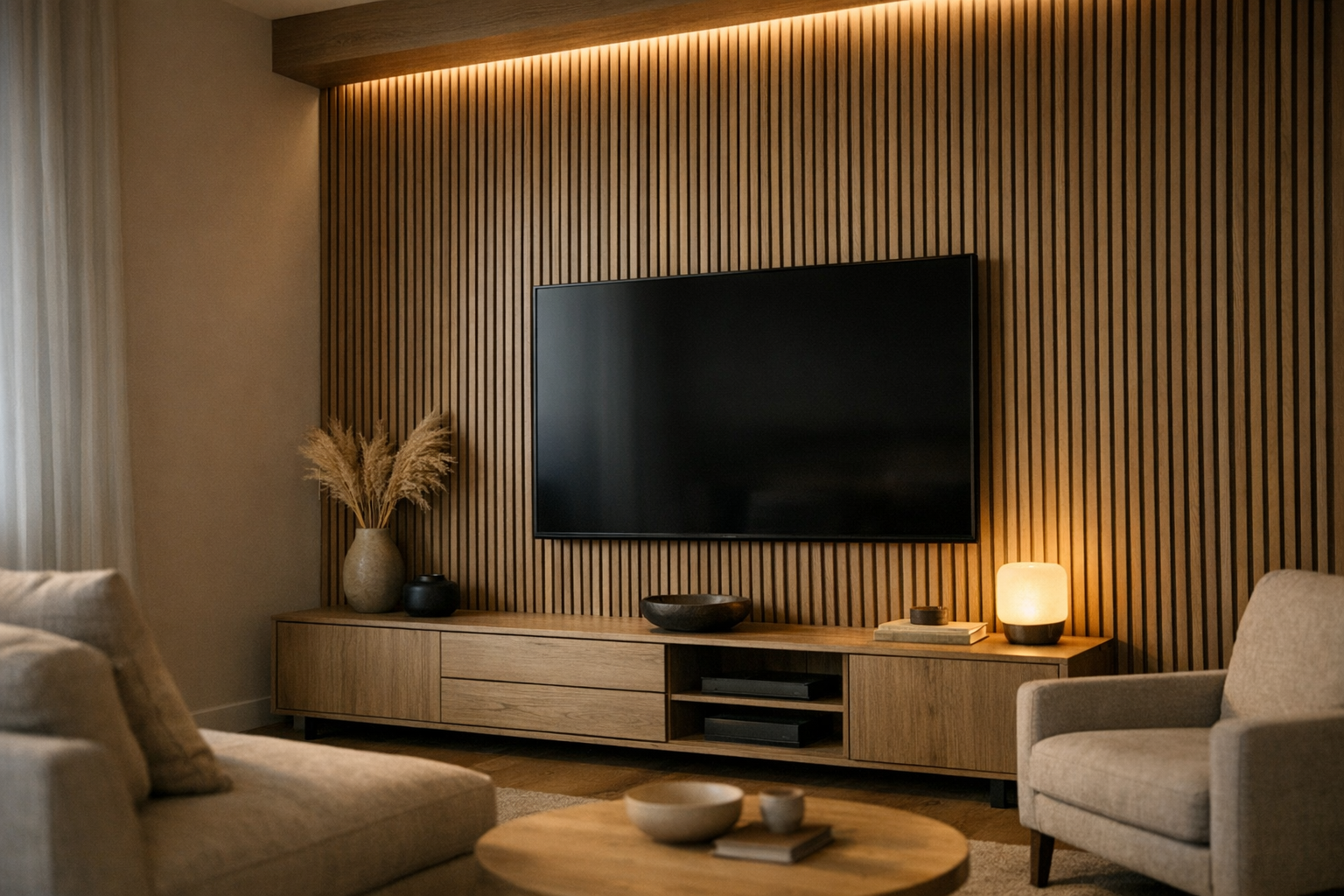
This treatment works especially well where the wall already has a built-in purpose: behind a TV, at an entry drop zone, behind a bed as a headboard wall, along a stair run, or as a polished office backdrop. A strong slat wall usually stops at a logical edge instead of wrapping the whole room, so the texture feels intentional rather than busy.
Material and finish change the mood quickly. Natural wood slats add warmth and visible grain; stained wood can feel richer, darker, or more tailored; painted slats create a cleaner architectural effect that can blend with nearby trim. A contrast backing, such as dark backing behind lighter slats, makes the gaps more dramatic, while a similar wall color keeps the lines softer.
The custom part is in the spacing, width, alignment, and integration. Narrow slats with tight spacing read sleek and modern, but too many close lines can become visually loud in a small room. Wider slats with more breathing room feel warmer and less dense. Outlets, switches, TV mounts, and media wiring should be planned into the layout so they do not interrupt the rhythm awkwardly.
Lighting is another deciding factor for custom feature walls Sarasota County homeowners should think through early. Grazing light from a window, sconce, or ceiling fixture will exaggerate every shadow line, which can be beautiful when the slats are straight, evenly spaced, and smoothly finished. Designed with restraint and quality materials, a slat wall can feel current without looking like a short-lived trend.
Shiplap and Tongue-and-Groove Walls for Casual or Coastal Character
Board-based treatments bring a different kind of character than applied trim or individual slats. Shiplap uses overlapping or rabbeted board edges that leave a visible reveal between boards, so the finished wall has crisp shadow lines and a relaxed, cottage-influenced look. Tongue-and-groove boards interlock with a tongue on one edge and a groove on the other, creating a tighter, more continuous surface that often feels more substantial and wood-paneled.
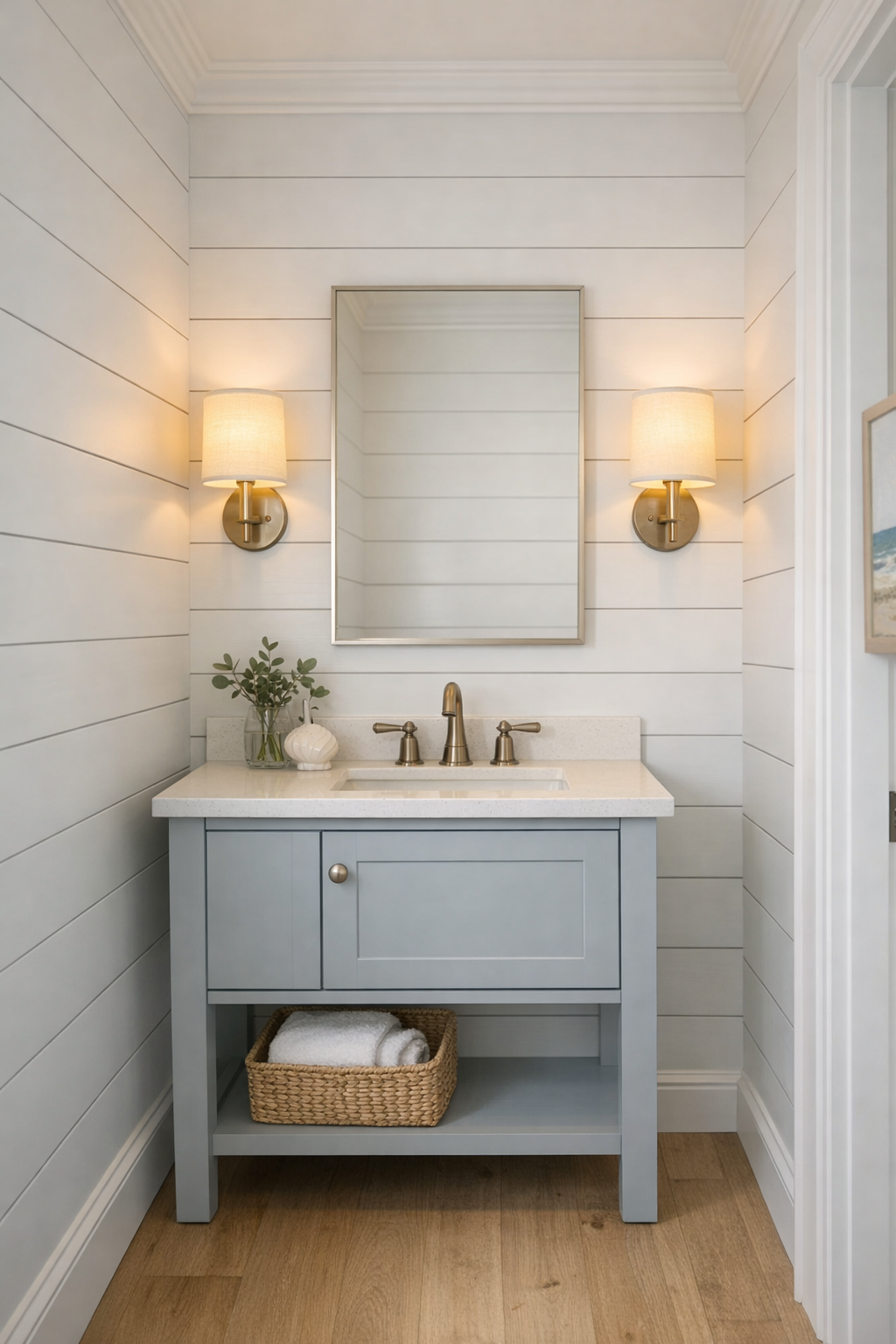
Orientation changes the read of the room. Horizontal boards can make a powder room, bedroom wall, or dining niche feel wider and calmer, while vertical boards can add height and a cleaner modern-cottage feel. Wider boards usually look simpler and less busy; narrower boards create more seams and texture. That choice matters in smaller Sarasota County spaces where too many lines can crowd the wall instead of giving it quiet structure.
These treatments can work well in coastal, casual, or cottage-inspired homes, but they are not automatic requirements for every coastal interior. A painted white or soft neutral shiplap wall may suit a powder room, mudroom-style entry, or bedroom headboard wall. A natural or stained tongue-and-groove ceiling, dining alcove, or selective living room wall can feel warmer and more tailored when the surrounding trim, flooring, and furnishings support the wood tone.
The difference between current and dated usually comes down to restraint and finish. Clean board spacing, straight seams, crisp inside and outside corners, smooth caulk lines, and trim transitions that look intentional all help the wall feel built in. Paint color matters too: bright contrast makes every seam stand out, while a softer wall-and-trim palette lets the texture support the room instead of taking it over.
How to Choose the Right Feature Wall Style for Your Room
The best choice usually comes from matching the treatment to the room's existing cues, not from picking the most dramatic idea. Start with the wall's job: a dining room may call for quiet picture-frame or box molding that feels formal and architectural, while a bedroom can handle a softer geometric trim layout behind the bed if the bedding and artwork stay simple. A TV wall often benefits from linear texture because repeated lines can frame the screen without needing extra décor, while a powder room can support shiplap or tongue-and-groove when the scale stays tight and intentional.
Wall size and ceiling height should guide the pattern. Tall walls can usually carry taller panels, longer verticals, or wider spacing; shorter walls often look better with fewer divisions and lower contrast. A strong choice is molding that lines up with door casing, baseboards, and furniture height so the wall feels planned. A weak choice is crowded molding squeezed around outlets, windows, or a low headboard, because the pattern starts fighting the room instead of supporting the focal point.
Natural light changes how bold the wall feels. Same-color painted trim creates shadows and dimension in a quieter way, while high-contrast paint makes every line, reveal, and angle more noticeable. That can be beautiful in an office backdrop, entry wall, or modern bedroom, but it can feel busy in a small room if the pattern density is high. For a custom feature wall Sarasota County homeowners want to feel refined, subtle contrast is often the difference between "finished" and "too much."
Also think about maintenance expectations and daily use. More grooves, seams, and slat spacing mean more visual texture and more edges to dust, while simpler molding panels and smoother painted treatments tend to read cleaner. Living rooms need to work with sofas, media consoles, windows, and artwork; bedrooms need the wall to support the bed rather than overpower it; dining rooms can handle more symmetry; offices and entries can take a more tailored statement. In small rooms, choose fewer lines, softer color shifts, and one clear focal point so the wall adds dimension without shrinking the space visually.
Professional Design, Layout, and Installation
A good installation starts before any trim is cut. The consultation looks at the room, the wall's dimensions, ceiling height, furniture placement, existing baseboards, casing, crown molding, outlets, and natural light so the design can be scaled to the space instead of forced onto it. For feature wall installation Sarasota County homeowners are planning, that early room assessment is what keeps the finished wall feeling deliberate and restrained.
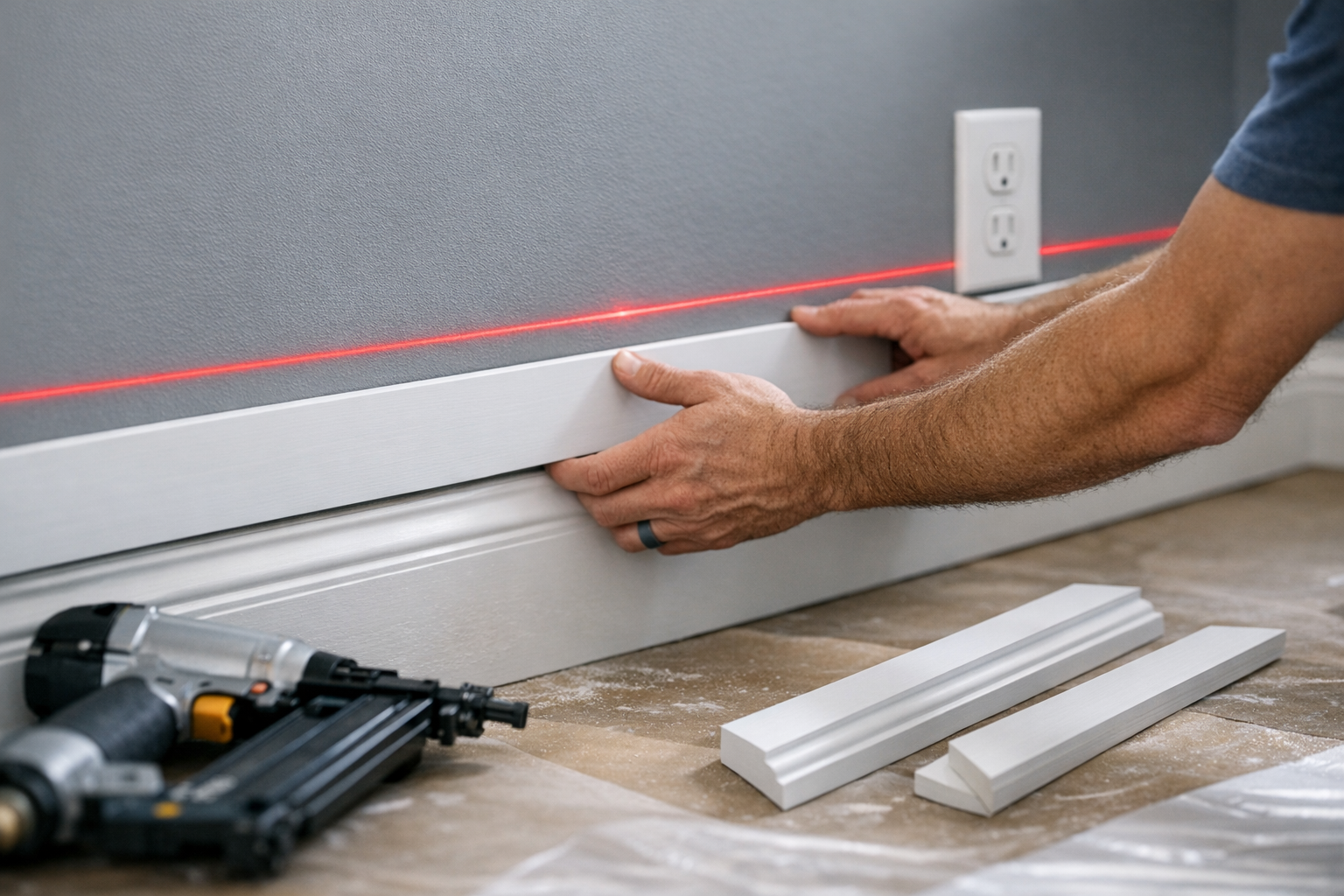
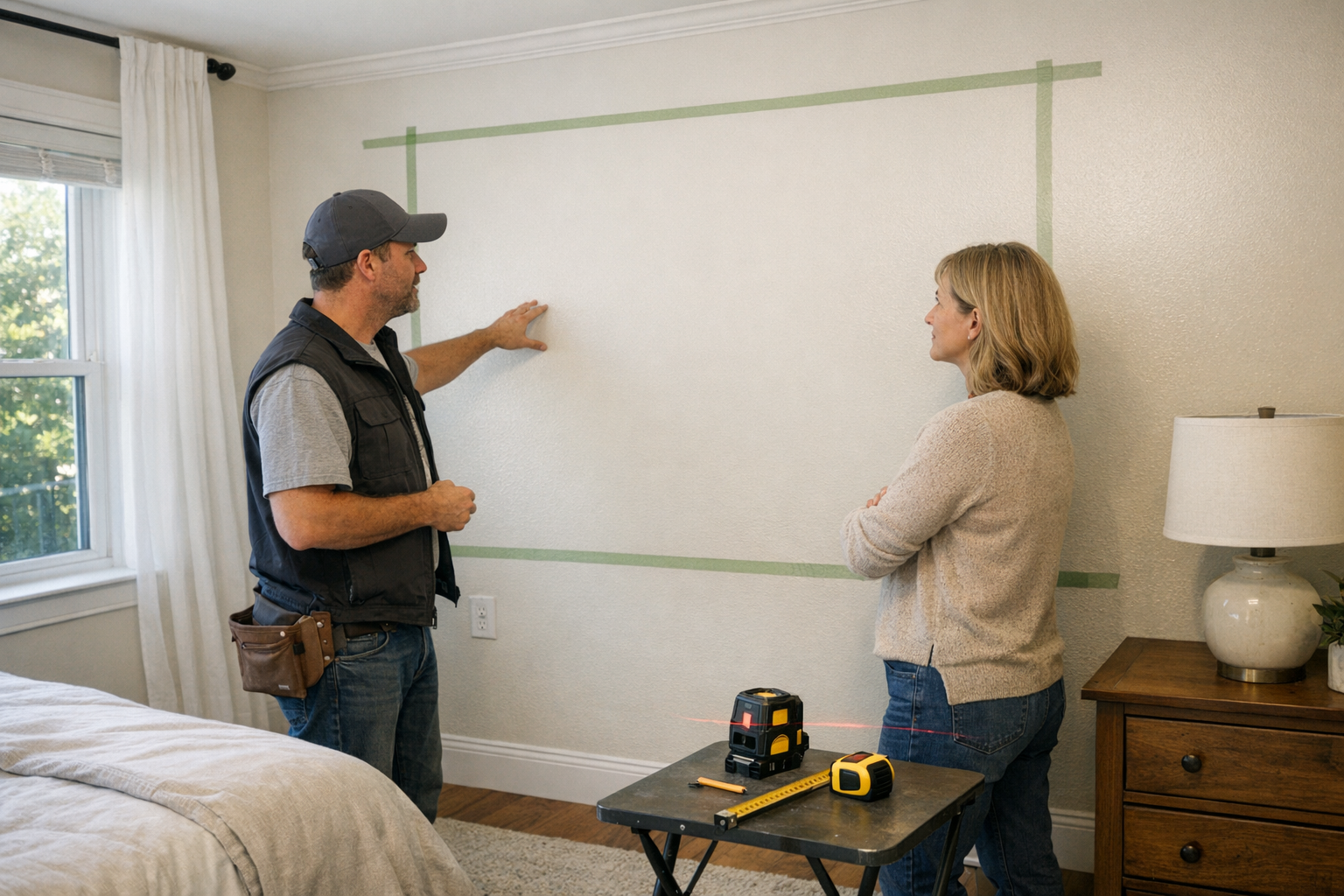
Layout planning is where the design becomes buildable. Picture frame molding installation depends on balanced panels, equal reveals, and lines that relate to nearby trim, while slat wall installation depends on consistent spacing and straight runs so the rhythm does not drift across the wall. Geometric trim, shiplap, and tongue-and-groove each need the same kind of layout discipline: clean endpoints, thoughtful transitions, and a pattern that works around doors, corners, and baseboards.
Professional installation matters because small inconsistencies become very visible once paint or finish goes on. Precise cutting, level lines, tight corners, filled nail holes, smooth caulk lines, sanding, priming, and final painting or finishing all affect whether the wall looks built-in or simply attached afterward. The goal is a surface that blends into the home's existing trim language, with seams prepared cleanly and details finished well enough that the focal point feels intentional from across the room and up close.
Plan a Custom Feature Wall for Your Sarasota County Home
Start with the actual room, not a trend photo. During a consultation for custom wall treatments in Sarasota County, the discussion can focus on the wall itself, nearby trim, furniture placement, paint direction, finish level, and how much visual impact feels right for the space.
Together, you can compare quieter molding for framed architectural detail, a stronger geometric layout for pattern, linear slat texture for rhythm, or shiplap and tongue-and-groove for board-based character. Schedule a consultation to choose a design that supports the home's architecture and creates a focal point that feels intentional, balanced, and professionally finished.
FAQs
What is a custom feature wall?
A custom feature wall is one intentionally designed wall that adds a focal point, texture, or architectural character without making the whole room feel busy. It should fit the wall size, ceiling height, furniture placement, existing trim, and visual weight of the room.
Which rooms work best for an accent molding wall?
Accent molding works well behind a bed, behind a dining table, in an entryway, in a hallway, or on a living room wall that needs architectural detail. Picture frame molding gives a lighter, refined look, while box molding creates a bolder and more structured paneled effect.
Are slat walls still in style for modern feature walls?
Slat walls are still a strong option when they are used with restraint and quality materials. Vertical slats can make a wall feel taller, horizontal slats can make it feel wider and calmer, and the spacing, width, alignment, outlets, switches, TV mounts, and media wiring should be planned into the layout.
Can a custom feature wall be painted the same color as the room?
Yes, painting the wall and trim the same color creates a subtle, built-in effect with shadow and dimension. A contrast color makes molding, seams, reveals, angles, or slats more noticeable, which can feel bold but may look busy in a small room.
How do I choose between molding, slats, shiplap, and tongue-and-groove?
Choose based on the room’s job, scale, light, furniture layout, and existing trim rather than the most dramatic design. Molding adds framed architectural detail, geometric trim creates a modern pattern, slats add linear texture, shiplap gives a casual board look, and tongue-and-groove creates a tighter, more substantial paneled surface.