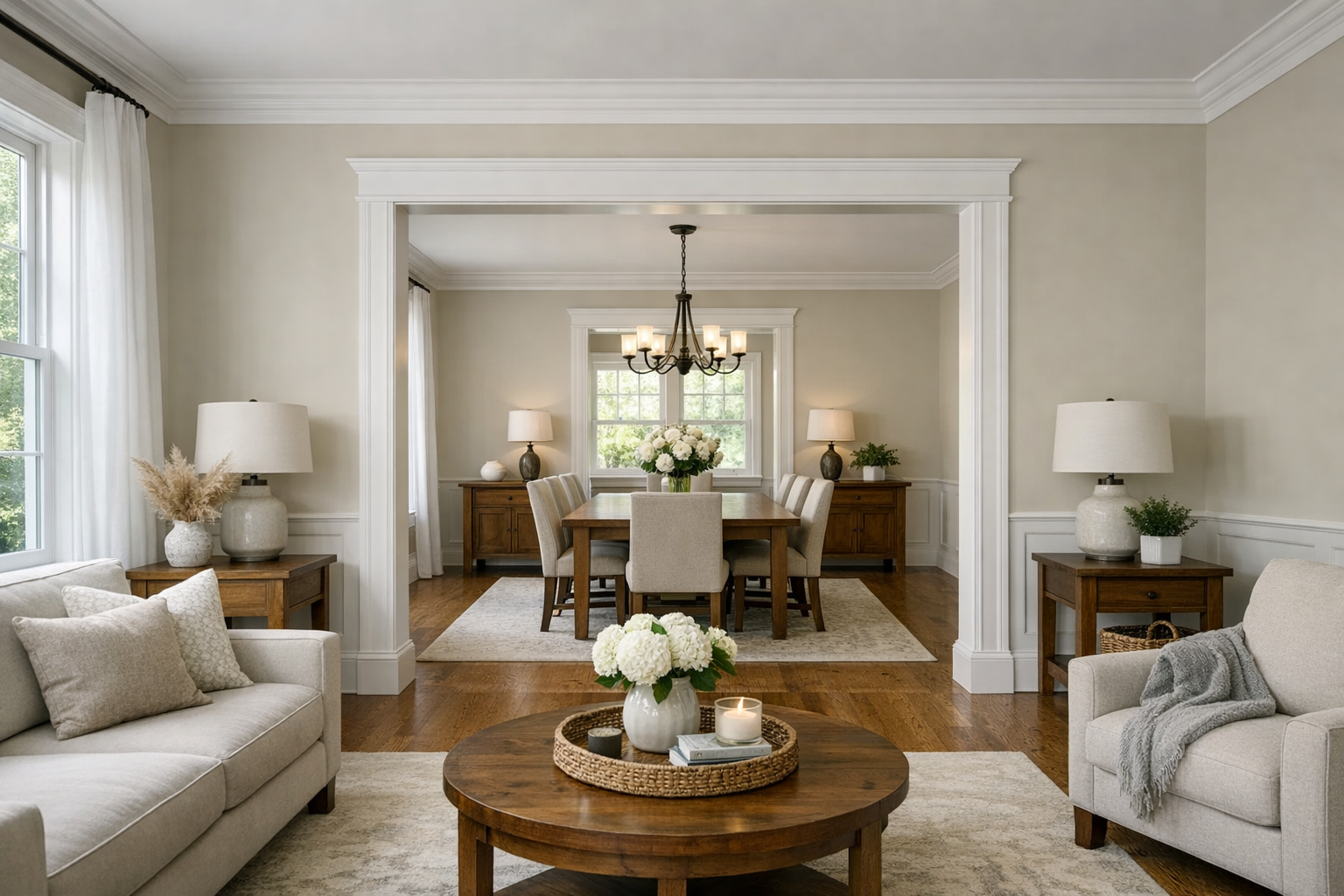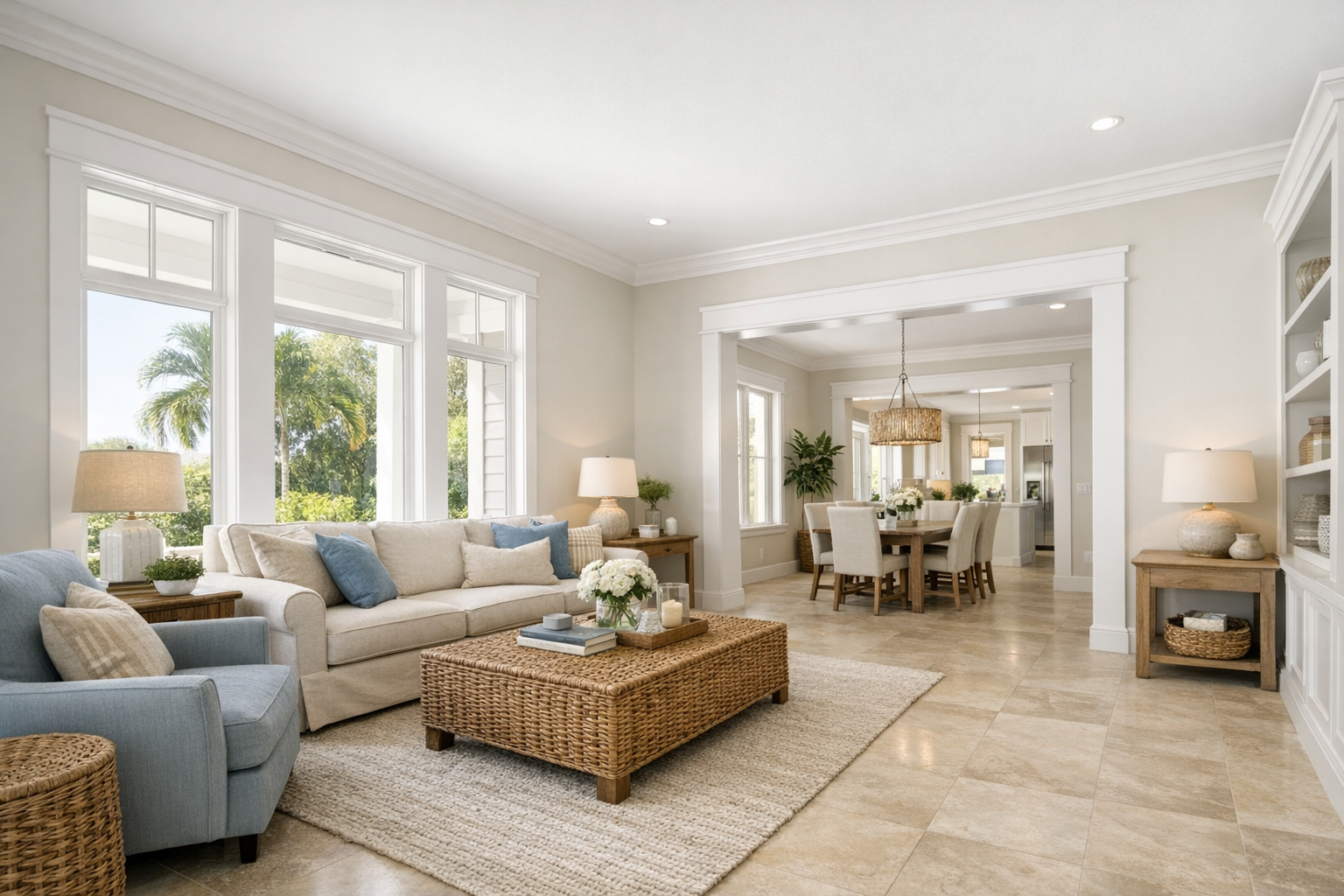
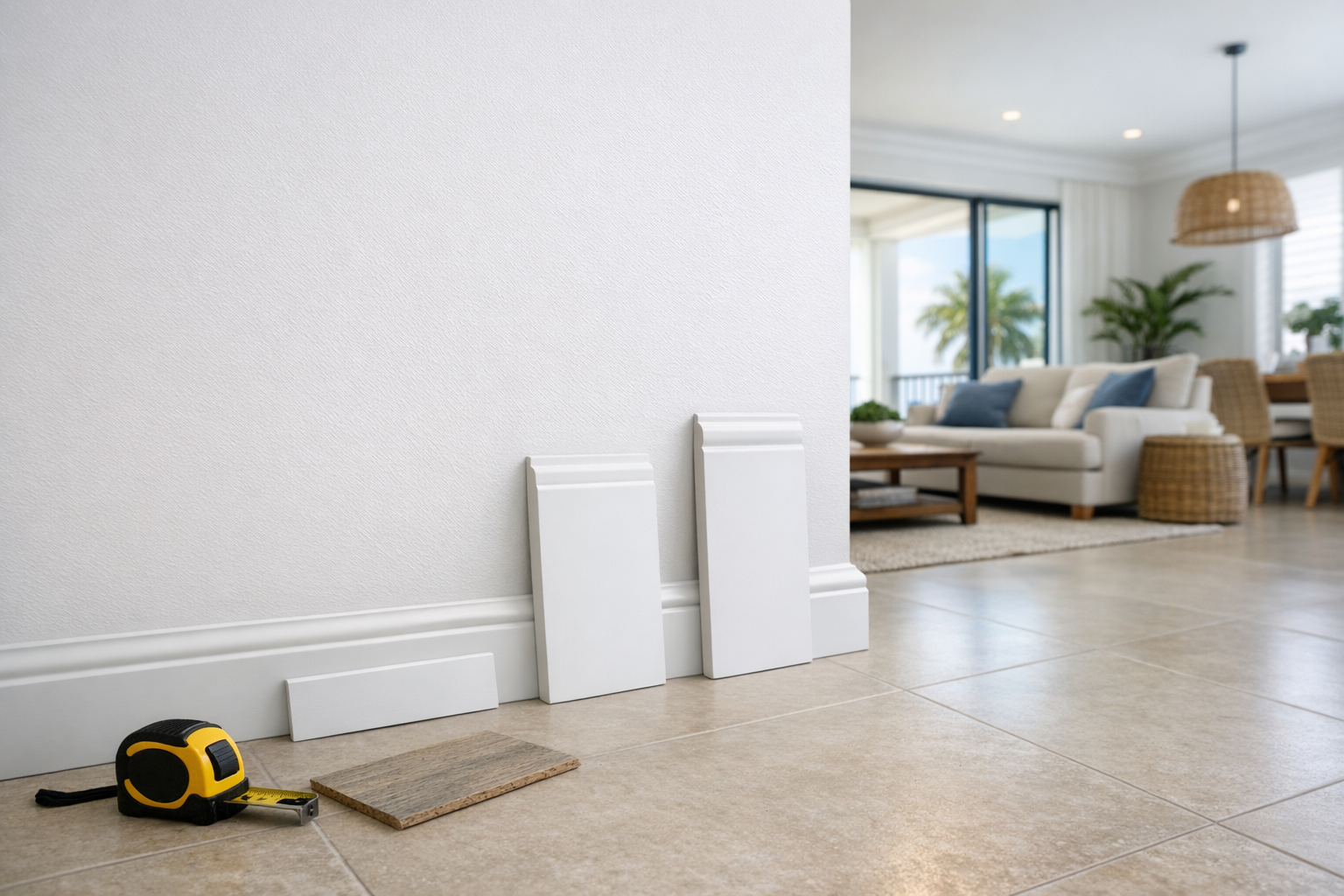

Choosing the right baseboard height is less about finding one "correct" number and more about making the bottom of the wall look intentional. A baseboard that feels balanced in a compact condo can look too slight in a wide-open living room, while a tall profile that looks polished in a higher-ceiling home can feel bulky in a smaller bedroom.
Start with proportion, then adjust for the room in front of you. Ceiling height affects how much visual weight the baseboard can carry; room scale changes how noticeable that trim line becomes; flooring affects how cleanly the baseboard meets the surface; and style determines whether the profile should read simple, coastal, modern, traditional, or more substantial.
That matters in Sarasota County because one project might involve an 8-foot-ceiling condo, another a coastal home with tile floors, another a newer Venice build with taller rooms, and another a remodel where luxury vinyl plank, carpet, tile, or hardwood-look flooring has changed the floor edge. In each case, the baseboard has to cover the transition, resist everyday wear, and still look like it belongs with the rest of the interior trim Sarasota County homeowners already have.
A proportion-based starting point, such as sizing trim as a small percentage of wall height, can help narrow the options, but it should not be treated as a rigid rule. The best takeaway is simple: good baseboards look connected to the wall height, door casing, flooring, and home style; weak ones look undersized, oversized, or mismatched before you ever notice the paint color.
A Quick Starting Point: Common Baseboard Height Ranges
For a first pass, it helps to sort the options into three working bands rather than shop by one fixed "standard baseboard height." Each band changes the visual weight at the bottom of the wall, so the right choice depends on whether you want the trim to disappear quietly, feel freshly updated, or become a more noticeable architectural detail.
- 3 to 4 inches: This is the simple, lower-profile range. It can work well in smaller bedrooms, hallways, condos with 8-foot ceilings, or projects where you are replacing old trim without trying to change the room's style. The practical advantage is that it usually feels modest and familiar; the tradeoff is that it may look undersized on long walls, in open living areas, or beside taller door casing.
- 5 to 5.5 inches: This is the flexible middle ground and often the best baseboard height to consider when you want an updated look without making the trim dominate the room. It gives the wall more definition than basic builder-style trim, but it still works with many clean, coastal, transitional, and modern interiors. In many rooms, this size reads intentional without feeling heavy.
- 6 inches or taller: This range creates a stronger architectural line and is usually better suited to higher ceilings, larger rooms, open layouts, or interiors with more substantial doors and casing. It can look polished in a newer Venice home with taller rooms or a spacious main living area, but in a compact room it can pull too much attention to the floor line.
A useful checkpoint is to stand back and compare the baseboard size with the wall height, door trim, and room width. If the trim looks connected to those elements, you are probably in the right range; if it looks like a thin strip at the floor or a bulky border around the room, move up or down before choosing the final profile.
Match Baseboards to Ceiling Height First
If your tape measure reads 96 inches from floor to ceiling, do not assume the tallest sample on the rack is automatically an upgrade. Ceiling height sets the first boundary because the same profile can look crisp in a taller room, chunky in a shorter one, or too slight on a high wall.
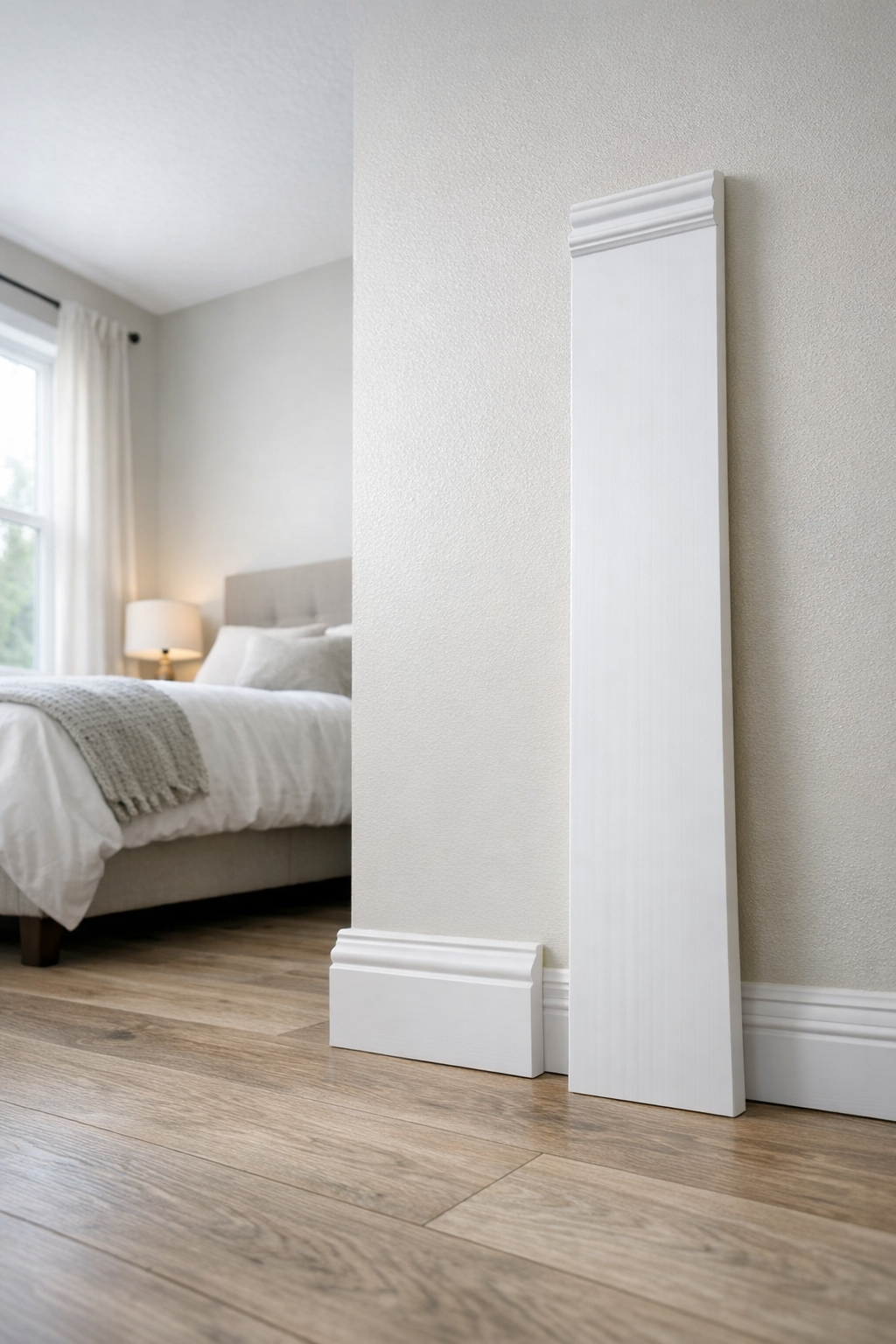
- For 8-foot ceilings: A practical range is often about 3.25 to 5.25 inches. The lower end works when the room is compact, the style is simple, or you are doing a straightforward replacement. The upper end can still work if the profile is clean and not overly layered. Tall baseboards can be worth it here when you want a more updated look, but they start to feel oversized if the room is narrow, the door casing is modest, or the trim has a heavy decorative shape.
- For 9-foot ceilings: Baseboards around 5 to 6 inches usually feel more balanced. This is where the 5- to 5.5-inch range becomes especially useful because it adds definition without turning the baseboard into the main feature. A flat, modern profile will read cleaner and lighter, while a built-up or more traditional profile will feel more formal and visually heavier.
- For 10-foot ceilings: Six inches or taller is often the better starting point, especially in larger rooms, open layouts, or spaces with substantial doors. In a wide main living area, a small baseboard may look like an afterthought because the wall has more height and width to absorb a stronger trim line.
The practical test is not whether the baseboard is "tall" or "standard"; it is whether the trim size looks proportional to the wall. Too short, and the room can feel unfinished at the floor. Too tall, and the trim can make the wall feel compressed, especially in an 8-foot room with simple doors and limited wall space.
Consider Room Size, Sightlines, and Open Floor Plans
A floor plan can change the answer even when the tape measure at the ceiling does not. Room proportions matter because the baseboard is read against wall length, walking distance, furniture size, and how many rooms you see at one time.
- Small bedrooms, tight entries, and narrow hallways: A 3- to 4-inch baseboard, or a simple profile near the lower end of the 8-foot-ceiling range, often feels cleaner because it leaves more open wall above it. In compact condos, a tall, layered baseboard can make the perimeter feel busy instead of polished.
- Average-size rooms with normal furniture scale: A 5- to 5.5-inch profile is the flexible middle choice. It gives the wall a more finished edge than a basic builder-size trim, but it usually does not dominate nightstands, sofas, closet doors, or modest door casing.
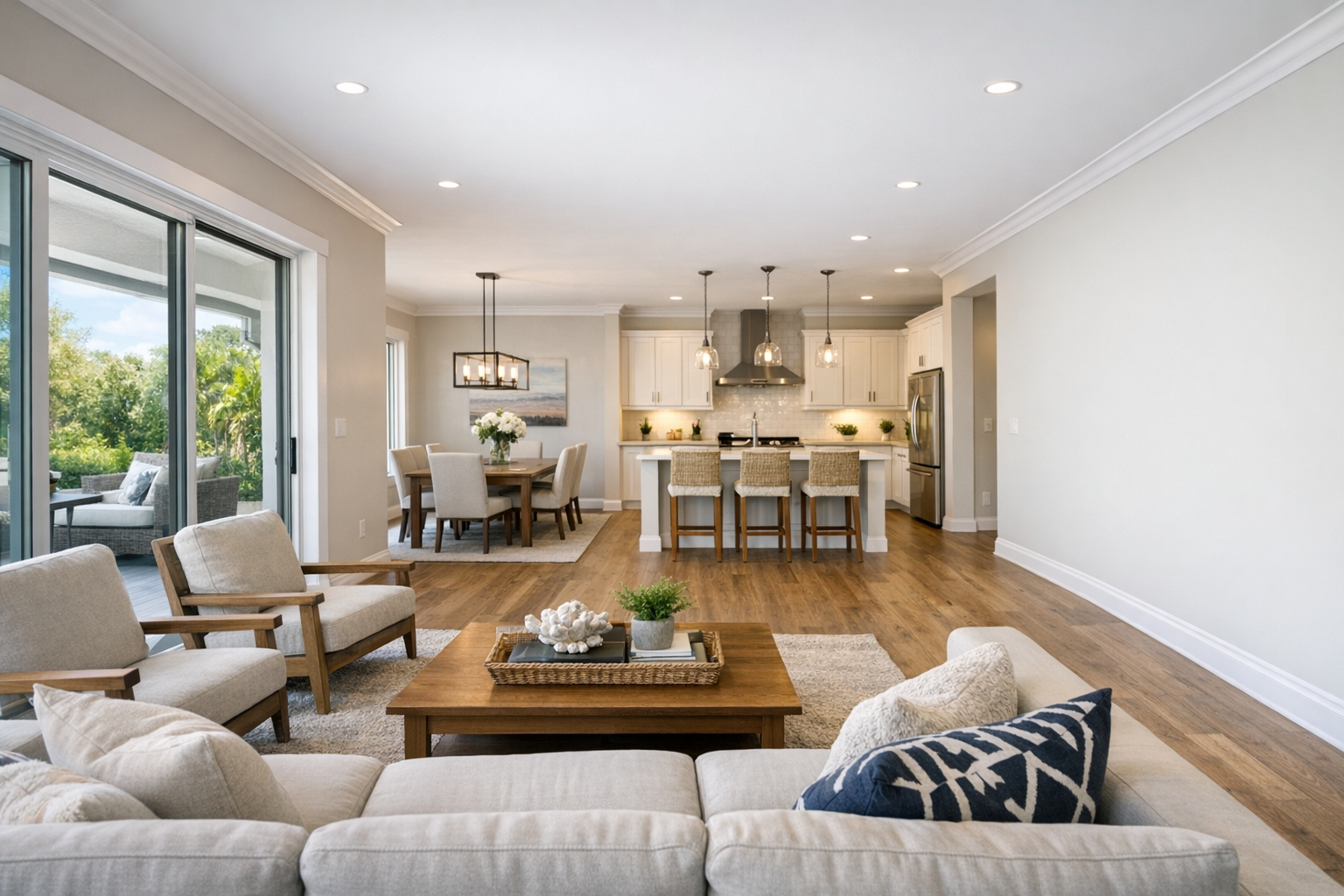
- Open living areas and long uninterrupted walls: Six inches or taller can work because the room has enough width and sightline distance to absorb the extra visual weight. In many Florida homes with open kitchen, dining, and living spaces, a short baseboard may fade away along a long tile or plank floor line.
Also look at connected spaces as one view, not as separate rooms. If the foyer, living room, and hallway all share the same sightline, changing baseboard height from one area to the next can look accidental unless there is a natural stopping point, such as a doorway, cased opening, or different flooring zone.
Factor in Flooring Type, Thickness, and Transitions
At the floor line, the decision becomes less about the sample in your hand and more about what the trim has to cover. Tile flooring, luxury vinyl plank, hardwood, and carpet each meet the wall differently, so your trim size should account for flooring thickness, the straightness of the cut edge, and whether the finished floor is already in place.
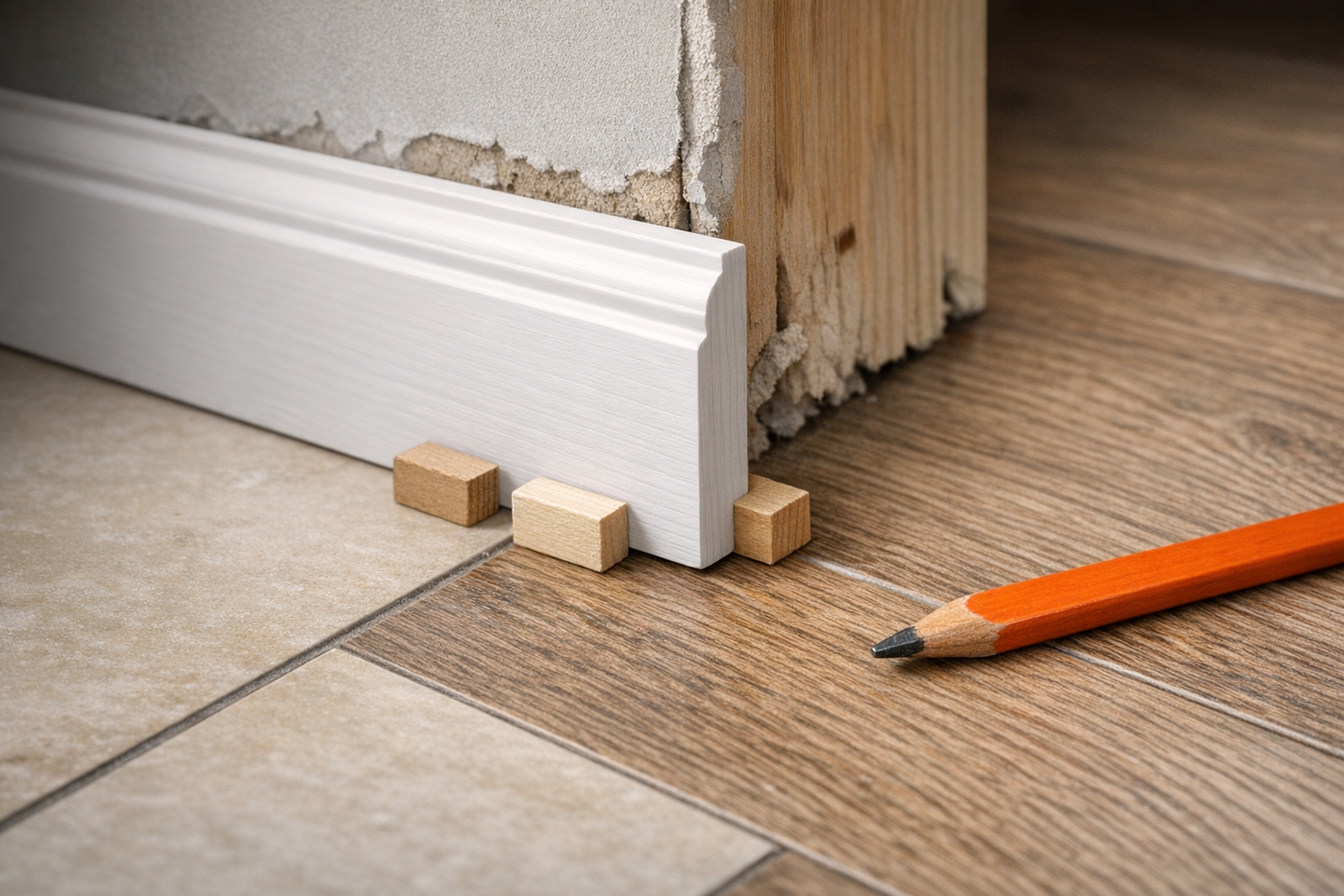
- Tile flooring: Tile can create a substantial finished edge, especially when the tile, mortar, and any leveling work add height at the perimeter. A taller baseboard can look more intentional above a broad tile surface, while a very short profile may make the floor line feel heavy. In a coastal-style room with large-format tile, a 5- to 5.5-inch baseboard often reads cleaner than a thin builder profile.
- Luxury vinyl plank: LVP usually has a slimmer visual edge than tile, but it still needs a clean perimeter. If new planks leave small gaps along the wall, shoe molding or quarter round can cover the joint without removing every baseboard. The tradeoff is appearance: shoe molding has a flatter, lower look, while quarter round is more rounded and more noticeable.
- Hardwood or hardwood-look floors: These floors tend to draw the eye lengthwise across the room, so uneven wall cuts or inconsistent gaps can stand out. If the existing trim is short, damaged, or sitting too high after a flooring change, replacing it with a slightly taller profile may look cleaner than adding a small molding strip along every wall.
- Carpet: Carpet changes the visible reveal because the pile and pad rise up against the baseboard. A baseboard that looked tall over hard flooring can appear shorter once carpet is tucked beneath it, so bedrooms with carpet may need the same nominal height as nearby rooms just to look visually consistent.
When new hard-surface flooring is being installed, baseboards usually look best when they are removed first and reinstalled or replaced after the floor is down. That lets the trim cover the floor edge instead of relying on extra molding to hide every transition. Shoe molding or quarter round is still useful when the existing baseboards are worth keeping, but if you are already changing flooring thickness or exposing old paint lines, taller replacement baseboards can be the cleaner long-term choice.
Choose a Height That Matches the Home’s Style
Style is where the same measurement can feel either sharp or out of place. Once the ceiling, room size, and floor edge have narrowed the range, look at the baseboard's profile shape too: a flat face feels cleaner, a rounded or sculpted top feels more traditional, and a squared cap gives the wall a stronger architectural line.
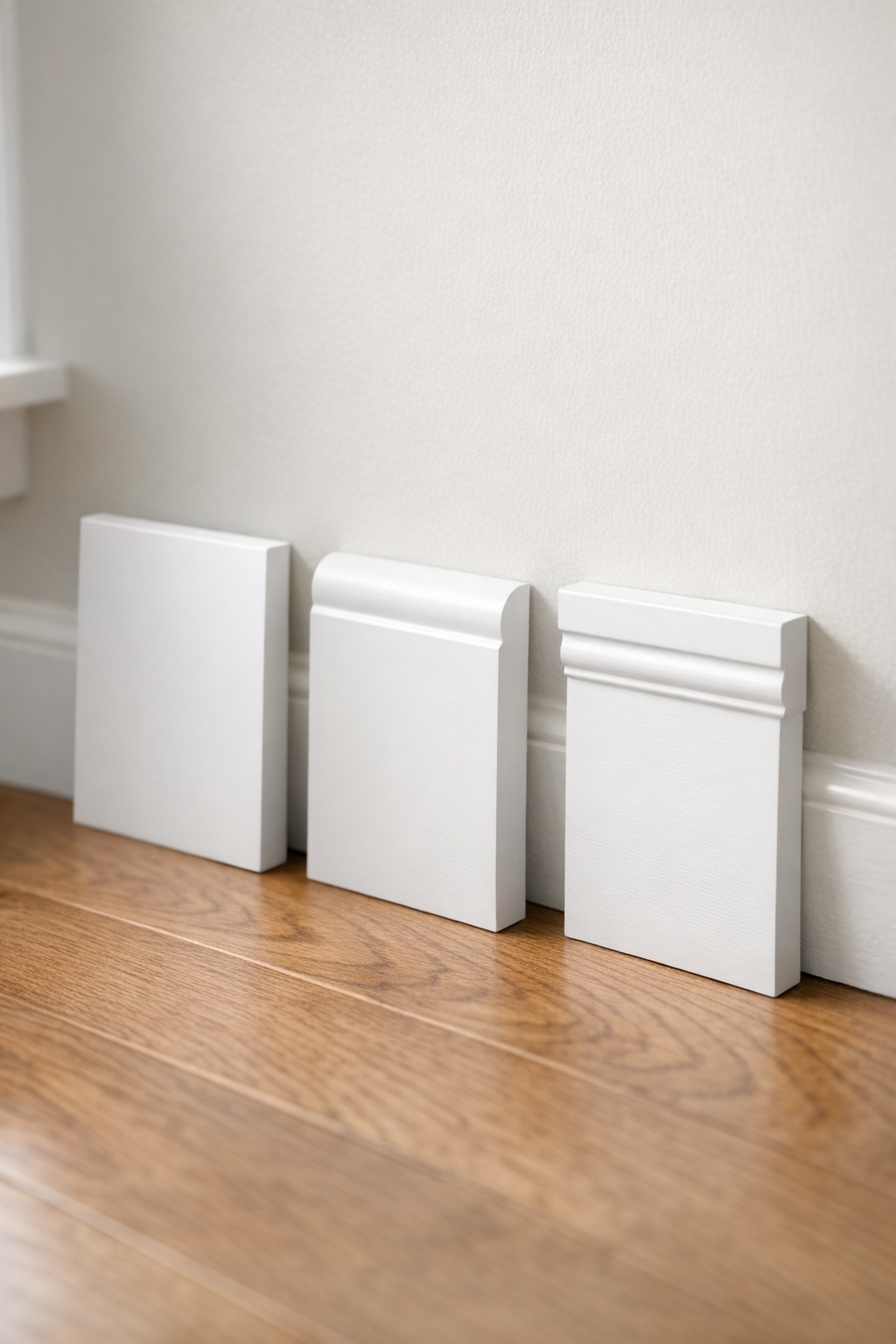
- Clean modern interiors: Modern baseboards usually work best when the profile is simple, with a flat or lightly eased face instead of heavy curves. That simplicity lets a 5- to 5.5-inch board look updated without feeling decorative, especially in open rooms where the trim needs to stay quiet.
- Coastal homes: In Sarasota County coastal homes, painted baseboards often look best when they feel light but not flimsy. A 5- to 5.5-inch profile can give tile or pale floors a finished edge while still keeping the room relaxed rather than formal.
- Craftsman-inspired rooms: Craftsman style leans on straighter, more substantial lines, so taller squared profiles can look intentional rather than oversized. In a larger room or a home with taller ceilings, 6 inches or more may fit the style better than a thin, rounded builder profile.
- Simple builder-grade replacements: If the home has short, thin baseboards and you are not changing the whole trim package, moving from a 3- to 4-inch board into the 5-inch range can refresh the room without making the baseboard height feel like a separate design feature.
A good signal is that the baseboard looks like it belongs to the home's architecture, not just the flooring project. If the height feels right but the profile looks too ornate, too rounded, or too plain for the room, adjust the shape before jumping to a taller size.
Know When to Replace Baseboards Instead of Reinstalling Old Ones
Sometimes the smartest height choice starts with admitting the old trim is no longer worth saving. Reinstalling existing baseboards can make sense when the pieces are straight, clean, consistent, and still proportional to the room; baseboard replacement makes more sense when the old material would fight the new floor, wall color, or updated trim style.
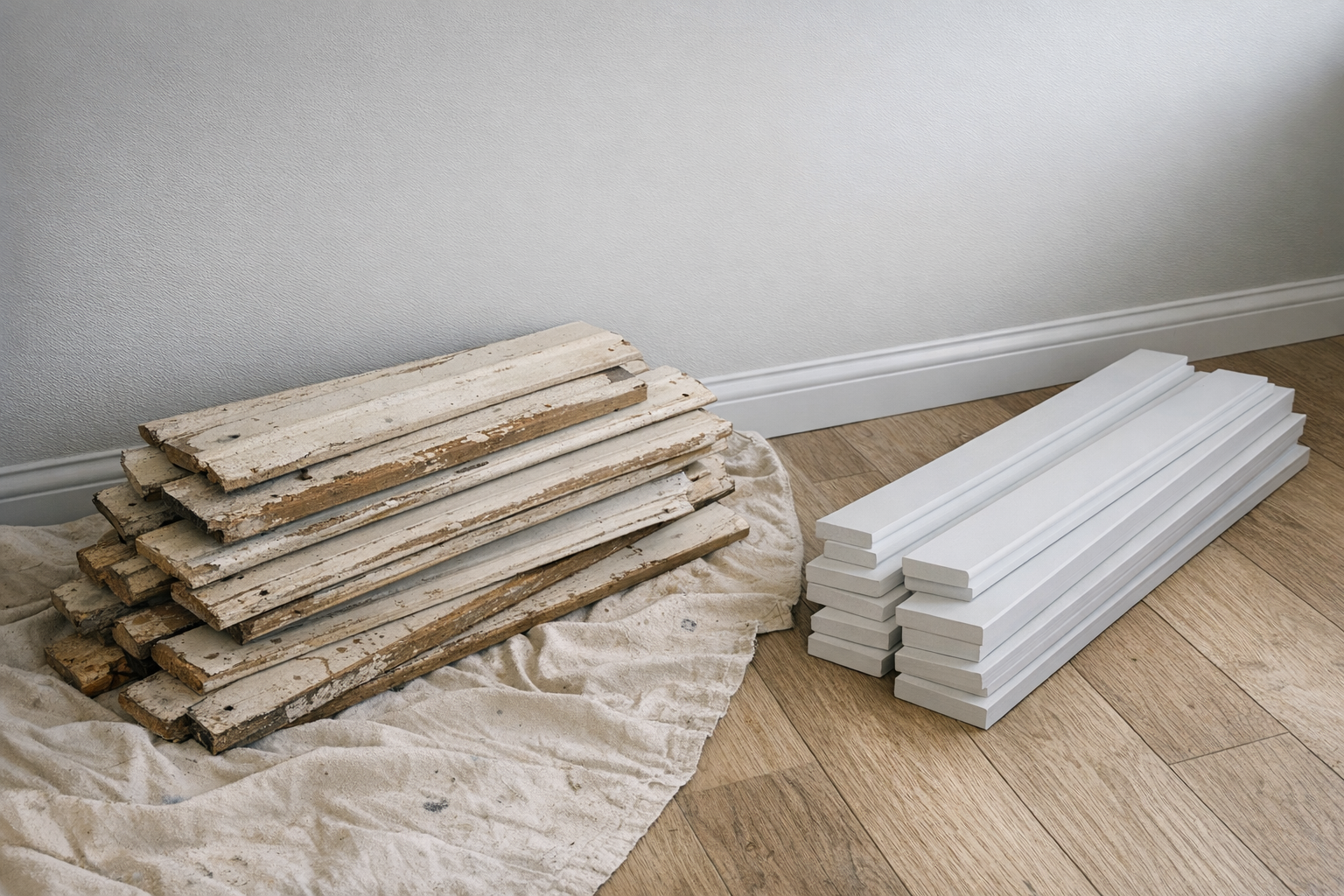
- Damage and swelling: Cracked MDF, puffed edges, splitting corners, crushed ends, and nail-scarred faces are poor candidates for reuse because those flaws tend to show again after painting. In homes with tile floors, repeated mopping near the wall can also leave lower trim looking swollen or ragged over time.
- Heavy caulk or paint buildup: If the top edge has thick caulk ridges or several paint layers, removing the board cleanly can be difficult. Even if it comes off in one piece, the profile may look soft or uneven once it is reinstalled.
- Short pieces and mismatched profiles: A room patched together with many small sections, different top shapes, or inconsistent thicknesses will rarely look intentional after a flooring update. Replacement gives you one continuous profile instead of a collection of repairs.
- Flooring changes that expose gaps: Switching from carpet to luxury vinyl plank or from one tile thickness to another can leave old baseboards sitting too high, too low, or unable to cover the floor edge cleanly.
Replacement is also the moment to move into a more proportional baseboard height instead of copying a dated size. A simple 3- to 4-inch board may still work in a smaller room, a 5- to 5.5-inch board is a flexible updated choice, and 6 inches or taller belongs where the ceiling height, room scale, and style can support it.
If rooms have different flooring types, professional layout matters because the baseboard has to land cleanly at doorways, cased openings, and transitions. That is where baseboard replacement Sarasota County projects, or baseboard installation Venice FL remodels with mixed tile and plank flooring, benefit from planning the height and stopping points before the first piece is cut.
A Simple Checklist for Choosing the Right Height
Before you order material or approve a profile, run the choice through this short checklist. The best baseboard height is the one that passes all of these tests in the actual room, not just on a sample board.
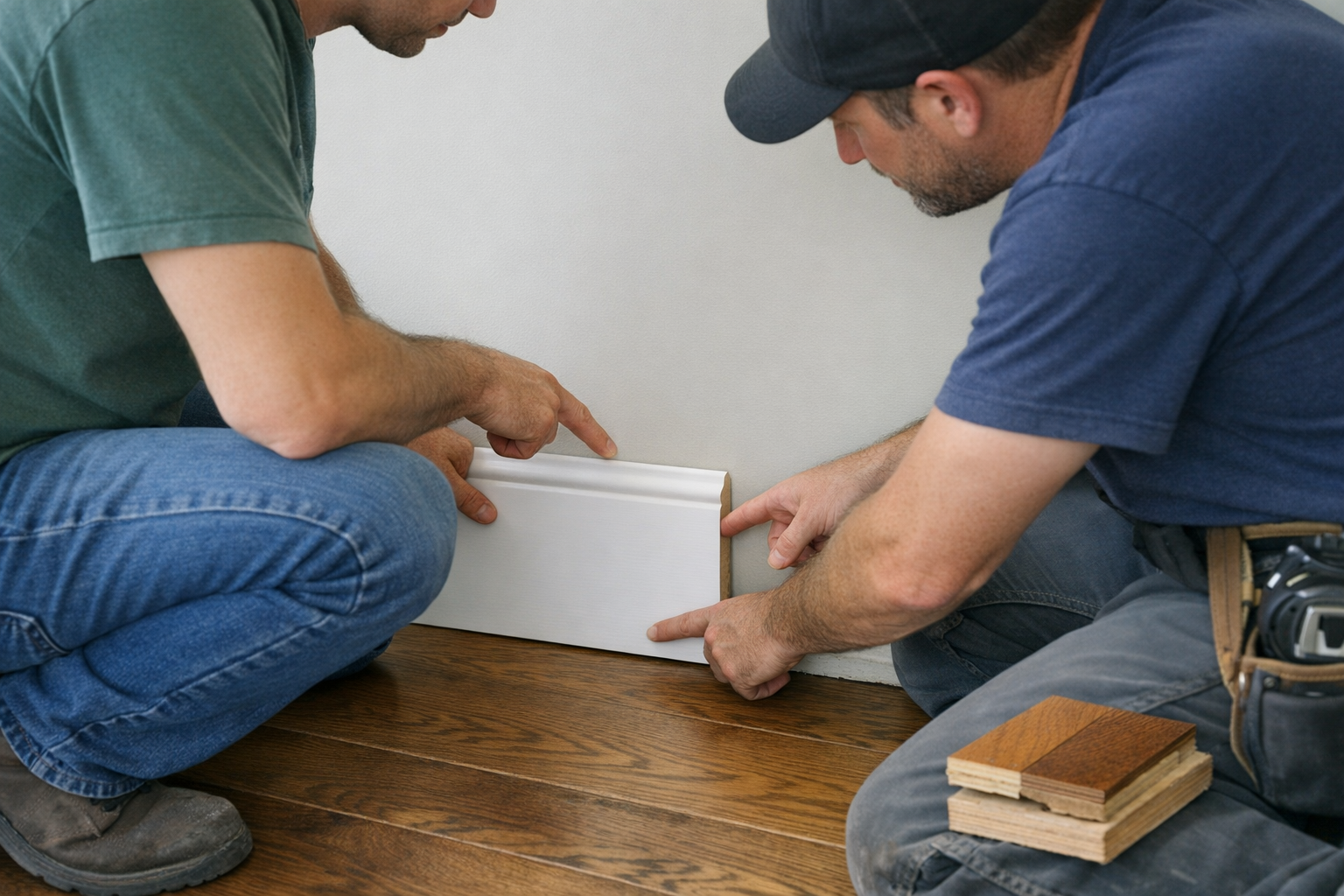
- Start with the ceiling: For 8-foot ceilings, stay in a modest range unless the room is wide and open; for 9-foot ceilings, look around the 5- to 6-inch range; for 10-foot ceilings or larger open rooms, 6 inches or taller can feel more balanced.
- Step back and read the room: A small bedroom may need quieter trim, while a long hallway, great room, or open living area can usually carry more visual weight at the floor.
- Match the flooring edge: Tile, plank, hardwood, and carpet all meet the wall differently, so choose a height that covers the edge cleanly without looking like it was added only to hide a problem.
- Compare it with the home's style: Modern baseboards are usually flatter and cleaner, standard baseboards are simpler and less noticeable, and tall baseboards make more of an architectural statement.
- Decide whether this is a swap or a change: A simple same-height replacement is more straightforward; a taller profile affects door casing, inside corners, outside corners, transitions, caulk lines, and paint touchups.
If several rooms are involved, the old trim is damaged, or the new height has to meet different flooring surfaces, professional measuring and installation can help the finished lines look intentional. The value is in the details: profile matching, clean miters, consistent reveal lines, smooth transitions, and a painted finish that does not call attention to the change.
Choose Baseboards That Look Right and Hold Up Over Time
At the finish line, the winning choice is the one that solves the room in front of you, not the tallest profile on the rack. Treat baseboard height as a balance between wall proportion, room scale, flooring edges, profile shape, and whether the existing trim will still look clean once it goes back on.
Use the height ranges as practical lanes: 3- to 4-inch baseboards stay quiet in smaller rooms or simple replacements, 5- to 5.5-inch baseboards give many rooms a more updated but not oversized look, and 6-inch-plus baseboards make sense when taller ceilings, larger rooms, or stronger architectural details need more visual weight.
Before committing, measure the rooms, note where flooring changes occur, and compare samples against the door casing and wall height. If a baseboard installation Venice FL project or baseboard replacement Sarasota County remodel involves tile, plank flooring, old caulk lines, or mixed room conditions, those details can change which size looks finished rather than forced.
The clear takeaway: choose a baseboard height that feels proportional, fits the flooring, and complements the home's architecture. When those three things line up, the trim looks intentional on day one and is much easier to live with over time.