

Crown molding installation Sarasota County homeowners can feel good about starts with fit, not just with picking a profile from a catalog. A clean, well-scaled crown can make living rooms, dining rooms, bedrooms, foyers, kitchens, and tray ceilings feel more finished, but the right choice depends on the ceiling height, wall conditions, home style, and the level of finish you want in the room.
Our crown molding service covers new installation, replacement, targeted repairs, cove molding, tray ceiling crown, vaulted ceiling crown, and custom multi-piece profiles for Sarasota County, Venice, and nearby communities. Standard crown creates a decorative transition where the wall meets the ceiling. Cove molding is usually softer and simpler, with a curved profile that works well when you want a cleaner, less formal look. Multi-piece crown is a built-up trim system that layers more than one molding or backer piece to create a larger custom profile, which can look strong in taller rooms but may feel heavy in smaller spaces.
A good crown moulding installer should help you avoid the common mismatch: trim that is too large for an 8-foot bedroom, too plain for a tall formal room, or too busy for a coastal-style interior. For homeowners looking for crown molding Venice FL services, the goal is the same whether the project is one room or a whole home: choose a profile, material, and paint-ready finish that look intentional once the furniture, lighting, doors, baseboards, and cabinetry are all seen together.
Crown Molding Services: New Installs, Replacement, Repairs, and Cove Molding
The first checkpoint is whether the room is bare, partly trimmed, or already carrying crown that no longer looks right. A new installation is for rooms with a plain wall-to-ceiling transition, so the choices are profile shape, projection, material, and how the new trim will tie into door casings, cabinets, beams, or existing baseboards. When the work is planned before interior painting, nail filling, caulking, priming, and finish paint can be handled as one coordinated finish.
Replacement makes more sense when the existing crown is working against the room. That may mean an outdated profile, swollen or distorted trim, poorly aligned corners, repeated cracking along the same seams, or a profile that cannot be matched cleanly after remodeling. In those cases, trying to patch every defect can leave the room looking pieced together. A replacement approach lets the installer reset the layout, correct weak transitions where possible, and choose a profile that fits the current paint plan and room style.
Repair is a better fit when the problem is limited. Isolated open joints, small dents, nail pops, short caulk failures, or one damaged run can often be addressed without removing all of the molding. The key question is whether the surrounding trim is still straight, secure, and visually consistent. If the old crown has multiple profiles mixed together, loose sections around the room, or gaps caused by a poor original layout, a targeted repair may improve one spot while leaving the larger problem visible.
Cove molding is a softer option when a homeowner wants a curved transition instead of the more detailed angles of traditional crown. It can look especially clean in casual bedrooms, coastal-style living areas, hallways, and spaces where a heavy formal profile would feel too busy. The tradeoff is visual impact: cove molding tends to be simpler and quieter, while standard crown can add more shadow lines and architectural detail. If you are searching for a crown molding installer near me, ask whether the estimate is based on repairing what is there, replacing the room, or installing a new profile from scratch, because each choice affects the finished look and paint preparation.
Choosing the Right Crown Molding Size, Profile, and Room Fit
Scale is where a trim choice either settles into the room or starts fighting it. For 8-foot ceilings, a lighter crown profile usually works best because it finishes the wall-to-ceiling transition without making the upper wall feel compressed. A simple cove, a small traditional crown, or a clean paint-grade profile can add definition while leaving room for window trim, door casing, and artwork.

Taller ceilings give you more room to increase profile size. A dining room, foyer, great room, or primary suite with extra wall height can often support a deeper crown with stronger shadow lines, especially when the baseboards and door casings already have some weight. The practical tradeoff is that larger profiles draw more attention to corners, ceiling waves, and out-of-square walls, so the layout and finish work need to be more precise.
Open-concept spaces need balance more than drama. When a kitchen, breakfast area, and living room share sightlines, the crown should feel consistent from one zone to the next without overpowering cabinets, beams, or built-ins. A medium profile size often gives these rooms a finished edge while keeping the trim from looking too formal in one area and too plain in another.
- Good selection signals: the crown looks proportional to the ceiling height, the shadow line is clean, the profile coordinates with baseboards and casings, and the room still has enough plain wall space to breathe.
- Weak selection signals: the crown appears oversized, walls feel crowded above windows or cabinets, the style clashes with existing trim, or a replacement piece looks noticeably different from the surrounding molding.
For crown molding installation Sarasota County homeowners are planning across several rooms, the best choice is not always the same profile everywhere. Bedrooms may need quieter trim, formal spaces may handle more detail, and hallways often look better with a restrained profile that connects the rooms without becoming the main feature.
Tray Ceiling and Vaulted Ceiling Crown Molding
A stepped ceiling changes the trim conversation because the crown is no longer just finishing one flat wall-to-ceiling line. Tray ceiling crown molding can outline the lower perimeter, frame the raised center, or do both when the room has enough height and the design calls for a more formal look. In a dining room or primary bedroom, that added line can make the ceiling recess feel intentional instead of plain.
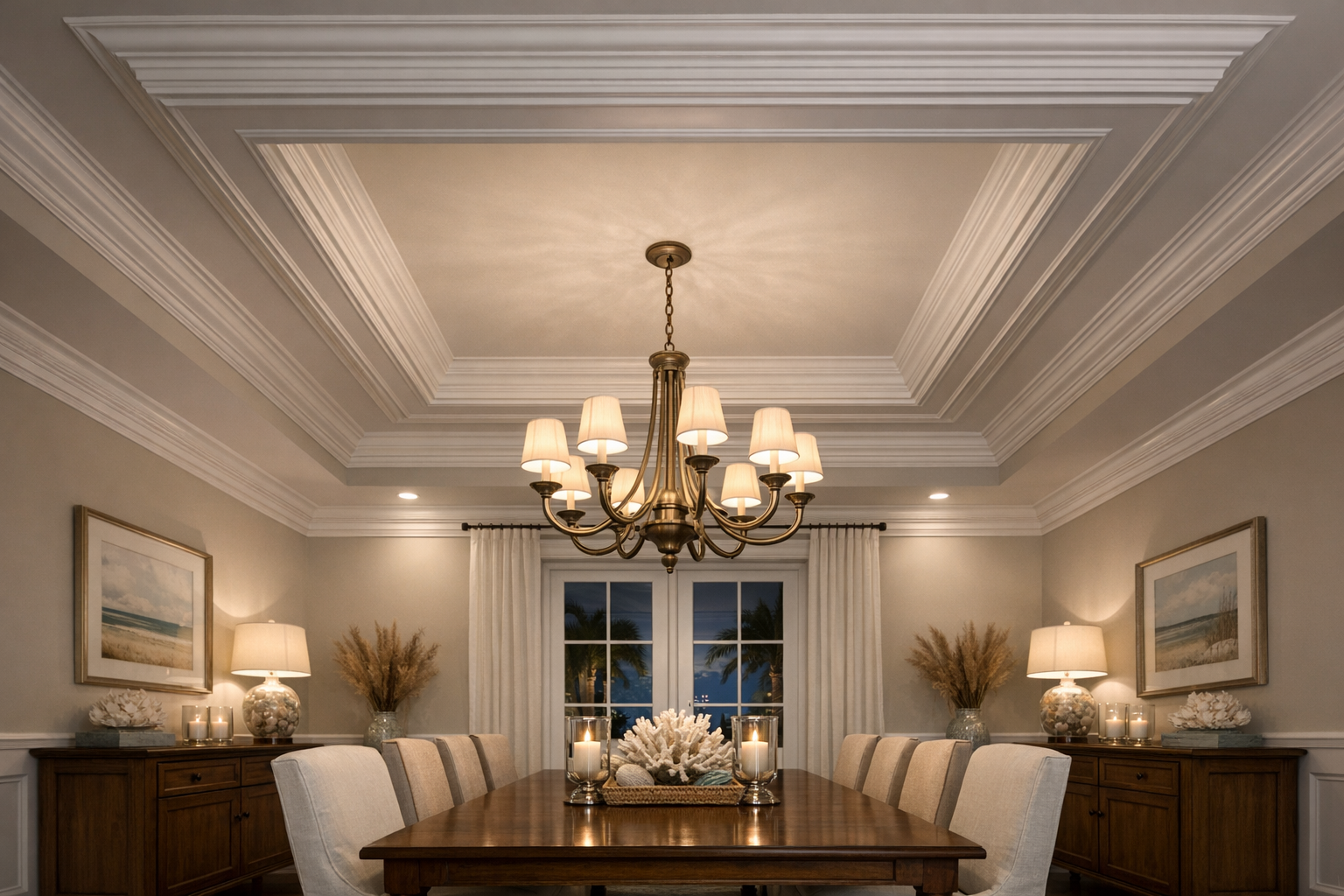
The main choice with a tray ceiling is what you want the crown to emphasize. A simple perimeter crown keeps the room clean and lets accent paint or the ceiling shape do most of the work. Crown placed inside the tray adds definition to the raised section and can help frame recessed lighting or perimeter lighting. A heavier profile may look right in a formal room, while a smaller cove or cleaner paint-grade crown often works better in a relaxed coastal interior.
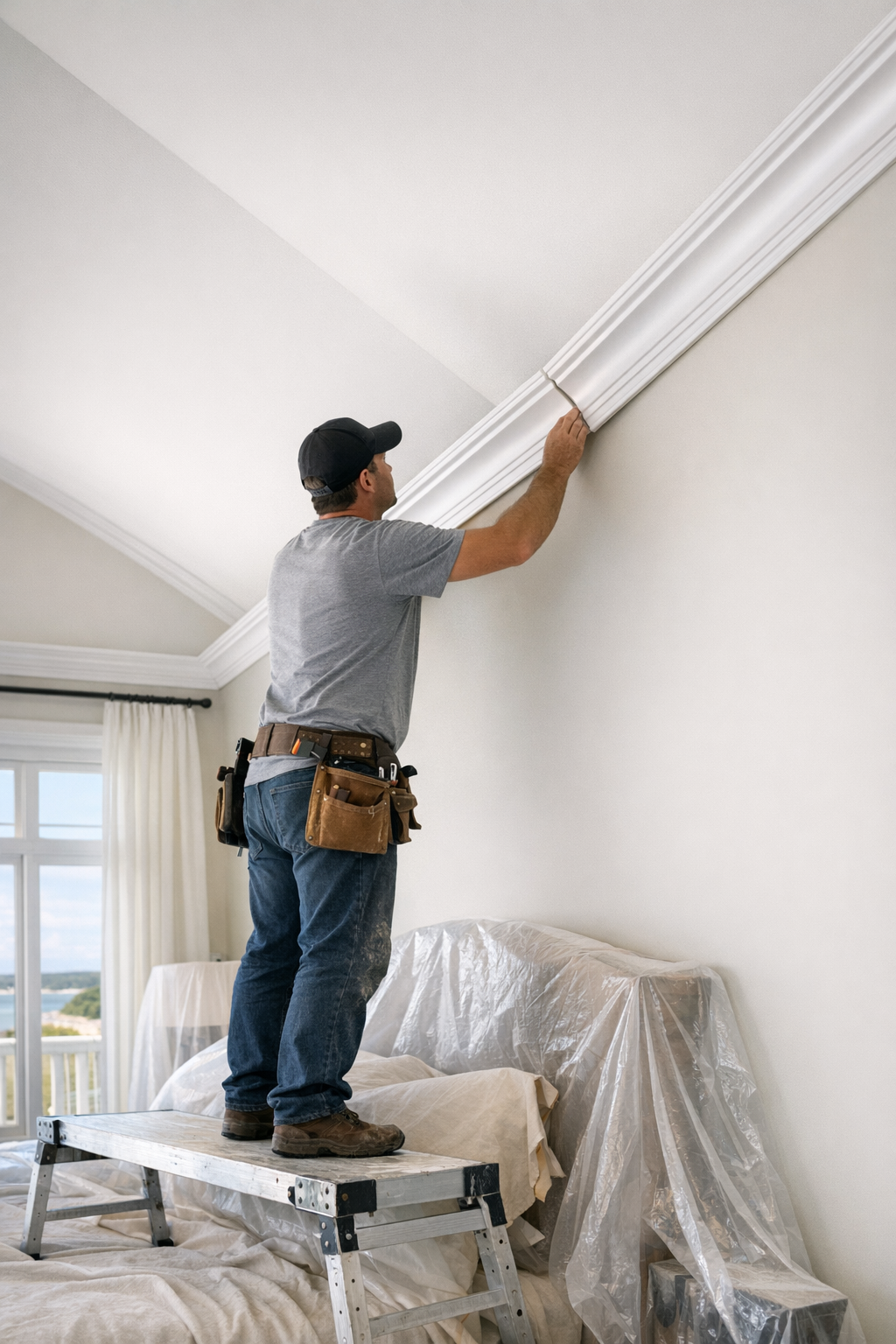
Vaulted ceiling crown molding needs a different level of planning because the trim has to move through changing slopes, wall heights, and transition points. The key issue is visual alignment: the crown should look like it belongs to the architecture, not like a flat-ceiling profile forced onto an angled surface. Inside corners, outside turns, and the point where a sloped ceiling meets a level wall all affect whether the finished line looks crisp or awkward.
- Good tray ceiling signal: the crown follows the ceiling steps cleanly, the corners look balanced, and the profile supports the lighting or accent paint instead of crowding it.
- Weak tray ceiling signal: the molding looks too bulky on the lower step, fights the light placement, or creates busy shadow lines around the raised center.
- Good vaulted ceiling signal: the profile is chosen for the slope, transitions are planned before cutting, and inside corners line up cleanly from normal viewing angles.
- Weak vaulted ceiling signal: gaps, twisted returns, or mismatched angles make the crown draw attention to the ceiling geometry for the wrong reason.
Not every crown profile that looks good on a standard flat ceiling works well on a stepped or sloped ceiling. That is why tray ceiling crown molding and vaulted ceiling crown molding should be evaluated on-site before a final profile is chosen. The room height, tray depth, slope changes, corner conditions, lighting layout, and desired paint finish all affect what will look clean once installed.
Multi-Piece Crown Profiles and Built-Up Trim Details
Some rooms need more than a single stick of crown to feel proportionate. Multi-piece crown profiles are built as a layered trim system: a base layer or backer is installed first, the main crown profile sits against it, and smaller cove, band, or cap pieces may be added to create a wider, taller build-up profile. Compared with one-piece crown, this gives the installer more control over size and detail, so the finished trim can look custom without relying on one oversized molding.
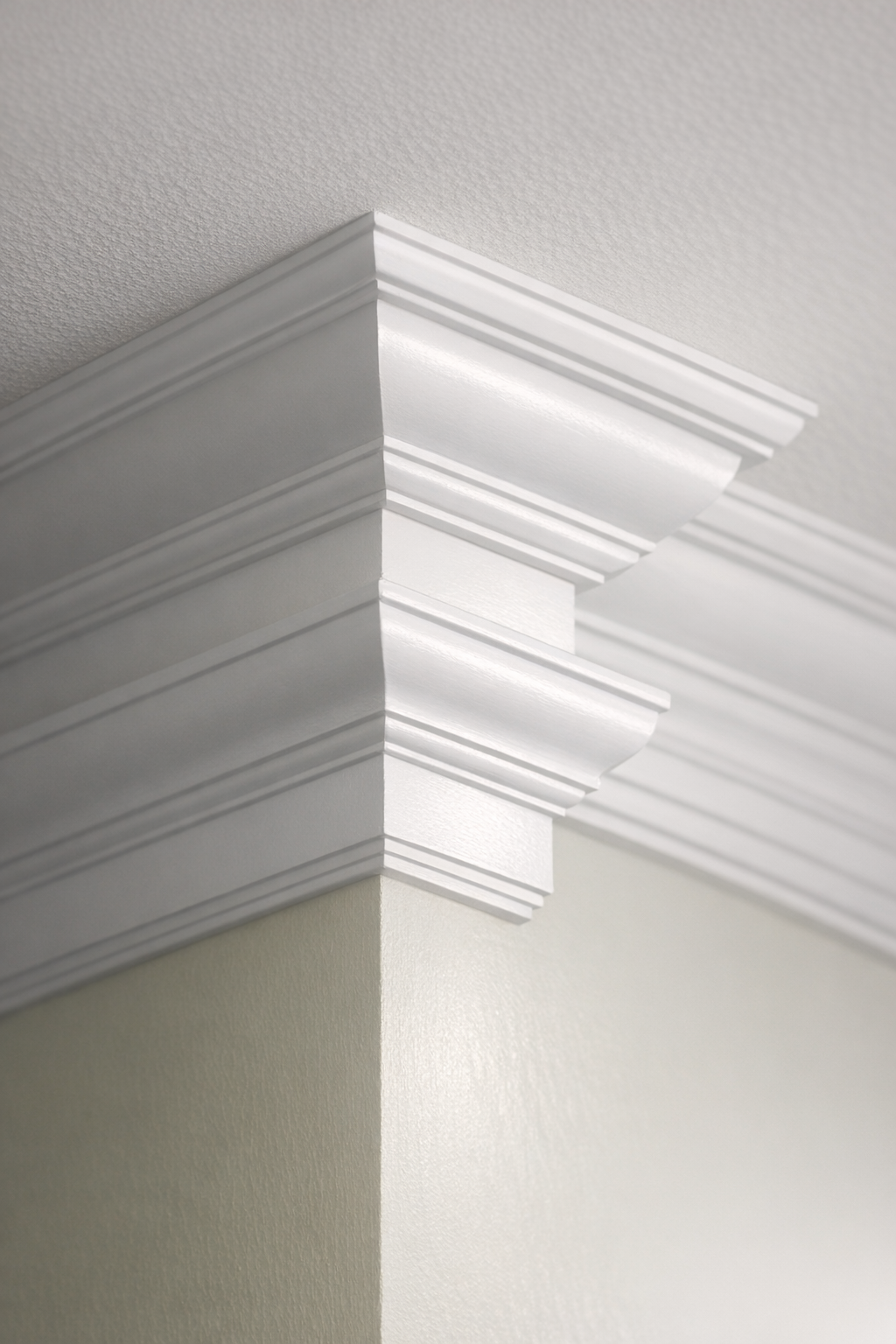
This approach makes the most sense in spaces that can visually carry the extra trim. Tall ceilings, formal dining rooms, foyers, great rooms, feature walls, and homes with larger baseboards often benefit from a built-up crown because the upper trim feels connected to the rest of the room. If the home already has substantial baseboards, chair rail, wainscoting, or detailed casing, a small crown may look underpowered; a coordinated build-up profile can help the trim package feel intentional from floor to ceiling.
The tradeoff is weight and complexity. A base layer plus crown plus added trim creates more shadow lines, more seams, more layout decisions, and more areas that need clean fastening, caulking, sanding, and painting. In a smaller bedroom, hallway, low-ceiling den, or simple coastal-style room, that same detail can feel busy or top-heavy instead of refined. In those cases, a cleaner one-piece crown or a small cove may give the room a finished edge without making the ceiling feel crowded.
- Good signal: the multi-piece crown profiles relate to the ceiling height, baseboards, door casing, and room formality, so the trim looks like part of the architecture.
- Weak signal: the crown build-up profile is chosen only because it looks impressive up close, then feels too large once it wraps the full room.
For crown molding installation Sarasota County homeowners want to feel polished rather than overdone, the best multi-piece design is usually the one that fits the room's scale first and adds detail second.
MDF, Wood, PVC, and Polyurethane Crown Molding in Florida Homes
Material choice is where the same crown profile can feel practical in one Sarasota County room and frustrating in another. Humidity, air conditioning, coastal air, room use, budget, profile availability, and the finish you want all matter before the first length of trim is ordered.

MDF crown molding is a common paint-grade option for conditioned interior spaces such as bedrooms, living rooms, dining rooms, and hallways. It has a smooth surface that paints cleanly, which makes it a good fit when the goal is crisp white or color-matched trim rather than visible wood grain. The tradeoff is that MDF is not the first choice for damp or splash-prone areas, and damaged edges are harder to make invisible than small flaws in solid wood.
Wood crown molding makes sense when the project calls for stain-grade trim, a premium paint-grade build, or a profile that needs sharper milling and stronger edges. It can be the better match in homes with existing wood casing, stained doors, built-ins, or higher-end trim packages. The practical consideration is movement: natural wood can expand and contract, so the installer has to plan joints, fastening, caulk, and finish prep with the room conditions in mind.
PVC crown molding is usually considered for moisture-prone or semi-exposed areas where traditional interior trim may not be the best fit. In Florida homes, that can include certain baths, laundry areas, garage-adjacent spaces, or covered exterior transitions when the profile and application are appropriate. PVC is typically paintable, but it does not behave exactly like MDF or wood, so profile selection, adhesive choices, fastening, and paint prep affect how finished it looks.
Polyurethane crown molding is lightweight and often available in decorative profiles, which can help when a room needs a specialty detail without adding the same weight as a large wood build-up. It can be useful for certain ceiling details, accent areas, and profiles that would be difficult to source in solid wood. The main takeaway is to judge it by the finished look, not just the catalog image: seams, surface texture, and paint quality still determine whether it blends with the rest of the trim.
For crown molding installation Sarasota County homeowners are planning as part of a larger interior refresh, the best material is not automatically the most expensive one. It is the one that fits the room's conditions, matches the existing trim or replacement pieces, accepts the desired paint or stain finish, and is available in a profile that suits the ceiling height and home style.
What Professional Crown Molding Installation Includes
A good installation visit should feel organized before any trim goes up. The installer measures each room, notes ceiling height and wall runs, looks at how the crown will die into cabinets, casing, beams, or tile, and recommends profiles that match the room instead of forcing one molding everywhere. This is where professional crown molding installation saves frustration: the estimate should account for room count, profile complexity, replacement pieces, repairs, painting coordination, and ceiling conditions.
Layout planning is the difference between trim that simply covers a seam and trim that looks intentional. The installer should plan where longer runs begin and end, how seams are placed, how reveal lines stay consistent, and how the crown will relate to tray ceilings, vaulted transitions, cove molding, or multi-piece build-ups. In older homes or remodeled rooms, walls and ceilings may not be perfectly square or flat, so the plan has to allow for real room conditions rather than assuming every corner is exact.
Corner strategy matters because inside corners and outside corners behave differently. Inside corners are the inward corners where two walls meet; they often need extra attention because slight wall movement or out-of-square framing can show as a gap. Outside corners project into the room, so alignment and crisp meeting points are more visible. Quality work aims for tight-fitting joints where conditions allow, with clean transitions instead of bulky caulk or obvious mismatch.
Fastening should leave the crown secure without drawing attention to the attachment points. After the molding is set, nail holes are filled, rough spots are sanded or prepared for touch-up, and caulk lines are kept clean where the trim meets the wall and ceiling. A weak finish usually shows up as wavy caulk, sunken nail holes, uneven reveals, loose sections, or joints that look patched rather than fitted.
Paint coordination is part of the service conversation, especially when crown molding installation Sarasota County homeowners request is tied to a larger interior repaint. Some projects are installed ready for the painter; others include primer, finish paint, or final touch-ups after nail filling and caulking. The practical takeaway is simple: professional crown molding installation should leave the room with secure trim, consistent lines, smooth filled fastener points, and a finish surface ready for the agreed next step.
Schedule a Crown Molding Estimate in Sarasota County or Venice, FL
A useful estimate starts with a few room details, not a vague request for "some crown." You can request service for new crown, replacement sections, targeted repairs, cove molding, tray ceiling crown, vaulted ceiling crown, or a multi-piece profile for a dining room, foyer, living room, bedroom, or hallway.

The most helpful estimate details are simple: how many rooms are involved, approximate ceiling height, photos of each wall-to-ceiling area, whether existing crown or other trim needs to be matched, the material you are considering, and whether painting should be included. If there are cracked joints, loose pieces, water-stained areas, cabinet transitions, sloped ceilings, or damaged corners, include close-up photos so those conditions are part of the conversation from the start.
For crown molding Venice FL projects and nearby Sarasota County homes, the goal is a clean plan before trim is ordered: the right profile, the right scale, and a finish expectation that matches the room. Send the project details, photos, and your preferred timing to schedule a Sarasota County crown molding installation estimate.
FAQs
What is the difference between cove molding and crown molding?
Crown molding creates a decorative transition where the wall meets the ceiling, often with angled details and stronger shadow lines. Cove molding has a softer curved profile and is usually simpler, making it a cleaner choice for casual bedrooms, coastal living areas, hallways, and less formal rooms.
Can damaged crown molding be repaired instead of replaced?
Damaged crown molding can be repaired when the issue is limited to isolated open joints, small dents, nail pops, short caulk failures, or one damaged run. Replacement is better when the crown has swollen trim, repeated cracking, loose sections, mismatched profiles, or a poor original layout.
What size crown molding is best for 8-foot ceilings?
For 8-foot ceilings, a lighter crown profile usually works best so the upper wall does not feel compressed. Good options include a simple cove, a small traditional crown, or a clean paint-grade profile that still leaves room for window trim, door casing, and artwork.
Can crown molding be installed on tray or vaulted ceilings?
Crown molding can be installed on tray ceilings by outlining the lower perimeter, framing the raised center, or doing both when the room has enough height. Vaulted ceiling crown requires extra planning because the molding must handle slopes, changing wall heights, inside corners, outside turns, and transitions where sloped ceilings meet level walls.
Should I choose MDF, wood, PVC, or polyurethane crown molding in Florida?
MDF works well for paint-grade trim in conditioned rooms such as bedrooms, living rooms, dining rooms, and hallways. Wood is best for stain-grade or sharper premium profiles, PVC is useful in moisture-prone areas such as certain baths or laundry spaces, and polyurethane is lightweight for decorative or specialty profiles.