
Request estimate
Request an Estimate
Ready to request a trim estimate? Send over the general type of trim or finish carpentry work you have in mind, a few project details, and any photos you already have. You do not need exact measurements, material names, or a fully finished design plan before reaching out.
Estimate details
What helps shape a useful estimate.
Request an Estimate for Trim or Finish Carpentry
Ready to request a trim estimate? Send over the general type of trim or finish carpentry work you have in mind, a few project details, and any photos you already have. You do not need exact measurements, material names, or a fully finished design plan before reaching out.
A rough idea is enough to start the conversation. Clear room photos, close-ups of the areas being changed, and inspiration images can all help shape a more useful response. For example, “new crown molding in the living room” gives a better starting point than “trim work,” and adding photos helps show the room size, wall conditions, and style direction.
Every custom trim estimate is based on the actual scope of the project, not a one-size-fits-all online number. The next step is simple: send the details you have, include photos if possible, and we’ll review what you’re planning.
Trim and Finish Carpentry Projects You Can Ask About
Estimate requests are easiest to sort when they are tied to a specific project category. You can ask about an interior trim estimate for small updates, larger room-by-room work, or custom finish details that need a closer look before pricing.
- Baseboards: the trim along the bottom of the wall, often requested when flooring changes or older trim looks dated.
- Crown molding: trim where the wall meets the ceiling; a crown molding estimate depends on the room layout, corners, ceiling height, and style.
- Door and window casing: the trim that frames openings, which can be replaced, matched to existing trim, or upgraded for a more finished look.
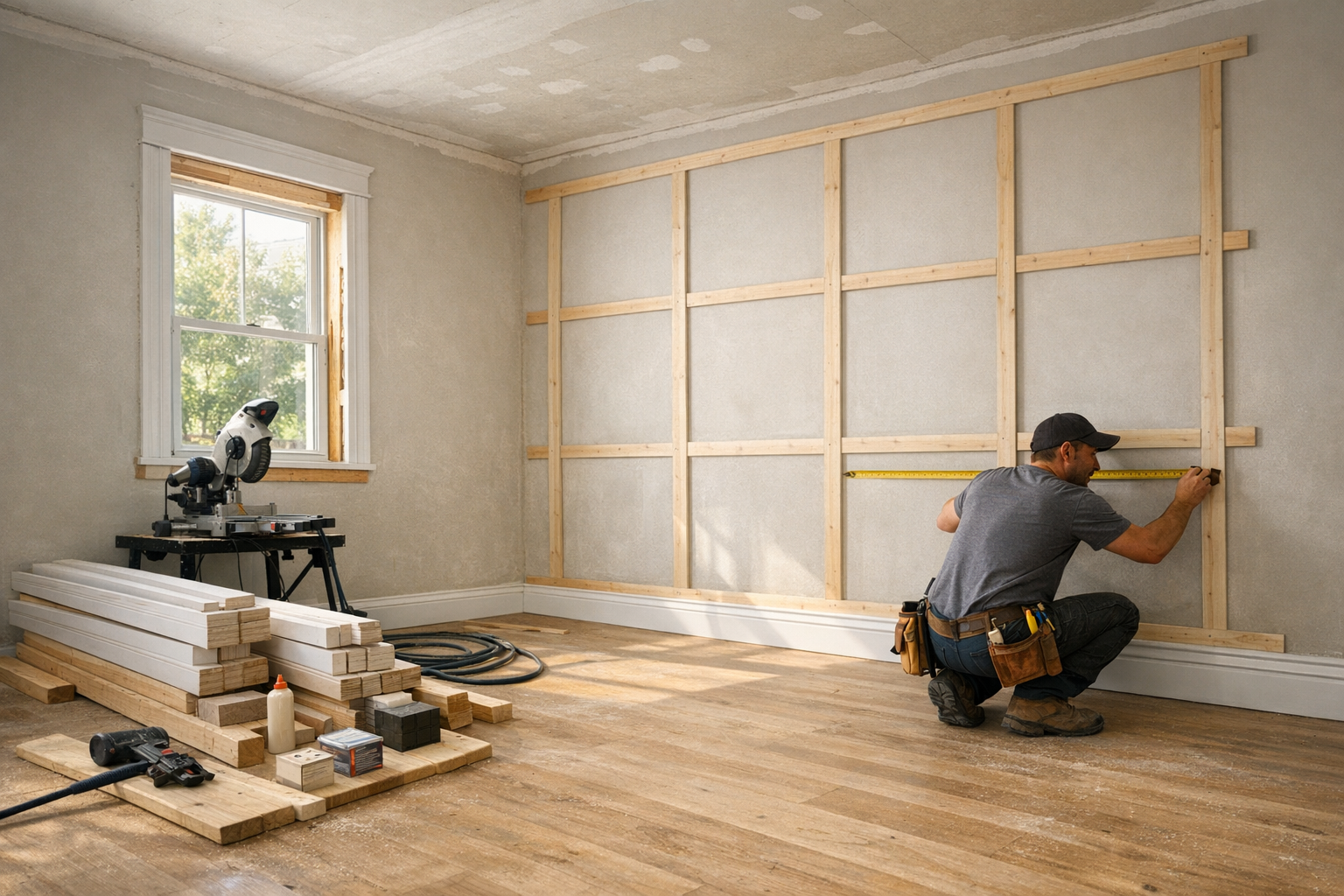
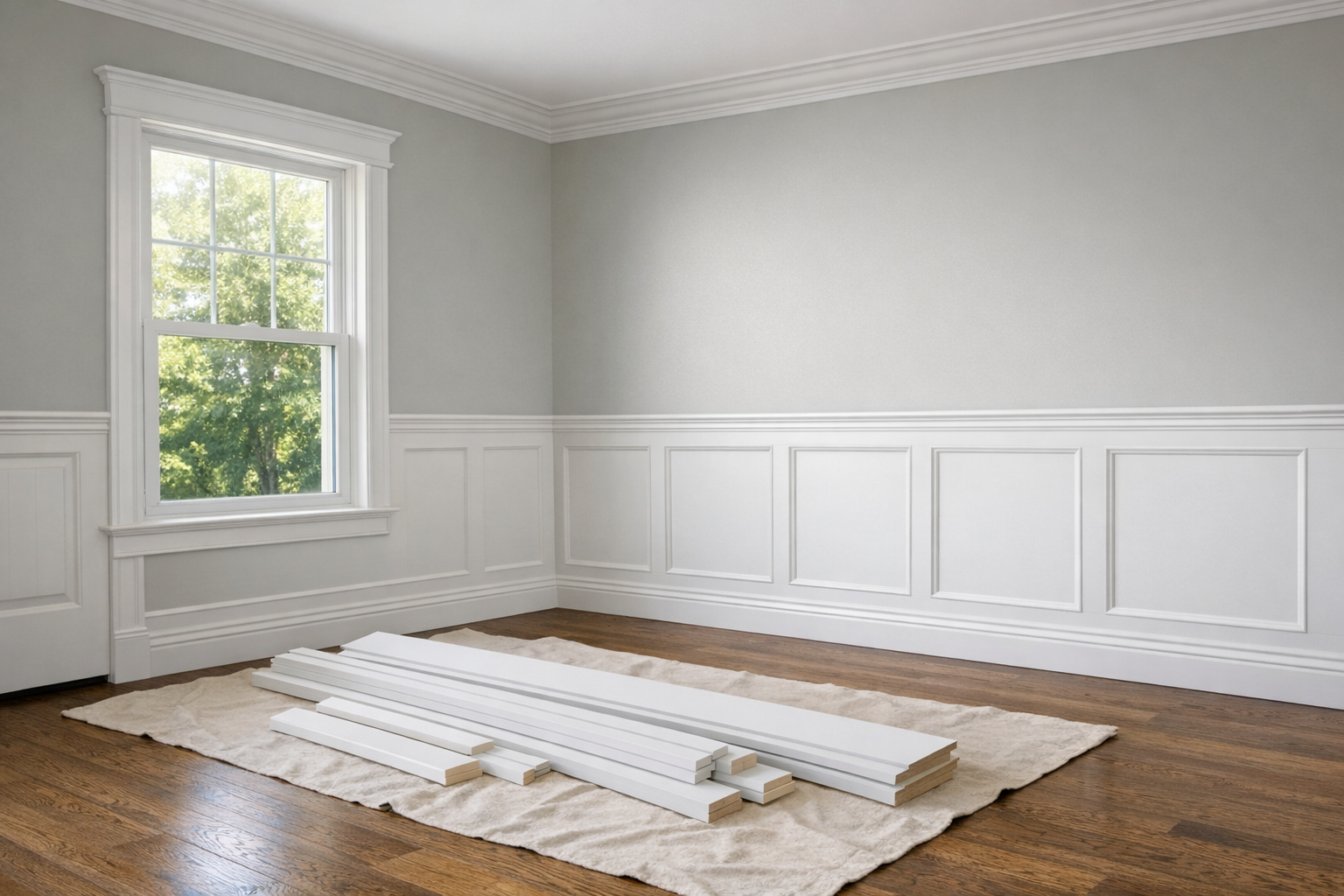
- Accent walls and wainscoting: decorative wall details that add pattern, depth, or paneling to a room.
- Built-ins and custom details: shelving, benches, feature areas, or other finish carpentry pieces that are shaped around the space.
If your project does not fit neatly into one of those labels, that is still fine. A short description like “trim around three new windows” or “custom detail for the dining room wall” is enough to place the request in the right starting category.
What to Include When You Request an Estimate
A useful request is less about perfect numbers and more about giving us enough context to understand the shape of the job. If you want to request an estimate for trim installation, include whatever you already know from the list below.


- Room photos: send clear, well-lit photos of the walls, corners, doors, windows, and any existing trim. Wide room photos help show layout; close-ups help show details that may need matching or replacing.
- Inspiration photos: share examples of the look you like, even if they are not an exact match. These help communicate style, height, spacing, and overall feel when you do not know the profile name.
- Approximate measurements: wall length, rough linear footage, number of doors, number of windows, or the number of rooms is helpful. Exact measurements are welcome, but they are not required for the first conversation.
- Openings and ceiling height: mention tall ceilings, stair areas, arched openings, or rooms with many corners. These details can change how the work is planned and estimated.
- Style and finish preferences: note whether you want a simple painted trim look, a more decorative profile, or a visible wood-grain finish. Paint-grade expectations usually focus on a clean painted result; stain-grade expectations focus more on the appearance of the wood itself.
- Material status: let us know if materials are already chosen, already purchased, or still undecided. That helps separate the carpentry scope from any material selection still needed.
If all you have is a few photos, a room name, and a rough goal, send that. The first step is simply to open the conversation, not to turn your estimate request into homework.
Can You Get Started With Photos and a Rough Idea?
A few phone photos can be enough to get a trim estimate started, especially when they show the room, the existing trim, and the general look you want. You do not need to know the trim profile name or have exact linear footage before reaching out.

- Helpful: “Baseboards in three bedrooms,” with wide photos, a few close-ups, and approximate room sizes. That gives enough context to understand the likely scope and ask better follow-up questions.
- Less helpful: “How much for trim?” without photos, room count, style direction, or measurements. There is not enough detail to separate a small repair from a larger installation.
Photos can point the finish carpentry quote in the right direction, but they may not show everything that affects final pricing, such as wall conditions, uneven corners, existing material issues, or details that need to be measured in person. If something is unclear, the next step is simply a follow-up question or a closer look.
Why Trim Pricing Is Based on Your Project, Not a Flat Online Rate
A flat online number would treat very different projects as if they were the same, which is why a custom trim estimate starts with the actual project scope rather than a generic service label. One room of baseboard, a full-home trim update, and a detailed feature wall can all fall under “trim,” but they do not require the same measuring, cutting, layout, material planning, or finish work.
The estimate is shaped by details such as room measurements, trim profile, material choice, and finish expectations. A trim profile is the shape and size of the molding; a simple, commonly available profile is different from a larger or more decorative option that may need more careful cuts. Paint-grade trim is planned to be painted, while stain-grade work usually puts more attention on visible wood character, grain, and clean finish details.
Room conditions matter, too. Walls and ceilings that are out of level, tight access areas, lots of inside and outside corners, doorway transitions, built-ins, stair angles, or detailed returns can change the labor involved even when two rooms look similar at first glance. That is not meant to make pricing mysterious; it is what helps the estimate reflect the work you actually want done instead of a rough number that may not fit your home.
What Happens After You Send Your Request
Once your message is in, the first step is a scope review. That means looking at the project type, photos, room count, measurements, inspiration images, and notes together so the estimate is tied to the work being discussed rather than a loose label.

If something is unclear, the follow-up is usually about practical details: which rooms are included, whether existing trim is being removed or matched, what finish look you want, and whether there are transitions, corners, or built-ins involved. A clear answer like “three bedrooms and the hallway” is more useful than a broad “whole house trim” note.
From there, the next step may be a photo-based conversation, a request for a few added measurements, or an in-person look. Added measurements help when the layout is straightforward; a site visit helps when wall conditions, custom details, or finish expectations could affect final pricing.
After the scope is clear enough, the estimate is prepared around the actual project details. If you request a finish carpentry estimate with only a rough idea, that is still workable, the follow-up is simply there to narrow the scope in a calm, organized way.
Requesting an Estimate Is Just the First Step
You can use the estimate request as a planning checkpoint, not a yes-or-no decision. Sending details does not commit you to scheduling the work; it simply gives you a project-specific way to understand what the trim or finish carpentry job may involve.
If you are ready to request trim estimate details, send the project type, a few room photos, any inspiration images, and the basics you already know. A clear plan is helpful, but a rough idea is enough to begin.
Ready for a custom trim estimate? Send your project notes and photos, and we’ll take a look.
FAQs
What photos should I send for a finish carpentry estimate?
Send clear, well-lit wide photos of the room plus close-ups of walls, corners, doors, windows, and existing trim. Inspiration photos are also helpful because they show the style, height, spacing, and overall look you want.
Do I need exact measurements before requesting a trim estimate?
Exact measurements are not required for the first conversation. Approximate wall length, rough linear footage, number of rooms, number of doors, number of windows, and ceiling height can help make the estimate more accurate.
Can I get a trim installation quote from photos?
Photos can be enough to start a trim installation quote when they show the room, existing trim, and the general look you want. Final pricing may still require follow-up questions, added measurements, or an in-person look if wall conditions, corners, transitions, or custom details affect the work.
Why are trim prices not listed online as a flat rate?
Trim pricing is based on the actual project scope because one room of baseboard, a full-home trim update, and a detailed feature wall require different labor and planning. Room measurements, trim profile, material choice, paint-grade or stain-grade finish expectations, corners, stair angles, built-ins, and wall conditions can all change the estimate.
Next step