
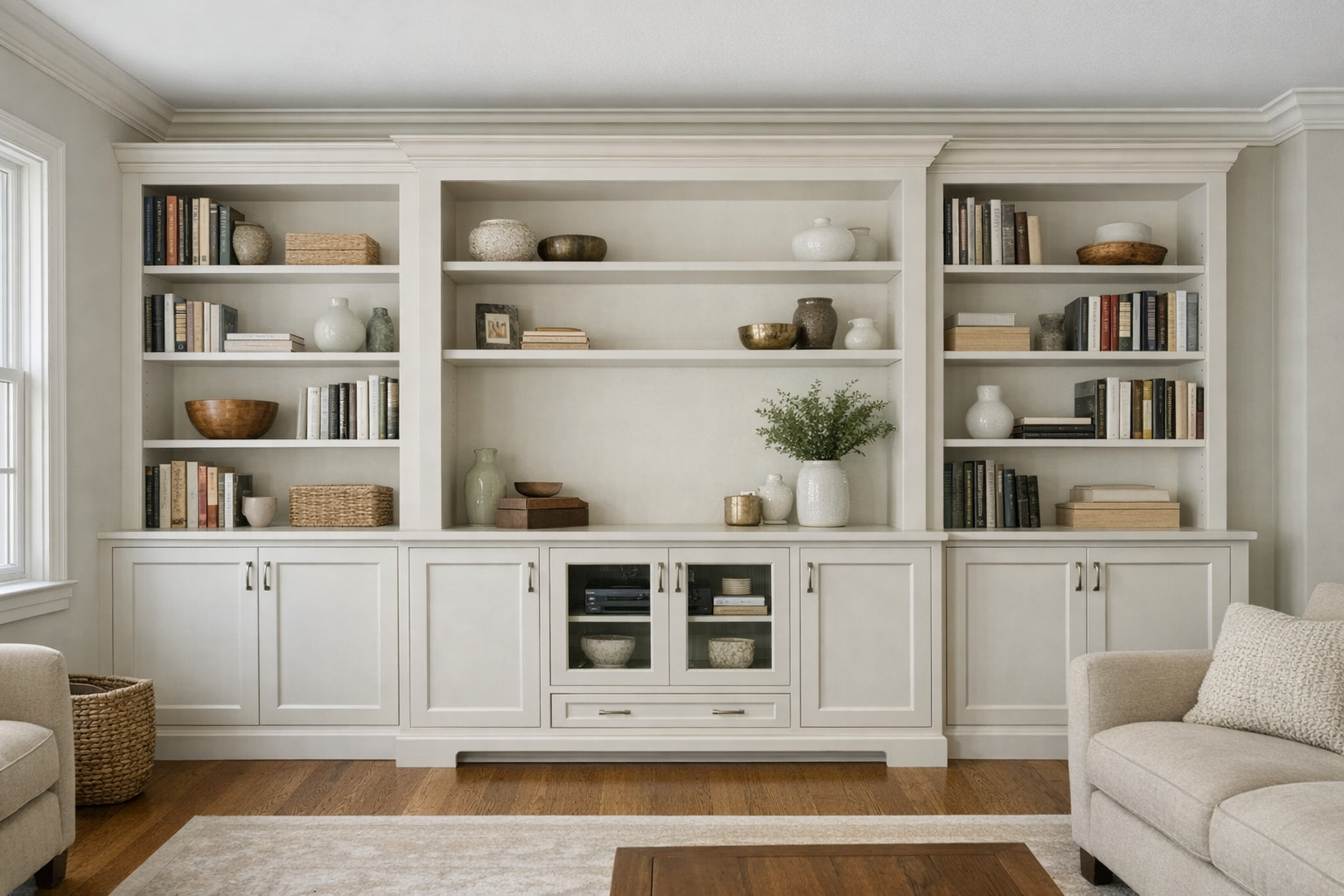
A narrow gap at the ceiling, a wavy wall line beside a bookcase, or an exposed cabinet side can make an otherwise solid installation feel incomplete. The trim portion of the work uses finish carpentry to help cabinets, bookcases, entertainment centers, mudroom storage, home office shelving, and similar built-ins look connected to the room rather than set in place as separate boxes.
This service is not basic cabinet installation, painting, or general wall molding. It focuses on the visible details around the cabinetry: where it meets the wall, floor, ceiling, side panels, face frames, and surrounding trim. The goal is a cleaner, more intentional result, especially for custom built-ins or stock cabinetry that needs a more fitted appearance.
Good trim work shows up in small, easy-to-see ways: tight miters instead of open corners, consistent reveals instead of uneven shadow lines, fitted edges instead of bulky filler strips, and trim that is measured or scribed to follow imperfect walls. Those details are what turn an installed cabinet run into a polished part of the room.
What Cabinet and Built-In Trim Work Includes
Once the boxes are set, the checklist shifts to the places your eye catches first: the top line, bottom recess, exposed sides, and seams between sections. At that stage, the trim package can include several finish pieces, each solving a different visual problem.
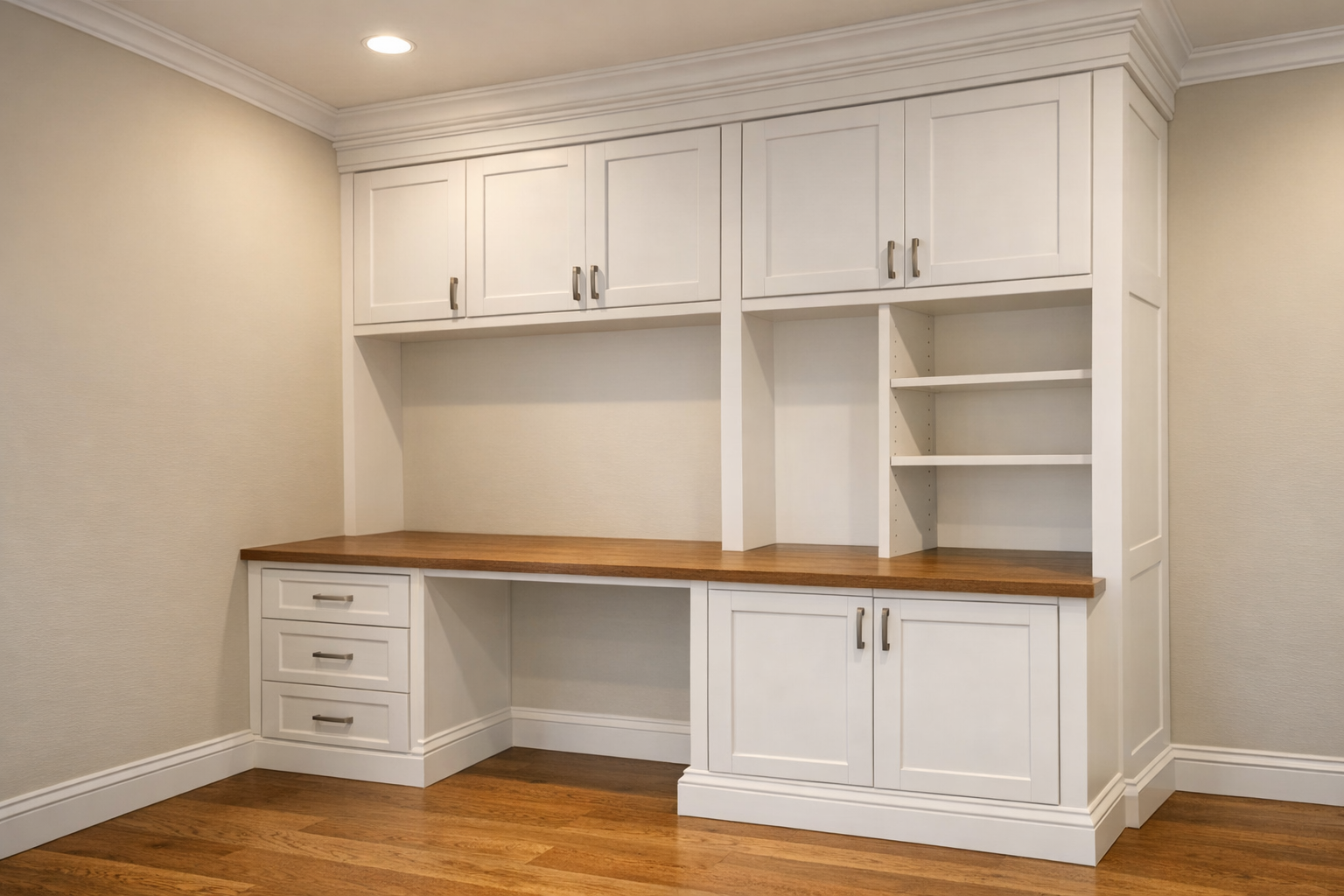
- Cabinet molding frames exposed cabinet edges, adds definition to plain boxes, and helps the cabinet run feel more connected to the room's existing trim style.
- Scribe molding is a narrow strip fitted where cabinetry meets an uneven wall or side surface, so small gaps are covered without using oversized filler.
- Toe kick trim finishes the recessed area at the bottom of base cabinets, giving the cabinet base a cleaner edge where shoes, flooring, and shadows can make unfinished cuts stand out.
- Base trim ties lower cabinets, benches, bookcases, or storage units into the floor line, especially when the built-in needs to relate to existing baseboards nearby.
- Crown details on cabinets finish the upper edge near the ceiling, softening the transition between tall cabinetry and the room above it.
- Panel molding and end-panel trim dress up exposed sides, flat panels, or bookcase ends so they look designed rather than left as plain cabinet surfaces.
- Filler refinement and face-frame transitions improve the spacing between cabinet sections, walls, doors, and openings, with attention to balanced reveals instead of awkward strips or uneven lines.
This is the finish-detail stage, not a full cabinet build, cabinet painting project, or general molding package. The focus is on measuring, fitting, cutting, and preparing the trim pieces that close gaps, frame built-ins, and make the final installation look intentional.
Where Cabinet and Built-In Trim Can Be Used
Start by looking at the transition that is most exposed in the room: an upper cabinet near the ceiling, a bench base at the floor, or a shelving edge against a side wall. Those project-specific edges usually decide which trim details matter most.
- Kitchens and laundry rooms: trim can refine cabinet ends, toe-kick areas, upper cabinet-to-ceiling transitions, and small wall gaps around stock or semi-custom cabinet runs.
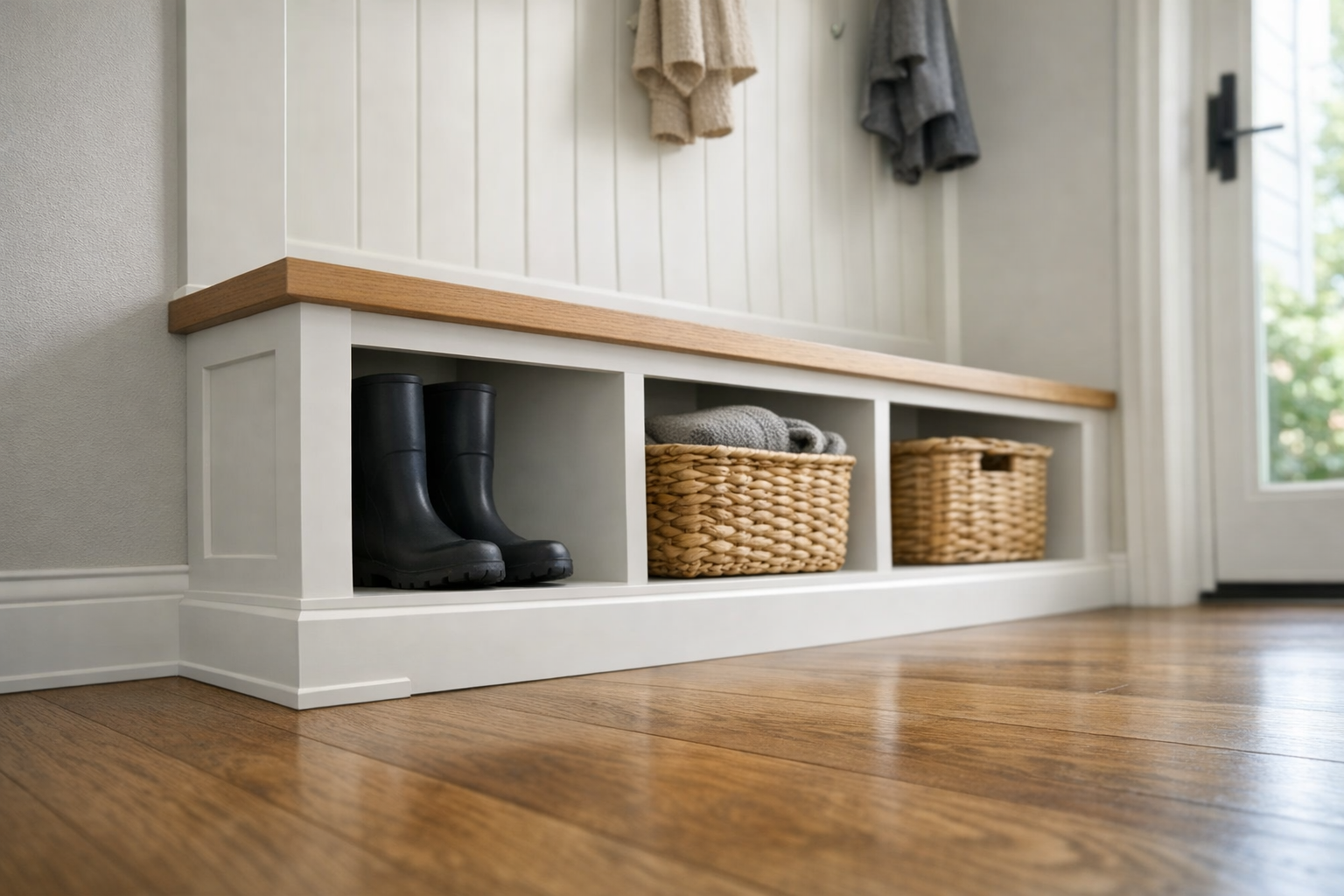
- Mudroom built-ins: bench bases, cubbies, locker-style storage, and tall side panels often need clean floor transitions and side trim where the unit meets surrounding walls.
- Built-in bookcases and alcove shelving: built-in bookcase trim helps frame the outside edges, close uneven wall lines, and make shelves look planned for the opening.
- Entertainment centers and media walls: entertainment center trim can define the TV opening, finish vertical seams, and create cleaner transitions between cabinets, shelves, and wall surfaces.
- Home offices and other storage areas: built-in cabinetry trim can help desks, file cabinets, display shelves, and closed storage relate to nearby baseboards, casing, and room proportions.
The common thread is fit. Whether the project starts with stock units, semi-custom cabinetry, or site-built storage, careful measuring, scribing, profile matching, and reveal alignment help the finished piece look like it was designed for that exact space.
How Trim Helps Cabinets and Built-Ins Look Custom
A custom-looking result often comes from how the last inch of space is handled. A narrow wall gap, a slightly wavy ceiling line, or an exposed cabinet side can make otherwise nice cabinetry feel unfinished; fitted trim gives those areas a planned edge instead of leaving them to caulk, oversized filler, or shadow.
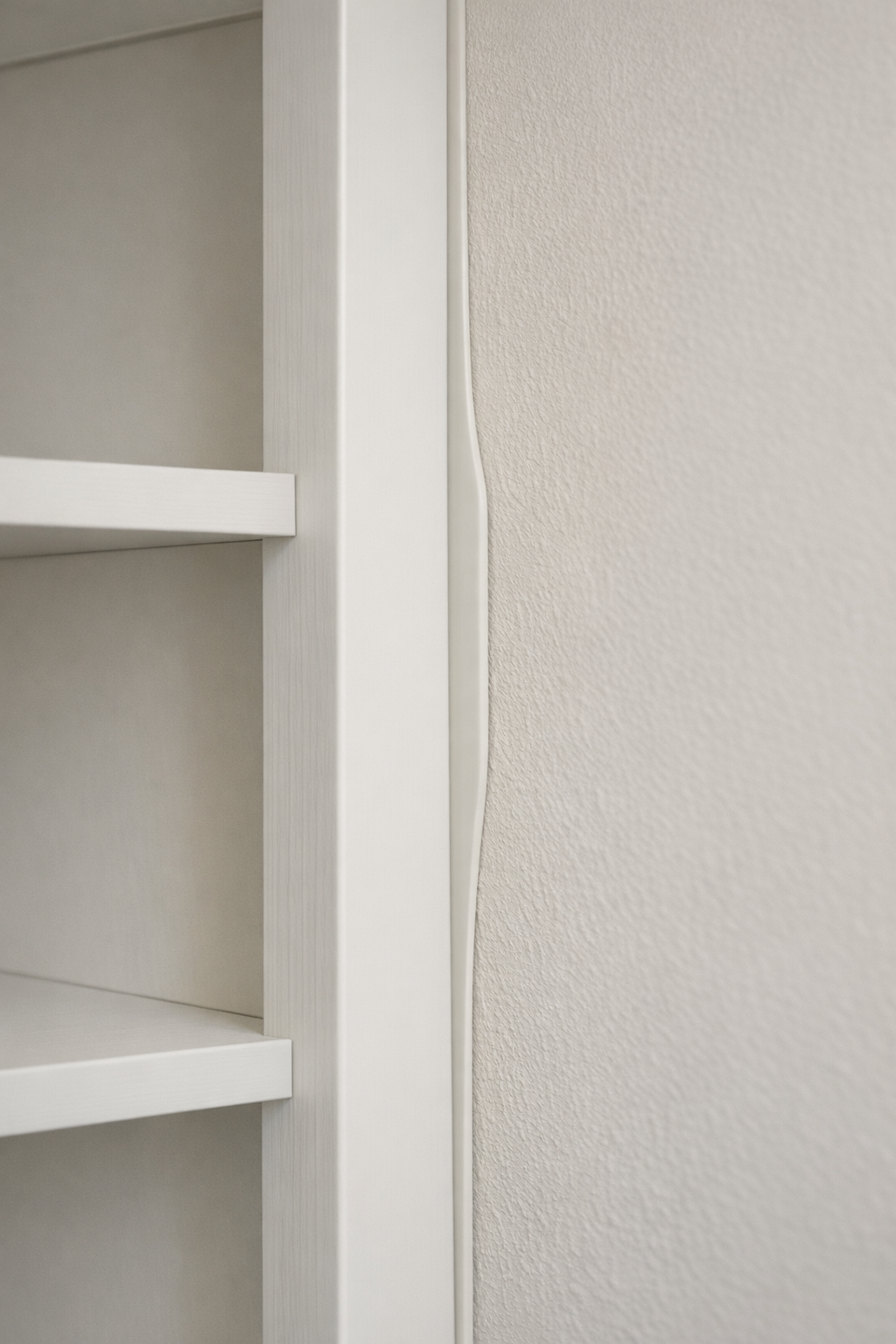
- Wall gaps: scribe trim is cut to follow the wall, so the cabinet edge can meet an uneven surface cleanly. The stronger result is a tight, shaped edge; the weaker result is a straight filler strip that leaves an obvious wedge-shaped gap.
- Ceiling transitions: crown or upper trim can soften the line where tall cabinets or bookcases meet the ceiling. Proportional molding looks intentional; molding that is too bulky can make the cabinets feel top-heavy.
- Exposed sides and ends: finished panels, side trim, or face-frame accents can turn a plain cabinet side into a cleaner surface that relates to the rest of the built-in.
- Awkward filler areas: balanced reveals keep the spacing around doors, shelves, and side returns consistent, so the eye sees order instead of random leftover space.
That is the real value of custom cabinet trim: it does not need to make every cabinet handmade from scratch to make the installation feel more deliberate. Clean scribe cuts, flush transitions, and a seamless fit can help stock or semi-custom pieces read as part of the room instead of separate units pushed into place.
Why Finish Carpentry Details Matter
At an outside corner, the cut tells on the whole job. Careful finish work has tight miters, smooth joints, controlled caulk lines, and reveals that stay even from one side of a cabinet run to the other. Rushed work tends to show open corners, heavy caulk used as filler, uneven seams, or trim that looks added on instead of planned.
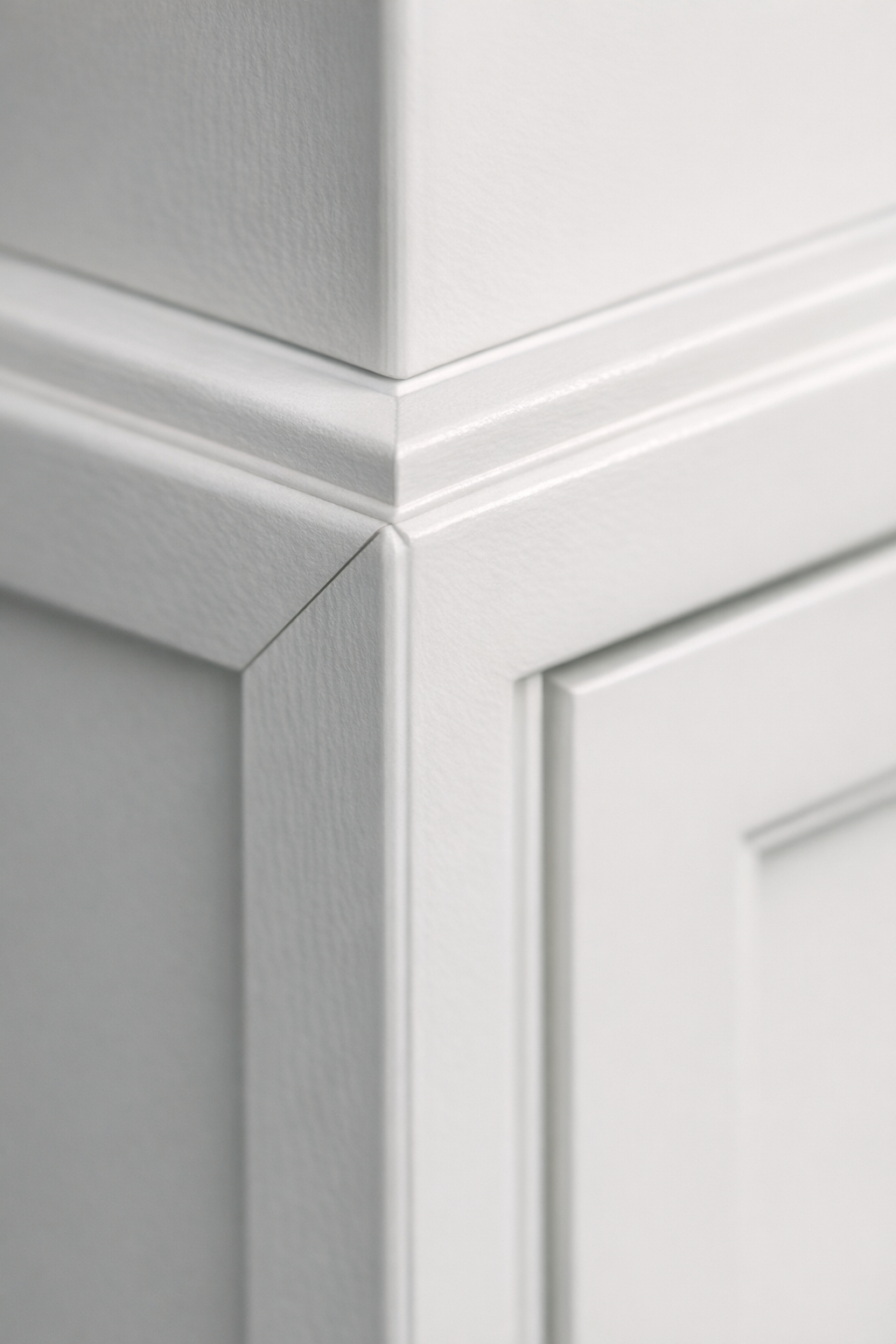
Profile selection matters too. A profile is the shape and scale of the trim piece: simple square stock, small cove, crown, base, panel molding, or a matching edge detail. Slim, simple profiles often suit modern cabinets; more layered profiles can work with traditional cabinetry or surrounding room trim. The practical takeaway is balance: the finish trim for built-ins should relate to the cabinet style and the room without overpowering doors, shelves, or face frames.
Finish preparation changes the standard of the work. Paint-grade trim is prepared so joints can be sanded, filled, caulked neatly, and painted into a clean surface. Stain-grade trim needs extra care because the wood grain, color variation, and joint lines remain visible after finishing. That is why stain matching, board selection, and clean cuts matter more when the goal is a natural wood look.
Good finish carpentry is not just decoration; it is measured, fitted, and scaled so the cabinetry feels settled into the room. Consistent spacing around doors, shelves, side returns, and ceiling details gives the eye a sense of order, while poorly scaled molding or mismatched profiles can make even nice cabinetry feel patched together.
Repairing, Replacing, or Upgrading Existing Cabinet Trim
Start with the failure point: is the loose crown only separating at a joint, or is the cabinet side itself damaged? That distinction helps decide whether the trim can be repaired, replaced, or refined while the main cabinet boxes stay in place.
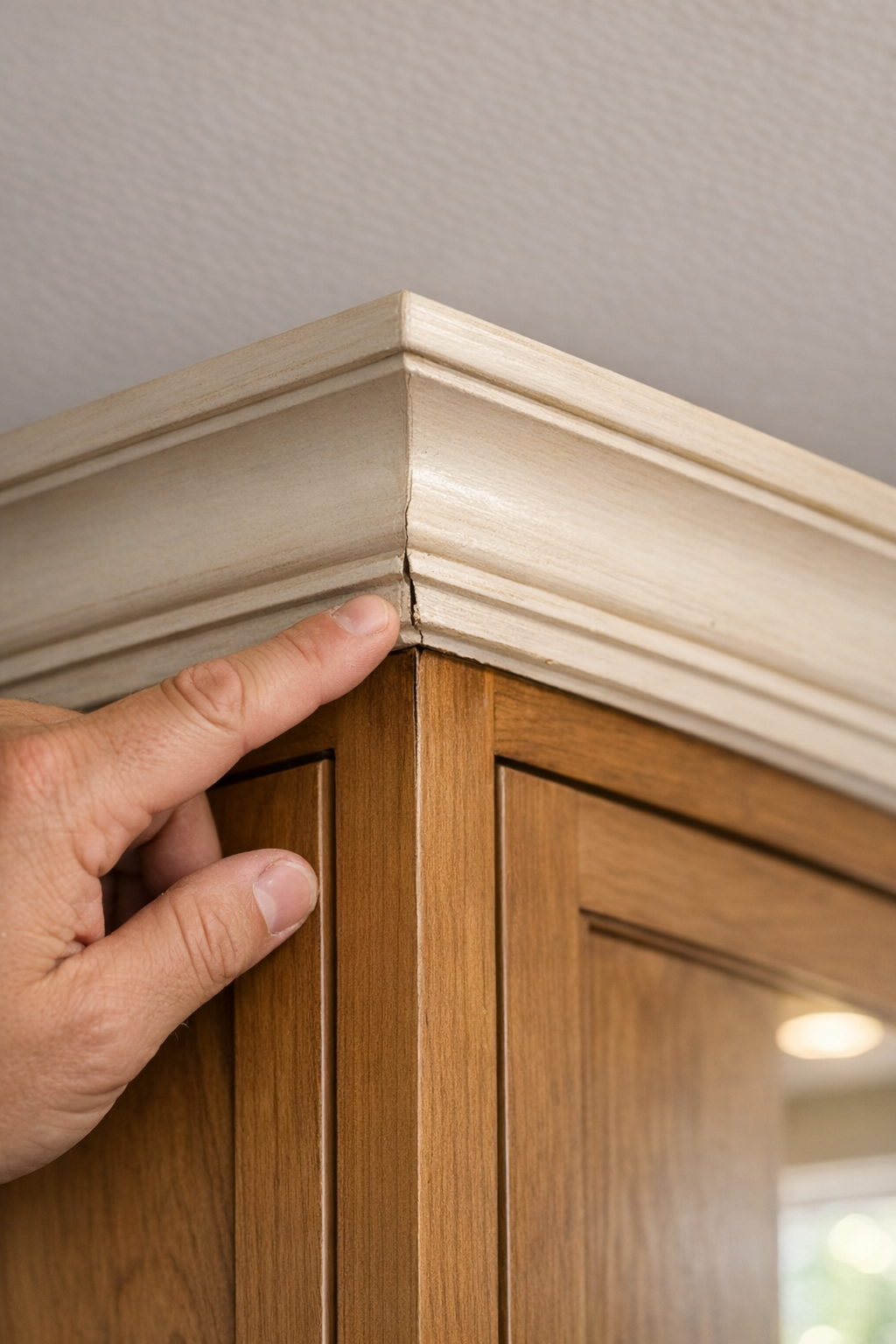
Common service calls include cracked molding, loose trim at the top or base, missing shoe or toe-kick pieces, bulky cabinet filler trim, visible cabinet-to-wall gaps, or older profiles that no longer match the room. A good repair plan looks at what is painted or stained, whether the existing profile can be matched, how straight the surrounding walls are, and whether the original trim was fitted neatly enough to build from.
Sometimes the right move is a small replacement piece; other times, a run of trim should be reworked so the reveals, corners, and transitions make sense together. Professional cabinet trim installation or built-in trim installation helps avoid a patched look by matching scale, scribing new pieces to the space, and preparing the repaired area to blend with the surrounding finish.
What to Expect During the Trim Installation Process
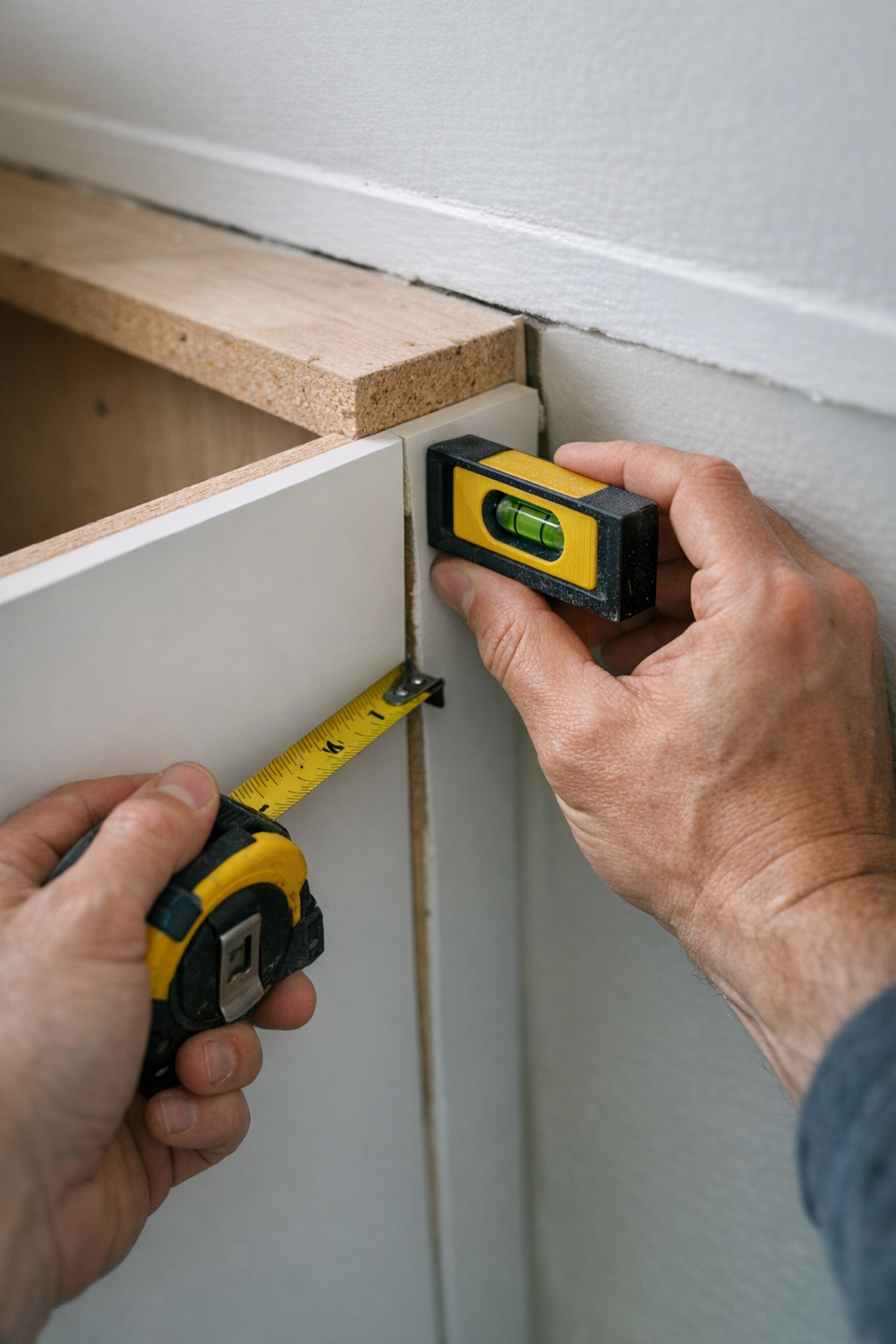
A trim project usually starts with a close look at the actual site conditions: cabinet edges, wall returns, floor lines, ceiling lines, and any existing profiles that need to be matched. This is where gaps, uneven surfaces, exposed ends, and awkward transitions are identified before any pieces are cut.
Next comes material and finish coordination. Paint-grade trim is meant to receive paint, so small filled seams and primed surfaces can be part of the prep. Stain-grade trim keeps the wood grain visible, which makes species, color, and grain direction more important and usually requires more careful selection.
During cabinet and built-in trim installation, the pieces are measured, cut, test-fitted, scribed where walls or ceilings are uneven, and then installed so the reveals and transitions stay controlled. The goal is not just to cover space, but to make each edge look planned.
Timeline depends on the number of cabinet runs or openings, the complexity of the profile, stain-grade requirements, site conditions, and how many scribe cuts or finish details are involved. Before wrap-up, the final walkthrough should focus on fit, joints, corners, transitions, and whether the surface is ready for paint or stain.
Get a Polished, Built-In Look for Your Cabinets and Storage
If the final walkthrough shows a shadow line at a cabinet side, a crown return that stops short, or a toe-kick edge that still looks unfinished, those are the details to address before calling the project complete. Focused finish carpentry can help cabinetry, shelving, and storage read as part of the room through cleaner lines, coordinated profiles, fitted edges, and surfaces prepared for a smooth paint or stain finish.
Whether you are finishing new custom built-ins, refining kitchen cabinets, or cleaning up storage areas, the next step is a project review. Share the areas that feel unfinished, and request an estimate or consultation for cabinet and built-in trim work, including profile matching, scribing needs, and the details that will give the project a more polished, built-in look.
FAQs
What is included in cabinet and built-in trim work?
Cabinet and built-in trim work includes cabinet molding, scribe molding, toe kick trim, base trim, crown details, panel molding, end-panel trim, filler refinement, and face-frame transitions. The work focuses on fitting visible edges where cabinetry meets walls, floors, ceilings, side panels, and surrounding trim.
Can cabinet trim hide gaps between cabinets and walls?
Yes, scribe molding can cover small gaps where cabinetry meets uneven walls or side surfaces. It is cut to follow the wall line, which creates a tighter finish than using oversized filler strips.
What trim is used around built-in bookcases?
Built-in bookcases often use outside edge trim, scribe molding, base trim, crown or upper trim, and panel or end-panel trim. These pieces help close uneven wall lines, frame the shelving, and make the bookcase look planned for the opening.
Should cabinet trim be painted or stained?
Paint-grade trim is prepared for filling, sanding, caulking, priming, and painting into a smooth surface. Stain-grade trim requires more careful wood species, color, grain direction, and joint selection because the natural wood remains visible.
Can trim make stock cabinets look custom?
Yes, fitted trim can make stock or semi-custom cabinets look more built in by adding clean scribe cuts, balanced reveals, flush transitions, and finished exposed sides. The best results come from trim profiles that match the cabinet style and room trim without overpowering doors, shelves, or face frames.