
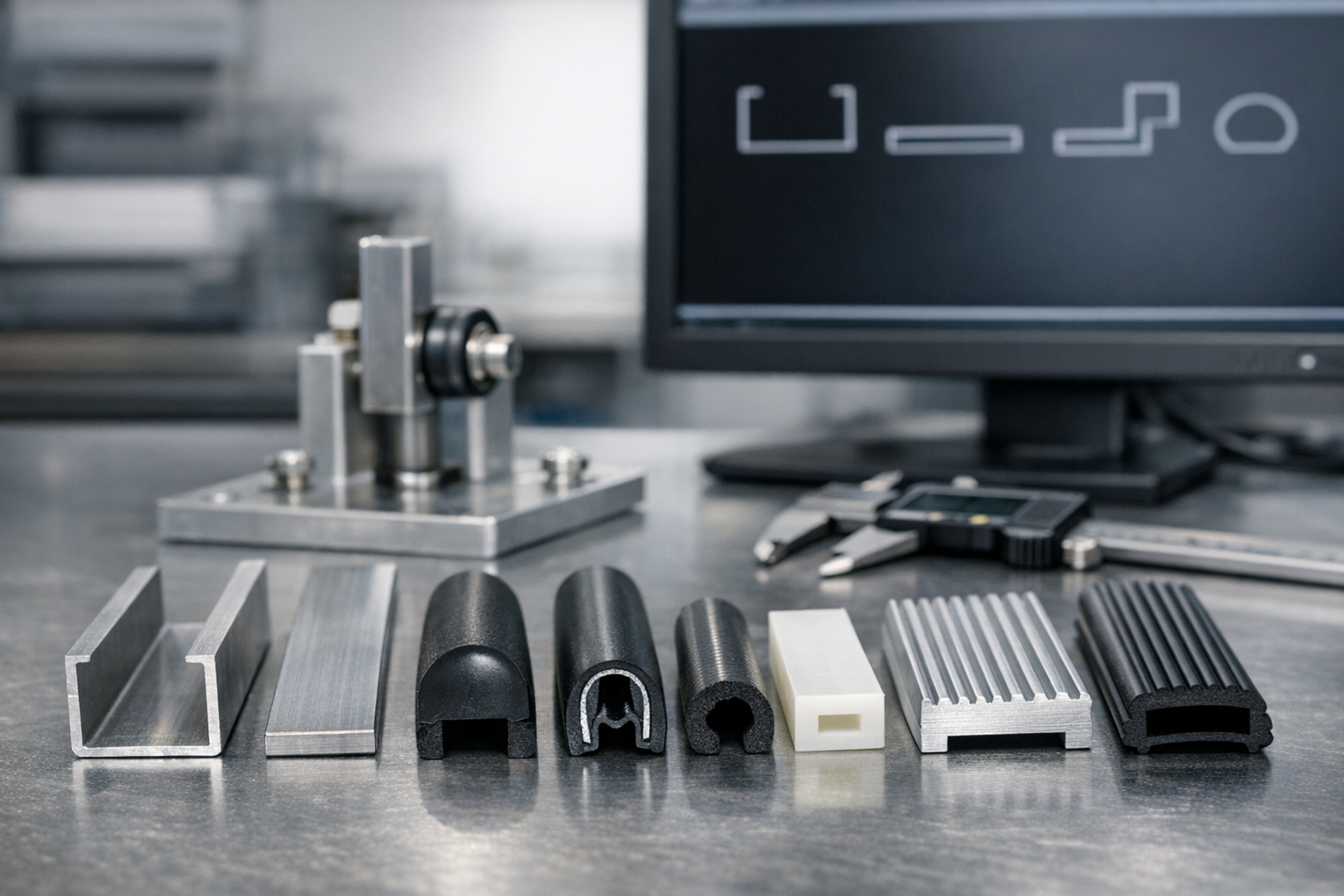
Your material and profile choice should start with the job the part has to do, not with a generic catalog list. For this service, “materials and profiles” means the combination of what the part is made from and the shape, size, and cross-section it needs to perform correctly in your application.
We help narrow the material and profile options by looking at function, environment, dimensions, production needs, and budget together. A rigid profile may be the better direction for support or alignment, while a more flexible profile may be a better fit for sealing, cushioning, or edge protection. An outdoor or exposed application may call for a different material choice than an indoor component where appearance, cost, or ease of fabrication is the main concern.
You can come to us with a drawing, sample, dimensions, installation details, or simply the problem you are trying to solve. From there, we help define a practical path forward, whether that means matching an existing shape, adjusting a standard option, or developing custom profiles around the required fit and performance.
Available Material Categories
The confirmed provider information available for this page does not support naming specific alloys, polymer grades, rubber compounds, certifications, or stocked materials, so we approach profile materials by category first and narrow from there based on the application requirements.
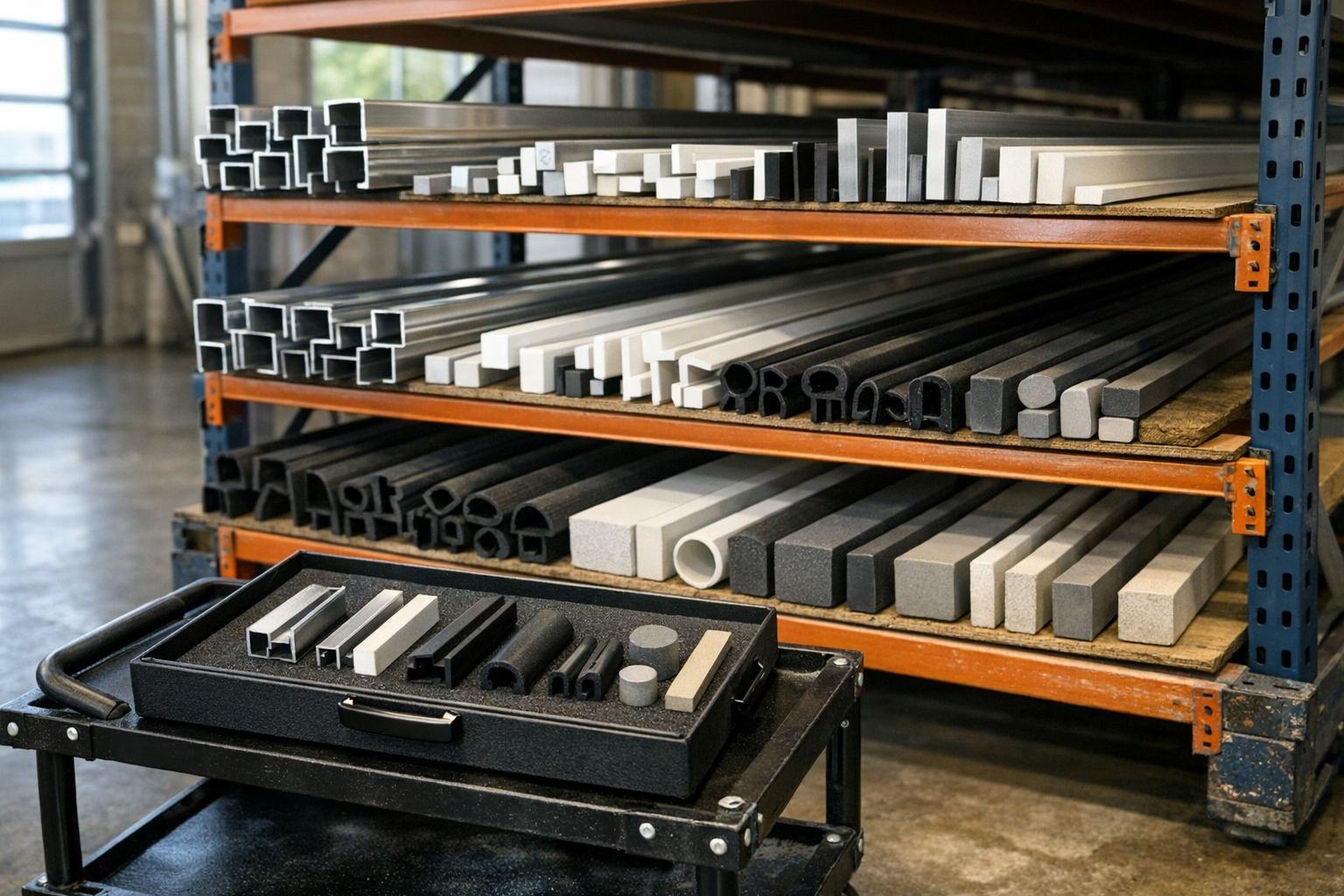
- Metals are generally considered when the profile needs rigidity, load support, dimensional stability, wear resistance, or a finished appearance. The tradeoff is that metal profile materials may add weight or require additional finishing when appearance or exposure conditions matter.
- Plastics are often evaluated when weight, shape flexibility, color, electrical behavior, moisture exposure, or cost control are important. They can be a strong fit for covers, channels, guides, trims, and non-structural components, but the exact plastic family matters when heat, chemicals, or abrasion are present.
- Elastomers are used when the profile needs to compress, seal, cushion, grip, or protect an edge. A good fit signal is repeated contact or vibration; a weak fit signal is an application that needs the part to stay rigid under load.
- Composites or specialty materials may be discussed when one material category alone does not balance strength, weight, environment, appearance, or service life. These options are best treated as project-specific rather than assumed from a standard list.
For materials for custom profiles, material selection is not just a purchasing step; it affects how the profile can be formed, cut, finished, installed, and priced. The practical takeaway is simple: bring the performance needs first, and we can help translate them into a workable material category before moving into exact profile design.
Standard Profiles vs. Custom Profiles
In buying terms, standard profiles are existing shapes and sizes that are considered first when they already match the part’s job closely enough. They can be a practical fit for straightforward channels, trims, guides, spacers, supports, or protective edges where the cross-section, material behavior, and appearance do not need to be specially engineered.
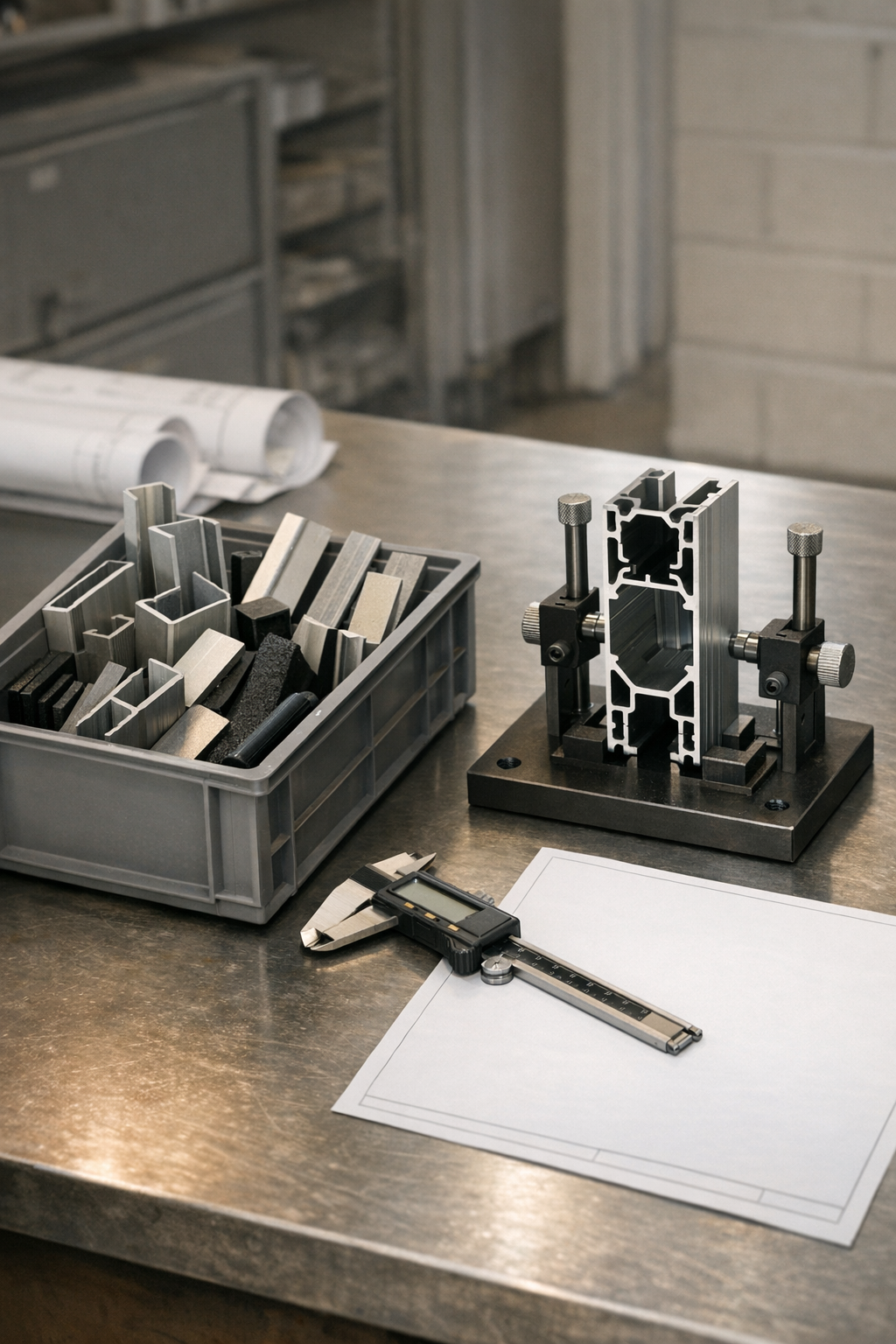
Custom profiles come into play when the part has to do something more specific: fit into a unique opening, seal against an uneven surface, carry a load in a certain direction, meet a tighter dimensional target, use a specific wall thickness, or combine multiple functions in one shape. The advantage is a closer fit to the application; the tradeoff is that the design needs more definition before quoting or production planning can move forward.
Because the confirmed provider information for this page does not identify a stocked catalog, minimum order quantity, tooling rule, or fixed lead-time structure, we do not assume those details here. The useful checkpoint is fit: if an existing profile meets the functional and dimensional need, it may be the cleanest path; if it creates gaps, stress points, installation workarounds, or performance compromises, standard and custom profiles should be compared before the material choice is finalized.
Profile Design Factors That Affect Performance
A small change in the cross-section can change how a profile fits, holds, seals, flexes, or installs. In profile design, the cross-section shape is the outline of the part when viewed from the end: a channel may guide or capture another part, a flat strip may cover or space, a bulb or lip may help create a sealing surface, and a ribbed shape may add stiffness without making the whole part solid.
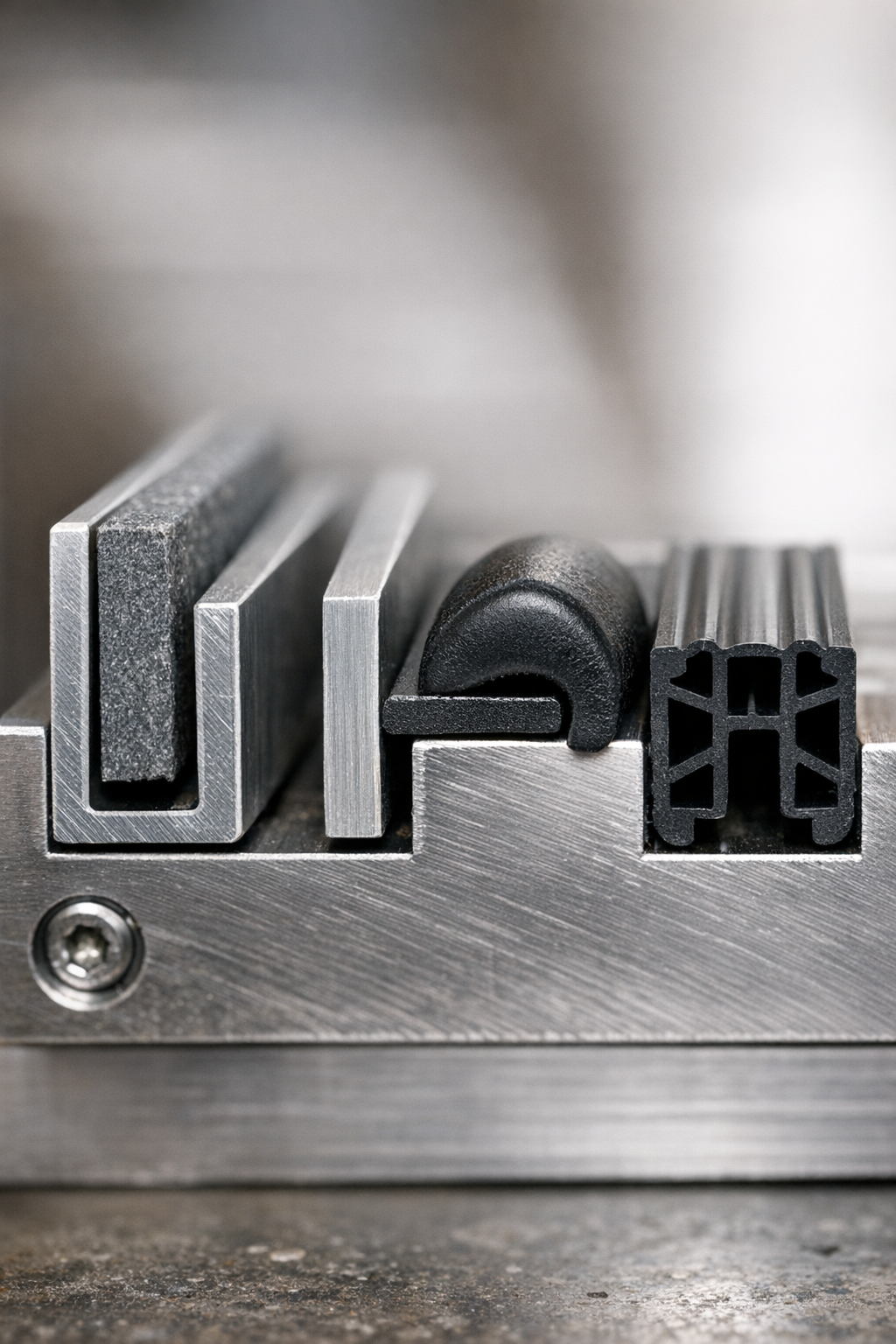
Dimensions set the overall size, while wall thickness affects strength, weight, flexibility, material use, and manufacturability. Thicker walls can support more load or resist damage, but they may add cost or make the part harder to form consistently. Thinner walls may reduce material use and improve flexibility, but they can become a weak fit when the part must carry weight, resist impact, or maintain a precise shape.
Hardness, rigidity, and flexibility describe how the selected material-profile combination behaves in use. A rigid profile is usually a better signal for support, spacing, alignment, or protection. A flexible profile is a better signal for sealing, cushioning, vibration control, or fitting around slight variation. Load direction also matters: a shape that works well in compression may not perform the same way when pulled, twisted, or bent.
Edge detail, channels, sealing faces, mounting slots, holes, clips, and other technical profiles features should be designed around assembly as well as performance. Sharp edges may need softening for handling or fit, sealing surfaces need enough contact area to do their job, and mounting features need dimensions that allow the part to locate properly without forcing installation. Tolerance needs tie all of this together: tighter targets can improve fit, but they may also affect production planning and cost.
How to Match the Material to the Application
The next filter is the service environment, because the same shape can behave very differently indoors, outdoors, near heat, around moisture, or in contact with other substances. Indoor use may put more weight on appearance, fit, and budget, while outdoor or washdown exposure may make moisture handling, UV exposure, corrosion resistance, and surface durability more important. Temperature resistance matters when a profile must stay rigid, flexible, or dimensionally stable through hot, cold, or cycling conditions.
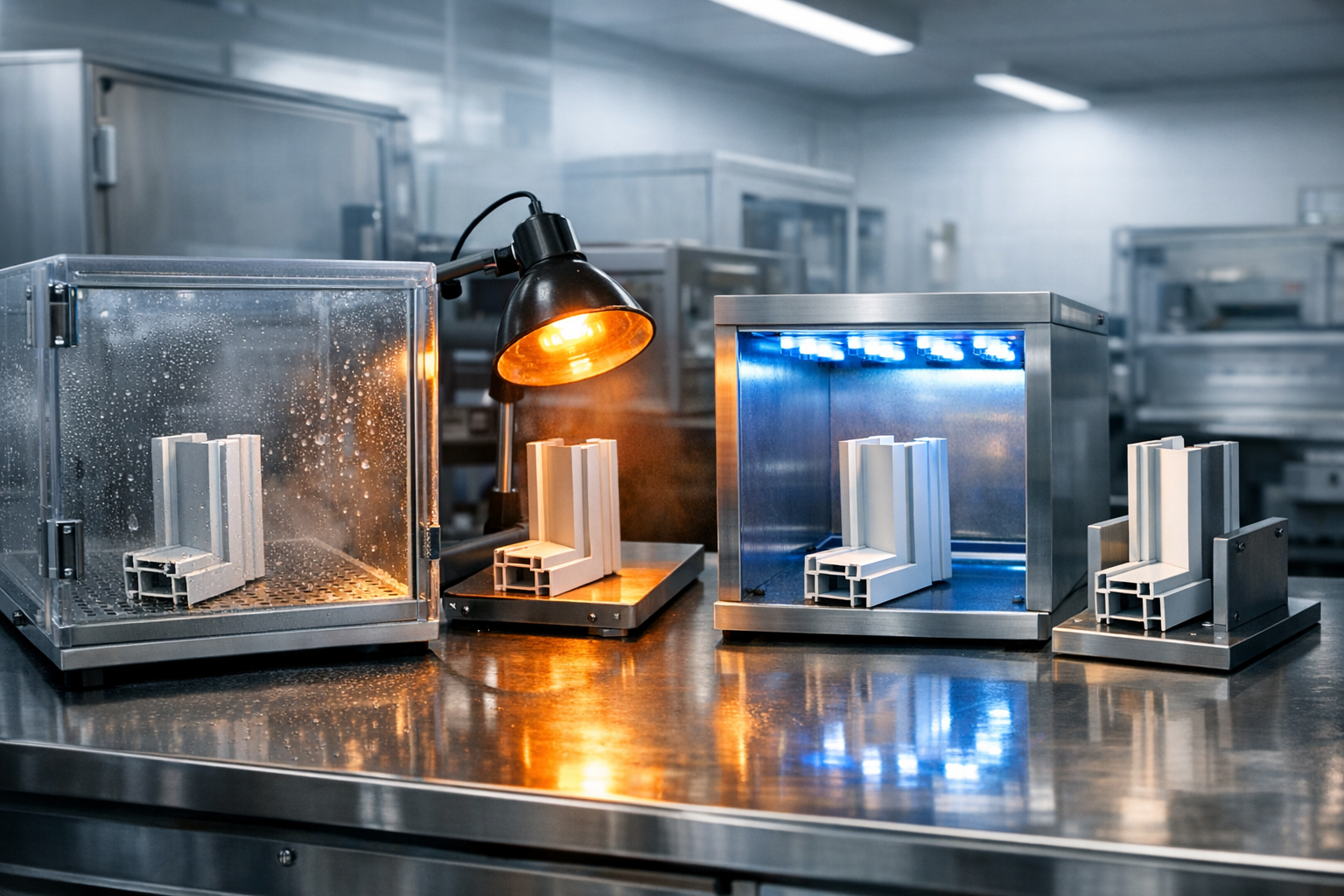
- Moisture and chemicals: A good-fit material resists swelling, staining, breakdown, or surface attack in the actual exposure conditions. A weak-fit signal is any material that looks acceptable in a dry sample but changes shape, softens, corrodes, or becomes brittle after contact with cleaners, oils, salt, solvents, or process fluids.
- Wear and movement: Sliding, rubbing, vibration, and repeated handling call for material selection that considers abrasion resistance and surface finish. A smooth finish may help with cleaning or movement, while a textured or grippier surface may help with handling, cushioning, or contact control.
- Strength, flexibility, and weight: Strength helps a profile carry load or protect an edge; flexibility helps it seal, bend, or absorb contact; density affects part weight and handling. The practical tradeoff is that a heavier or stiffer option may feel more robust, while a lighter or more flexible option may install more easily.
- Service life and budget: Lower upfront cost can make sense for short-term, low-risk, indoor uses, but longer service expectations may justify a material-profile combination that better resists wear, exposure, or deformation. If regulatory requirements apply, they should be identified early so the material selection is narrowed around those constraints rather than added at the end.
The takeaway is not that one material is best; it is that materials and profiles need to be matched to the conditions they will actually see. Sharing the environment, contact surfaces, cleaning process, movement, load, desired appearance, expected life, and target budget gives us a better basis for recommending a workable combination.
Manufacturing and Customization Options
Once the shape and material direction are close, the next question is how the part should be made. In profile manufacturing, the practical choice is usually between using an existing shape, developing a continuous shaped section, or building the part through fabrication and follow-up operations. Extruded profiles are formed as a continuous cross-section, which can make sense when the same shape is needed repeatedly. Fabricated profiles are built or modified through cutting, forming, joining, or assembly-style work, which can be useful when the geometry is less suited to a continuous process or the quantity does not justify a more dedicated setup.
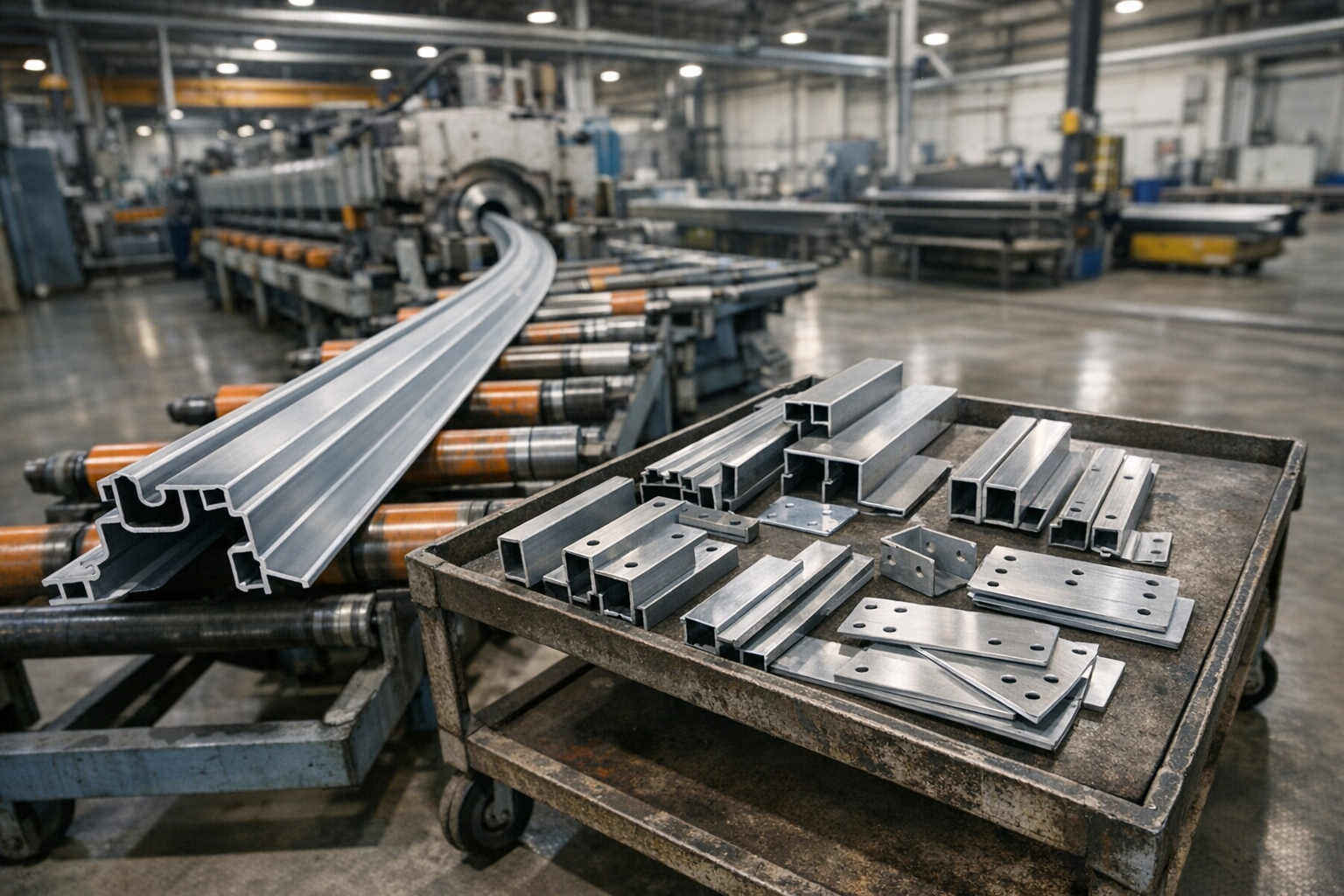
- Tooling and setup: A custom profile may require more front-end planning than a standard option, especially when the cross-section, material behavior, or dimensional targets are specific to the application.
- Material behavior: Stiffer, softer, heavier, or more heat-sensitive materials can change how easily a profile is formed, held to size, cut, or handled during production.
- Volume and cost: Higher repeat quantities may support more dedicated production planning, while smaller or trial runs may favor simpler customization paths that reduce upfront commitment.
Finishes, Coatings, Cutting, and Secondary Work
The last details on a profile often decide how easily it installs, how it looks in the finished assembly, and whether it arrives ready to use. A surface finish affects touch, appearance, friction, and how visible handling marks may be. Coatings can add a protective or visual layer when the base material alone is not the best match for exposure or appearance goals. Cutting sets final length, while drilling, notching, slotting, or bonding can turn continuous or fabricated profiles into parts that align with fasteners, mating components, or assembly steps.
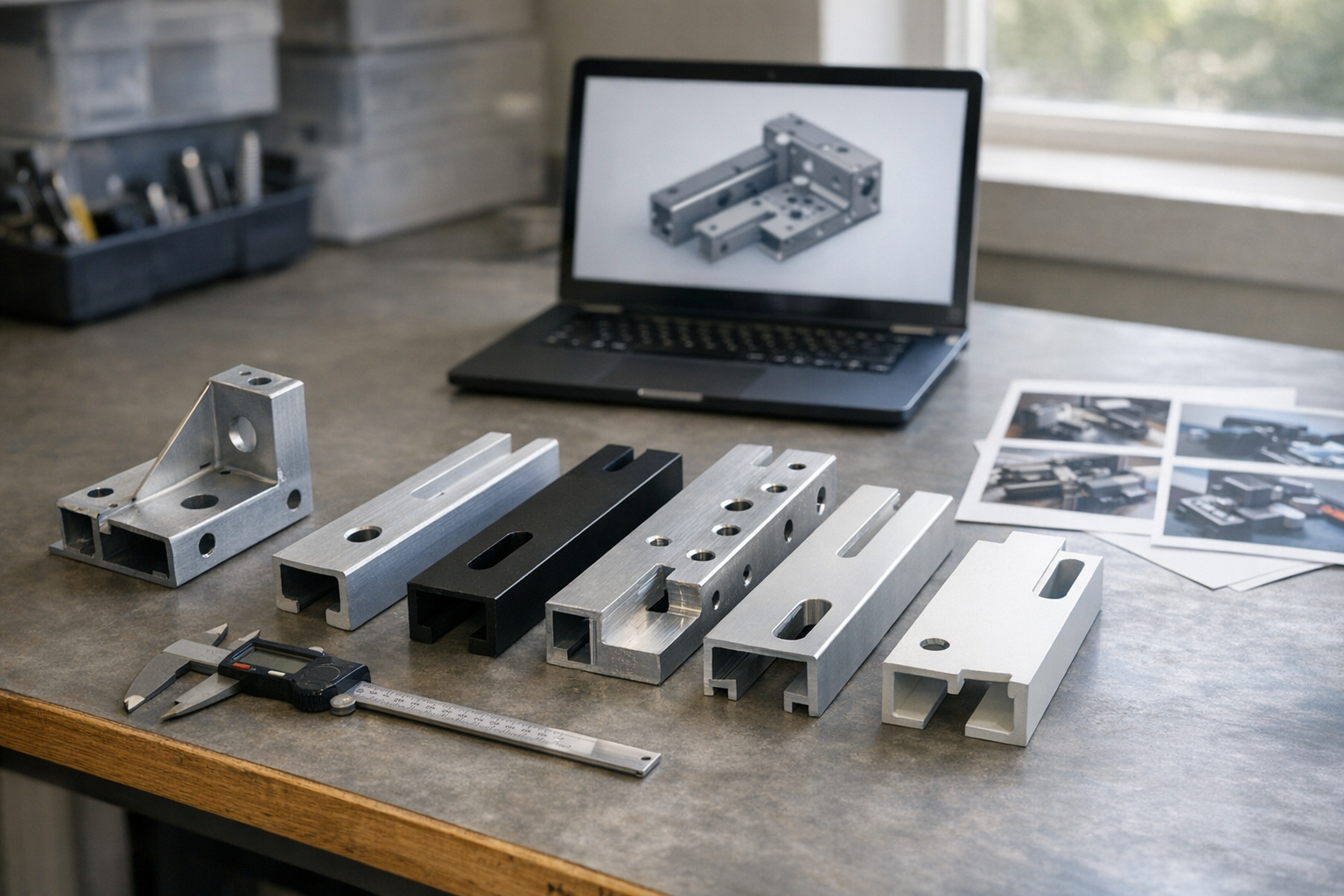
These choices should be considered with the material and profile design, not added at the end. A hole near a thin edge may weaken a section; a coating may change fit in a tight channel; a cut edge may need attention if people handle the part during installation. Marking and packaging also matter when parts must be identified, protected in transit, or staged for production. The practical takeaway: define the finished part, not just the raw profile, so the material, shape, finish, and secondary work support the same application.
How to Request the Right Material and Profile Combination
For the fastest review, package the request around the finished part you need. A drawing or CAD file communicates geometry; a physical sample shows fit, wear, and handling details; photos help explain where the profile sits when the full assembly cannot be shipped. If you only have rough dimensions or an existing part to match, that is still a useful starting point.
- Dimensions and profile design: Share length, cross-section shape, wall thickness, hole or slot locations, edge details, and any critical fit points. Mark which dimensions are flexible and which cannot change.
- Material direction: Include any preferred material category, existing material, or known limitation. If you do not know the material, describe the job: rigid support, flexible sealing, cushioning, wear surface, spacer, trim, or protection.
- Performance requirements: Note load, movement, compression, abrasion, temperature, moisture, chemical contact, appearance expectations, and service life goals. These details help narrow practical materials and profiles instead of guessing from shape alone.
- Installation details: Explain how the part is mounted, bonded, fastened, pressed in, slid into place, or assembled with other components. A profile that looks correct on paper still needs to install cleanly.
- Quantity and timing: Share prototype needs, production quantities, repeat usage if known, and target lead time. Volume and schedule can affect whether a standard, modified, fabricated, or custom route is the better fit.
If you are not sure what to specify, send what you have and describe the problem the part needs to solve. We can review the options, compare tradeoffs, and recommend a practical path for custom materials and profiles before you commit to a final request or quote.
FAQs
What materials are available for custom profiles?
Custom profile materials are narrowed by category first: metals, plastics, elastomers, and composites or specialty materials. Metals suit rigidity and load support, plastics suit weight and cost control, elastomers suit sealing and cushioning, and specialty materials are considered for project-specific performance needs.
Can profiles be made to custom dimensions?
Yes, custom profiles can be designed around a required cross-section, wall thickness, fit point, opening, sealing surface, or load direction. Dimensions, wall thickness, holes, slots, edge details, and tolerance needs should be provided so the profile can be reviewed for fit, manufacturability, and cost.
Can you match an existing profile sample or drawing?
Yes, a drawing, CAD file, physical sample, photos, rough dimensions, or installation details can be used to start the review. The profile can be matched to an existing shape, adjusted from a standard option, or developed as a custom profile based on the required fit and performance.
What profile design factors affect performance?
Cross-section shape, dimensions, wall thickness, hardness, rigidity, flexibility, load direction, edge details, channels, sealing faces, mounting slots, holes, clips, and tolerances all affect performance. Thicker walls can improve load support and damage resistance, while thinner walls can reduce material use and improve flexibility.
How do I choose between standard profiles and custom profiles?
Choose a standard profile when an existing shape and size already meet the functional, dimensional, material, and appearance requirements. Choose a custom profile when a part must fit a unique opening, seal an uneven surface, carry load in a specific direction, meet tighter dimensional targets, use a specific wall thickness, or combine multiple functions.