
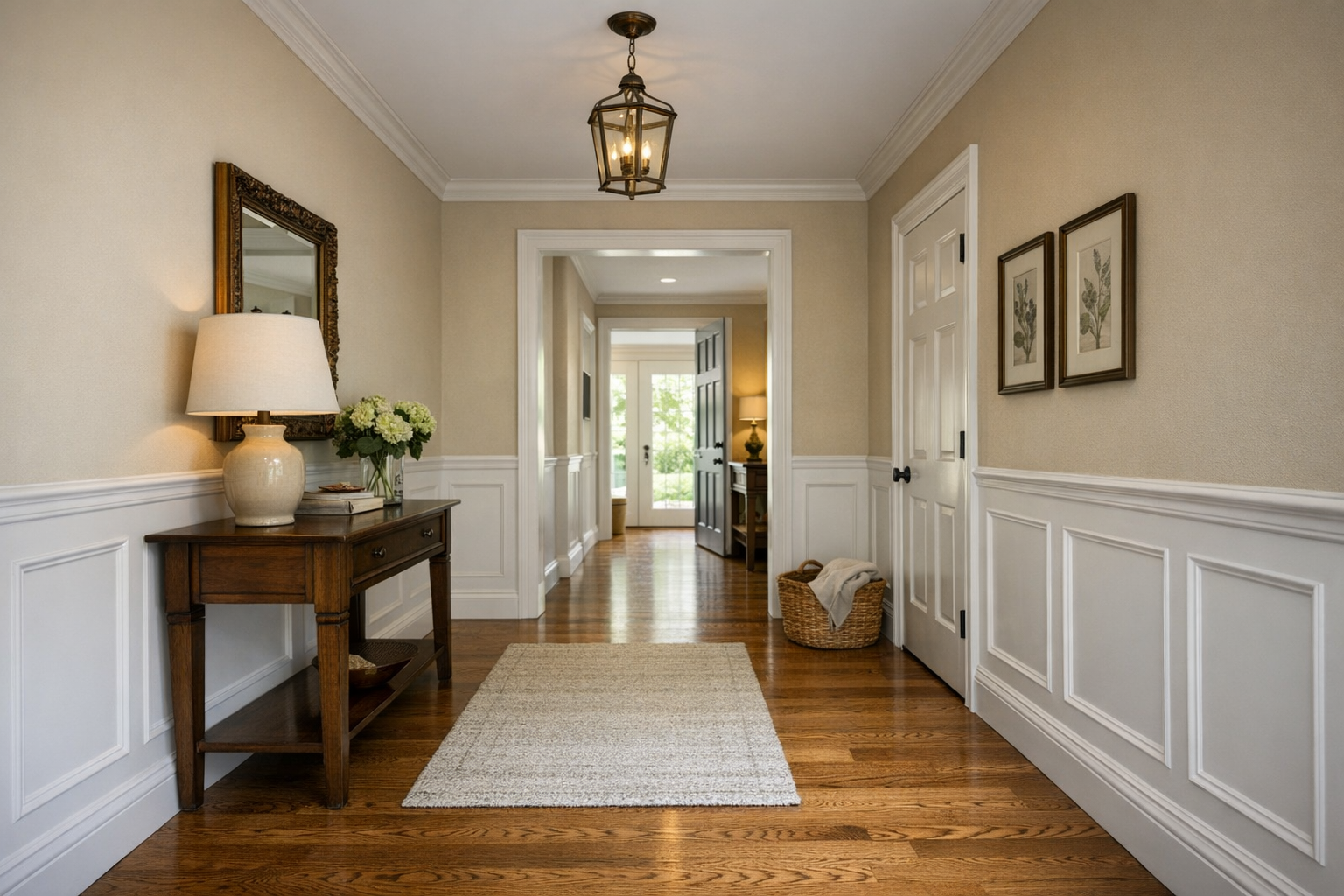
In a busy hallway, dining room, or entry, the best results start with the right height, trim profile, and finish plan before a single piece is installed. Our service is designed for homeowners who want a finished result, not a DIY experiment: we help with the design direction, material choices, layout, installation, caulking, and paint-ready finishing so the trim lines, seams, corners, and transitions look clean.
Projects can be tailored to the room and the style of the home. Custom wainscoting may mean a classic lower-wall treatment in a dining room, where the trim adds structure and formality, while a modern accent wall may use paneling across a larger surface to create depth behind a bed, sofa, or entry feature. The practical takeaway is simple: the right wall treatment should look proportional to the room, hold up to daily use, and feel like it belongs with the existing baseboards, doors, floors, and paint colors.
From the first conversation, we focus on what the room needs visually and functionally, then plan the wall paneling installation around accurate measurements, level layout lines, clean cuts, and a smooth finish. That attention to detail is what helps a wall treatment look custom rather than added on after the fact.
Wainscoting vs. Wall Paneling: What’s the Difference?
The easiest way to separate the terms is to think about height and scope. Wainscoting is a type of wall paneling, usually installed on the lower portion of the wall and finished with chair rail molding at the top and baseboard trim at the bottom. Wall paneling is the broader category: it can stop partway up the wall, run floor to ceiling, cover one accent area, or wrap an entire room depending on the design.
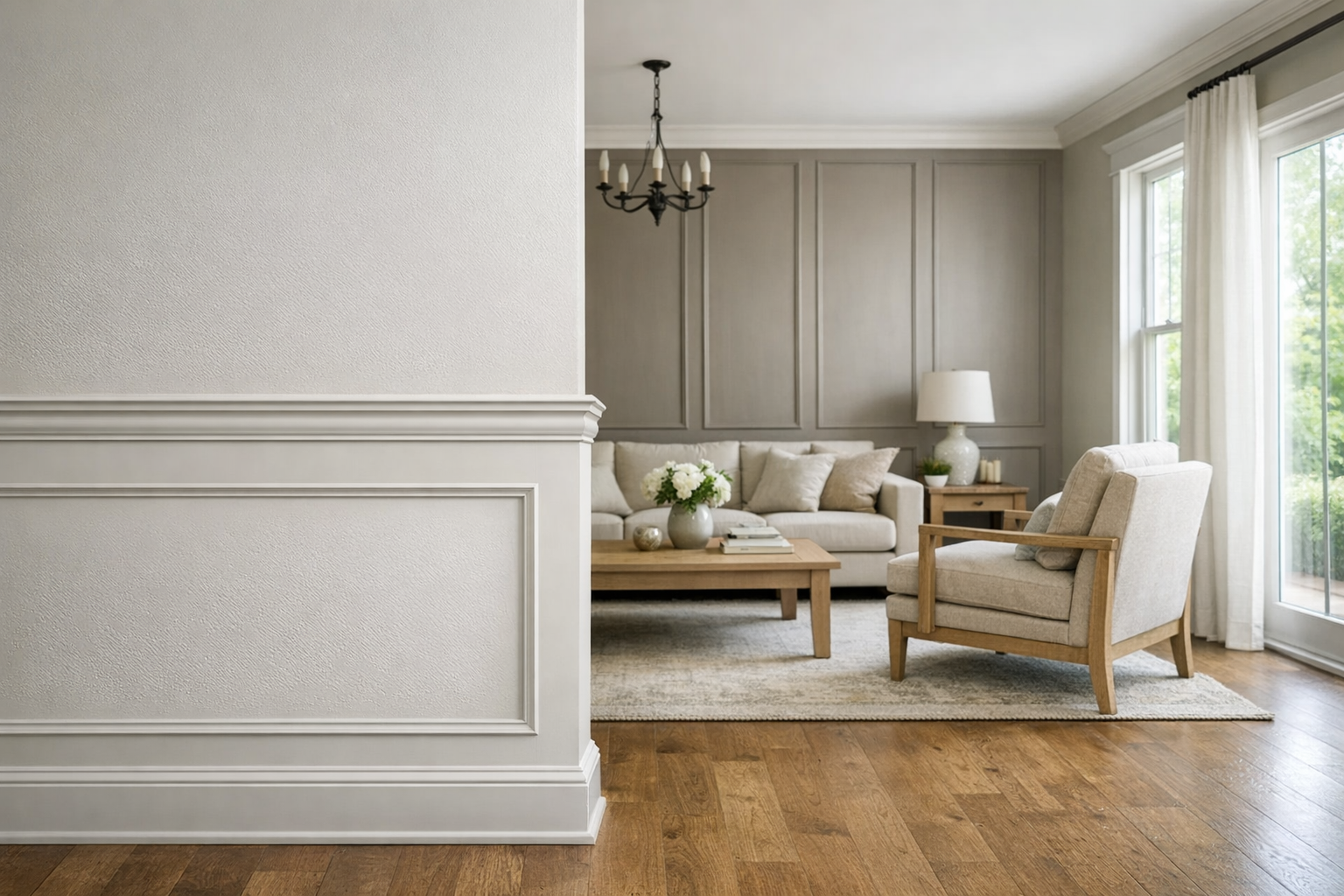
In practical terms, wainscoting creates a lower-wall band that can make a dining room, hallway, stair wall, or powder room feel more structured. Full-height or larger-format interior wall paneling changes the whole surface instead, which is why it is often used for feature walls, bedroom backdrops, fireplace walls, or rooms where the goal is stronger texture and visual depth.
Both wall paneling and wainscoting are decorative wall treatments, but the finished look depends on layout, height, spacing, trim profile, and proportion. A lower treatment with a clean cap can feel classic and contained; a ceiling-height layout can feel more dramatic or contemporary. The right choice comes down to what the room needs: more wall protection in a busy area, more architectural character on a plain surface, or a stronger focal point without overwhelming the rest of the space.
Popular Styles We Install
A wall with narrow beadboard grooves feels very different from one with wide battens, layered raised panels, or a clean geometric accent layout. We install styles that range from traditional dining room trim to cleaner modern accent walls, so the right direction depends on how formal, casual, textured, or streamlined you want the space to feel.
- Beadboard wainscoting: Beadboard uses narrow vertical grooves to create a lighter, cottage-inspired texture. It works well in powder rooms, bathrooms, mudrooms, breakfast areas, and casual hallways. The tradeoff is that the grooves add detail, so it feels more relaxed than formal and needs crisp paint work so the lines stay clean.
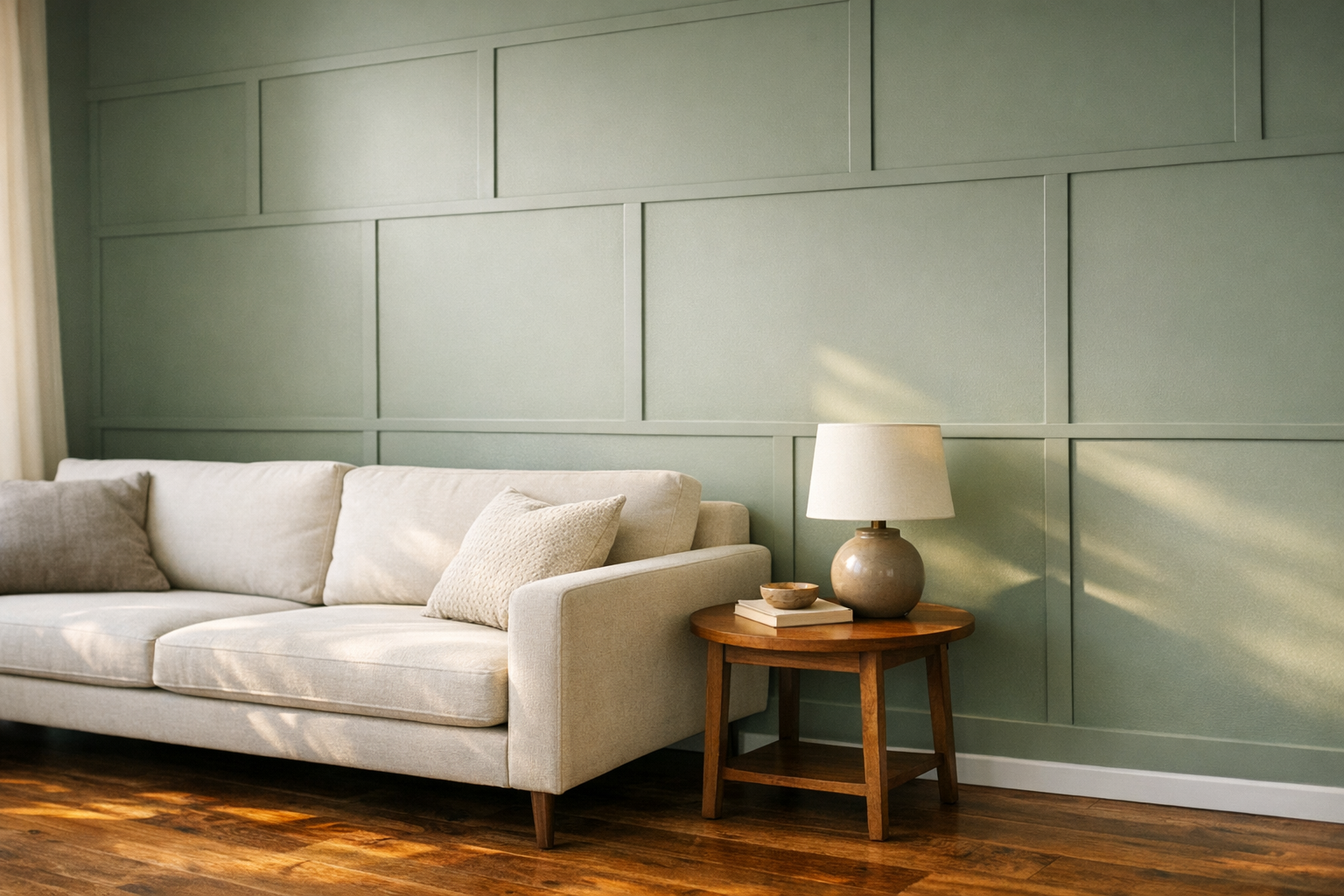
- Board and batten wall paneling: This style uses vertical battens over a flat wall or panel surface, giving the wall stronger rhythm and shadow lines. It can lean farmhouse, transitional, or modern depending on spacing and trim thickness. Wider spacing feels calmer; tighter spacing creates more visual movement.
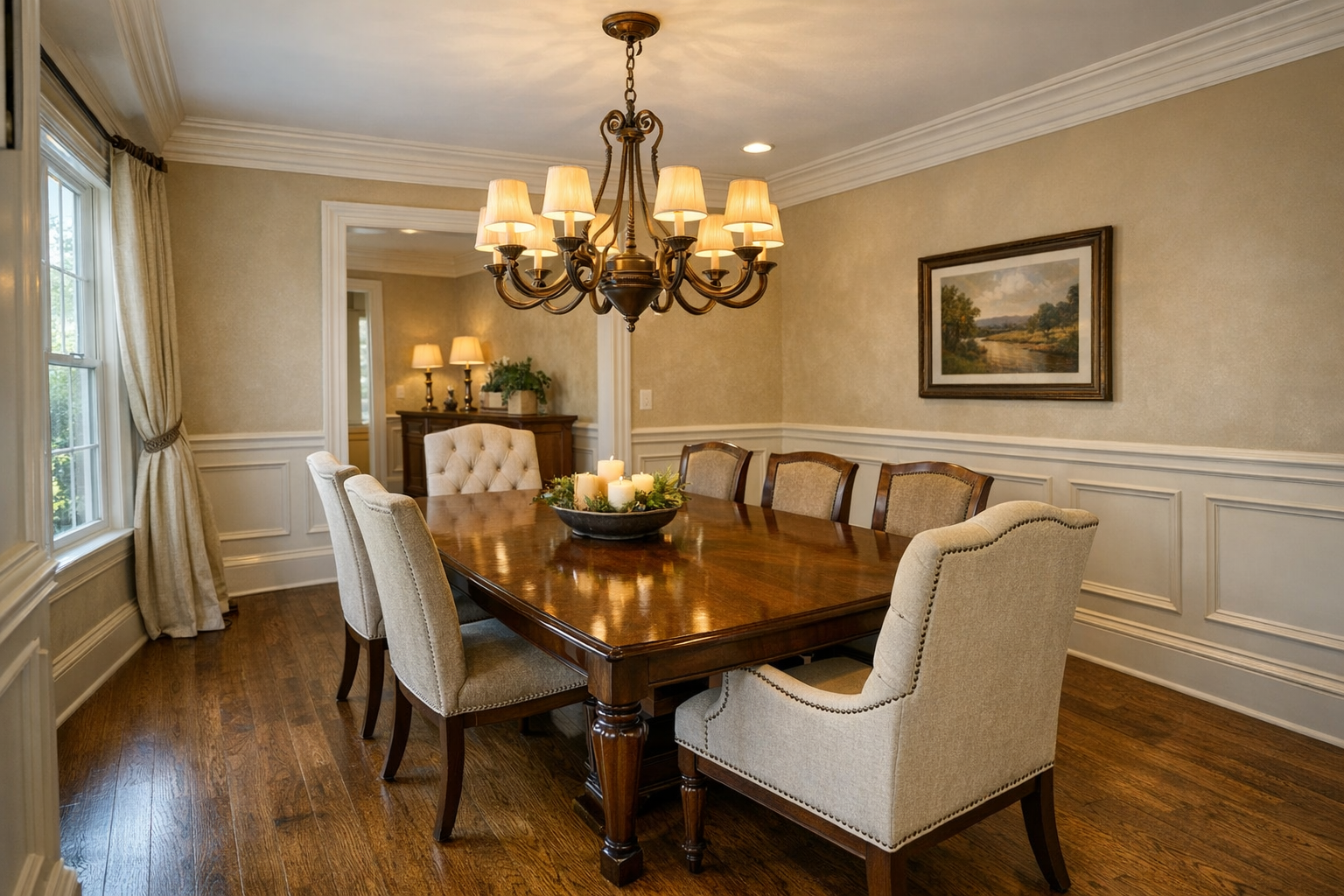
- Raised panel wainscoting: Raised panels have layered trim and dimensional center panels, which gives them a more traditional, formal look. They are a strong fit for dining rooms, foyers, stair walls, and studies. The main tradeoff is complexity: the profiles, corners, and panel proportions need to be carefully planned so the finished wall looks balanced rather than busy.
- Picture frame molding: Picture frame molding creates rectangular trim boxes directly on the wall, often paired with a chair rail or used full-height. It is a good choice for elegant living rooms, bedrooms, dining rooms, and transitional spaces because it adds structure without the heavier feel of raised panels.
- Shiplap: Shiplap uses horizontal boards or panel profiles with visible reveal lines. It is popular for farmhouse, coastal, cottage, and casual accent walls. The practical decision is scale: horizontal lines can make a wall feel wider, but too much shiplap in one room can dominate the design.
- Accent wall paneling: Accent walls can use geometric trim, slats, squares, vertical panels, or custom layouts behind a bed, fireplace, desk, or media wall. This is often the most flexible option for modern interiors, but it depends heavily on clean alignment with outlets, furniture, ceiling lines, and nearby trim.
Where Wainscoting and Paneling Work Best
Room use matters as much as style because the same trim profile can feel formal, practical, or decorative depending on where it is installed. Dining room wainscoting is usually the most traditional application: raised panels or picture-frame layouts create a more composed lower wall, help define the room, and pair well with crown molding, baseboards, and painted trim.
- Entries and hallways: These are strong candidates for lower-wall treatments because they see bags, shoes, pets, and daily traffic. A capped wainscot or board-and-batten layout adds visual structure while creating a more durable surface zone for wall protection.
- Bathrooms and powder rooms: Bathroom wainscoting often uses beadboard or a moisture-aware panel option to add texture without overwhelming a small space. The key distinction is exposure: a powder room has different demands than a wall beside a tub or shower, so splash areas, ventilation, caulking, and finish selection should be planned carefully rather than assuming every material belongs in a damp location.
- Bedrooms: Board and batten or a paneled feature wall can frame a bed, add height behind nightstands, or give a plain wall a built-in focal point. A full accent wall feels more dramatic; a lower treatment feels quieter and more architectural.
- Living rooms: Picture frame molding works well when you want elegance without heavy panel construction. It can outline seating areas, fireplaces, or long blank walls while keeping the room open and refined.
- Mudrooms and stairways: These areas benefit from durable lower-wall treatments because they combine visibility with daily wear. Clean trim transitions, a sturdy cap, and washable painted finishes help the paneling look intentional while supporting practical wall protection.
Materials, Paint, and Finish Options
The material choice is where the design starts to become practical: it affects the surface texture, paint or stain options, moisture tolerance, and the amount of finishing work needed before the wall looks built in.
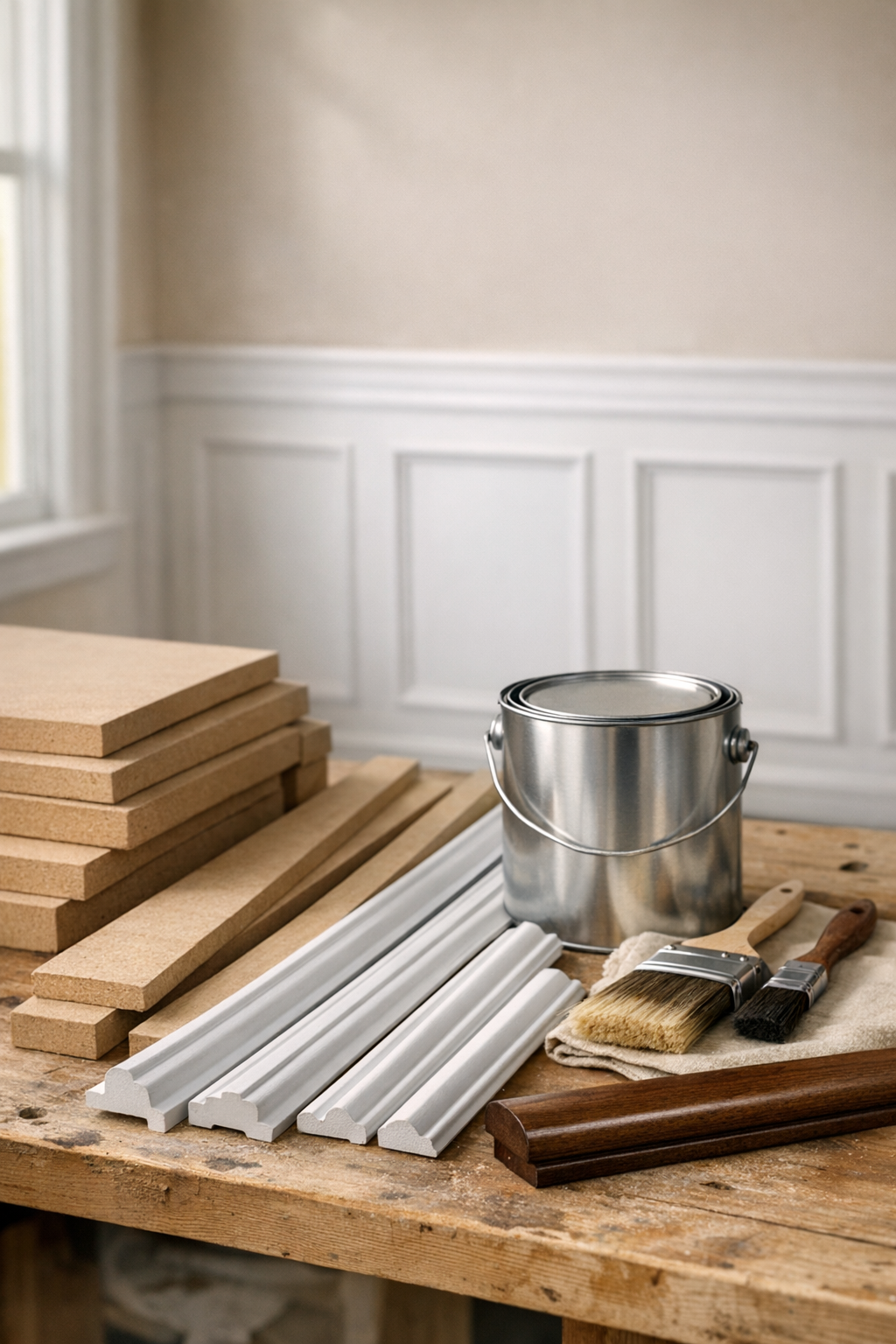
- MDF: A good fit for smooth, painted interior treatments where you want crisp profiles without visible wood grain. It works especially well for paint-grade picture frame molding, flat panels, and many lower-wall applications in dry rooms.
- Paint-grade wood: Used when the design calls for real wood trim but the final finish will be painted. It can be painted to match existing trim, doors, crown molding, or baseboards so the new paneling feels original to the room.
- Stain-grade wood: Chosen when the grain is part of the finished look. This is better for premium custom applications where the goal is warmth, depth, and a furniture-like finish rather than a solid painted surface.
- PVC panels and moisture-resistant options: These are considered for bathrooms, powder rooms, laundry areas, or other humid spaces. The practical difference is that the material selection, seams, caulking, and finish all need to be planned around moisture exposure, not just appearance.
- Custom wood panels: These suit higher-end designs with more detailed profiles, stain finishes, or built-up trim assemblies. They can create a richer look, but they also require more careful finishing and coordination with surrounding millwork.
Finish choices also influence the final scope of a wainscoting and wall paneling project because materials and finishing work are among the factors that affect overall cost. Painted finishes can blend with existing trim for a seamless look, use a contrast color for more definition, or coordinate with nearby cabinetry. Sheen matters too: a softer sheen feels subtle, while a more washable trim finish is often preferred where walls see frequent contact.
Getting the Height, Layout, and Proportions Right
After the material and finish are chosen, the next decision is where the paneling should stop on the wall. Wainscoting is typically a lower-wall treatment with a baseboard below and a chair rail or cap above, while broader wall paneling can be planned at different heights and layouts. That is why there is no single "correct" height for every room: a lower band can feel lighter, a mid-height layout can feel more traditional, and a taller treatment can suit rooms with higher ceilings or larger wall expanses.
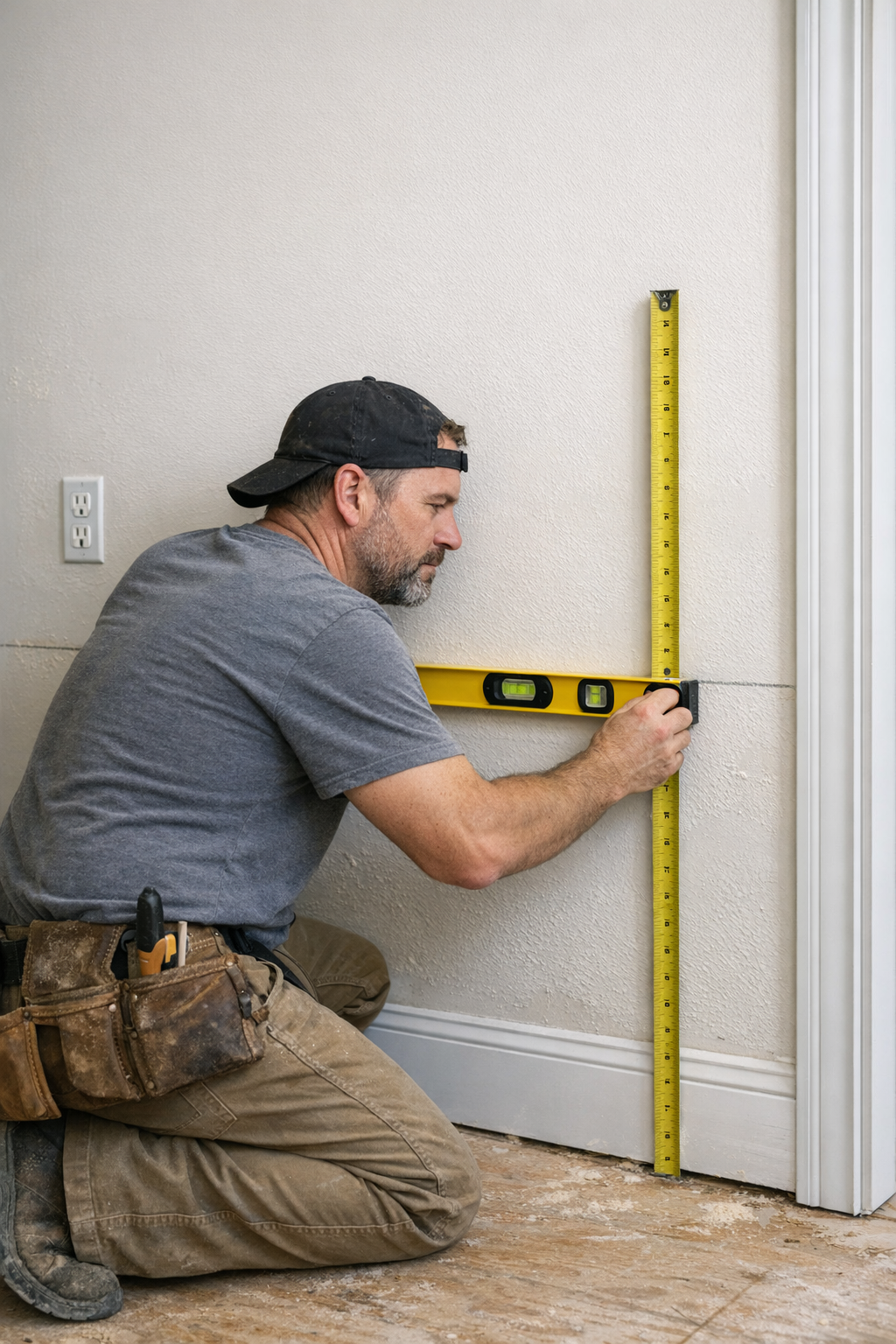
A professional layout looks at the full wall instead of choosing a height in isolation. The chair rail needs to land at a comfortable visual point, panel spacing should stay balanced from corner to corner, and the panel profiles should relate to nearby doors, windows, baseboards, casing, and existing millwork. Good layout planning avoids tiny end panels, narrow slivers beside door trim, and top rails that run awkwardly into window stools or other trim.
Outlets, switches, corners, and wall breaks are part of the design, not afterthoughts. In some rooms, panels are centered between interruptions; in others, spacing is adjusted slightly so an outlet does not cut through the most visible part of a frame. Scaled layout drawings, measurements taken during the consultation, and simple on-wall mockups help preview those choices before cutting begins, which is how professional wainscoting and wall paneling avoids uneven panels, poor proportions, and distracting cutoffs.
What to Expect From Professional Installation
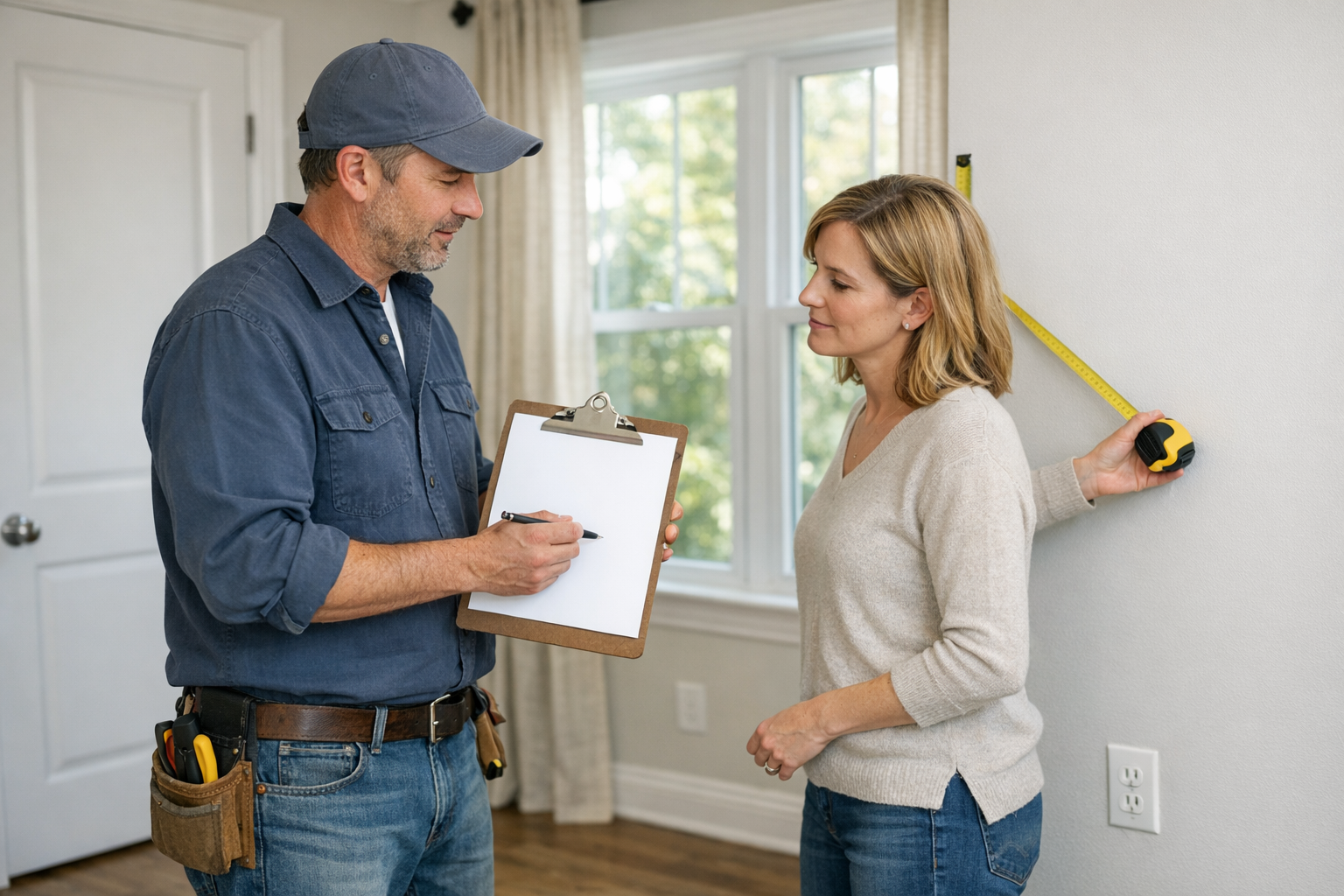
A professional project usually starts with a consultation, not a saw. We review the room, talk through the style you want, recommend profiles and materials, and take measurements that account for doors, windows, outlets, corners, baseboards, and any walls that are slightly bowed or out of square. Because wainscoting installation and wall paneling installation are custom carpentry projects, the layout is planned before materials are cut.
Once the design is set, the work moves into surface preparation, layout lines, cutting, fitting, and fastening. Good millwork installation is precise: rails should run level, stiles should align cleanly, panels should meet corners without awkward gaps, and transitions into existing trim should look intentional. On imperfect walls, the goal is not to pretend the room is perfectly square; it is to scribe, shim, adjust, and fit the pieces so the finished face reads clean.
After the trim is installed, the finish work makes a major difference. Nail holes are filled, seams are caulked where appropriate, rough spots are sanded, and the surface is primed before paint or stain is applied. Simple flat-panel projects can be manageable for experienced DIYers, but custom layouts benefit from professional tools, fastening methods, and finishing experience. Before we leave, the area is cleaned up so the new wall treatment feels like part of the room, not a construction zone.
Cost Factors and How to Start Your Project
The best estimate starts with the walls themselves, because wainscoting and wall paneling are custom carpentry projects rather than one-price products. Wainscoting installation cost is shaped by room size, wall height, style complexity, material choice, paint or stain finish, existing wall condition, and how many corners, doors, windows, outlets, and transitions need to be worked into the layout.
- A smaller accent wall typically has fewer panels, seams, and trim returns than a full room, while multiple rooms require more measuring, material, cutting, and finishing time.
- Simple flat trim or picture-frame molding is usually less complex than raised panels or detailed custom wainscoting with layered profiles.
- Paint-grade interior wall paneling is planned differently than stain-grade wood because stain makes grain, joints, and material selection more visible.
To start, share inspiration photos, the rooms you are considering, your preferred finish, and any budget or timeline goals. We can review the scope, talk through practical options, and prepare a professional estimate. Contact us today to schedule your wainscoting or wall paneling consultation.
FAQs
What is the difference between wainscoting and wall paneling?
Wainscoting is a type of wall paneling that is usually installed on the lower portion of a wall with chair rail molding at the top and baseboard trim at the bottom. Wall paneling is broader and can cover a partial wall, a full wall, one accent area, or an entire room.
What rooms are best for wainscoting?
Wainscoting works especially well in dining rooms, hallways, stair walls, entries, powder rooms, mudrooms, and bathrooms. Busy areas benefit from lower-wall treatments because they add structure and create a more durable surface zone for daily traffic, bags, shoes, and pets.
How high should wainscoting be on a wall?
There is no single correct height for every room because the best height depends on ceiling height, wall size, trim, doors, windows, and the desired style. A lower band feels lighter, a mid-height layout feels more traditional, and a taller treatment works well in rooms with higher ceilings or larger wall expanses.
Can wall paneling be installed in a bathroom?
Wall paneling can be installed in bathrooms and powder rooms when the material, seams, caulking, ventilation, and finish are planned for moisture exposure. Beadboard, PVC panels, and moisture-resistant options are common choices, but a powder room has different requirements than a wall beside a tub or shower.
How do you choose the best wall paneling style for a home?
Choose the style based on the room’s formality, durability needs, ceiling height, and existing baseboards, doors, floors, and paint colors. Beadboard feels casual, board and batten can look farmhouse or modern, raised panels feel formal, picture frame molding adds elegance, and geometric accent paneling works well for modern focal walls.