
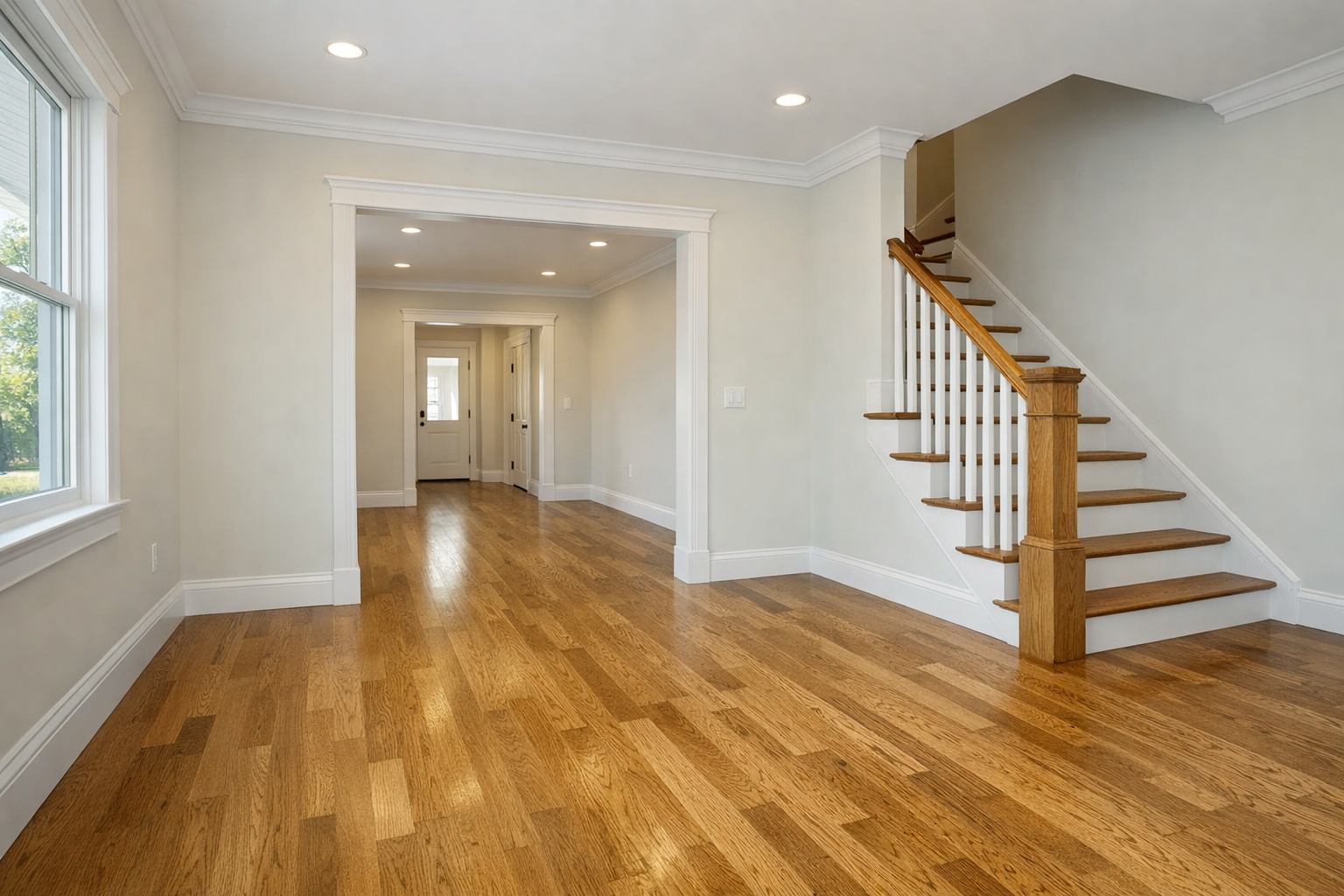
Baseboards, casing, and stair details are often the first finish elements people notice when they walk through a newly built home. These pieces bring the visible edges of the home together: where walls meet floors, where doors and windows meet drywall, and where ceilings or stair areas need a cleaner transition. For homeowners planning a new build, that consistency matters because trim influences the character of each room and the perceived quality of the entire project.
A well-planned trim scope also keeps the finish carpentry from becoming a room-by-room guessing game late in the build. Instead of mixing profiles, sizes, and installation details as decisions come up, the package sets a clear direction for the home before final finish work begins. That helps the trim install coordinate with drywall, priming, flooring, paint, and punch-list milestones.
Depending on the project, finish carpentry packages can include baseboards, door and window casing, interior doors, crown molding, closet trim, stair skirt boards, rail-related trim details, and custom accents. The takeaway is simple: the right package gives the home one polished finish language while still leaving room for upgrades in key spaces like entries, great rooms, dining areas, and primary suites.
What Is Included in a New Construction Trim Package?
Start the scope by walking the plan: every door opening, window, closet, stair run, and room perimeter should have an assigned trim detail. A useful package is easiest to understand as a room-by-room checklist, not a single product on a shelf, and it should be adjusted to match the builder's specifications, floor plan, room count, ceiling heights, and finish level.
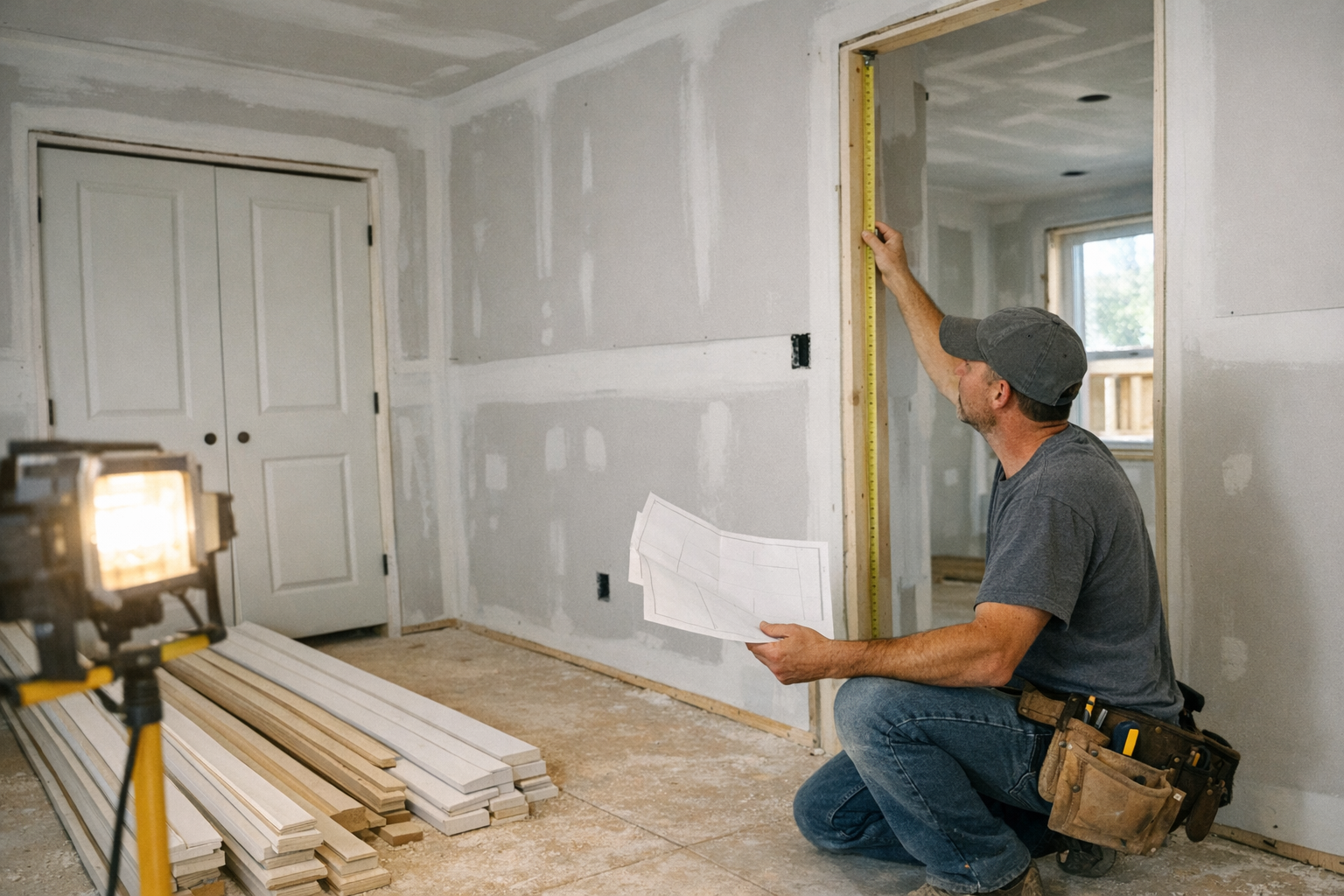
- Baseboards: These run along the bottom of the walls and create the finished line where wall surfaces meet flooring. Taller or more detailed baseboards change the visual weight of a room, while simpler profiles keep the look clean and cost-conscious.
- Door and window casing: This frames interior door openings and windows so the drywall edges look complete. A basic profile gives a neat border; a wider or layered profile makes the openings feel more architectural.
- Window stools and aprons: A stool is the horizontal ledge at the bottom of a window, and the apron is the trim piece below it. Some interior trim packages use a simple picture-frame detail instead, so this choice should be made before material is ordered.
- Closet trim: Closet openings may need the same door trim, jamb details, or shelving-related trim as the main rooms. Including closets in the package helps avoid unfinished-looking secondary spaces.
- Interior doors and hardware coordination: Some packages include setting interior doors; others only trim around openings after doors are installed. If hardware coordination is included, the trim contractor accounts for items like hinge locations, knob prep, door swings, and consistent reveal lines.
- Stair trim: Stair areas may include skirt boards, trim along landings, and rail-related finish details. This scope is layout-dependent because a straight stair run, open railing, or landing turn each changes the amount and type of trim needed.
- Optional crown molding and accent details: Crown molding finishes the wall-to-ceiling transition, while accents such as wainscoting, panel molding, or feature-wall trim add more design character. These are commonly treated as upgrades because they add material, layout time, and installation detail.
The practical takeaway: the package should spell out what is included room by room, what is optional, and where upgraded profiles or details apply. That clarity helps homeowners compare scopes accurately instead of assuming every trim quote covers the same work.
Standard, Upgraded, and Custom Trim Package Options
Package levels are most useful when they describe real scope differences, not just "good, better, best" labels. The right level usually depends on the home's price point, the rooms that need extra detail, and whether the project is one home or a repeatable builder plan.
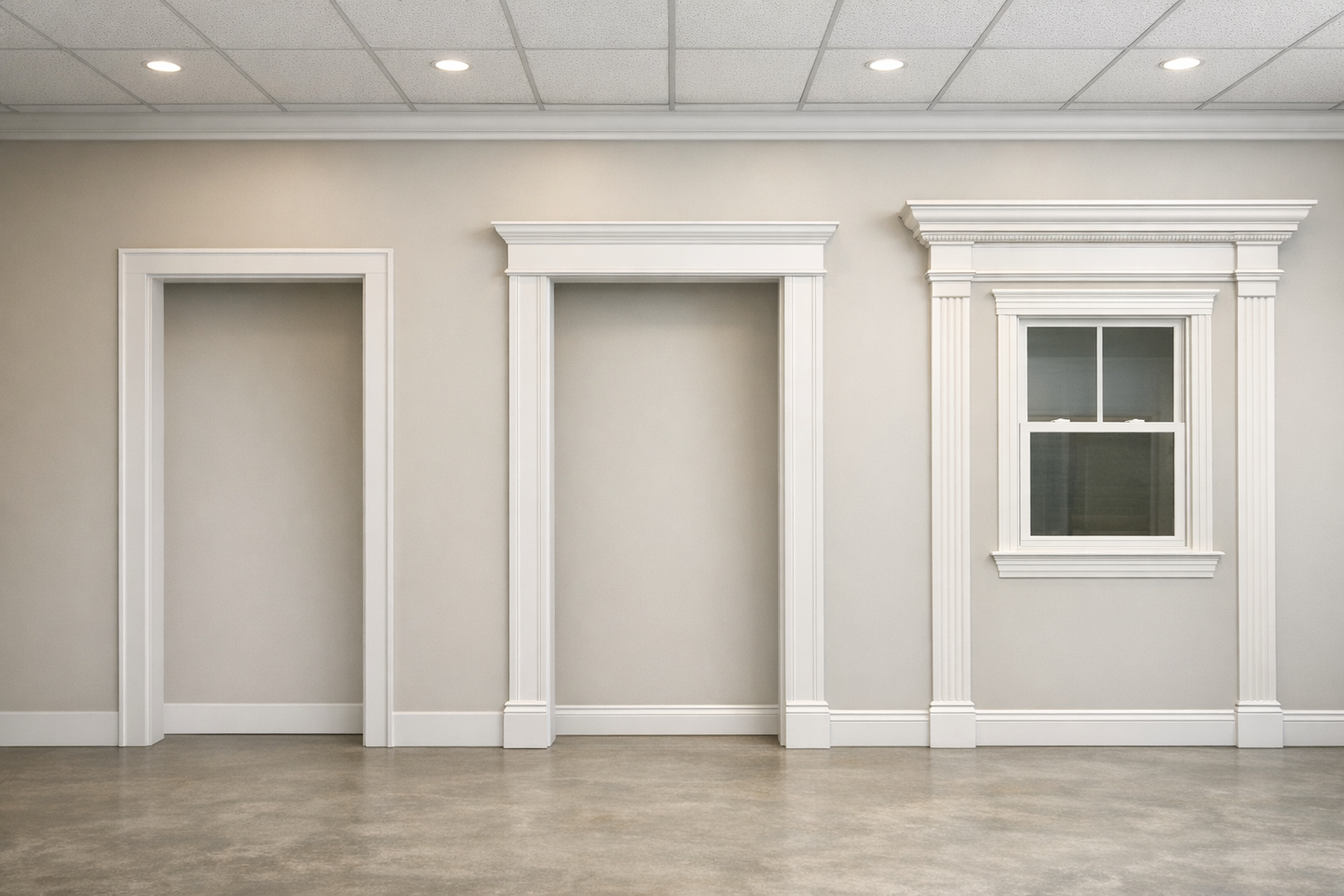
- Standard packages: A standard trim package focuses on clean, durable essentials: baseboards, door casing, window casing, closet openings, and straightforward transitions. This level fits starter homes, production homes, spec builds, and multi-home developments where consistency, speed, and a neat finished look matter more than decorative detail.
- Upgraded packages: An upgraded package keeps the core scope but changes the visual impact. That may mean taller baseboards, wider casing, more defined window trim, crown molding in main living areas, or accents in select rooms such as dining room wainscoting or primary suite crown. These builder trim packages work well for move-up homes where buyers expect a more finished, designed feel without fully custom millwork throughout.
- Custom packages: Custom trim packages are built around the architecture and owner's design goals. This level can include custom millwork for new homes such as built-ins, coffered ceilings, paneled feature walls, library trim, detailed stair work, wainscoting, or specialty profiles matched to a specific style. It is best suited for luxury custom homes, showcase spaces, and projects where the trim is meant to become a major design feature.
A good way to choose is to decide where detail will actually be noticed. A development may use one standard profile set across every plan, then offer crown or accent walls as upgrades. A custom home may use a cleaner package in bedrooms and reserve the most detailed millwork for the foyer, great room, dining room, study, or primary suite. That kind of structure keeps the package practical while still giving the finished home the right level of character.
Paint-Grade, Stain-Grade, MDF, and Wood Trim Choices
Material choice is where a trim package starts to feel tailored instead of generic. The same baseboard or casing profile can look very different depending on whether it is painted, stained, built from engineered material, or selected as clear wood, so this decision affects appearance, finish expectations, installation precision, and budget.
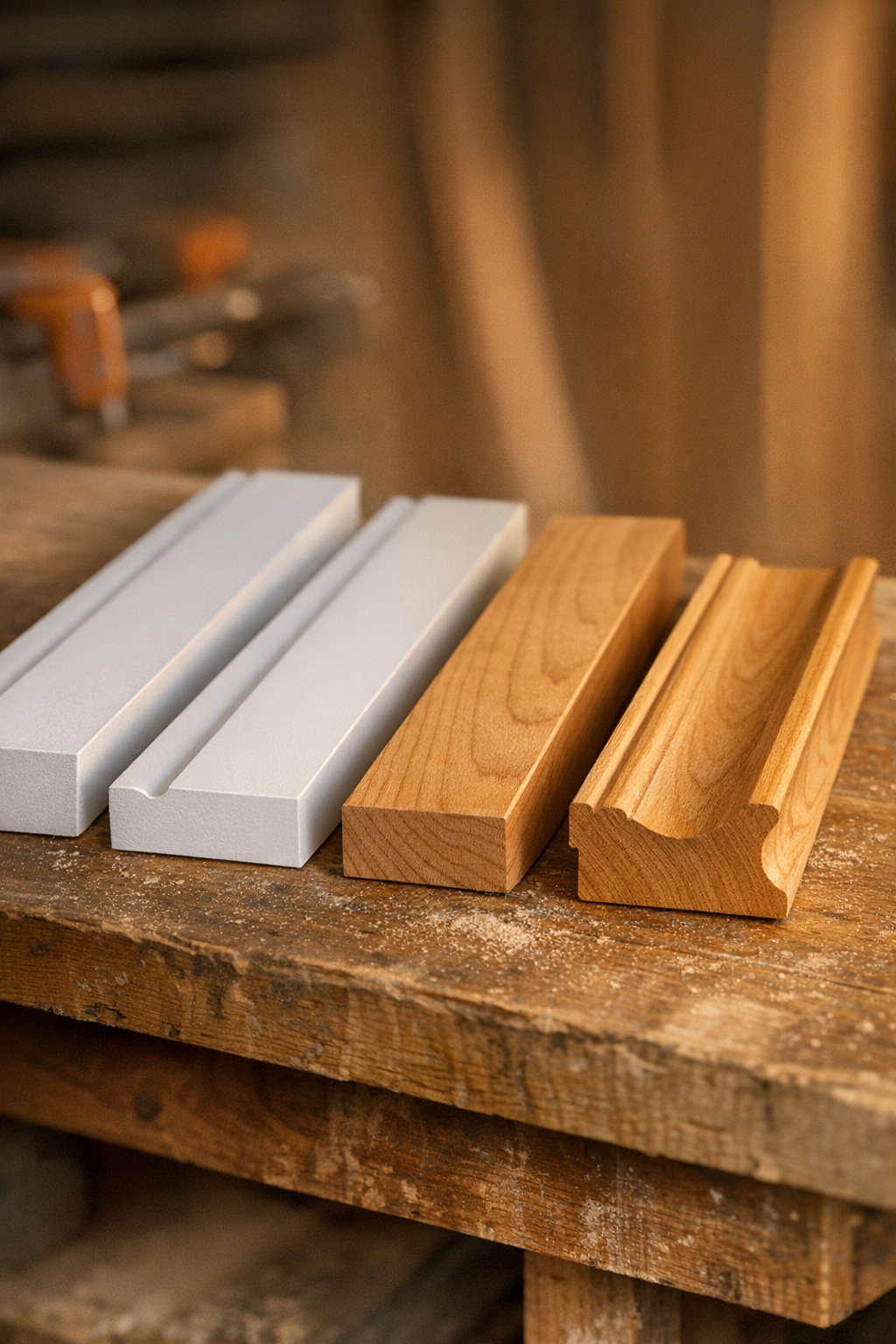
Paint-grade trim is made to be painted, so the goal is a smooth, consistent surface rather than visible wood grain. MDF is a common paint-grade option because it provides a uniform face for crisp painted profiles, especially on baseboards, casing, and larger flat trim details. Finger-jointed material is another paint-grade choice; it uses shorter wood pieces joined together, then painted so the joints are not part of the finished look. These options often make sense for clean modern, transitional, or production-style packages where consistency matters across many rooms.
Stain-grade wood is selected when the natural grain, color, and character of the wood will remain visible. That makes the carpentry more detail-sensitive: boards need to be chosen more carefully, grain and color variation matter more, and joints, miters, and returns are less forgiving because the finish will not hide them the way paint can. It is a strong choice for traditional, craftsman, rustic, or higher-end custom interiors where the trim is part of the design feature, not just a painted border.
The practical takeaway for new construction trim packages is to match the material to the room conditions and finish goal. Painted packages usually prioritize clean lines and efficient consistency. Stained packages usually call for more selective material and tighter visual control. In humid areas or high-use spaces, maintenance expectations and finish durability should be part of the selection conversation before profiles are ordered.
Trim Styles and Room-by-Room Customization
Profile selection is where the package starts matching the architecture of the home. Modern trim usually leans toward flat stock, square edges, and minimal reveal lines, which keeps rooms clean and understated. Transitional homes often use simple casing with a slightly more detailed baseboard, giving the space some shape without feeling ornate. Craftsman packages may use wider, built-up casing and header details. Farmhouse styles often favor taller baseboards, simple window trim, and relaxed painted finishes. Traditional homes can support more layered profiles, including crown molding, paneled openings, and more formal casing combinations.
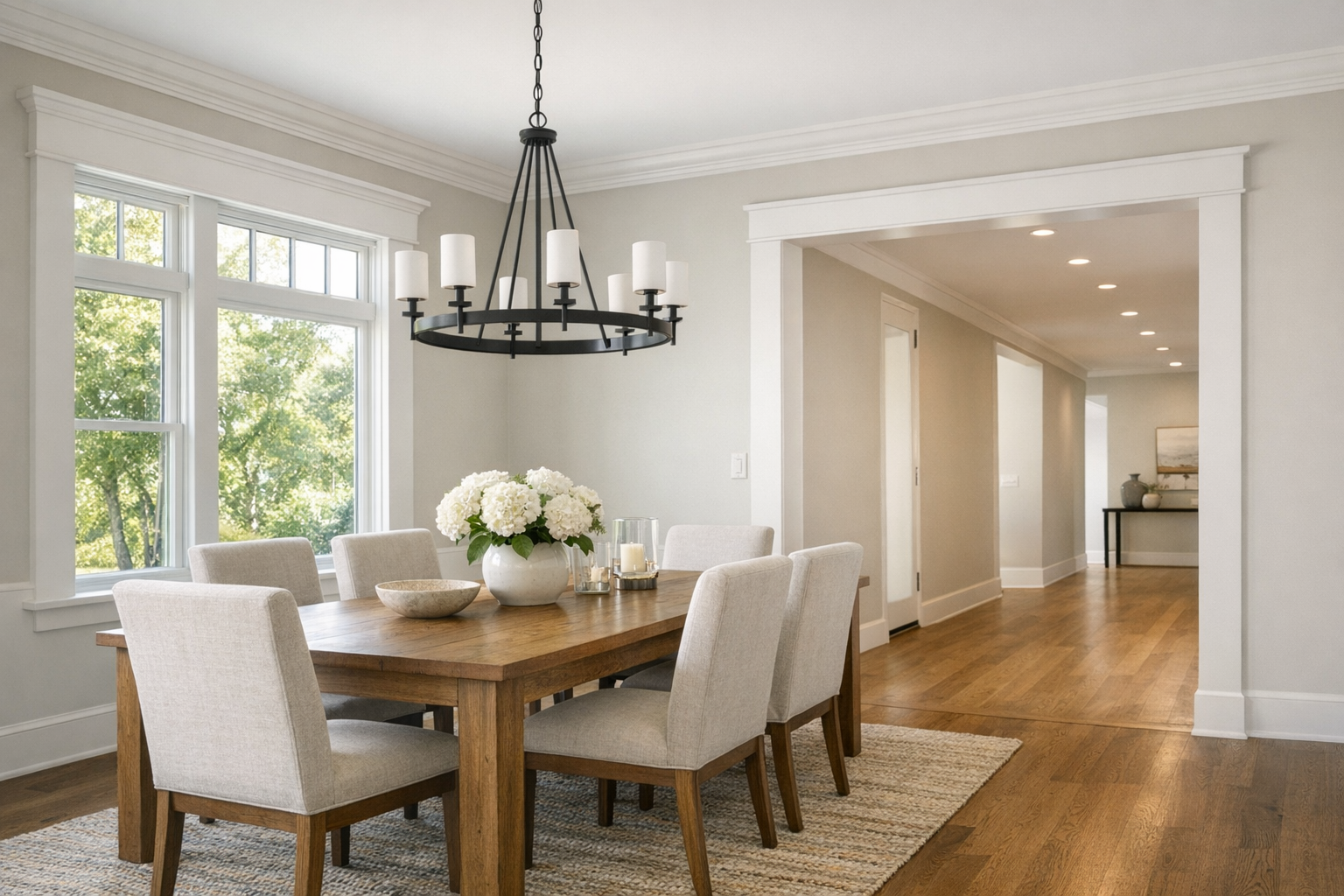
The best new construction trim packages do not have to treat every room the same. Secondary bedrooms might receive straightforward base and casing so they feel finished without overbuilding the budget. Dining rooms may be upgraded with crown molding, a chair rail, or wall panel details because those spaces are meant to feel more formal. Main living areas can use enhanced door and window casing to frame larger openings, while stairs may need upgraded skirt boards, trim returns, or rail-adjacent finish details. Entries, studies, and offices are good places for custom accents because they create a strong first impression.
The key is coordination, not collecting unrelated profiles. A good package uses a main trim family, then scales the detail up or down by room. That keeps crown molding installation, casing widths, base heights, and accent details visually connected from one space to the next, so the home feels intentionally designed instead of pieced together late in the build.
When Trim Is Installed During New Construction
On the jobsite, timing is just as important as profile selection. Trim packages for new construction usually move in after drywall is complete and the home is ready for finish work, often around priming, flooring readiness, cabinet milestones, and other interior finish sequencing. The exact order can vary by builder, but trim is commonly installed before final paint touch-ups, caulking, putty work, and punch-list finishing.

Early planning keeps new home finish carpentry from becoming a late-stage scramble. Door sizes affect casing and jamb details. Window returns affect whether openings receive stools, aprons, or full casing. Cabinet clearances can change how crown, base, and side trim terminate. Stair layouts may require skirt boards or rail-adjacent trim before surrounding finishes are complete. Flooring transitions also matter because baseboards, shoe molding, and thresholds need to meet finished floor heights cleanly.
A finish carpentry contractor helps coordinate those details with the builder, superintendent, designer, painter, flooring crew, cabinet installer, and other trades before materials are ordered and crews are scheduled. That coordination helps prevent missing profiles, blocked cabinet doors, awkward trim returns, mismatched window details, and delays caused by waiting on specialty pieces after the house is already in the finish stage.
What Affects the Cost of a New Home Trim Package?
A dependable trim estimate starts with the actual scope, not a one-size-fits-all number. For new home trim packages, the biggest cost drivers are usually the size of the home, the number of rooms and openings, ceiling heights, the selected profiles, and how much detail is being added beyond the core baseboard and casing package.
Profile size changes both material and labor. A simple baseboard and casing layout is more efficient than a taller base, layered casing, crown molding, wainscoting, or multi-piece built-up details. Material also matters: paint-grade trim is typically chosen for a smooth painted finish, while stain-grade wood requires more selective boards because the grain and color remain visible.
Door count, window count, stair complexity, and built-ins can shift the scope quickly. A home with many interior doors, cased openings, tall windows, stair skirt boards, bench seats, shelving, or fireplace trim will need more layout, cutting, fitting, and finish coordination than a simpler plan with fewer detailed areas.
Jobsite conditions and builder specifications also affect the quote. Clean access, ready rooms, finalized selections, and consistent profile choices help keep the work predictable. Changes to door schedules, ceiling details, specialty rooms, or finish materials after pricing can change the final scope.
To provide an accurate estimate, we typically need plans, room counts, ceiling heights, door and window schedules, desired profiles, material preferences, finish type, and any crown, stair, or built-in details. Final pricing is based on measured scope and selected materials, so the quote reflects the home being built, not a generic package that may miss important details.
Why Choose a Professional Trim Package Service?
A clean estimate is only useful if the field work matches it: casing that lines up from room to room, baseboards that meet cleanly at corners, crown returns that look intentional, and window trim that feels like part of the home instead of an afterthought. A professional finish carpentry contractor turns the selected scope into a repeatable field plan, so the finished home has consistent profiles, cleaner joints, and fewer mismatched details.
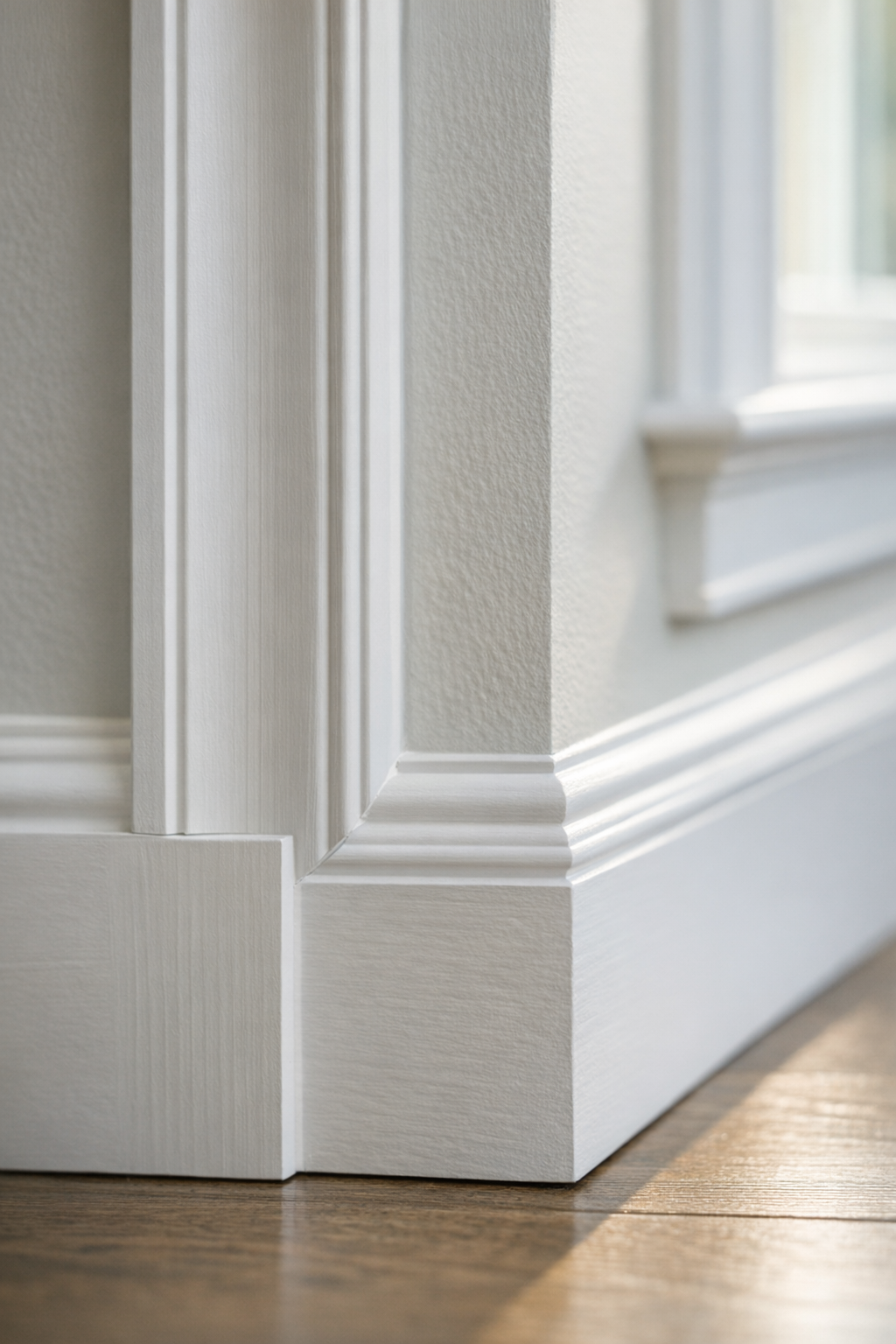
That consistency is also a planning advantage. Well-organized new-home trim packages include material takeoffs, profile lists, room-by-room scope notes, and installation planning before work begins. That helps the trim phase coordinate with drywall, priming, flooring, cabinets, paint, and punch-list timing instead of creating delays because a casing profile, door trim detail, or specialty room material was missed.
Quality control is more than "straight boards." Good signs include tight miters, clean reveals around doors and windows, properly planned transitions at flooring and cabinets, consistent base heights, and careful handling of paint-grade or stain-grade materials. Weak signs include mixed profiles without a reason, uneven gaps, rushed caulking-dependent joints, and unclear responsibility for final touch-ups.
Trust also comes from how the service is managed. Look for a trim partner who can show a portfolio of similar homes, communicate clearly with the builder or superintendent, define what is included and excluded, identify whether crews are locally owned, and explain how punch-list items are handled after installation. For custom trim packages, that communication matters even more because specialty rooms, built-ins, stair details, and upgraded millwork need tighter coordination.
If you are planning a single custom home, a spec build, or a multi-home development, send the plans, door and window schedules, finish preferences, and any inspiration photos you already have. We can help review the scope, recommend practical package options, and prepare a trim consultation or package estimate that matches the way the home is actually being built.
FAQs
What is included in a new construction trim package?
A new construction trim package can include baseboards, door and window casing, window stools and aprons, closet trim, interior door coordination, stair trim, crown molding, and accent details. The scope should be listed room by room so every door opening, window, closet, stair run, and room perimeter has an assigned trim detail.
Do trim packages include interior doors?
Some trim packages include setting interior doors, while others only include trimming around openings after doors are installed. If door coordination is included, the contractor accounts for hinge locations, knob prep, door swings, and consistent reveal lines.
What is the difference between paint grade and stain grade trim?
Paint grade trim is made for a smooth painted finish, and MDF is commonly used because it provides a uniform surface for baseboards, casing, and flat trim details. Stain grade wood keeps the natural grain and color visible, so board selection, miters, joints, and returns must be more precise.
How do homeowners choose the right trim package for a new home?
Builders choose a trim package based on the home price point, floor plan, room count, ceiling heights, selected profiles, and where detail will be most noticeable. Standard packages fit production and spec homes, upgraded packages add features like taller baseboards or crown in main areas, and custom packages suit luxury homes with built ins, coffered ceilings, wainscoting, or detailed stair work.