
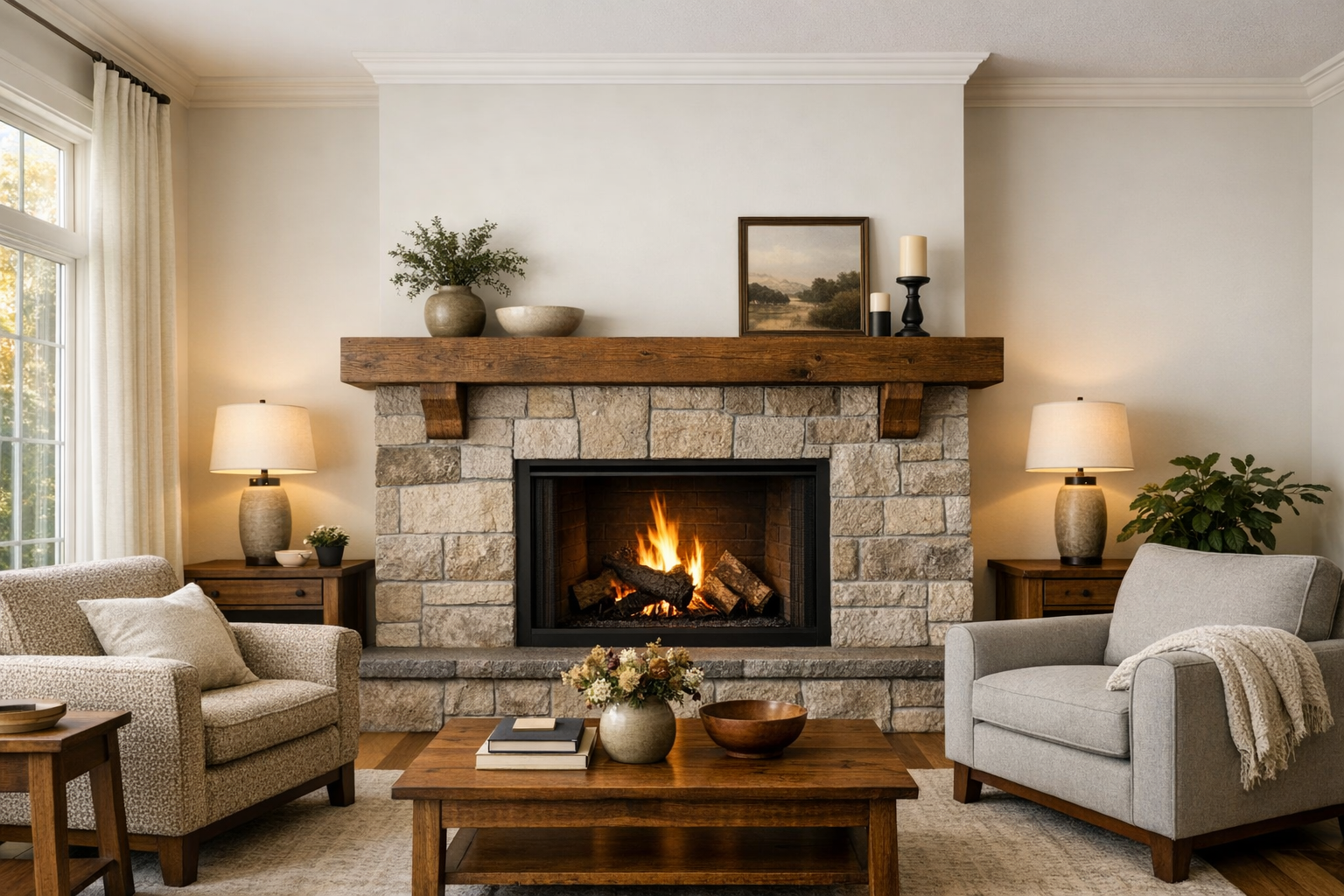
Start with the wall itself: does the fireplace look too small for the room, too plain for the architecture, or unfinished around the firebox? An updated mantel or surround can give that area visual weight, create a cleaner transition to the surrounding wall, and help the fireplace read as an intentional focal point.
This service is about more than choosing a pretty shelf or decorative trim. A mantel affects visual height, proportion, and how the fireplace relates to the rest of the room; a surround shapes the area around the firebox and influences the finished look, material transition, and safety planning. A clean painted mantel may soften a transitional living room, while a stone or tile surround can add weight, texture, and durability.
Professional fireplace mantel installation or fireplace surround installation helps bring those choices together in a practical way. Measurements, material selection, fastening, heat exposure, and code-aware placement all matter, especially when combustible trim, existing masonry, gas units, or older fireplace openings are involved. The goal is a fireplace feature that looks intentional, fits the room, and is installed with the right attention to both finish and safety.
Mantel vs. Surround: What Each Part Does
When you ask for a fireplace mantel and surround estimate, the words you use can change the scope of the project. The mantel is often the shelf above the fireplace, but it can also mean the full decorative framework around the opening. The surround is the material that frames the firebox opening itself, often planned with heat exposure, finish transitions, and code-aware placement in mind.
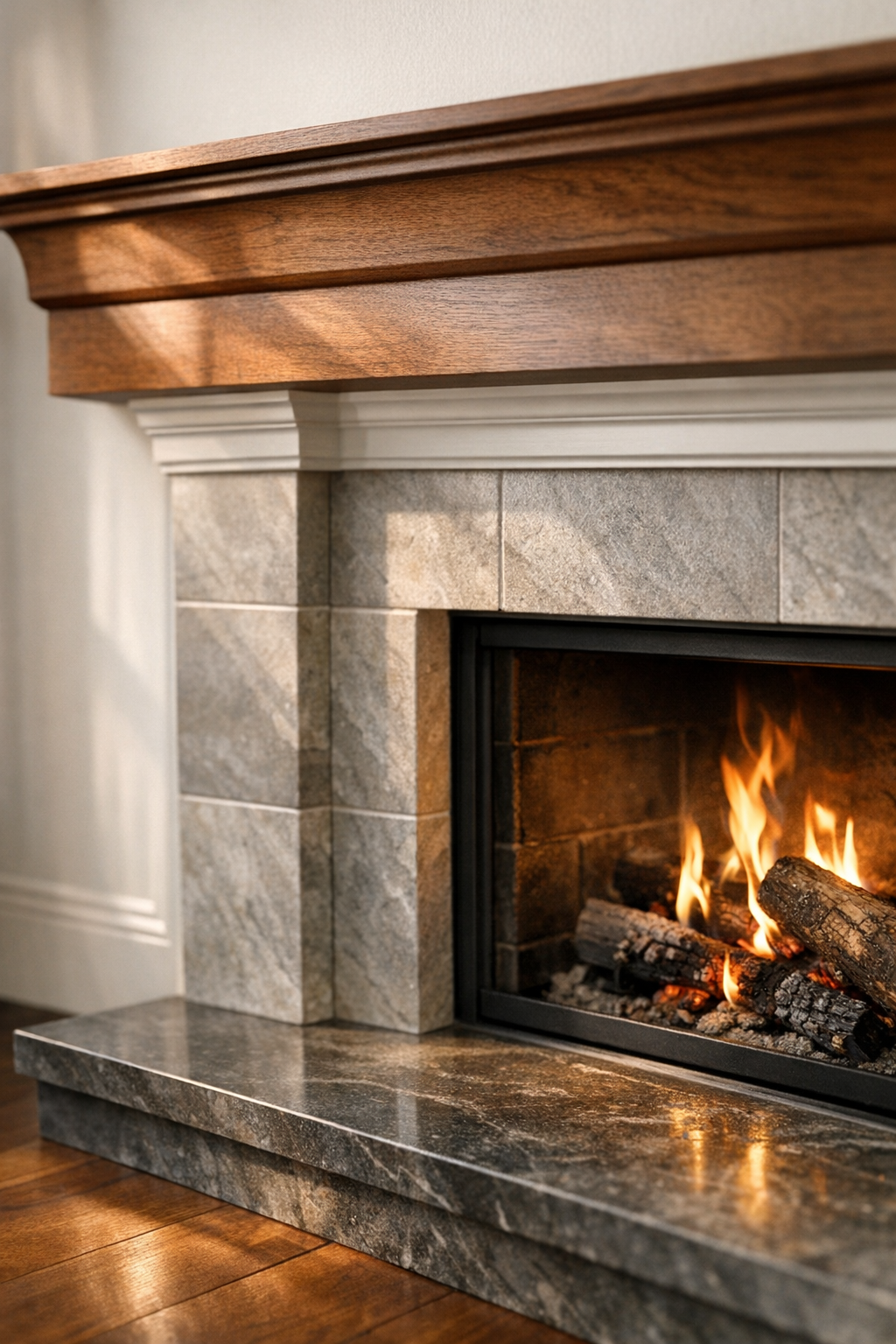
- Mantel shelf: the horizontal ledge above the firebox. It affects the fireplace's visual height and is often where homeowners notice scale problems first.
- Legs and header: the vertical side pieces and top crosspiece of a full mantel frame. These create a more built-in, architectural look than a shelf alone.
- Surround: the facing material immediately around the firebox opening, such as stone, tile, brick, marble, or another approved finish. This is the area most directly tied to heat, material transitions, and safe layout.
- Hearth: the base area at floor level in front of the fireplace. It can be a design feature, a material break, and part of the overall fireplace plan.
- Firebox: the actual opening or unit where the fire sits. Its size, type, and placement shape what can be built around it.
- Corbels and chimney breast: corbels are decorative brackets under a shelf; the chimney breast is the projecting wall mass around the fireplace, if your home has one.
A simple project might replace only dated fireplace mantels while keeping the existing tile or stone. A larger remodel might remove the old facing, resize the visual frame, and install new fireplace surrounds that better match the room's architecture and proportions.
Mantel Replacement, Surround Upgrades, and Full Custom Fireplace Design
If the existing stone or tile still suits the room but the shelf looks too skinny, the scope may be a mantel replacement. If the shelf, facing, hearth, and wall all feel disconnected, it is usually better to plan those pieces as one feature.
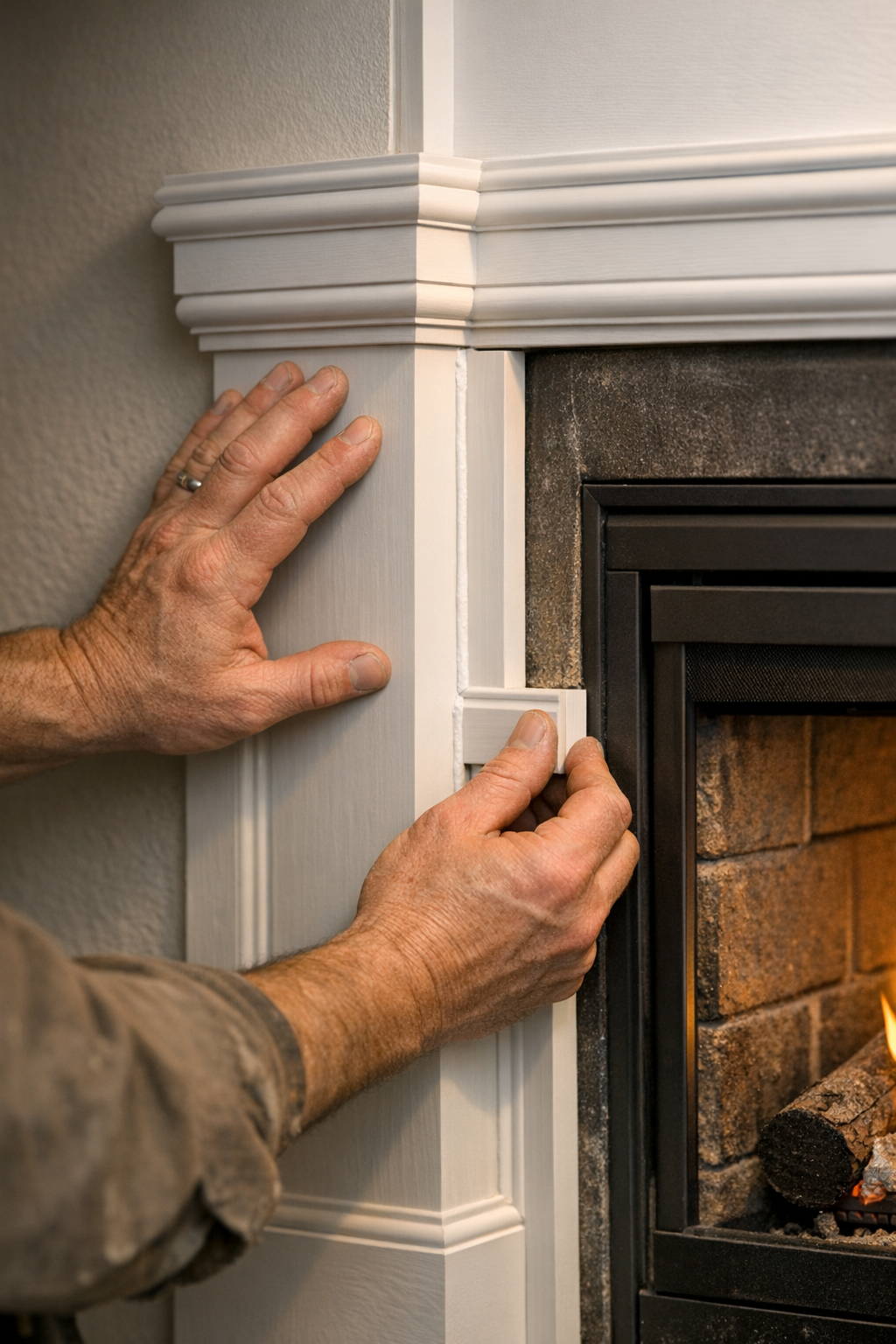
- Mantel replacement: this keeps the existing firebox and surrounding facing but swaps the shelf or mantel frame. It makes sense when the tile, stone, or brick still looks good, but the mantel is too plain, too ornate, or out of scale.
- Surround upgrade: this changes the material around the firebox while leaving the broader wall layout mostly intact. It is a good fit when the mantel works, but the facing material dates the room or does not transition cleanly to the flooring, hearth, or wall finish.
- Custom mantel added to an existing firebox: this gives a plain fireplace more presence without rebuilding the whole feature. Custom fireplace mantels are especially useful when the firebox feels visually stranded on a large wall and needs architectural framing.
- Fireplace refacing: this is a broader update that changes the visible face of an outdated fireplace, often improving the relationship between the fireplace, the room style, and the wall proportions. It is more involved than replacing a shelf, but less extensive than designing the entire feature from scratch.
- Full custom fireplace design: this plans the mantel, surround, hearth, finish transitions, and overall scale together. Custom fireplace surrounds and mantel details are usually the better route when several parts feel mismatched, when the fireplace is being made into the room's main focal point, or when proper fit and code-aware installation need to be built into the design from the start.
A smaller update is usually enough when one element is the clear problem: the shelf is too skinny, the trim style clashes, or the facing material is the only outdated piece. A full transformation becomes more practical when the fireplace looks undersized for the wall, the mantel and surround belong to different design eras, or changing one piece would leave the rest looking unfinished.
Choosing the Right Material: Wood, Stone, Tile, Marble, Brick, and Cast Options
Material choice is where the design starts to feel real, because each surface changes the fireplace's visual weight, maintenance routine, installation approach, and placement near heat. The best choice is not just the prettiest sample; it is the one that fits the room's architecture, the firebox type, and the level of upkeep you are willing to live with.
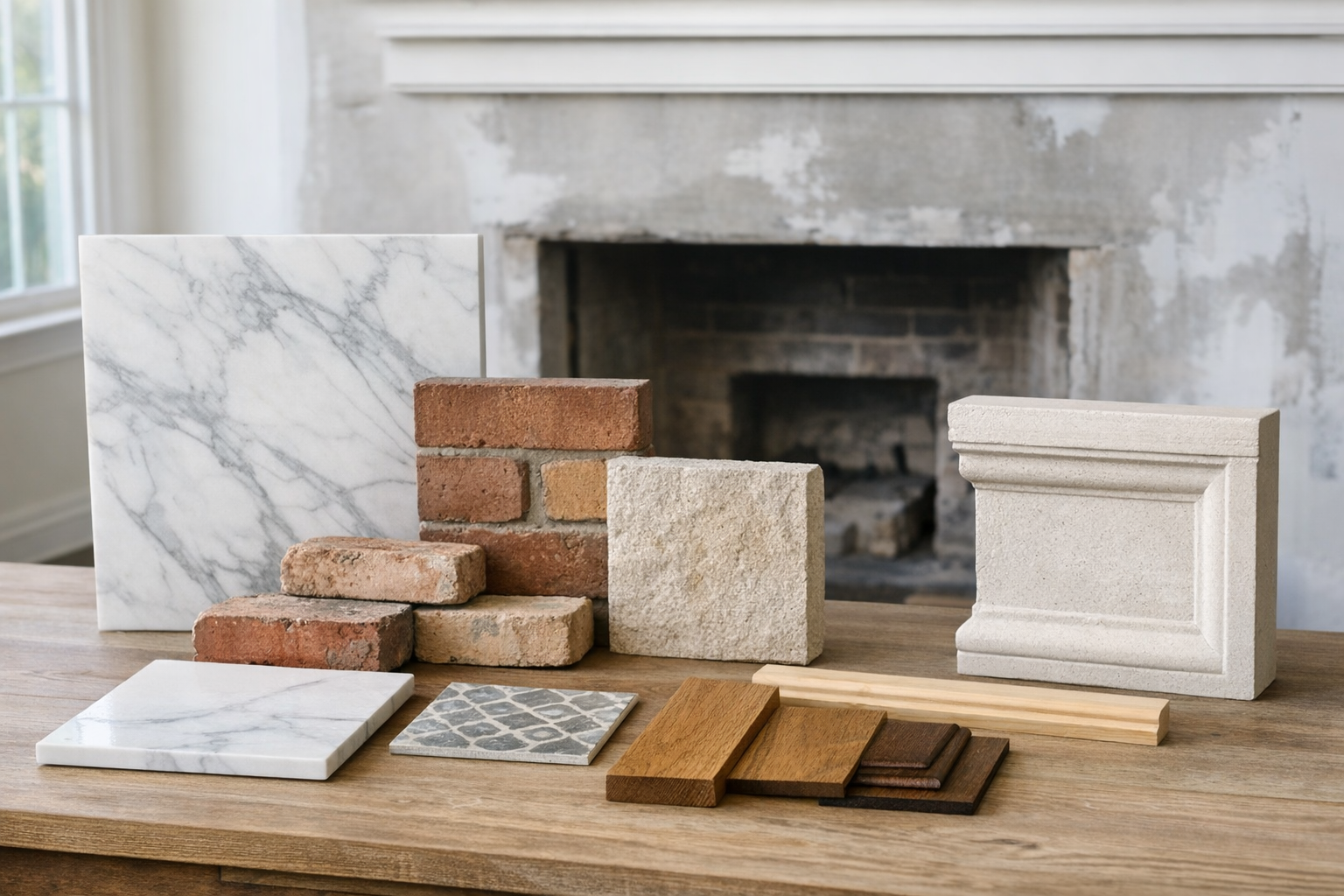
- Wood fireplace mantels: wood works well for shelves, legs, panel details, and painted or stained trim, especially in traditional, transitional, and farmhouse-style rooms. It can be crisp and simple or built up with profiles and decorative molding. The tradeoff is placement: wood is combustible, so its depth, height, and distance from the firebox need to be planned around code-aware installation requirements.
- Stone fireplace surrounds: natural stone gives the fireplace a heavier, more permanent look and can suit rustic, classic, or high-end interiors depending on the cut and finish. Limestone feels softer and warmer, granite looks denser and more polished, and slate brings a darker, textured character. Stone is often chosen when the surround needs to feel substantial, but the wall proportions still matter so it does not overpower the room.
- Marble fireplace surrounds: marble is a refined option when the goal is a formal, elegant, or quietly luxurious focal point. Veining makes each piece visually active, so it pairs best with mantel shapes that do not compete with the stone. It is a strong design choice, but samples should be reviewed carefully because color movement can look different once installed at fireplace scale.
- Tile: tile is flexible for color, pattern, and layout, from handmade-look ceramic to large-format porcelain. It can make a simple firebox feel custom without requiring a heavy surround profile. The practical detail is grout: narrow joints and darker grout can reduce the visual distraction of staining or everyday dust, while intricate patterns need cleaner layout planning.
- Brick: brick adds texture, warmth, and a familiar masonry look. It can feel historic, casual, or industrial depending on color, mortar, and whether it is left natural, limewashed, or painted. Its uneven surface gives character, but it also means the finished edge transitions to trim, flooring, and wall surfaces should be planned deliberately.
- Cast stone and stone veneer: cast stone can mimic carved stone with more controlled shapes, while veneer creates the look of masonry with less visual bulk than full-depth stone. These options are useful when you want texture or a custom profile, but the installation still needs accurate measurement, suitable backing, and a design that matches the fireplace's scale.
A helpful checkpoint is to separate combustible from noncombustible zones before falling in love with a sample. Wood and some trim products have different placement limits than stone, tile, brick, marble, granite, slate, limestone, cast stone, or other noncombustible surround materials. That does not mean one category is automatically better; it means the mantel depth, projection, surround width, and firebox relationship should be designed together so the finished fireplace is both attractive and code-aware.
Styles That Fit the Room: Traditional, Transitional, Modern, and Minimal
Style decisions get easier when you look at the fireplace elevation like a piece of architecture, not just a finish choice. Wall width, ceiling height, firebox size, shelf projection, and the fireplace's intended role all affect whether the design feels balanced, too quiet, or overpowering as the room's focal point.
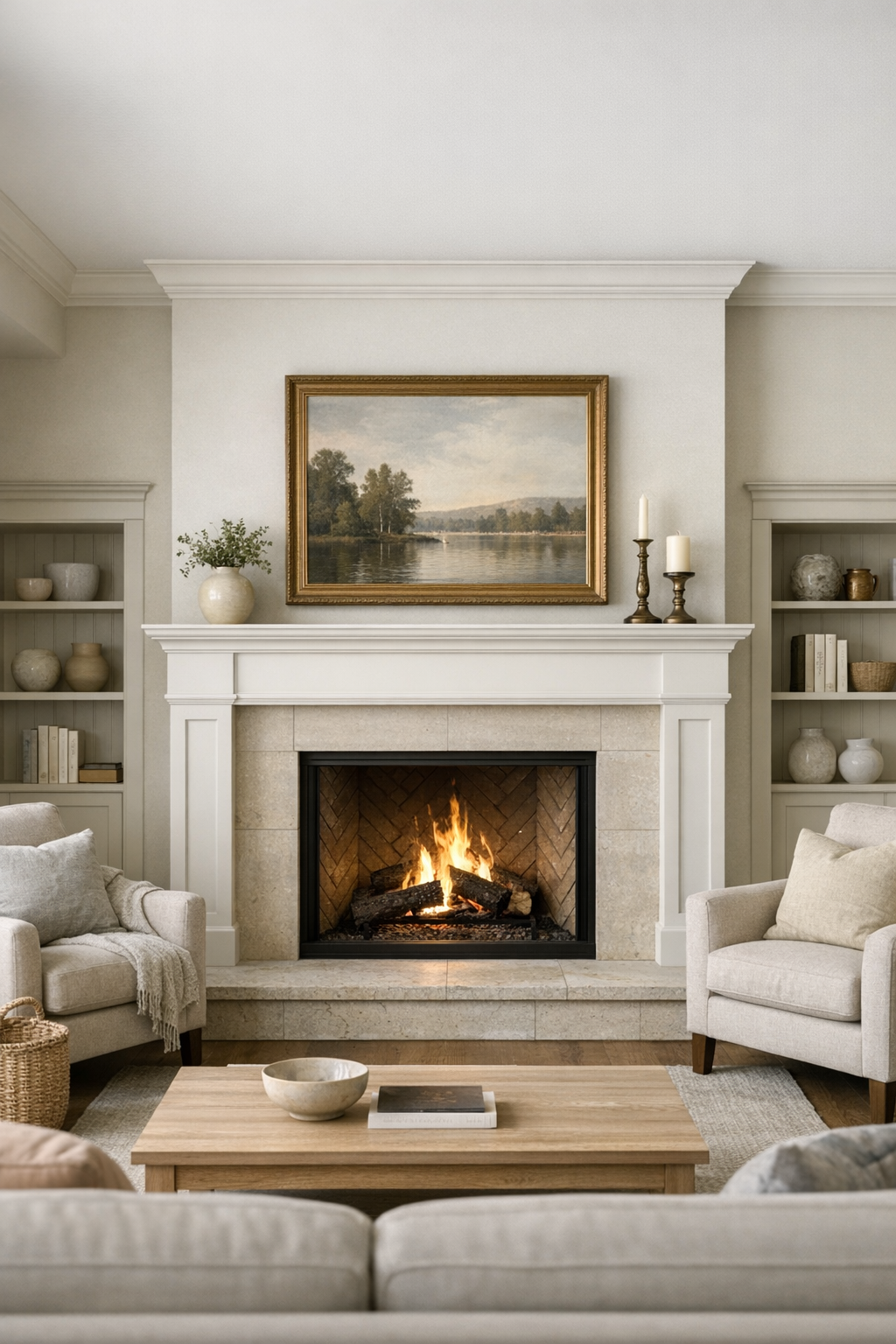
- Traditional: traditional mantels use detailed millwork, layered trim, crown molding, and shaped legs to give the fireplace a formal, built-in presence. This style works best when the room already has architectural detail, taller ceilings, or classic trim elsewhere. A weak signal is an ornate mantel in a plain, low-ceilinged room, where the profiles can feel heavier than the architecture around them.
- Transitional: transitional designs simplify the traditional frame with clean painted wood, restrained trim, and a shelf that feels substantial without being bulky. It is a good middle ground for homes that mix older details with updated furniture. The practical takeaway is proportion: a mantel that is too narrow for the wall can look temporary, while one with modest trim and the right width can make the fireplace look intentional.
- Rustic and statement designs: a rustic beam adds thickness, texture, and an informal feel, while a full stone statement surround gives the fireplace more visual weight from floor to ceiling. These choices can be excellent in larger rooms, vaulted spaces, or homes with natural materials nearby. In a small room, though, deep projection or a chunky shelf can crowd the firebox and make the wall feel top-heavy.
- Modern and minimal: a modern fireplace mantel usually relies on simple lines, thinner profiles, smooth slabs, or a low-profile shelf rather than decorative trim. Marble surrounds can also feel modern when the veining is allowed to be the main detail. Color matters here: high contrast makes the fireplace more prominent, while a wall-matched surround creates a calmer, more minimal feature.
During design, elevation drawings and room measurements help test these choices before anything is built. Shelf depth affects shadow lines and display space, projection affects how far the mantel comes into the room, trim detail changes formality, and color controls whether the fireplace blends in or becomes the visual anchor.
Fireplace Type, Heat Exposure, Clearances, and Code Considerations
Before the final profile is approved, the fireplace itself has to drive a few decisions. A mantel that looks perfect on paper can become the wrong choice if its shelf projects too far, sits too close to the firebox opening, or places a TV, artwork, or combustible trim in a heat path that the fireplace was not designed to handle.
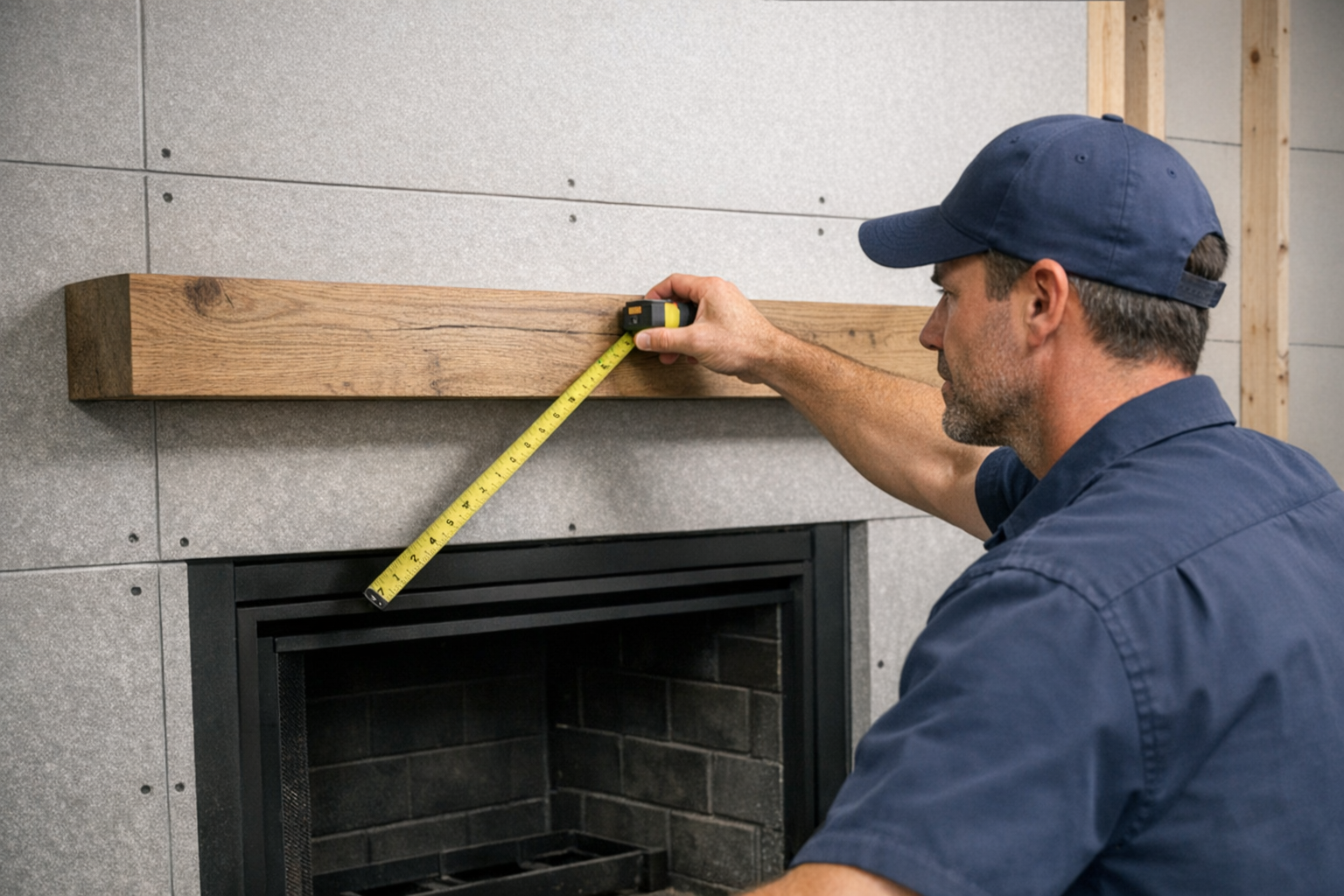
- Wood-burning fireplaces: these usually call for the most caution because the design has to account for flame, radiant heat, smoke staining, and the relationship between combustible trim and the opening. Wood fireplace mantels can be safe and beautiful, but their height, side clearance, depth, and any protective noncombustible facing need to be planned together.
- Gas fireplaces: gas units vary widely by model. Some are built into framed walls, some use decorative fronts, and some push more heat toward the wall above the unit. That means the mantel, surround material, and anything mounted above the fireplace should be sized around the specific unit, not copied from another room.
- Electric fireplaces: electric units often give more design flexibility, but the heat outlet, ventilation area, power access, and wall construction still matter. A clean modern frame may be simple visually, yet it still needs enough space for the unit to operate as intended.
- Fireplace inserts: an insert changes the existing opening by adding a new appliance inside it. The surround may need to work with insert trim panels, depth changes, and the remaining masonry or facing, so measurements around the firebox are especially important.
The main takeaway is simple: fireplace mantels and surrounds should be designed around both appearance and placement rules. A good plan identifies the fireplace type, measures the opening and projection, separates combustible and noncombustible areas, and uses local code requirements and the fireplace manufacturer's installation instructions to guide the final layout.
What to Expect From a Professional Design and Installation Process
A professional project usually starts by turning the fireplace wall into a measured plan, not just a style idea. During the first conversation, the installer or designer will look at what is staying, what is being removed, the fireplace type, the room's proportions, and the look you want the finished feature to have.
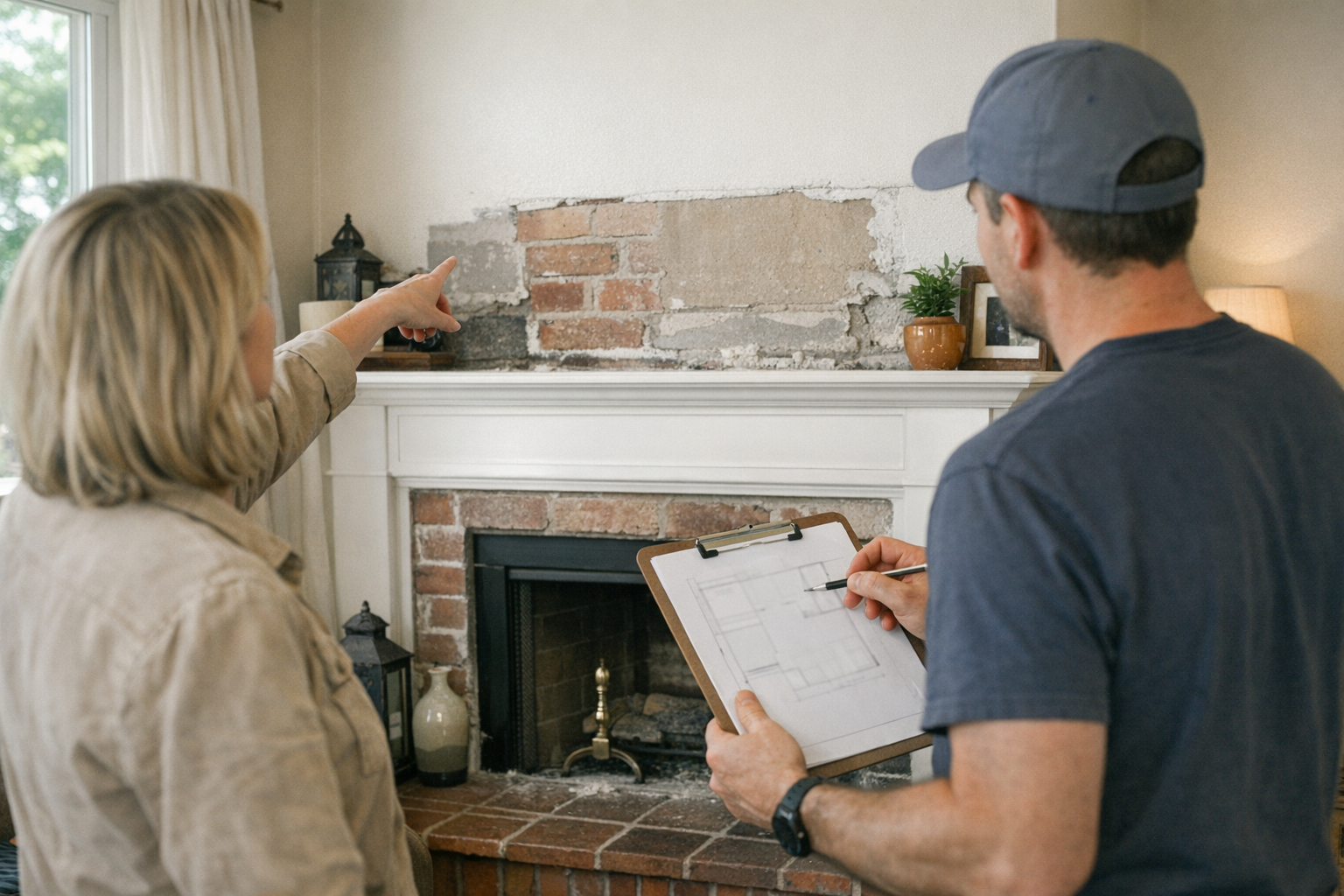
- Consultation and measurements: the team measures the firebox opening, surrounding wall, hearth, ceiling height, existing projection, nearby trim, and any features above the fireplace. These measurements shape the scale of the mantel, the width of the surround, and whether the design should feel subtle, substantial, or fully built-in.
- Fireplace and material review: the plan is matched to the fireplace type and the materials being considered. A painted wood mantel, tile face, stone slab, cast surround, or full custom fireplace design each changes the weight, fastening method, edge details, and finishing sequence.
- Design direction: you may review profile options, sample finishes, material boards, elevation drawings, or renderings. This step helps you see whether the shelf depth, trim detail, surround width, and overall height look balanced before anything is fabricated or ordered.
- Fabrication or ordering: some fireplace mantel installation projects use prebuilt or semi-custom components, while custom fireplace surrounds may require templating, shop fabrication, stone cutting, tile layout planning, or finish work before installation day.
- Preparation and installation: the work area is protected, old material may be removed, the wall or substrate is prepared, and the new mantel or surround is fastened, set, trimmed, grouted, caulked, painted, or sealed as the material requires.
Timing varies because not every project has the same scope. A simple mantel replacement may move faster than a tile, stone, or full fireplace mantels and surrounds remodel because there may be less demolition, fewer layout decisions, and fewer finishing steps. Projects can take longer when materials need to be fabricated, adhesives or grout need curing time, paint or stain needs finishing, or hidden wall conditions appear after removal.
The final walkthrough should leave you with a clean work area, finished edges, secure installation, and a fireplace feature that matches the approved design. It is also the point where placement, clearances, and finish details are reviewed so the finished result looks intentional and fits the fireplace it surrounds.
Why Work With a Professional for Your Fireplace Mantel or Surround
The real value shows up in details that are hard to judge from a photo or sample: a shelf that feels too deep, side legs that crowd the opening, or trim that does not meet the wall cleanly. A professional helps match the finished feature to the room's dimensions, the home's architecture, the fireplace's visual role, and the installation requirements that affect fit and placement.
- Better proportion: the mantel shelf, side legs, surround width, and overall height are scaled to the wall instead of chosen as isolated pieces. A strong design looks anchored and intentional; a weak one may feel too narrow, too top-heavy, or disconnected from the rest of the room.
- Code-aware material placement: combustible trim, noncombustible facing, hearth edges, and nearby finishes are planned around the fireplace area so the design supports both appearance and safer use.
- Cleaner installation: accurate measurements and proper fit help reduce awkward gaps, uneven reveals, misaligned edges, and trim that looks added on rather than built in.
- Stronger project coordination: custom fireplace mantels and custom fireplace surrounds often involve multiple decisions at once, including material selection, wall preparation, installation sequencing, finish work, and final placement review.
Whether you want to update, replace, or create a fireplace feature, the goal is a finished result that feels like part of the room and fits the fireplace it surrounds. To get started, schedule a consultation or request an estimate, and recommendations can be shaped around your fireplace type, room, materials, local code considerations, and installation scope.
FAQs
What is the difference between a fireplace mantel and a fireplace surround?
A fireplace mantel is usually the shelf above the firebox, though it can also include the full decorative frame with legs and a header. A fireplace surround is the facing material immediately around the firebox opening, such as stone, tile, brick, marble, or another approved finish.
Can I replace just the mantel without replacing the whole fireplace surround?
Yes, mantel replacement can keep the existing firebox and surrounding tile, stone, or brick while changing only the shelf or mantel frame. This works best when the current facing still looks good but the mantel is too plain, too ornate, too skinny, or out of scale.
What materials are best for fireplace mantels and surrounds?
Wood is common for mantel shelves, legs, painted trim, and stained trim, while stone, tile, marble, brick, cast stone, and veneer are common surround materials. The best material depends on the room style, firebox type, heat exposure, maintenance needs, and whether the area requires combustible or noncombustible placement.
Do fireplace mantels and surrounds need to meet building codes?
Yes, mantel and surround placement should account for local code requirements and the fireplace manufacturer’s installation instructions. Important factors include firebox type, opening size, shelf projection, combustible trim, noncombustible facing, hearth edges, and anything mounted above the fireplace.
How do I choose a fireplace mantel style that fits my home?
Choose a mantel style based on wall width, ceiling height, firebox size, shelf depth, projection, trim detail, and the fireplace’s role as a focal point. Traditional rooms often suit detailed millwork, transitional spaces work well with clean painted wood and restrained trim, and modern rooms usually look best with simple lines, smooth slabs, or a low-profile shelf.