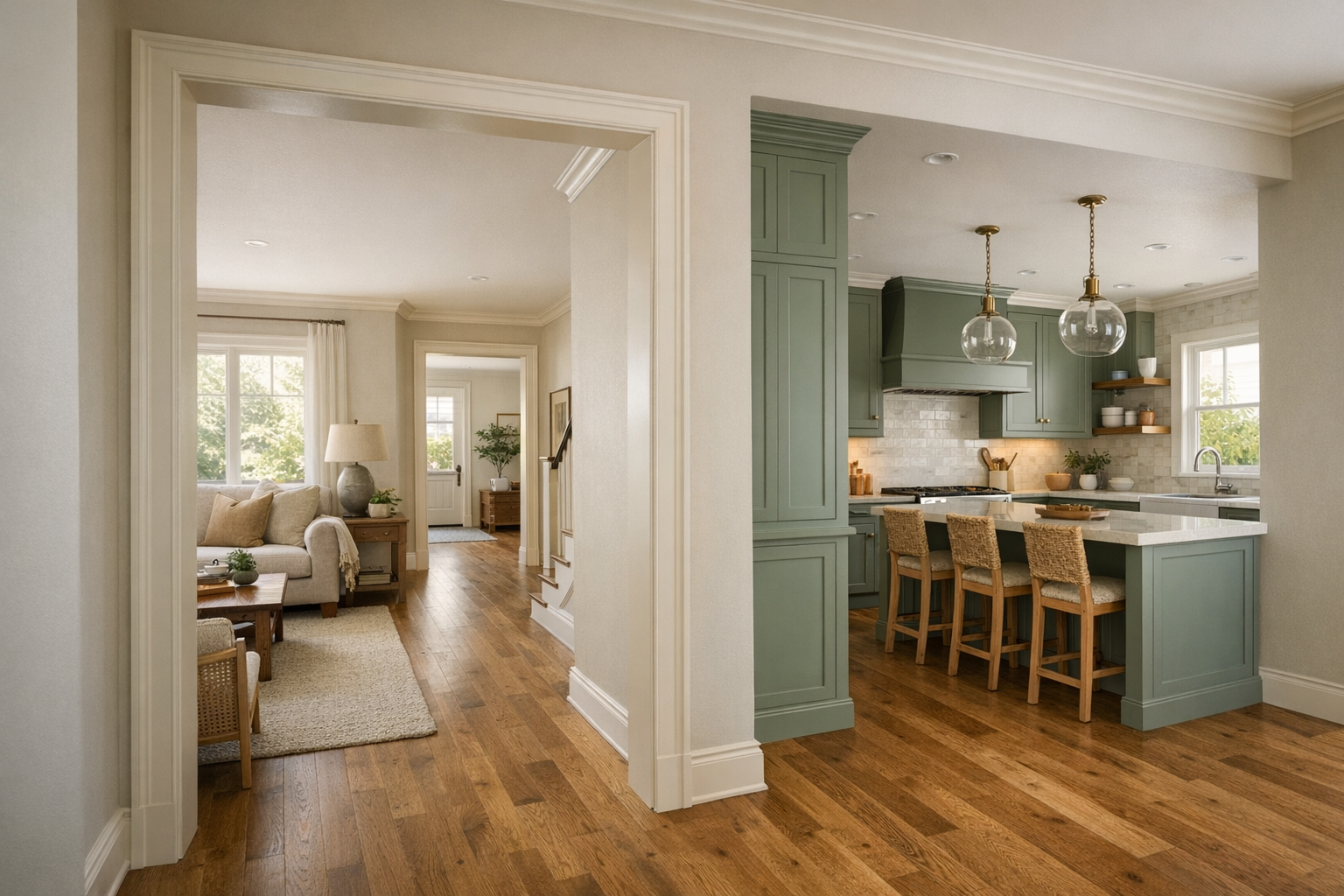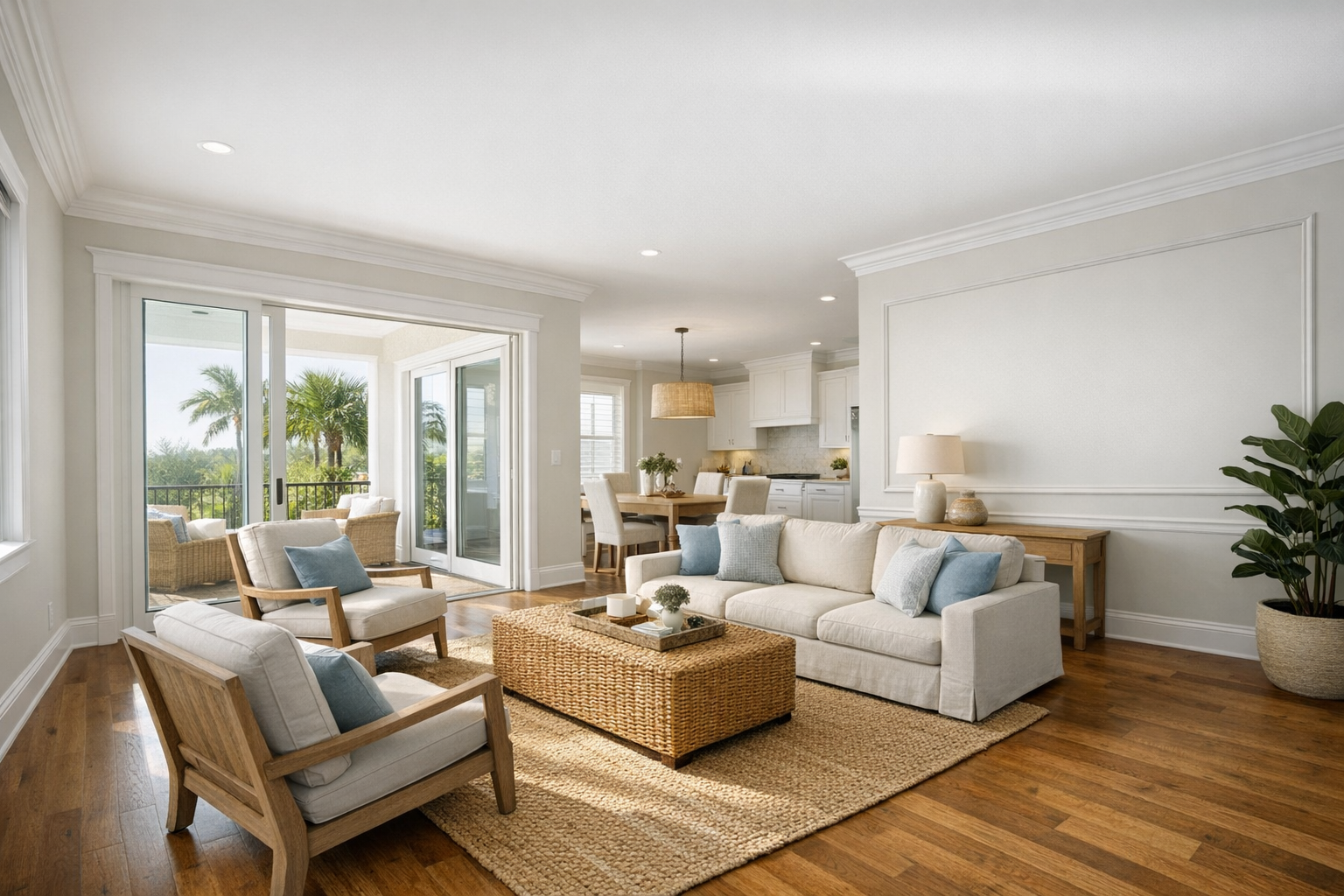
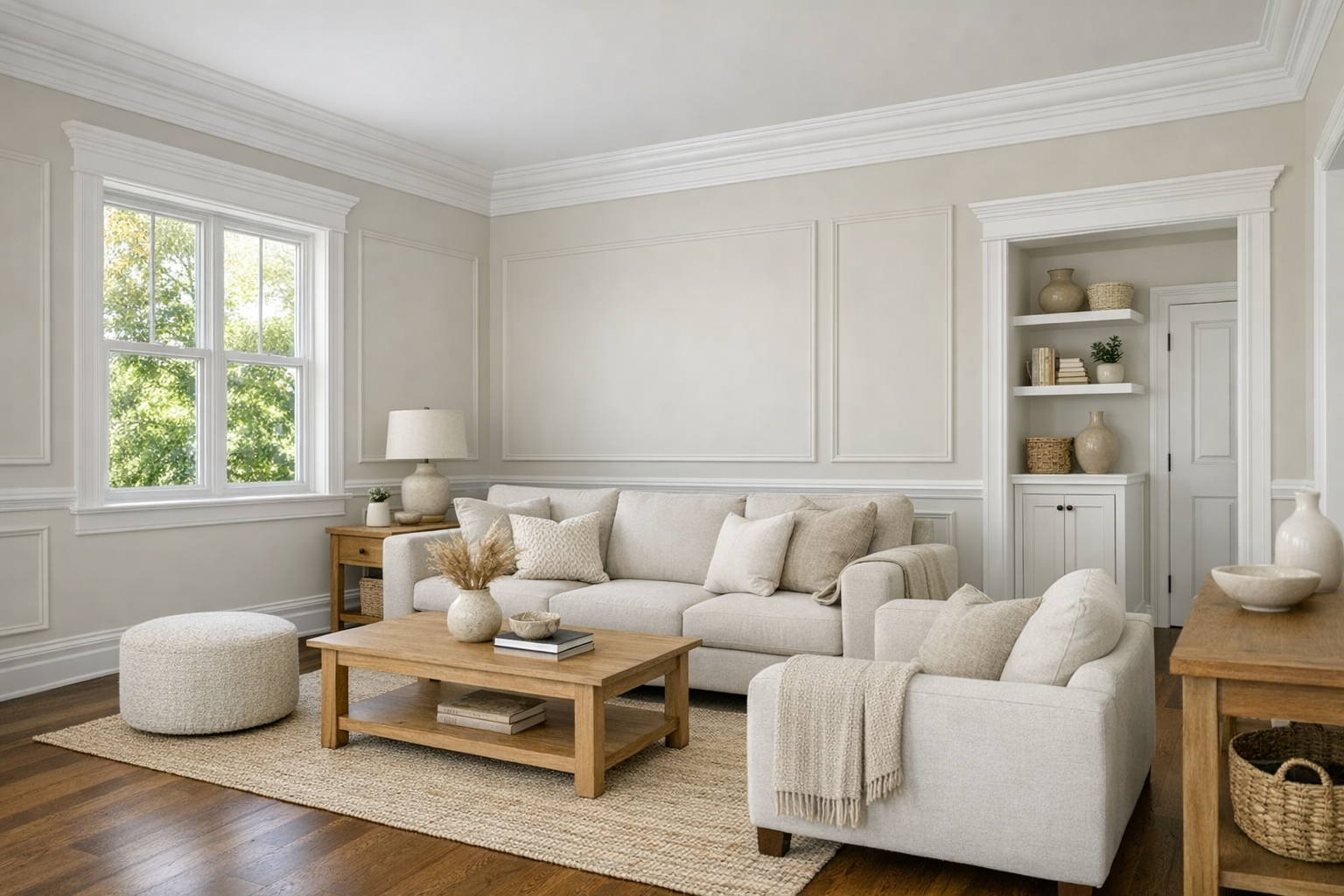

Sometimes a room reaches the "done" stage on paper, but your eye still catches something missing. The drywall is up, the flooring is in, and the paint color looks right, yet the space can feel flat or disconnected. That often happens where surfaces meet: the wall drops straight into the floor with little definition, a doorway looks like a plain opening, or a window feels bare instead of framed into the room.
Finish carpentry is the visible trim and woodwork added near the end of a project to help a room look complete. It includes details such as baseboards at the floor, casing around doors and windows, crown moulding at the ceiling, and other built-in or decorative wood elements that cover transitions, frame openings, and add character.
In plain English, this is the work that turns basic construction into a room that feels intentional. It is different from rough framing, which creates the structure, and different from painting, which finishes the surface after the woodwork is installed. As you read, you'll get the language to describe what you're seeing and a clearer sense of when to search for a finish carpenter rather than a general handyman, painter, cabinetmaker, or rough carpenter.
What Is Finish Carpentry in a House?
Think of it as the detail layer your eye reads first. Interior finish carpentry is the careful, visible woodwork added after the larger construction pieces are in place, especially where one surface meets another. In a house, that usually means the edges of floors, walls, doors, windows, ceilings, and built-in areas.
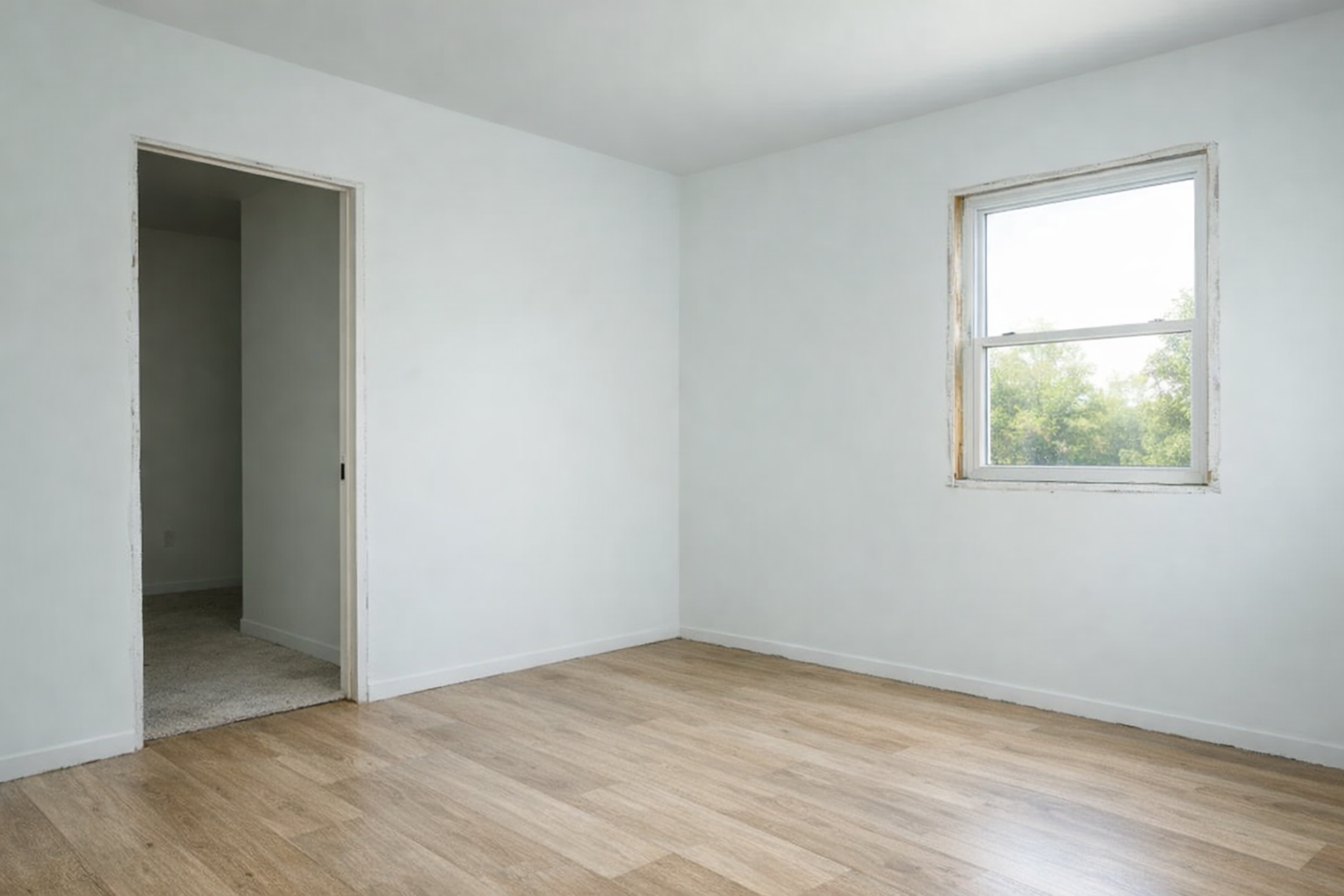
At the floor, that might be baseboards, shoe moulding, or quarter round that create a clean line between the wall and flooring. Around openings, it might be casing that frames doors and windows. At the ceiling, it might be crown moulding that softens the corner where the wall meets the ceiling. These pieces are not just decoration; they cover transitions, define openings, and give the room a more intentional shape.
The important difference is that this work is meant to be seen. It is not the hidden framework inside the walls. The skill is in precision: corners that meet cleanly, trim that sits straight, reveals that look consistent, and moulding sizes that feel balanced for the room instead of too skimpy or too bulky.
For a homeowner, the practical takeaway is simple: if the issue is a bare transition, an unframed opening, a plain wall, or a room that lacks architectural definition, you are probably describing residential finish carpentry. The project may be simple or custom, but the goal is the same: make the visible details feel finished, connected, and proportionate.
Finish Carpentry vs. Rough Carpentry: The Simple Difference
A doorway is an easy place to see the handoff. Rough carpentry creates the framed opening in the wall; finish carpentry adds the casing around that opening so the door looks complete from inside the room. One is about the layout and structure behind the surface. The other is about the visible edge you walk past every day.
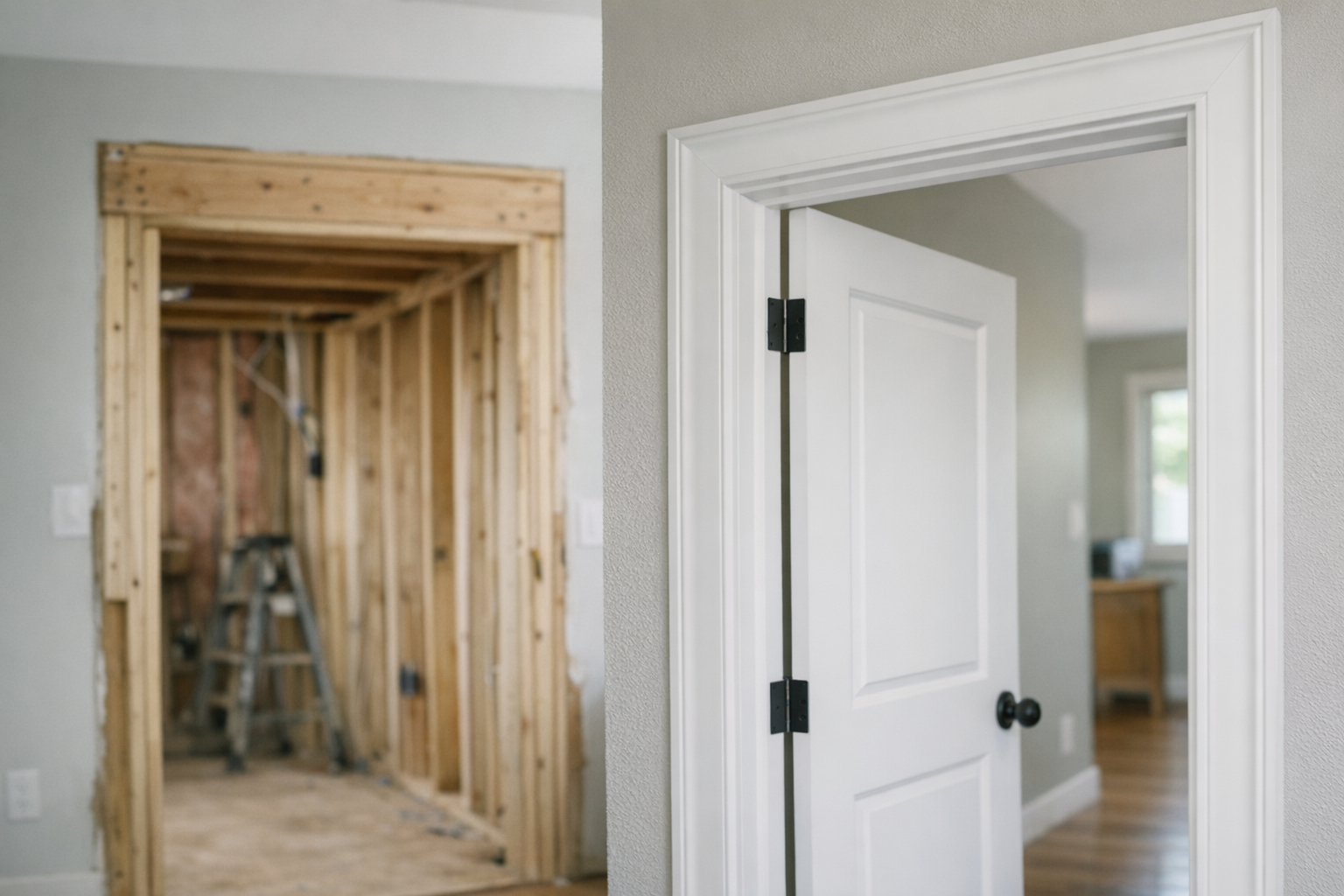
That difference changes what "good work" looks like. In rough work, the big questions are whether the framing is placed correctly and ready for the next stage. In finish work, the details are judged much closer: do the casing corners meet cleanly, does the baseboard follow the room neatly, does the crown moulding create an even ceiling line, and do the transitions look smooth instead of patched together?
Both types of carpentry matter, but they solve different problems. If you are changing the bones of a space, you are thinking about rough carpentry or remodeling. If the room is already built but still looks plain, bare, or visually disconnected, a finish carpenter is usually the more specific person to search for. The practical takeaway: rough work gets the room built; the finish work makes the built room look intentional.
The Room Details Finish Carpenters Commonly Install
If you walk a room from the floor up, the usual finish carpentry details start to sort themselves by location. That is often the easiest way to describe interior trim installation to a pro: "I need the floor edges cleaned up," "the windows need casing," or "the ceiling line feels too plain."
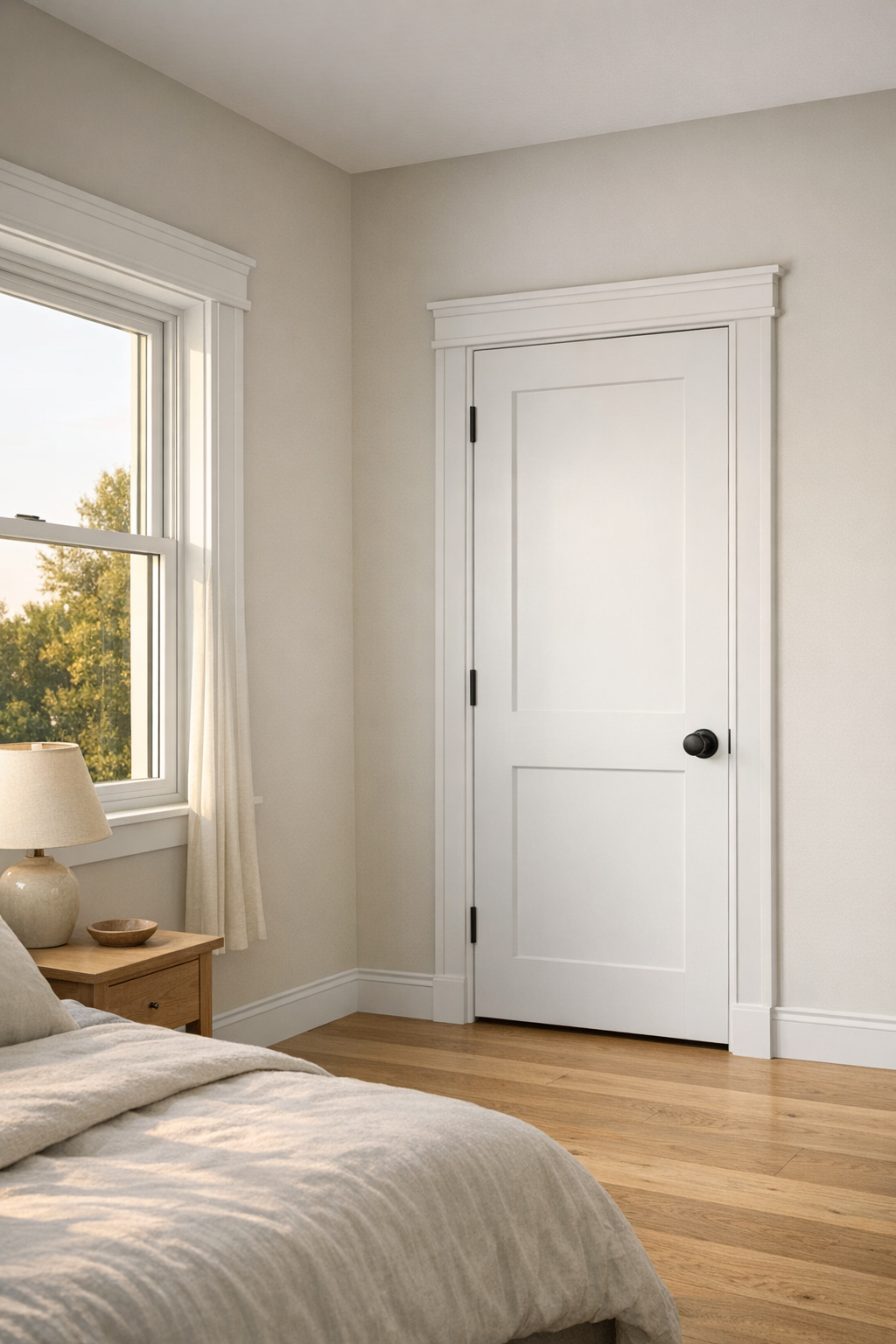
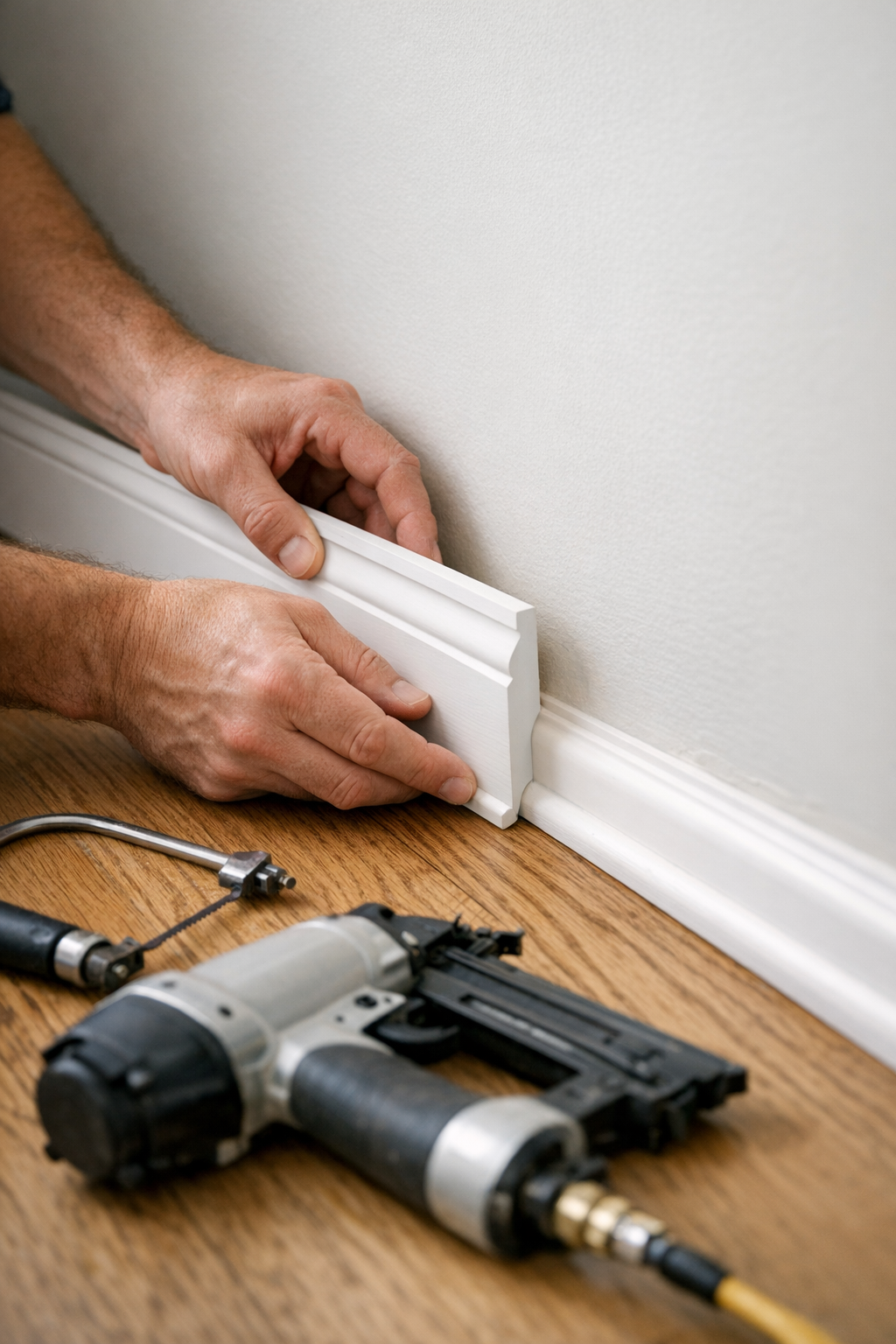
- Baseboards, shoe moulding, and quarter round at the floor: Baseboards are the boards that run along the bottom of the wall where it meets the floor. They protect the lower wall visually and create a clean, deliberate edge. Shoe moulding and quarter round are smaller pieces added at the bottom of the baseboard, often where the flooring meets the trim. The practical difference is scale: baseboards create the main line, while shoe moulding or quarter round handles the smaller floor transition. A good baseboard installation makes the room feel grounded instead of leaving the wall and floor looking like they simply stop against each other.
- Door and window casing around openings: Casing is the trim that frames a door or window. Around a door, it helps the opening look finished from the room side. Around a window, it turns a plain drywall edge into a framed feature. Narrow, simple casing reads clean and understated; wider or more detailed casing adds more presence. The main takeaway is that casing gives openings a border, so doors and windows feel like part of the room's design instead of holes cut into the wall.
- Crown moulding and ceiling trim overhead: Crown moulding sits where the wall meets the ceiling. It softens that corner and can make the ceiling line feel more intentional. Smaller crown keeps a room simple; larger or layered crown creates a more formal look. Other ceiling trim, such as flat bands or simple applied moulding, can also define the top of the room without using a traditional crown profile. With moulding installation overhead, proportion matters because trim that is too small can disappear, while trim that is too large can overpower the space.
- Chair rail, picture frame moulding, panel moulding, and wainscoting on walls: Chair rail is a horizontal strip of trim installed partway up the wall. Picture frame moulding creates rectangular frames on the wall surface. Panel moulding is similar, but often used to create a more built-in panel effect. Wainscoting covers or defines the lower portion of a wall with trim, panels, or boards. These details break up large blank walls, add rhythm, and give a dining room, hallway, entry, or bedroom more architectural interest.
- Mantels, shelves, and built-in trim as feature details: A mantel frames a fireplace and gives that wall a focal point. Shelves can be simple display ledges or part of a larger built-in arrangement. Built-in trim refers to the finished edges, face frames, panels, and moulding that make shelving, benches, niches, or media walls look integrated with the room. The difference from basic trim is that these pieces often need to relate to nearby walls, ceilings, openings, and furniture, so the proportions are more noticeable.
Why These Details Make a Room Feel More Complete
The effect is less about decoration for decoration's sake and more about giving your eye a clean path around the room. Finish carpentry takes the edges that might otherwise look abrupt, floor to wall, wall to opening, wall to ceiling, and turns them into deliberate lines.
At the floor, trim can make a room feel settled. Without a defined base, the wall may seem to drop straight into the flooring, especially if there are small uneven gaps or shadowy edges. Baseboards and smaller floor mouldings create a visual stop, so the flooring and wall read as connected parts of the same room rather than two materials meeting by accident.
Around openings, casing and window trim change the way doors and windows feel in the wall. A plain drywall return can look minimal, but it can also feel unfinished if the rest of the room has more detail. Casing gives the opening a border, and consistent reveals, the small, even margins around the door or window, are one of the quiet signs that the work was planned carefully.
At the top of the room, crown, beams, or other ceiling details help the ceiling line feel intentional. The size and shape of those details matter because they affect proportion: a slim profile keeps the look light, while a deeper or layered profile adds more shadow and formality.
Trim also creates repetition. When baseboards, casing, wall moulding, and ceiling lines relate to each other in scale and style, separate parts of the room start to feel connected. That said, trim improves the finish, flow, and proportion of a space; it is not a fix for a poor layout, damaged drywall, uneven flooring, or rushed paint preparation.
Basic Trim Work vs. Custom Finish Carpentry
The dividing line is not whether the trim is attractive; it is how much the room asks the carpenter to solve. Basic trim work usually means installing standard pieces in a straightforward pattern, such as one baseboard profile around the room, matching casing at each door, or crown moulding along a simple ceiling line. The goal is consistency: clean transitions, repeated profiles, and a finished look without redesigning the room.
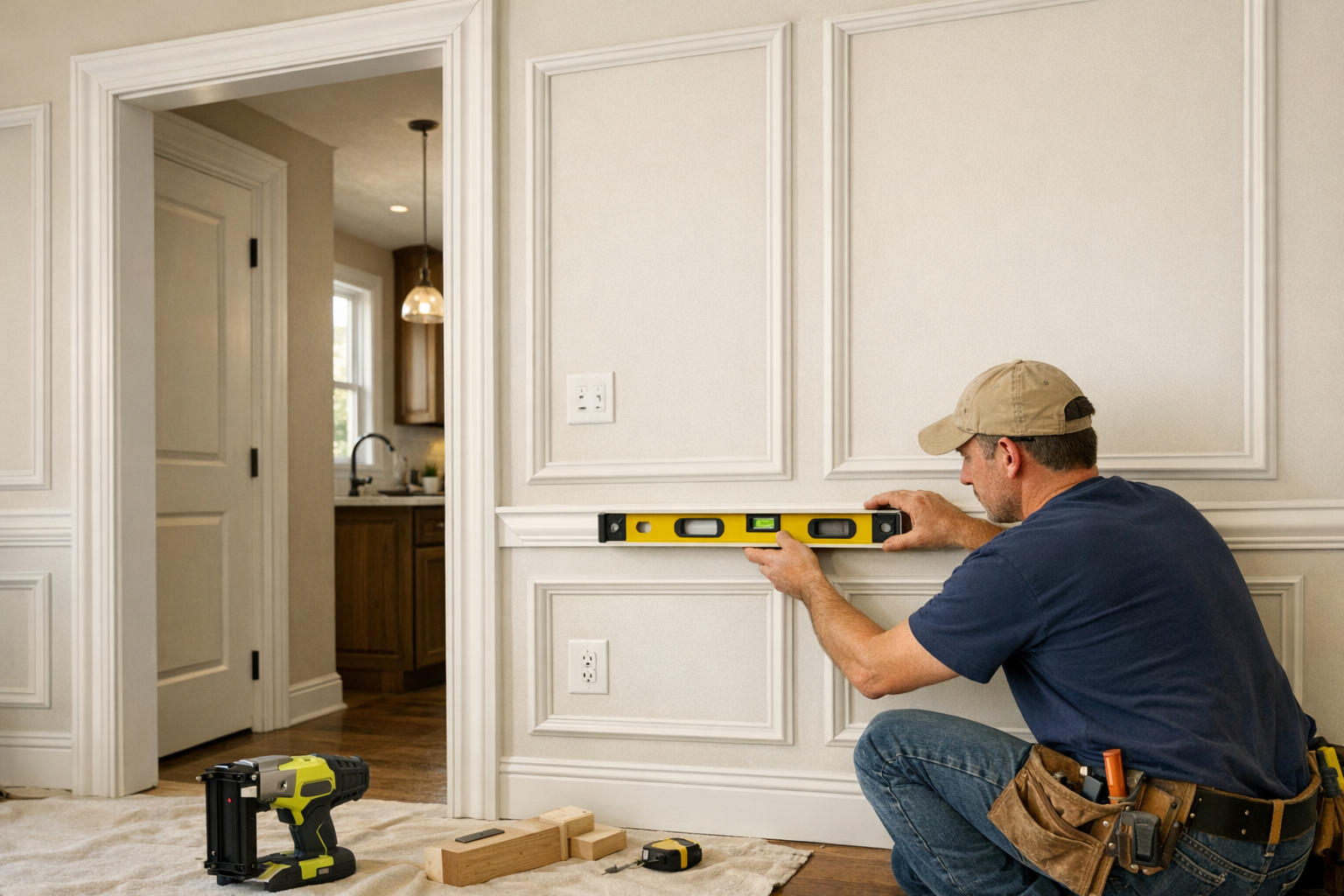
That kind of standard installation works well when the choices are already clear. If you want the same baseboards throughout a bedroom, new casing around several windows, or a simple crown profile where the walls meet the ceiling, the main decisions are size, style, material, and finish. A good result should look even from one wall to the next, with corners, reveals, and transitions handled neatly.
Custom finish carpentry starts to make more sense when the trim has to be designed for the room instead of simply installed in it. That might mean matching older trim in the rest of the house, creating a unique wall moulding layout, building a fireplace mantel surround, adding built-in trim so shelves look integrated, or planning a coffered ceiling that fits the room's proportions.
The practical takeaway is that "custom" is less about making everything fancy and more about making the details belong. If a room has unusual dimensions, existing trim you want to continue, built-ins that need to look intentional, or a feature wall that needs careful spacing, custom finish carpentry gives the carpenter room to adjust profiles, proportions, and layout so the finished work feels continuous rather than pieced together.
Paint-Grade and Stain-Grade Details: Why the Finish Matters
The finish you want should be part of the conversation before profiles are chosen. Paint-grade trim is planned for a painted surface, so the goal is a smooth, clean result once primer and paint are applied. It is common for baseboards, casing, crown, and wall moulding installation to be paint-grade when the homeowner wants a crisp white or color-matched look.
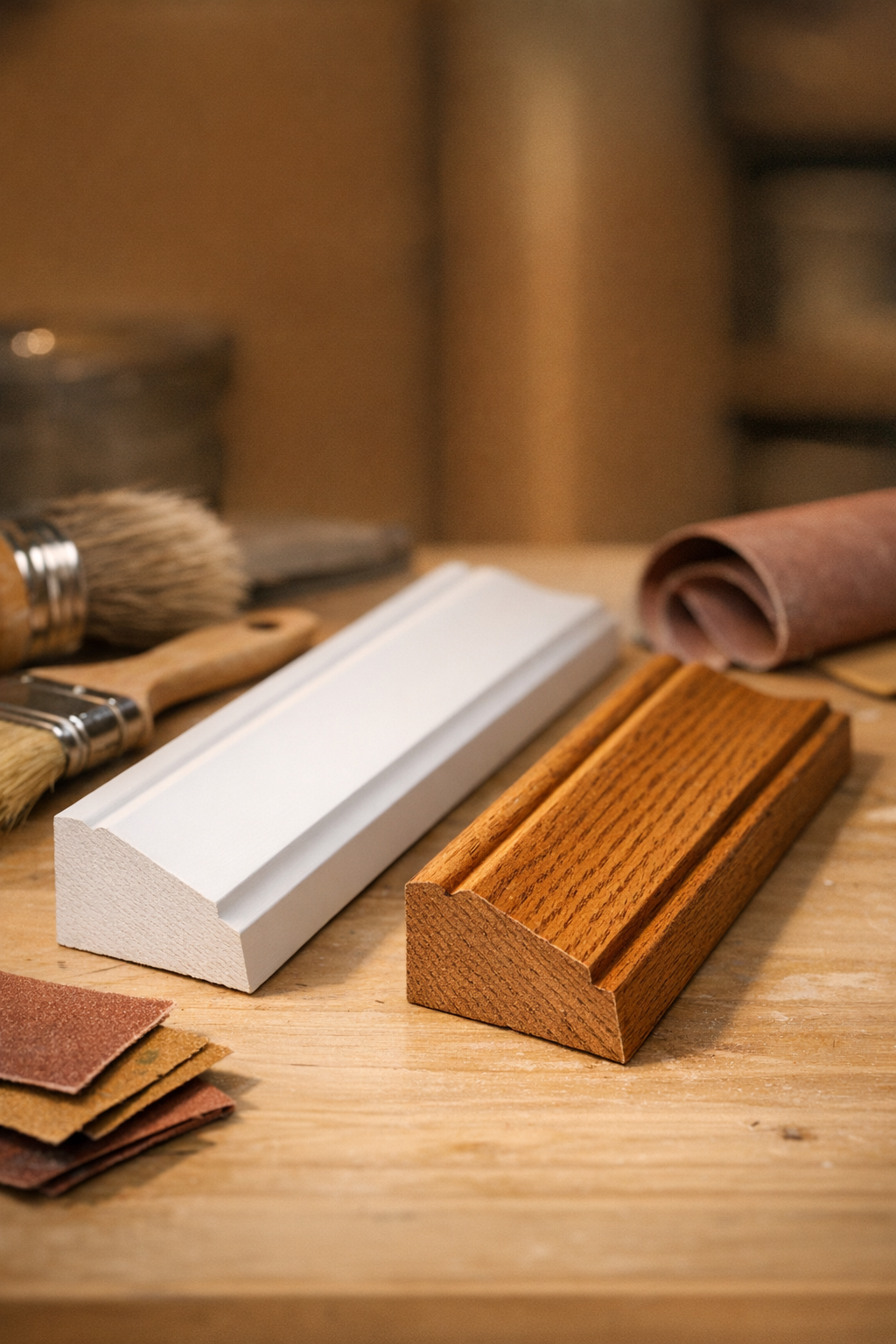
Stain-grade work is different because the wood itself remains part of the finished design. The grain, color variation, and direction of each piece stay visible, so material selection and layout matter more. A small mismatch that might disappear under paint can stand out on a stained mantel, window casing, stair detail, or built-in surround.
You do not need to become fluent in lumber terminology before calling someone. The useful takeaway is simpler: if you want painted trim, focus on profile, proportion, and a smooth surface; if you want stained woodwork, expect more attention to grain, color matching, tight miters, and clean joinery. That is why stain-grade finish carpentry work often feels more exacting before the final finish ever goes on.
When to Hire a Finish Carpenter Instead of a Handyman, Painter, Cabinetmaker, or Rough Carpenter
Choosing the right pro is easier when you separate surface finishing from visible woodwork. A painter is usually the right person after the trim is installed, when the job is sanding, caulking small seams, priming, and painting. A handyman may be a fit for a small, simple repair, such as replacing a short damaged piece of existing trim. But when the woodwork itself has to be laid out, cut, joined, matched, and made to look intentional, you are usually in finish carpentry territory.
Look for a finish carpenter when the project involves details people will notice up close: door and window casing with even reveals, crown moulding that turns corners cleanly, a wall treatment with balanced spacing, or new trim that has to line up with older trim elsewhere in the house. The practical difference is precision. A weak fit may show up as uneven gaps, awkward proportions, or joints that draw your eye for the wrong reason; a strong fit looks calm, consistent, and built into the room.
A cabinetmaker is a better search when the main item is cabinet construction or a furniture-like piece, such as a custom vanity, bookcase, or storage cabinet. A rough carpenter is the better category when the work is about framing, structure, or changing the bones of a space. Some projects overlap, especially built-ins, where cabinet work, trim, and painting may all need to coordinate. In that case, the question is which part drives the finished look.
For a larger room update, search for someone whose photos show projects like yours: baseboards meeting casing cleanly, crown that fits the ceiling line, built-ins trimmed into the wall, or custom finish carpentry that matches existing details instead of fighting them. If you are local and trying to find the right search phrase, "finish carpenter Sarasota County" is more specific than searching only for a general remodeler when your main goal is visible interior trim and detail work.
The Details That Make a Room Feel Finished
A helpful way to plan your project is to name the spots that still feel unresolved. Are the floor edges asking for baseboards or shoe moulding? Do doors and windows need casing so they feel framed instead of bare? Would the ceiling line benefit from crown moulding, beams, or another detail that gives the room more shape? Those answers turn a vague feeling into a clearer finish carpentry scope.
Then decide how much detail the room really needs. Basic work may be enough when you want clean, consistent interior trim installation throughout a straightforward space. Custom finish carpentry makes more sense when the room needs proportioning, matching, built-in trim, or a detail designed around existing walls, openings, or features.
The finish choice matters, too. Painted trim puts the focus on crisp profiles, smooth prep, and clean lines. Stained woodwork puts more attention on the material itself, so grain, color, and tight joints become more noticeable. Either approach can look polished when the pieces are planned as part of the room instead of added as an afterthought.
In the end, the details that finish a room are usually the ones that make transitions feel intentional: trim that fits, openings that look framed, ceiling lines that feel resolved, and built-ins that belong to the wall around them. If that is the part of your home that feels unfinished, you now have the language to describe the work and the kind of professional skill to look for.