
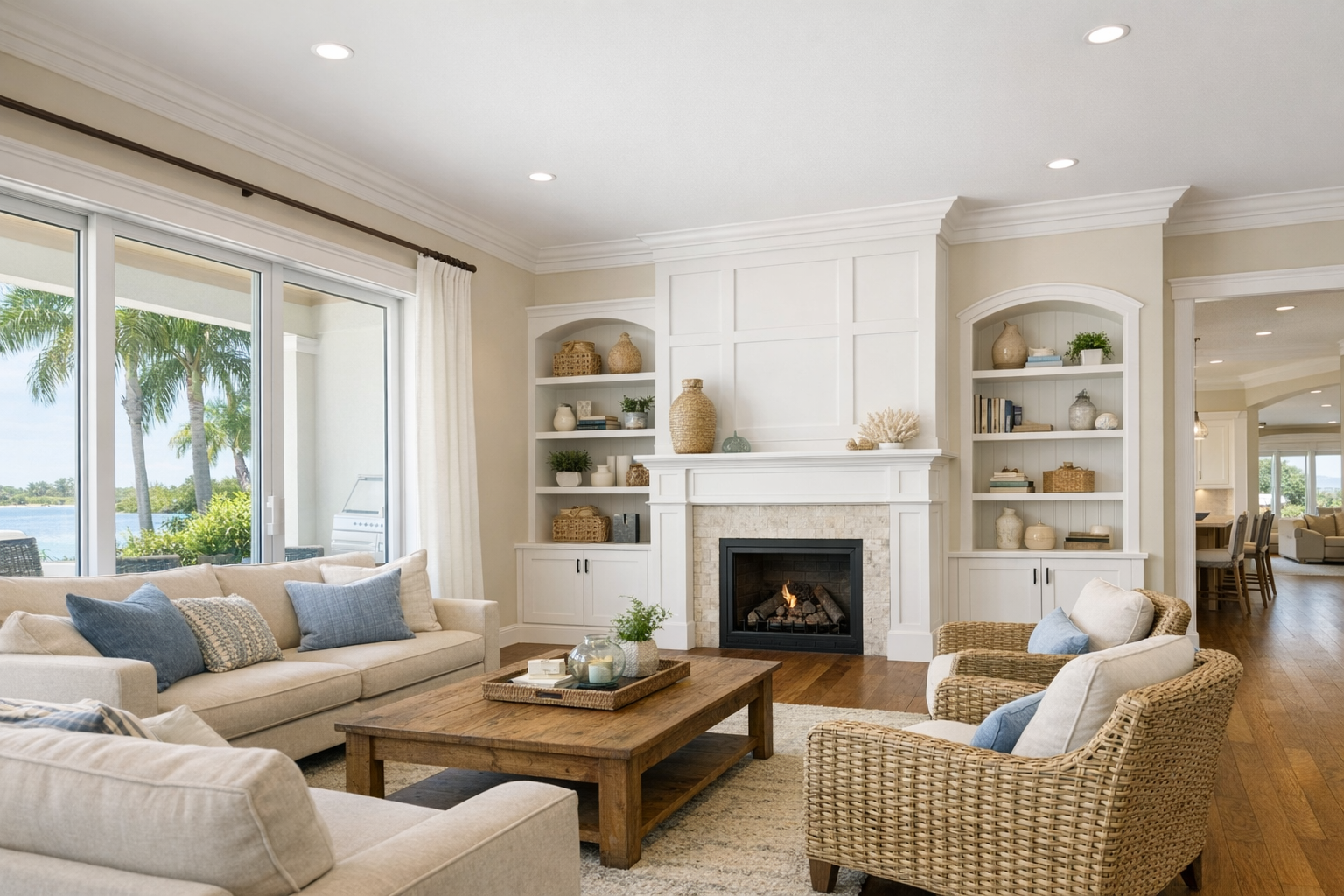
This page is your starting point for finish carpentry services Venice FL homeowners can use to make rooms feel cleaner, more finished, and more tailored without guessing which trim project comes first. If you live in Venice, Sarasota County, or a nearby Southwest Florida community, use this services hub to compare the main types of interior trim work and decide whether you need a detailed service page or a project consultation.
Interior trim is the finish work that shapes the edges, transitions, and focal points of a room. Baseboards finish the wall-to-floor line, door and window casing frame openings, crown molding defines the wall-to-ceiling transition, and wall paneling or feature walls add texture where a flat wall feels unfinished. Ceiling details, stair trim, fireplace surrounds, built-ins, repairs, replacements, and multi-room trim packages each solve a different problem, from creating a stronger focal point to making mismatched rooms feel more consistent.
As you move through the page, look for the service that matches your goal: cleaner room edges, a more formal ceiling line, a custom accent wall, better storage, refreshed stairs or fireplace trim, or help repairing damaged pieces. The right interior trim contractor should be able to explain those options clearly, show where trim installation services in Sarasota County fit your home’s style, and help you choose a scope that feels practical for the rooms you actually want to improve.
Foundational Trim: Baseboards, Door Casing, and Window Casing
If a room feels almost done but still a little rough around the edges, foundational trim is usually the place to look first. Baseboards run along the wall-to-floor line, shoe molding can tighten the transition at the flooring edge, and door and window casing frame the openings so walls, doors, windows, and floors feel intentionally connected instead of unfinished.
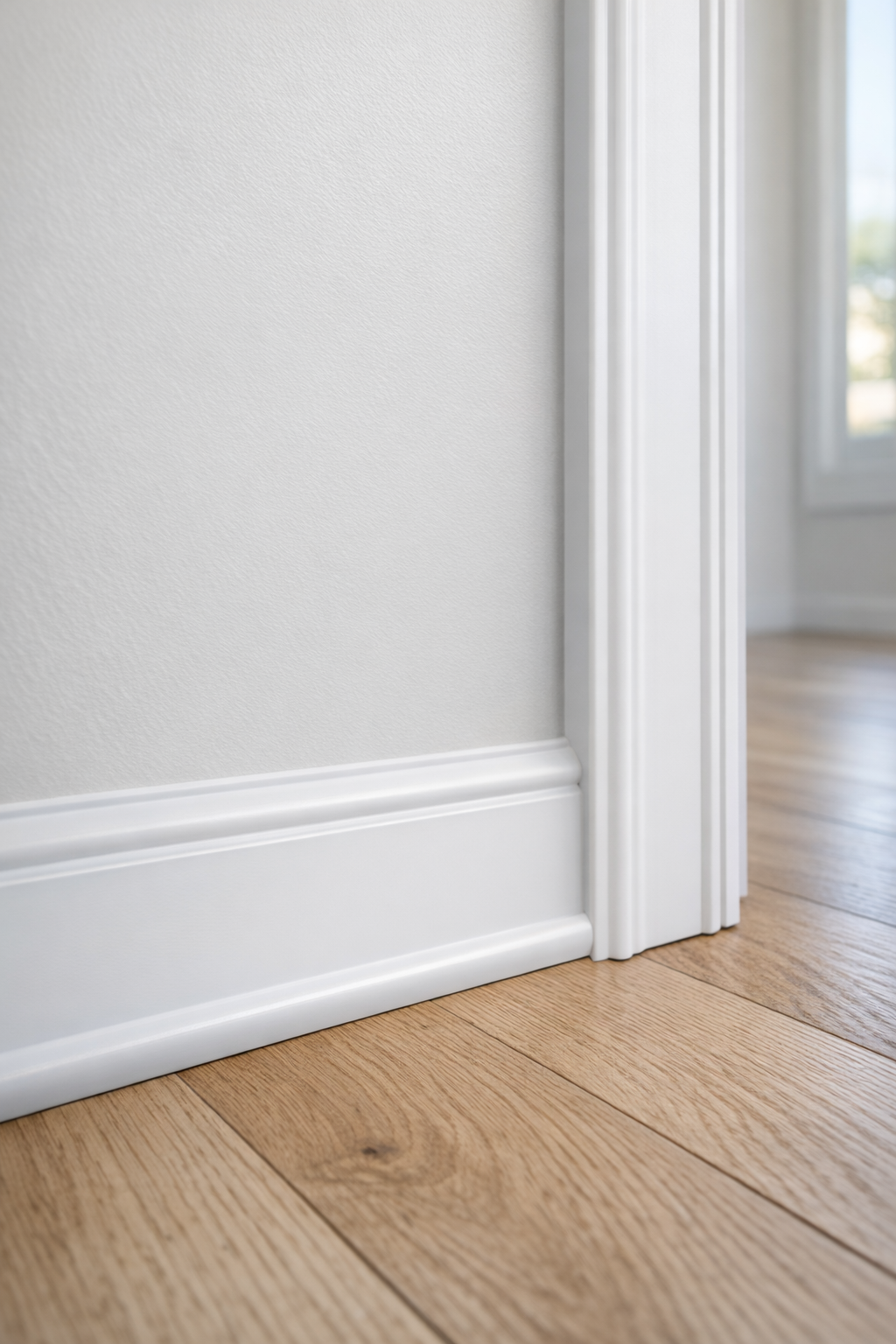
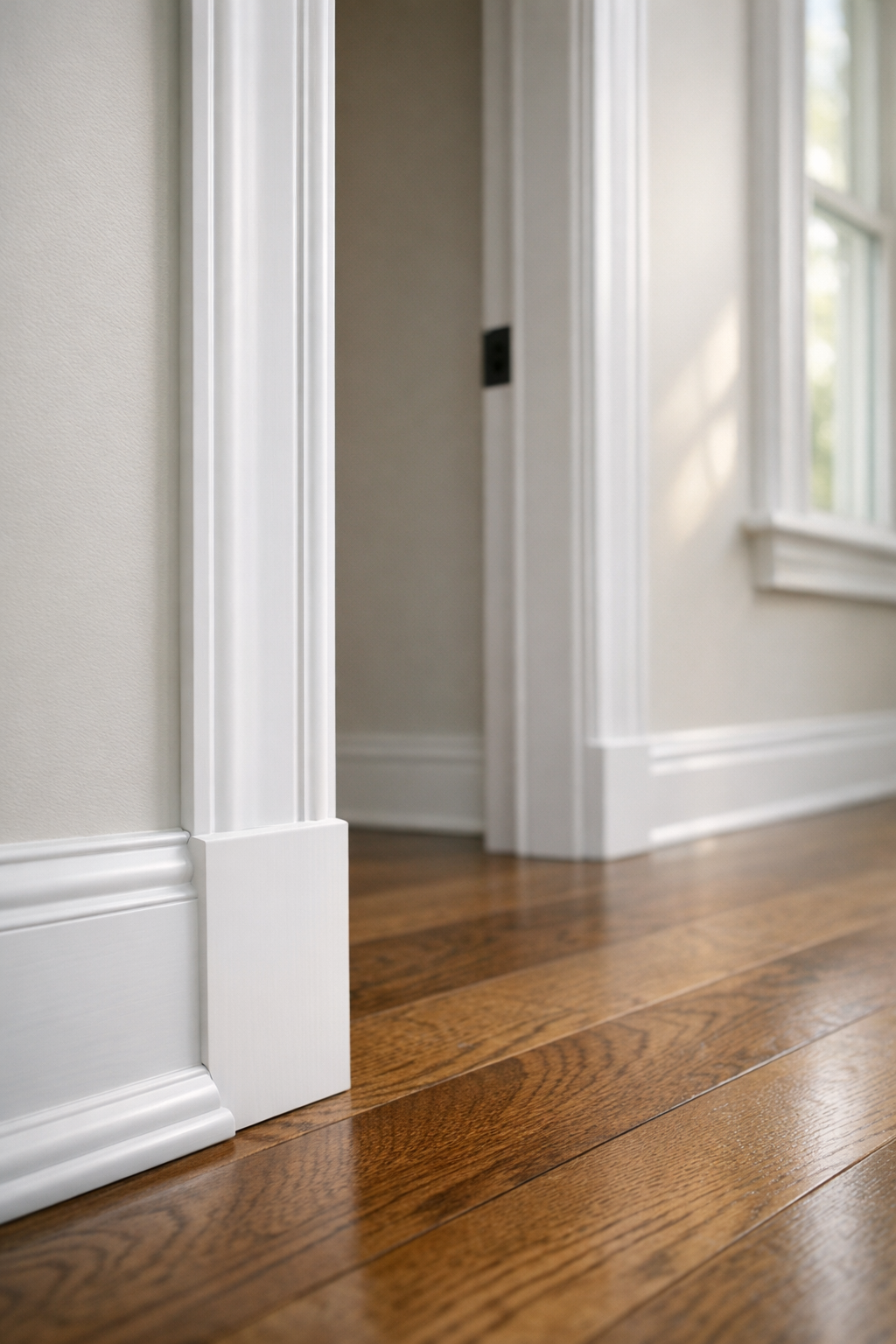
Baseboard installation can be a simple replacement or a style upgrade. A simple replacement is best when the existing trim is damaged, outdated, or inconsistent but the room layout is staying the same. A style upgrade changes the visual weight of the room, such as swapping a narrow, plain baseboard for a taller or more detailed profile. The practical takeaway: the more visible the trim line is across connected spaces, the more important it is to choose a profile that fits the room’s scale and the surrounding finishes.
Door casing and window casing work the same way around openings: they create a finished frame and help the trim package feel consistent from room to room. Wider casing around interior doors can make hallways and main living areas feel more substantial, while matching new casing to existing trim can help connected rooms feel cohesive instead of patched together.
For many homeowners, this is the starting point before larger interior trim work because it affects every room edge people see at eye level or below. Look for details such as tight corners, consistent reveals around doors and windows, level baseboard runs, smooth transitions at flooring changes, and paint-ready prep. If your goal is cleaner room edges, start with the baseboards and casing service page; if several rooms need the same update, a whole-room or multi-room trim plan may make more sense.
Crown Molding and Ceiling Details for a More Finished Room
At the top of the room, crown molding gives the wall-to-ceiling line a defined edge instead of letting the two surfaces simply meet. It tends to fit best in dining rooms, living rooms, primary bedrooms, entries, and offices where the goal is a more finished or slightly more formal look. The key is scale: taller ceilings can usually handle a deeper or more layered profile, while lower ceilings often look better with a slimmer shape that adds detail without making the room feel top-heavy.

A crown profile is the shape and visual weight of the molding, and that choice changes the whole feel of the room. A simple, clean profile works well with modern or coastal interiors; a more detailed profile can suit traditional rooms or spaces that already have substantial baseboards and casing. If the existing trim is narrow and understated, an oversized crown can look disconnected. If the room already has taller casing or heavier baseboards, crown molding installation can be sized to feel like part of the same trim package.
Ceiling details can also include trim-only accents such as perimeter molding, small ceiling borders, or transitions that frame a tray-style ceiling area without getting into electrical, structural, or other local trade work. Good finish carpentry here shows up in the details: inside corners should meet cleanly, outside corners should look crisp, long runs should stay level, and the final surface should be ready for paint with smooth joints and transitions.
If your main goal is to make a room feel more complete above eye level, the crown molding service page is the best next stop. If you are comparing several ceiling details at once, a consultation can help narrow the profile, size, and room-by-room approach before the design gets too busy.
Wall Paneling, Wainscoting, Board and Batten, Shiplap, and Feature Walls
Walls are where trim can shift from background detail to visible design. Wainscoting is paneling installed on the lower portion of a wall, often used in dining rooms, entries, hallways, and offices to add structure without covering the entire surface. Board and batten uses vertical boards or strips to create a taller, more rhythmic pattern, which can make bedrooms, mudroom-style entries, or long hallway walls feel more intentional.
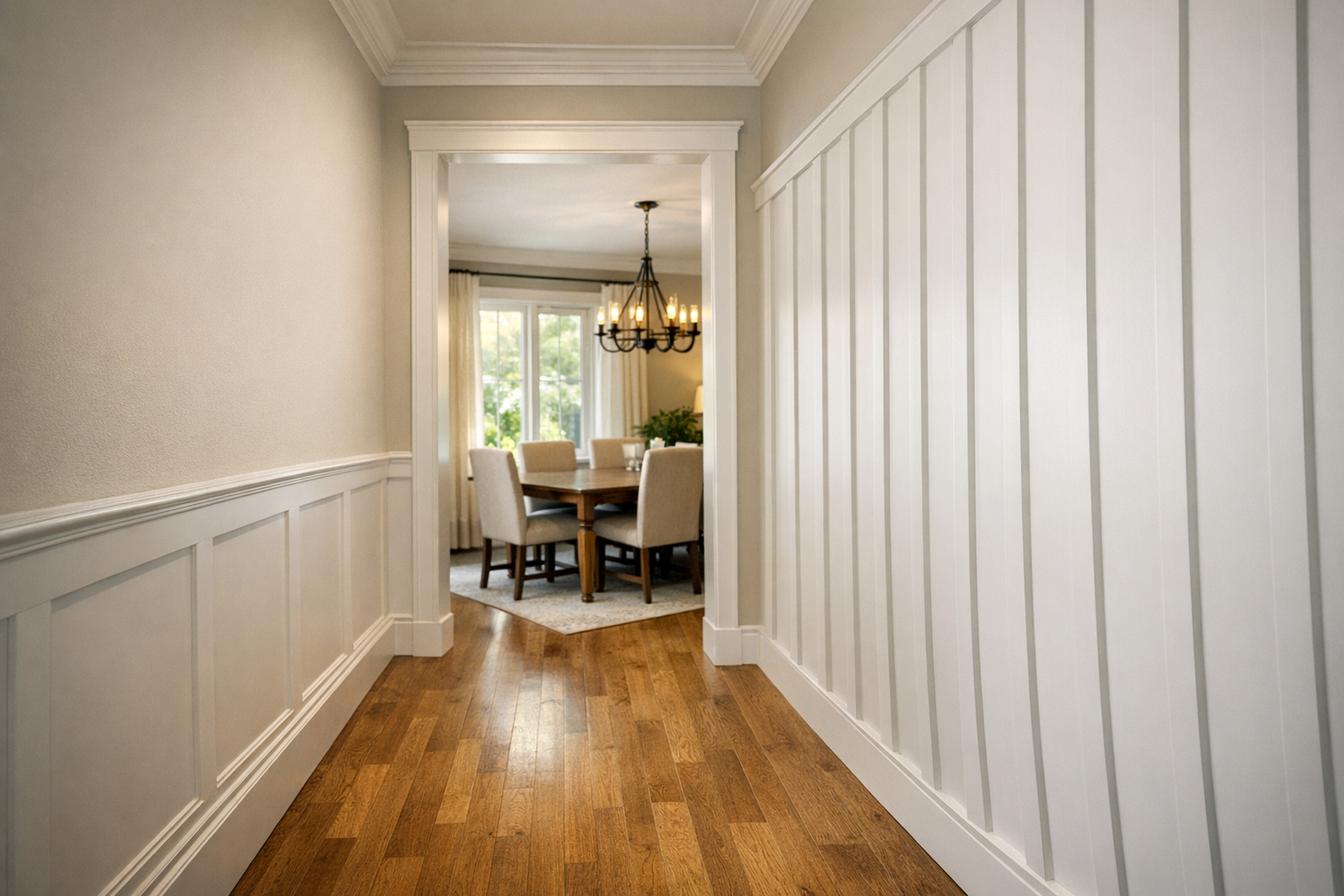
Shiplap is a horizontal plank-style wall treatment that adds a more casual, coastal, or cottage feel, especially in living areas, bedrooms, offices, and fireplace-adjacent walls. An accent wall is broader: it can use trim boxes, geometric patterns, vertical slats, picture-frame molding, or mixed profiles to make one wall stand out. The practical difference is visual volume: simple panels add texture quietly, while a full feature wall becomes the room’s main design moment.
A subtle panel design is usually the better choice when the room already has strong furniture, artwork, ceiling detail, or natural views. A bolder feature wall makes more sense when a space needs a focal point behind a bed, sofa, desk, dining table, or entry console. Layout matters as much as style: balanced spacing, level lines, clean outside edges, consistent reveals, and paint-ready seams are what keep custom trim services Southwest Florida homeowners request from looking busy or improvised.
If you know you want texture throughout a room, start with the wall paneling or wainscoting service page. If you want one high-impact wall, head to the feature wall page and compare board and batten, shiplap, picture-frame molding, and other accent wall layouts before choosing a direction.
Stair and Fireplace Trim for High-Visibility Areas
Stairways and fireplaces ask more of trim because they sit where people naturally pause, pass through, or look across from another room. Stair skirt boards are non-structural trim boards used to finish the open side of a stairway, while related stair trim can clean up the edges around treads, risers, landings, and wall transitions so the stair area looks planned instead of patched together.
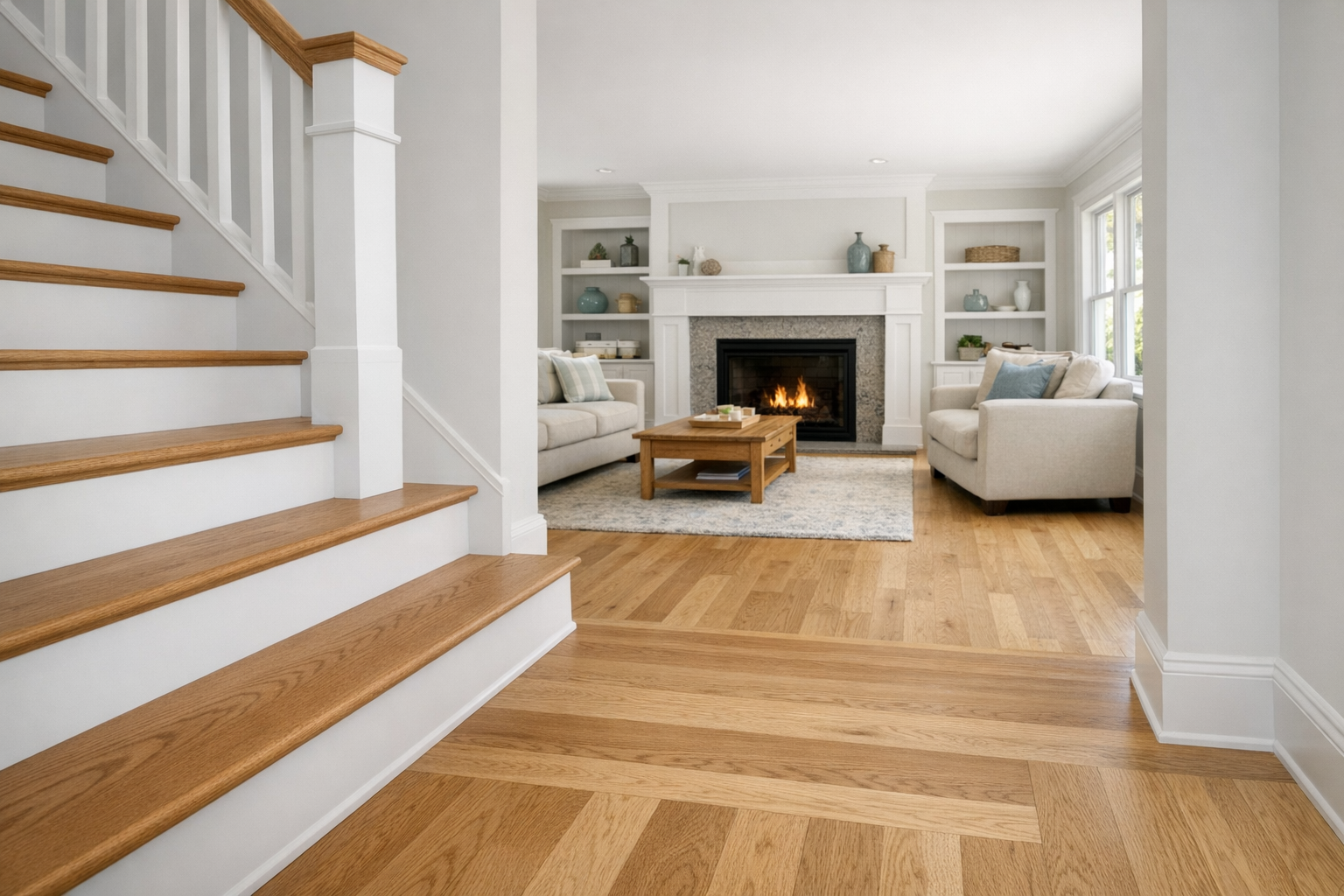
Fireplace trim works the same way around a different focal point. A fireplace surround frames the feature with finish carpentry, and mantel trim adds a top ledge or layered profile that can be simple, traditional, coastal, or more built-up depending on the room. The best choice usually depends on what sits nearby: baseboards, casing, crown, wall paneling, and other millwork should feel related, even if the fireplace gets a little more visual weight.
The practical goal is connection. Matching existing trim profiles can help a stair hall, living room, entry, or open-plan space feel cohesive from one view to the next. Good signals include clean returns, tight corners, level horizontal lines, consistent reveals, and transitions that do not fight the surrounding baseboards or casing.
If your stairway looks unfinished, start with the stair trim or stair skirt boards service page. If the fireplace is the main feature that feels flat, dated, or disconnected from the rest of the room, the fireplace trim or mantel trim page is the better next stop.
Built-Ins and Custom Interior Carpentry for Storage, Display, and Room Function
Some rooms need more than trim around the edges; they need a piece that makes an awkward wall, niche, or daily routine work harder. Built-ins are custom interior carpentry elements designed into the room rather than added as loose furniture, so they can provide storage, display space, or a more tailored architectural look depending on the goal.
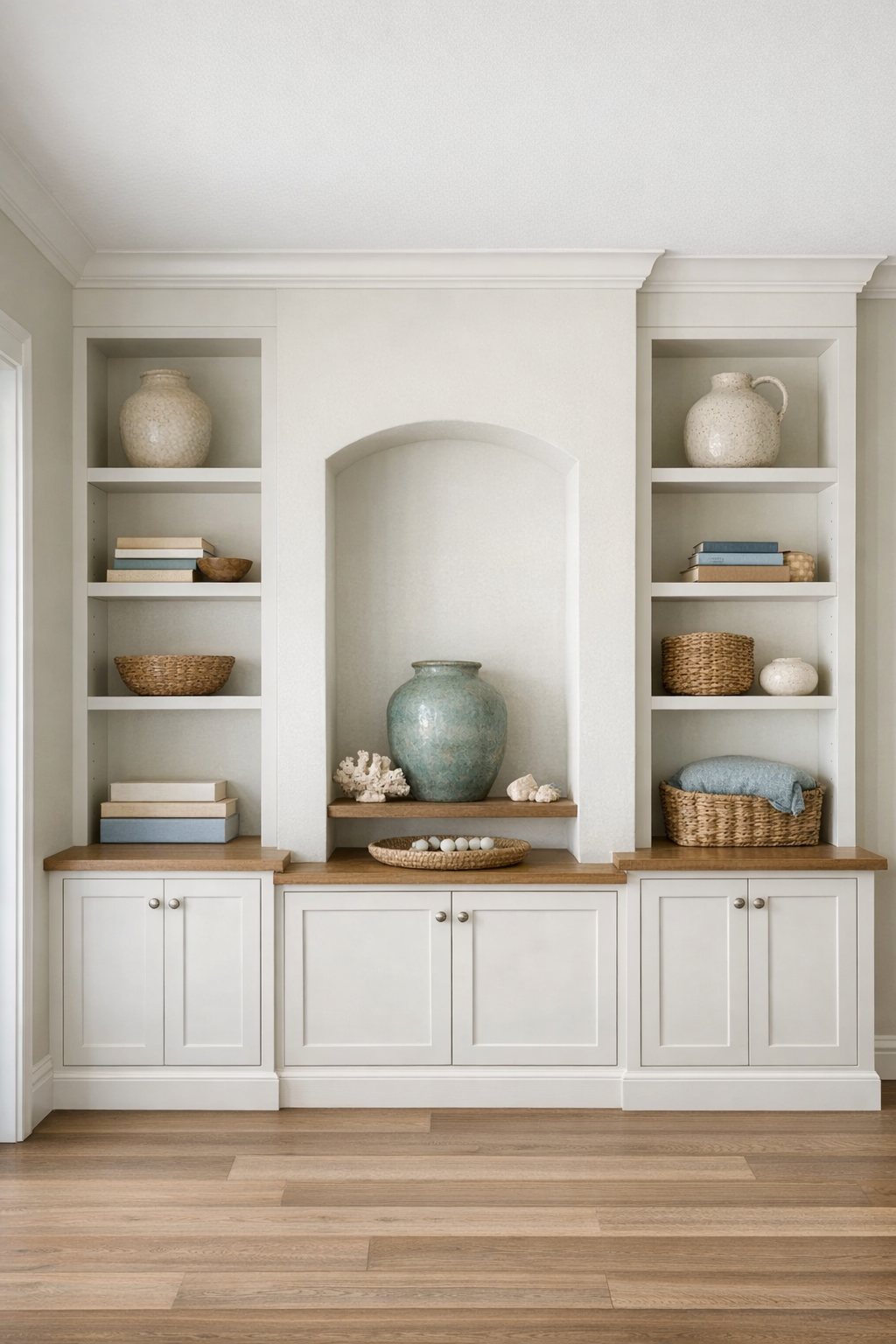
Common uses include living room shelving for books and decor, office built-ins for a cleaner work zone, mudroom-style storage near an entry, window-adjacent trim details that make a wall feel more intentional, and custom trim packages shaped around an existing room layout. The practical difference is purpose: open shelves emphasize display, closed or lower storage helps hide everyday items, and decorative trim details can make the piece feel connected to nearby casing, baseboards, wall paneling, or crown.
Finish also changes the direction of the design. Paint-grade work is often chosen when the piece should blend with surrounding trim, stain-grade work highlights the wood itself, and a mixed approach can separate a decorative top, shelf, or accent from the main painted body. If you want custom trim services Southwest Florida homeowners can use for storage and style together, the built-ins or custom interior carpentry page is the next place to compare options with a finish carpenter Venice FL homeowners can plan around.
Trim Repairs, Replacements, and Multi-Room Trim Packages
Older trim rarely needs the same answer in every room. One area may only need a small repair where a baseboard, casing corner, or painted joint has been damaged, while another may look better with a coordinated replacement because the profile, height, or finish no longer matches the rest of the home.
Repair is usually the more targeted path when the existing interior trim still fits the room and the goal is to clean up isolated problem spots. Replacement is the stronger option when several pieces are mismatched, the style feels dated from room to room, or a previous patch left uneven reveals, rough transitions, or corners that will still stand out after paint.
Profile matching matters when you want new work to blend with what is already there. A trim profile is the shape and size of the molding, so matching it helps a repaired doorway, added casing run, or replaced baseboard section feel connected instead of looking like an obvious add-on. When the original profile cannot be matched cleanly, a coordinated replacement across one room or connected rooms can create a more intentional result.
Multi-room trim packages are for homeowners planning broader trim upgrades without turning the project into a piecemeal guessing game. That might mean refreshing one bedroom first, updating the main living areas together, or planning whole-home trim installation services Sarasota County homeowners can phase room by room. If you are comparing repair, replacement, or a bundled package, the trim repairs and replacements page is the best next stop before choosing the scope.
How to Choose the Right Finish Carpentry Service for Your Home
The easiest way to narrow the choice is to start with the room’s main need, then match that need to the service page that fits it best.
- Choose foundational trim when the room needs cleaner edges: baseboards, shoe molding, door casing, and window casing help tighten the transitions around floors and openings.
- Choose crown molding or ceiling details when the room feels unfinished above eye level; the main decision is profile size, because heavier trim creates more presence while slimmer trim stays quieter.
- Choose wall paneling, wainscoting, board and batten, shiplap, or a feature wall when a flat wall needs texture, rhythm, or one stronger design moment.
- Choose stair or fireplace trim when the most visible part of the room needs a cleaner focal point, especially where transitions, skirt boards, mantel details, or surrounding trim should feel connected.
- Choose built-ins when the goal is storage, display, or a custom-fit solution that looks planned into the room instead of added later.
- Choose repairs, replacements, or a multi-room package when the existing trim has damage, mismatched profiles, or inconsistent details from one room to the next.
If you are comparing finish carpentry services Venice FL homeowners can use in Venice, Sarasota County, or nearby Southwest Florida communities, explore the detailed service pages that match your project goal, or request a consultation to sort out the right scope before work begins.
FAQs
What finish carpentry services are offered in Venice FL?
Finish carpentry services include baseboards, door and window casing, crown molding, ceiling details, wall paneling, wainscoting, board and batten, shiplap, feature walls, stair trim, fireplace trim, built-ins, repairs, replacements, and multi-room trim packages. These services are for homeowners in Venice, Sarasota County, and nearby Southwest Florida communities.
What is included in interior trim installation?
Interior trim installation includes finish work around room edges, openings, ceilings, walls, stairs, fireplaces, and built-in features. Common pieces include baseboards at the wall-to-floor line, casing around doors and windows, crown molding at the wall-to-ceiling line, and paneling or feature walls for added texture.
What is the difference between baseboards, casing, and crown molding?
Baseboards finish the wall-to-floor transition, while door and window casing frames openings so doors, windows, and walls look connected. Crown molding defines the wall-to-ceiling transition and is often used in dining rooms, living rooms, primary bedrooms, entries, and offices for a more finished look.
Can existing trim be repaired instead of replaced?
Existing trim can be repaired when the current profile still fits the room and the damage is limited to isolated spots such as a baseboard, casing corner, or painted joint. Replacement is the better choice when several pieces are mismatched, outdated, uneven, or inconsistent from room to room.
How do I choose the right trim style for my home?
Choose trim based on the room’s main need: baseboards and casing for cleaner edges, crown molding for unfinished ceiling lines, wall paneling or feature walls for texture, stair or fireplace trim for focal points, and built-ins for storage or display. Match the trim profile, size, and visual weight to the room’s scale and nearby finishes so connected spaces feel cohesive.