
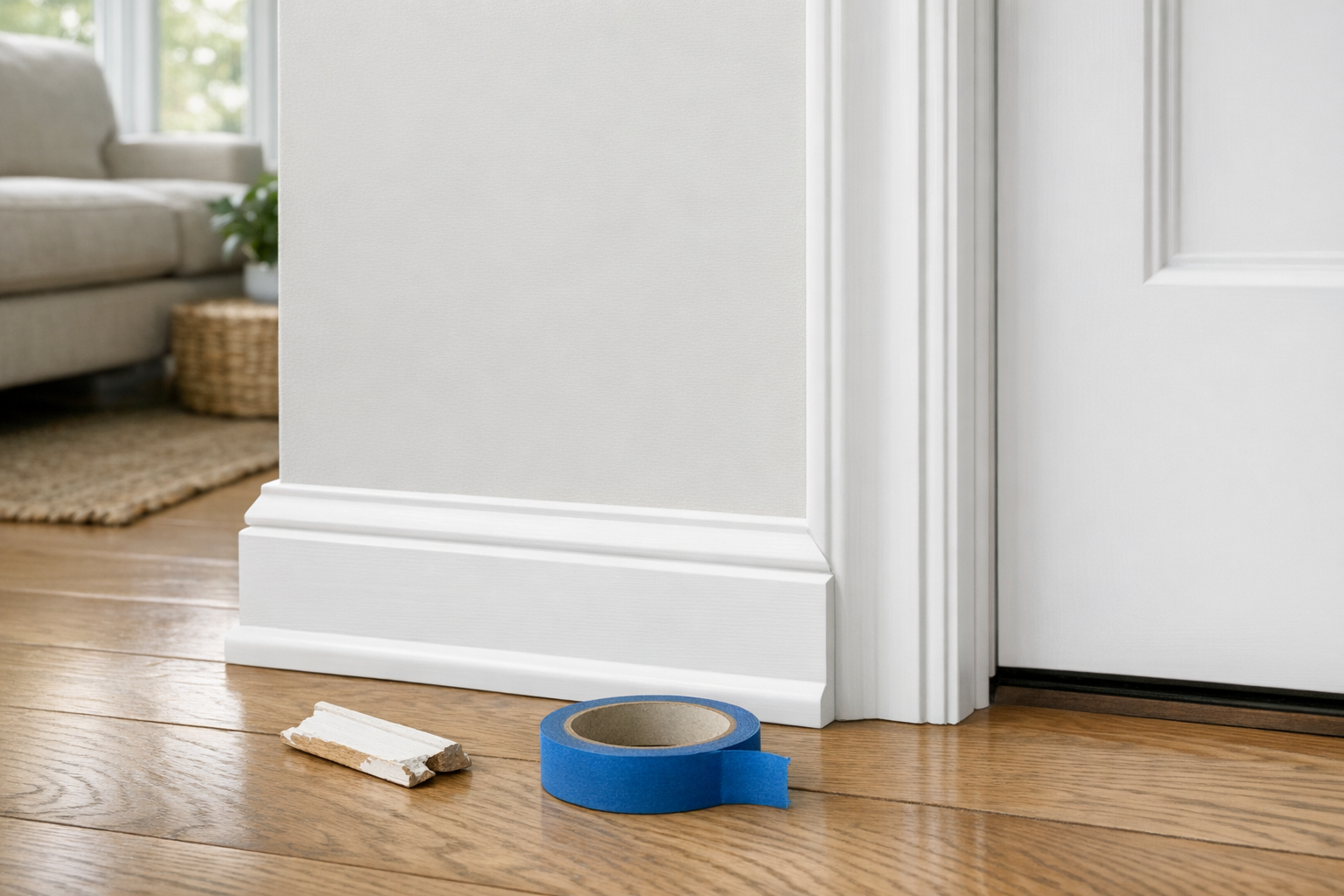
A chipped baseboard, loose door casing, cracked corner, or rotted exterior board can make an otherwise cared-for space look unfinished. Trim also helps cover transitions and protect edges, so open joints or failing pieces can leave gaps where moisture, drafts, and everyday wear may become more noticeable.
We handle damaged trim repair for interior and exterior areas, including baseboards, door casing, window casing, crown molding, and exterior trim. Common signs that it is time to call include split corners, recurring caulk gaps, dented or chipped baseboards, soft wood, swollen MDF, missing sections, mismatched profiles, or exterior casing with visible deterioration.
Our finish carpentry services start with a close look at the condition of the trim, where the damage is located, and whether the existing profile and finish can be matched. Minor, localized damage can often be repaired, while rotted, swollen, badly split, or repeatedly failing sections are usually better candidates for replacement. The goal is simple: recommend the option that restores a neat, durable, finish-ready result without doing more work than the trim actually needs.
Common Trim Problems We Can Help Fix
Most calls start with something small that keeps catching your eye: a baseboard dent from a vacuum, a cracked corner near a doorway, chipped paint along a window casing, or loose trim that no longer sits tight to the wall. These problems affect the look of the room, but they can also leave edges exposed to more wear if they are ignored.
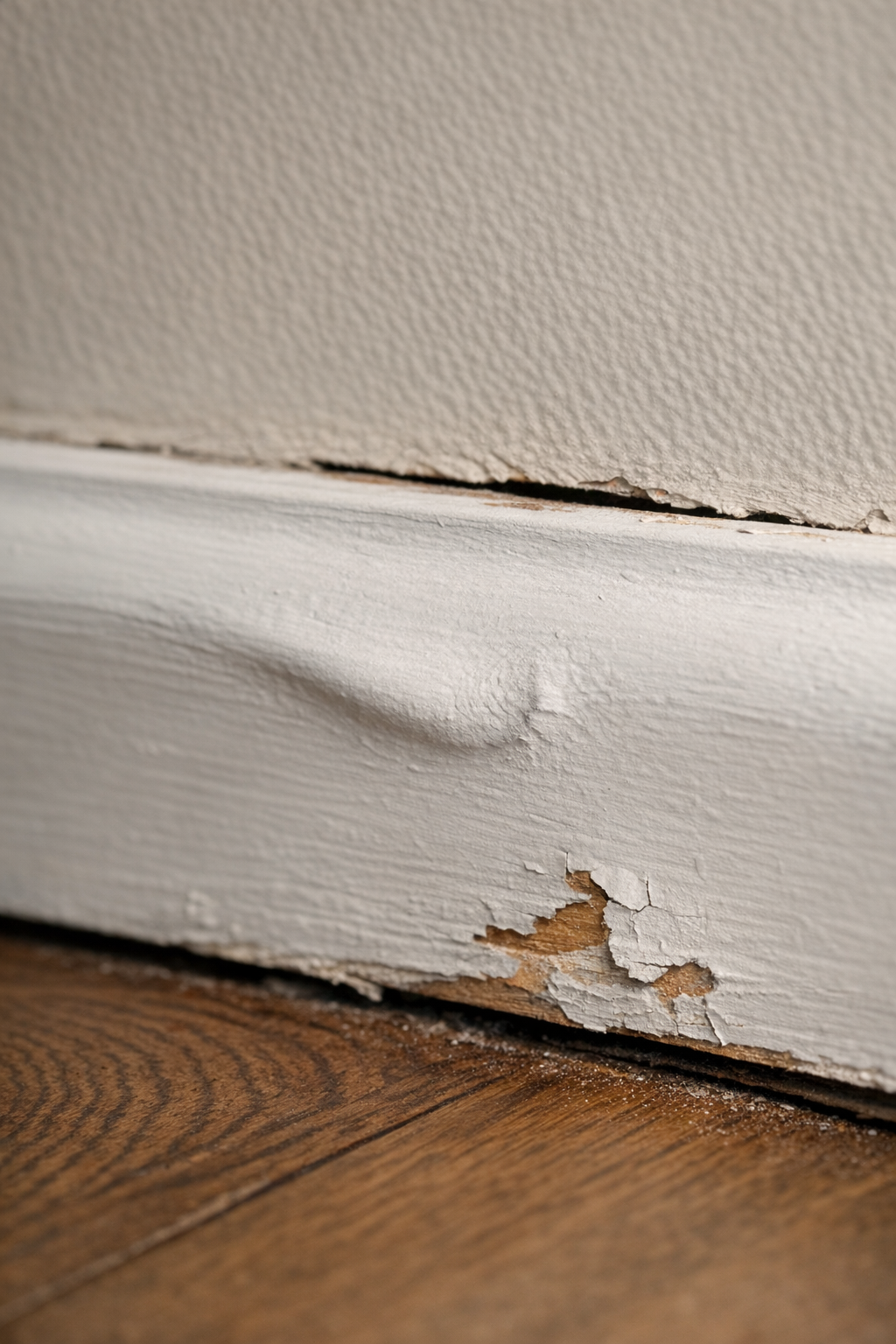
- Surface damage: dents, chips, scratches, nail holes, pet damage, and split corners are common trim repair issues. When the damage is shallow and limited, the goal is usually to smooth, fill, sand, and prepare the piece for paint or finish.
- Movement and gaps: settling, seasonal movement, impact, or weak fastening can lead to open joints, recurring caulk gaps, and trim pulling away from the wall. The practical concern is whether the piece can be re-secured cleanly or whether the joint has failed too many times.
- Moisture-related damage: water staining, peeling paint, soft wood, swelling, warped pieces, and rot indicators need a closer look. Limited wood trim repair may be possible, but swollen MDF, rotted exterior casing, or badly deteriorated sections are often better replaced.
- Poor installation or mismatched pieces: uneven reveals, rough cuts, bulky caulk lines, missing sections, and profiles that do not match nearby trim can make a finished room feel patched together. Service focuses on the trim itself, not structural framing or cabinetry work.
When Trim Can Be Repaired and When Replacement Is the Better Choice
The real decision is whether the piece still has enough sound material to hold a clean repair. Repair keeps the existing trim in place and addresses a limited problem; replacement removes a failing or mismatched section so the finished line can be rebuilt more cleanly.
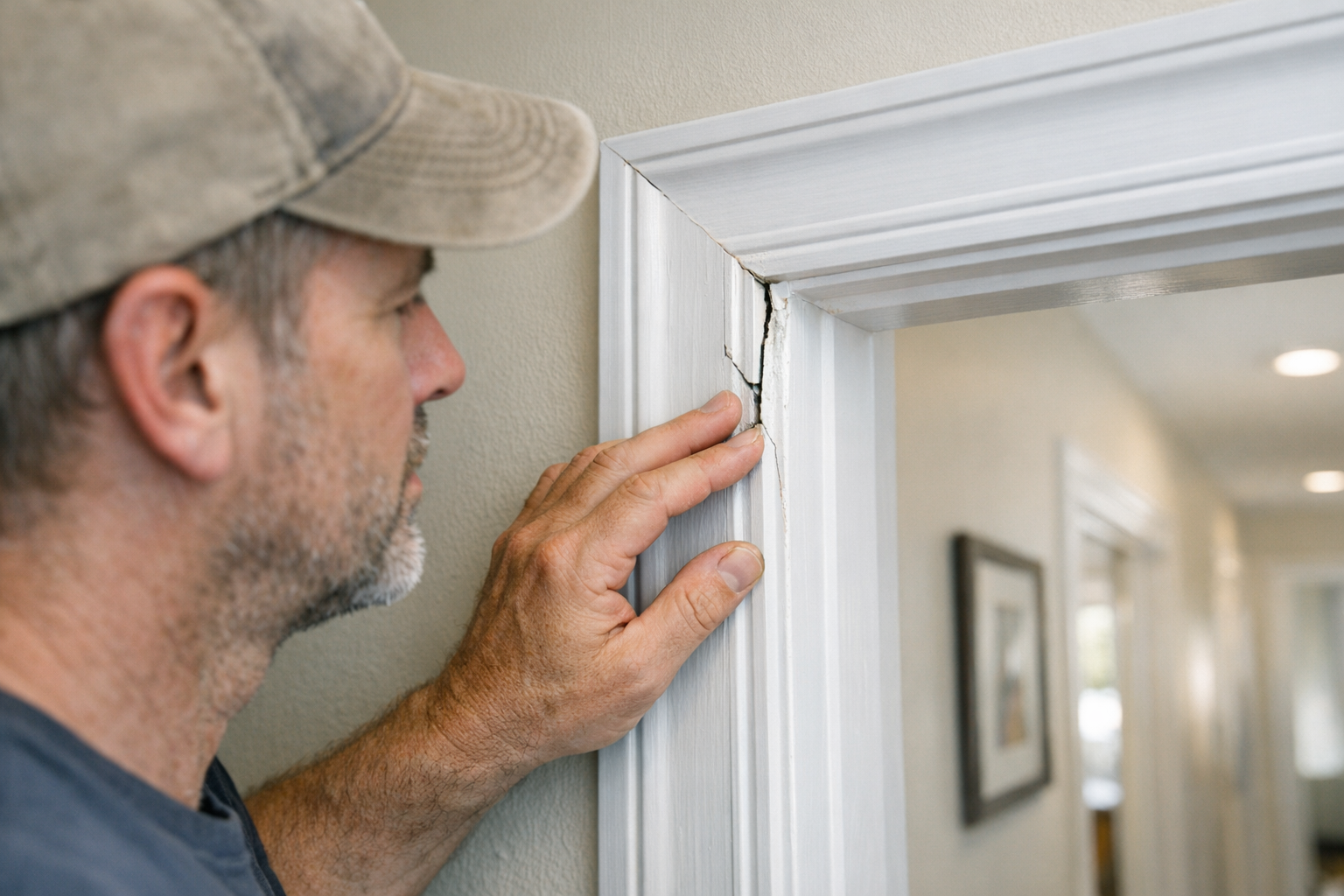
- Repair is often the right fit for small, localized damage. Dents, chips, nail holes, minor gaps, loose sections, and isolated corner damage can often be handled as damaged trim repair when the surrounding material is stable and the profile still lines up with nearby pieces.
- Replacement is usually better when the material is failing. Rotted, swollen, split, severely warped, or repeatedly loose trim may not hold filler, fasteners, caulk, or paint well enough for a durable-looking result. In those cases, trim replacement is the cleaner path.
- The location of the damage matters. A small mark in the middle of a baseboard is different from a failed joint at a doorway, a split corner, or exterior casing exposed to moisture. Rotted trim replacement is especially common when deterioration affects more than the surface.
- Matching also affects the recommendation. If the existing profile, thickness, reveal, and finish can be blended well, a partial repair or section replacement may make sense. If the trim is poorly matched already, replacing a longer run can look more intentional than patching one awkward spot.
Before recommending trim repair and replacement work, we look at the material, finish, damage severity, and nearby sections. The takeaway is simple: we do not push replacement where a clean repair is practical, but we also do not hide failing trim behind filler when a new section will give you a better finished result.
Interior and Exterior Trim We Repair or Replace
A floor-level scuff is not the same problem as a separated crown joint or a soft exterior board. Different trim locations fail in different ways, so we look at each run by what it protects, what it frames, and how visible the finished joint will be.
- Baseboards, quarter round, and shoe molding: These pieces run along the floor line and cover the transition between wall and flooring. Baseboard repair and replacement is common when there are chips, dents, swollen sections, open joints, or pieces that no longer sit tight against the wall or floor.
- Door casing and window casing: Casing frames the opening around doors and windows, so gaps, cracked corners, impact damage, settling lines, or uneven reveals are easy to notice. A small split or loose miter may be repairable, while missing, swollen, or badly mismatched casing may need a new section.
- Crown molding and chair rail: Crown molding finishes the wall-to-ceiling transition, while chair rail creates a horizontal break on the wall. Cracks, separation at joints, finish damage, and uneven lines can make these details stand out for the wrong reason.
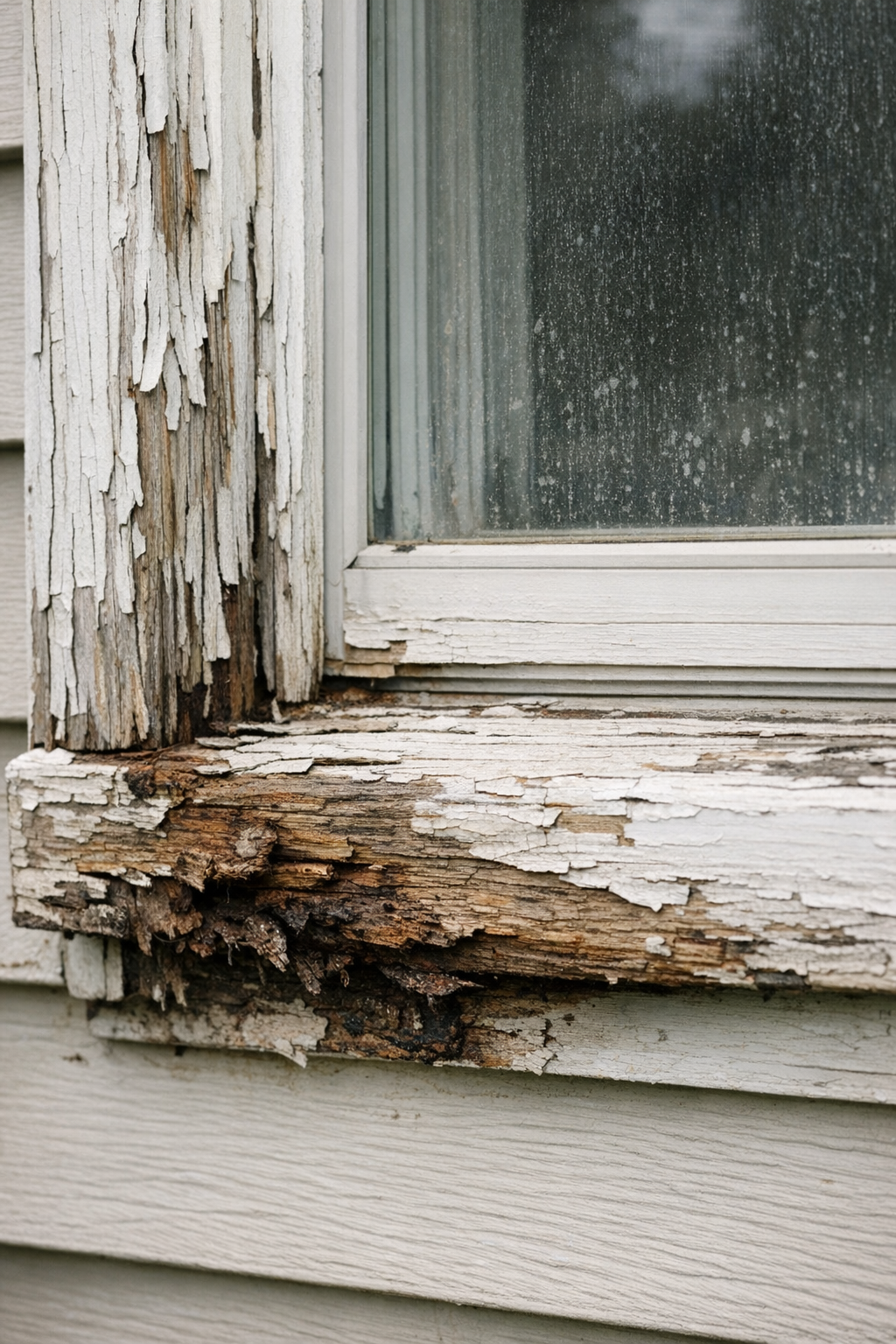
- Exterior trim: Exterior casing, fascia-style trim, and other outside details face weather exposure, so peeling paint, swelling, soft spots, rot indicators, and recurring gaps deserve attention before the damage spreads across more of the trim run.
Matching Existing Trim Profiles and Preparing for Paint or Finish
A replacement piece should look like it belongs next to the trim that stays. We compare the profile shape, overall width, thickness, material, and reveal, the small visible edge or spacing line around a door, window, floor, or ceiling transition, because even a slight mismatch can make a new section stand out.
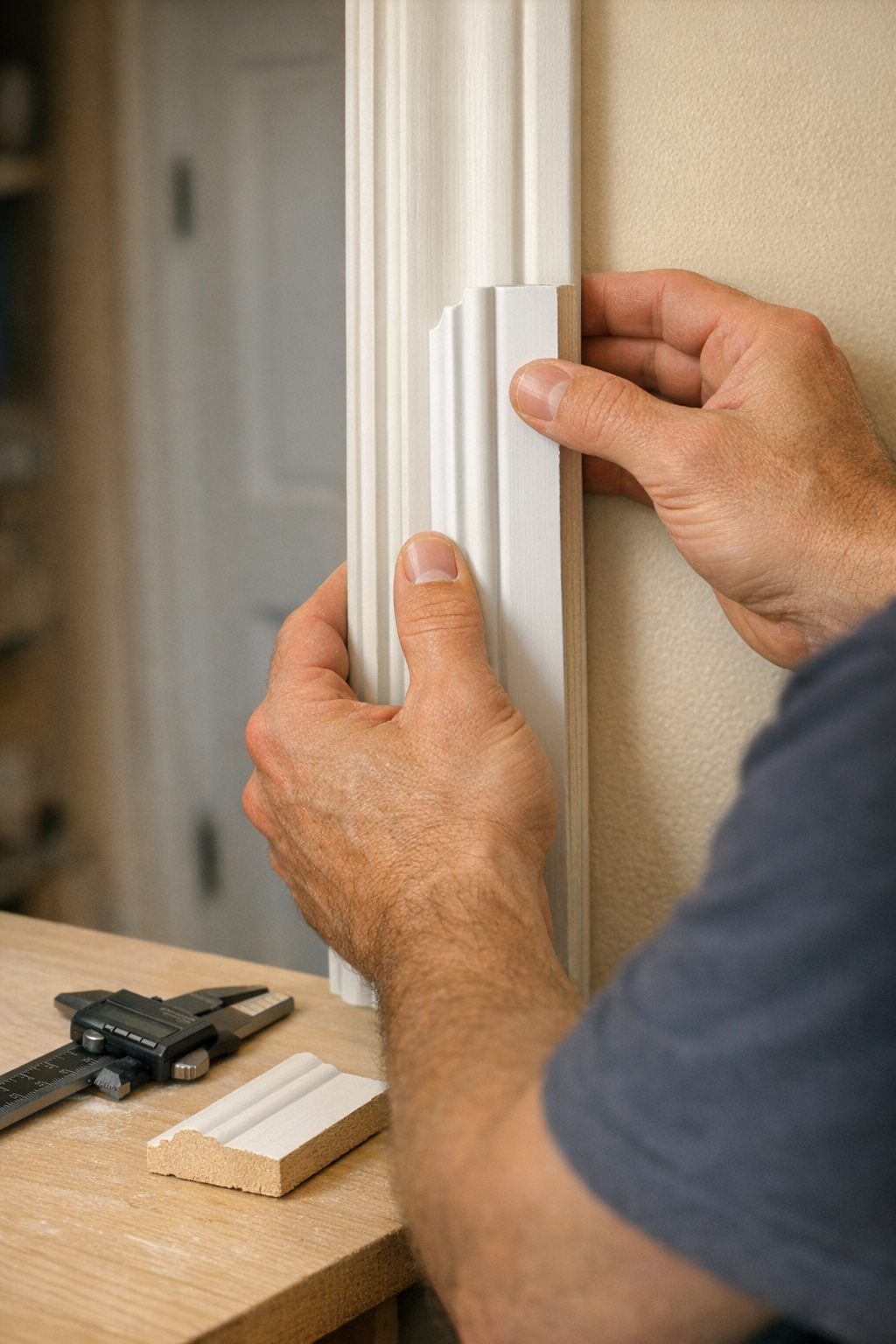
When an exact profile is available, trim installation and repair can usually focus on fitting the new piece cleanly into the existing run. If the original trim is older, custom, discontinued, or built up from multiple pieces, we assess match options rather than promising a perfect duplicate. The practical choices may include using the closest available profile, replacing a longer section so the change stops at a natural corner or break, or planning a more involved match for highly visible areas such as crown molding replacement in a main room.
Once the repair or replacement is in place, the finish preparation matters. Nail holes are filled, rough edges are sanded, open seams are cleaned up, and caulking is used where trim meets walls, ceilings, or adjacent pieces so the line is ready for paint or finishing. The goal is a smooth, finish-ready surface that blends the repaired area into the surrounding trim as cleanly as the existing material allows.
What to Expect From Our Trim Repair or Replacement Service
Your appointment starts with a close look at the areas that bother you most, whether that is a loose baseboard, a cracked corner, a swollen section near a window, or exterior casing that no longer looks sound. We look at the visible damage, the surrounding trim, the material condition, and where the piece sits before making a repair-or-replacement recommendation.

From there, we explain the practical path forward. A small chip, nail hole, limited gap, or loose section may be a repair candidate when the trim is still solid. Baseboard replacement, window casing replacement, or another new section may make more sense when the piece is rotted, swollen, split, missing, badly mismatched, or likely to keep failing.
If replacement is needed, we review material and profile options before work begins. That may mean matching the existing shape and size where possible, choosing a close available profile, or replacing a longer run so the transition lands at a natural stopping point instead of in the middle of a visible wall.
During the trim repair and replacement work, damaged pieces are removed when needed, new or repaired sections are cut to fit, fastened securely, and prepared for a finished result. Seams, nail holes, and edges are addressed with filling, sanding, caulking, and primer-ready prep where appropriate for the surface.
Before we wrap up, we clean the work area and review the finished trim with you. Project length depends on the number of areas involved, the severity of the damage, profile or material matching, and the finish preparation required, so we discuss those details before the work is scheduled.
Why Hire a Professional for Trim Work
Professional trim work comes down to details that are easy to notice once they are wrong. Accurate measurements, clean cuts, tight mitered or coped joints, and consistent reveals help baseboards, casing, and crown look intentional instead of patched in.
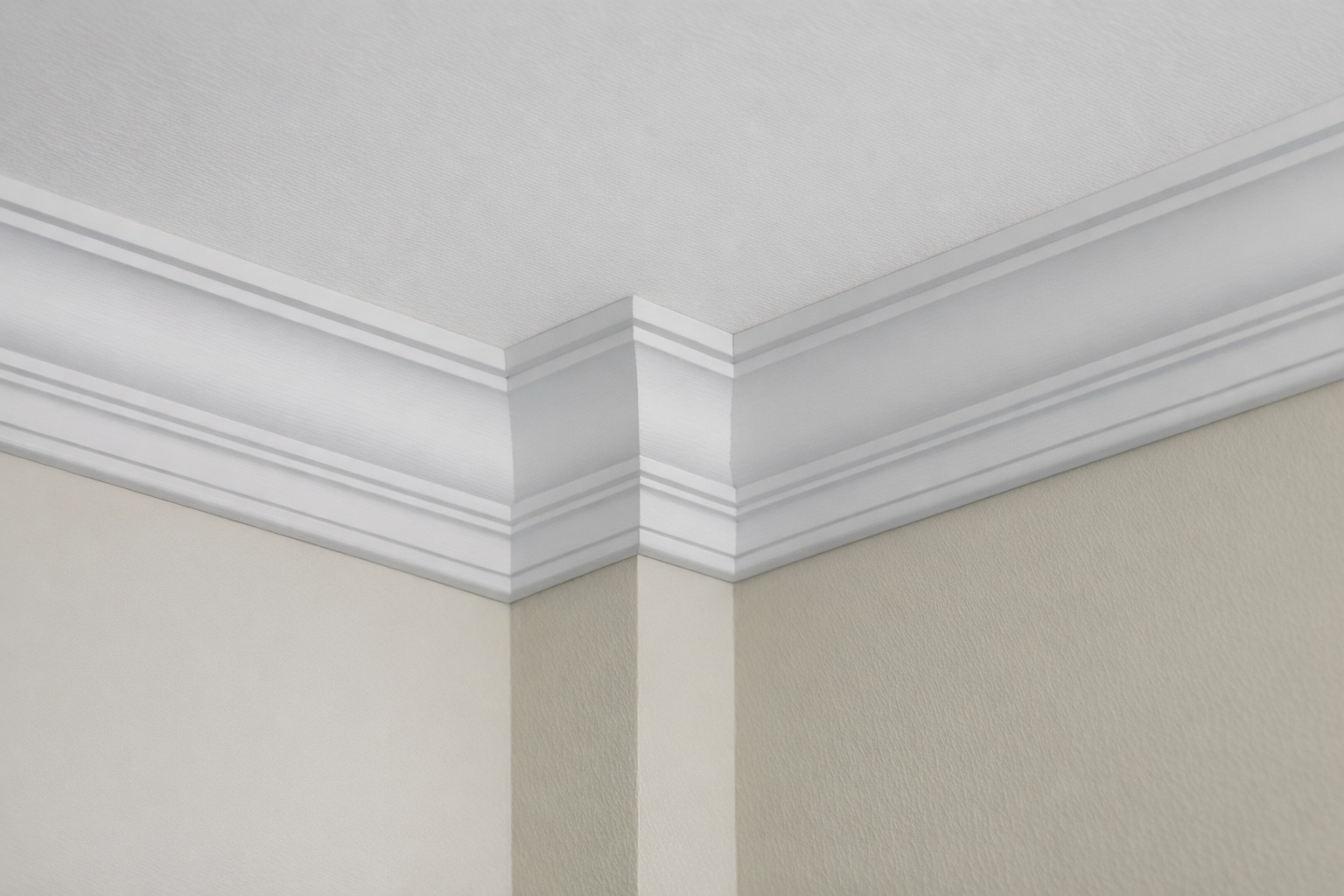
Fastening matters, too. Nails or trim fasteners hold the piece in place, adhesive can help support contact where appropriate, and caulk is used for small paintable seams where trim meets a wall, ceiling, or adjoining piece. Those materials do different jobs, so using them correctly helps avoid loose sections, lumpy seams, and gaps that reopen too quickly.
A professional eye also helps catch problems that should not be covered up. Soft wood, swollen MDF, recurring caulk gaps, split corners, and rotted exterior casing can point to material failure or moisture exposure; in those cases, replacing the affected section may be a smarter recommendation than filling and painting over it.
For baseboard repair, crown molding replacement, door casing, or window trim, profile matching is another reason to bring in finish carpentry services. Matching the shape, size, material, and finish as closely as practical reduces visible patchwork and uneven transitions, while sanding, filling, caulking, and primer-ready preparation leave the trim ready for the final finish.
Schedule Trim Repair and Replacement
When you are ready to turn marked-up, loose, or failing trim into a finish-ready detail again, contact us to schedule an assessment. We can look at the damaged areas, talk through what you want the finished trim to look like, and explain whether the better path is restoring what is there or planning trim replacement for sections that are too worn, rotted, swollen, split, or broken to keep.
During the assessment, we consider the condition of the material, the location of the damage, the severity of cracks or gaps, and whether the existing profile and finish can be matched closely enough for a clean result. A small chip, loose piece, or limited caulk gap may be a trim repair candidate; soft wood, swollen MDF, recurring gaps, missing sections, or rotted exterior casing often points toward replacement.
Reach out when you are ready to restore damaged trim, replace unsalvageable pieces, and prepare the area for a smooth, finish-ready look. We will review the affected trim with you and recommend a practical plan based on what the home actually needs.
FAQs
What types of trim can be repaired or replaced?
Trim repair and replacement can cover baseboards, quarter round, shoe molding, door casing, window casing, crown molding, chair rail, exterior casing, and fascia style exterior trim. Both interior and exterior trim are included.
Can trim be repaired before painting?
Yes, small dents, chips, nail holes, minor gaps, loose sections, and isolated corner damage can often be repaired before painting. The work may include filling, sanding, cleaning seams, caulking edges, and preparing the trim for primer or finish.
How do I know if trim damage is from water or rot?
Water or rot related trim damage can show up as water staining, peeling paint, soft wood, swelling, warped pieces, visible deterioration, or recurring gaps. Swollen MDF, rotted exterior casing, and badly deteriorated sections are usually better candidates for replacement.
Can you match my existing trim profile?
Existing trim is matched by comparing the profile shape, overall width, thickness, material, finish, and reveal around the door, window, floor, or ceiling transition. If an exact match is not available, options include using the closest available profile or replacing a longer run so the change stops at a natural corner or break.
Should damaged trim be repaired or replaced?
Repair is usually best for small, localized damage when the surrounding material is stable and the profile still lines up with nearby pieces. Replacement is usually better for rotted, swollen, badly split, severely warped, missing, mismatched, or repeatedly loose trim that will not hold filler, fasteners, caulk, or paint well.