
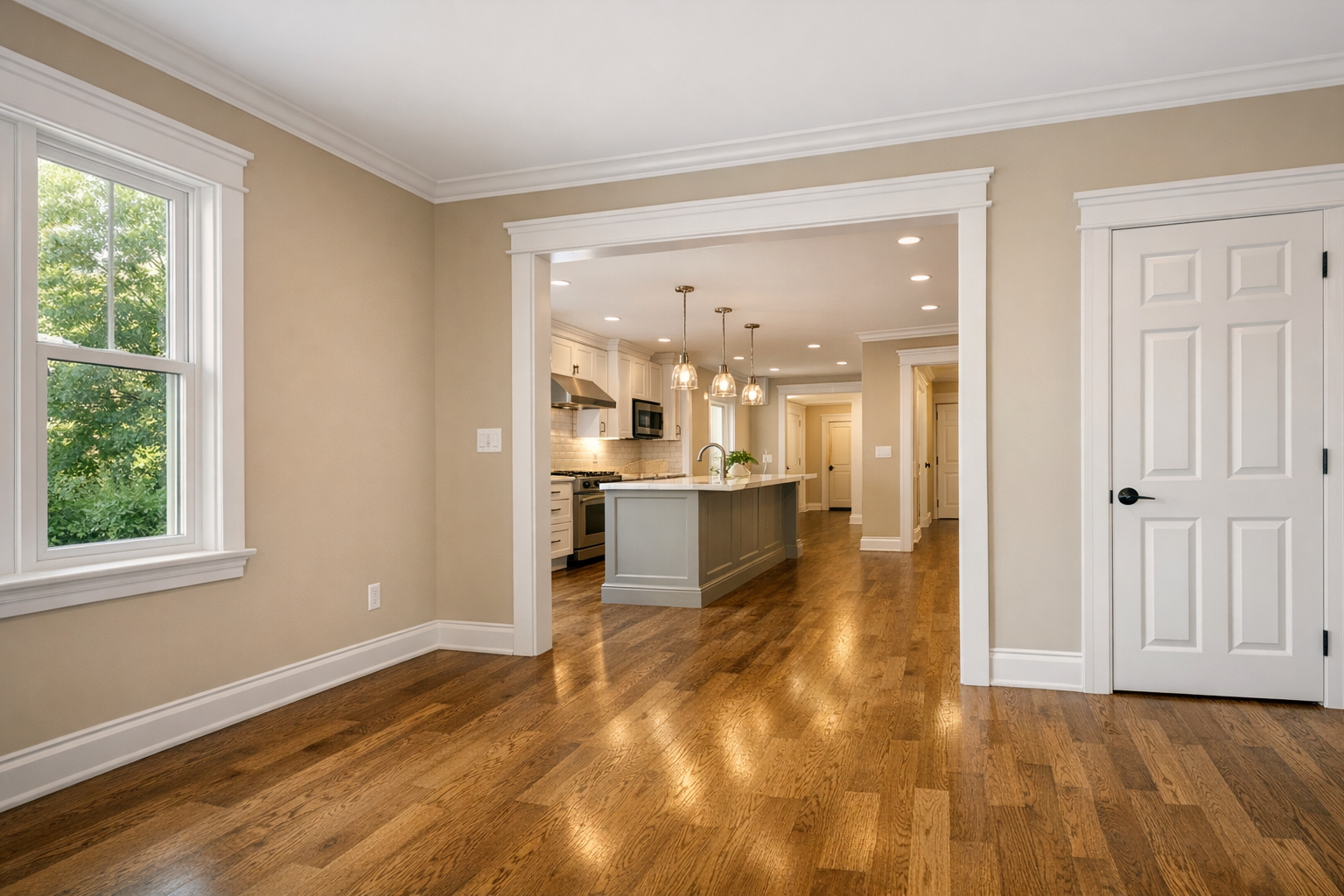
Remodel trim packages bring the finish carpentry into one coordinated plan instead of treating each board as a separate afterthought. A package can tie together baseboards, door casing, window trim, molding, and other interior details so a remodeled kitchen, hallway, bathroom, bedroom, or living area feels connected to the rest of the home rather than patched in piece by piece.
The right package is shaped by the room, the existing trim, the finish you want, and how much visual change you want from the remodel. A standard refresh may focus on clean new baseboards and matching casings. An upgraded profile package can use taller baseboards, wider casing, or more defined molding to make the space feel more finished. A custom millwork package goes further with specialty details, built-up profiles, stain-grade pieces, or decorative accents that become part of the room's design.
Final scope depends on your home and project goals, but the takeaway is simple: trim is not just a border around the room. It is the transition between floors, walls, doors, windows, cabinets, and ceilings, and choosing it as a package helps the finished remodel look intentional.
What Is Included in a Remodel Trim Package?
A strong scope starts by naming every edge that needs to be finished. A remodel trim package may include removing old trim, baseboard installation along new or existing flooring, door casing around openings, window trim, jamb extensions where the wall depth has changed, shoe molding or quarter round at the floor line, transition trim between materials, and caulking or prep for paint.
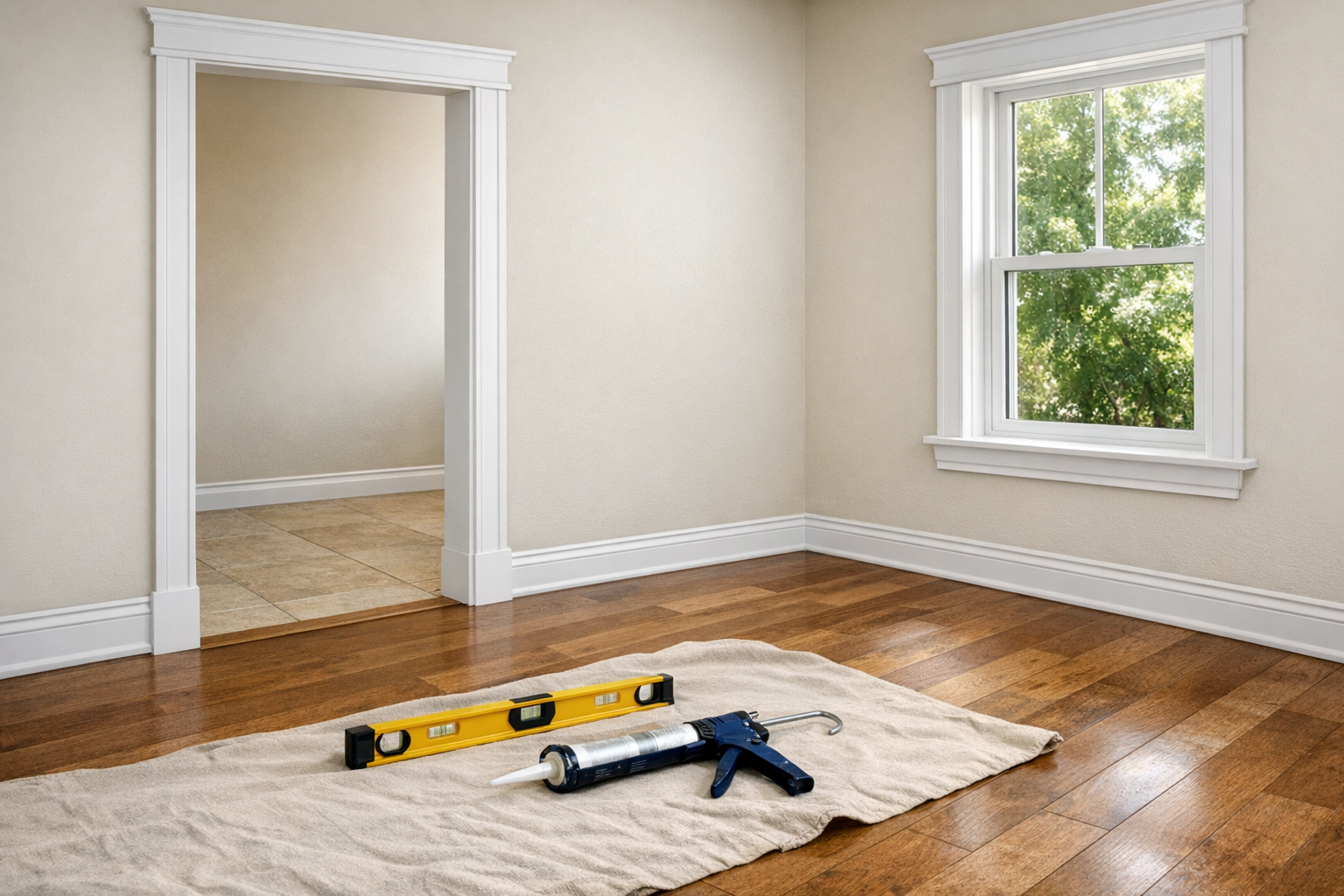
Those pieces are not chosen as random boards. They are coordinated by profile, height, reveal, material, and finish readiness. The profile is the shape of the trim face, from simple flat stock to more decorative molded edges. Height affects how substantial the room feels, especially at baseboards. The reveal is the small, consistent setback where casing meets a door or window jamb; when it is even, the opening looks clean instead of improvised.
- Baseboards finish the joint where walls meet the floor and help protect the lower wall from everyday contact.
- Door casing frames interior doors and helps cover the gap between the jamb and wall surface.
- Window trim finishes the edges around windows, while jamb extensions build out the inside edge when the window frame sits deeper than the wall surface.
- Shoe molding or quarter round can cover small flooring gaps at the baseboard, especially when flooring is being replaced or refinished.
The practical takeaway is that the package should define both the visible pieces and the finish expectations. Paint-grade trim, stain-grade trim, caulked seams, filled nail holes, and joint treatment all affect how complete the installation looks before the final coat goes on. Decorative add-ons such as crown molding or specialty millwork can be included, but they should be separated from the core room trim so the estimate is clear.
Standard, Upgraded, and Custom Trim Package Options
Most homeowners land in one of three service scopes: a simple refresh, a more noticeable profile upgrade, or a fully custom trim plan. Each one can use the same basic categories of pieces, but the difference is how much changes: the profile size, the casing style, the material, the finish expectation, and whether the trim is meant to blend in or become a design feature.
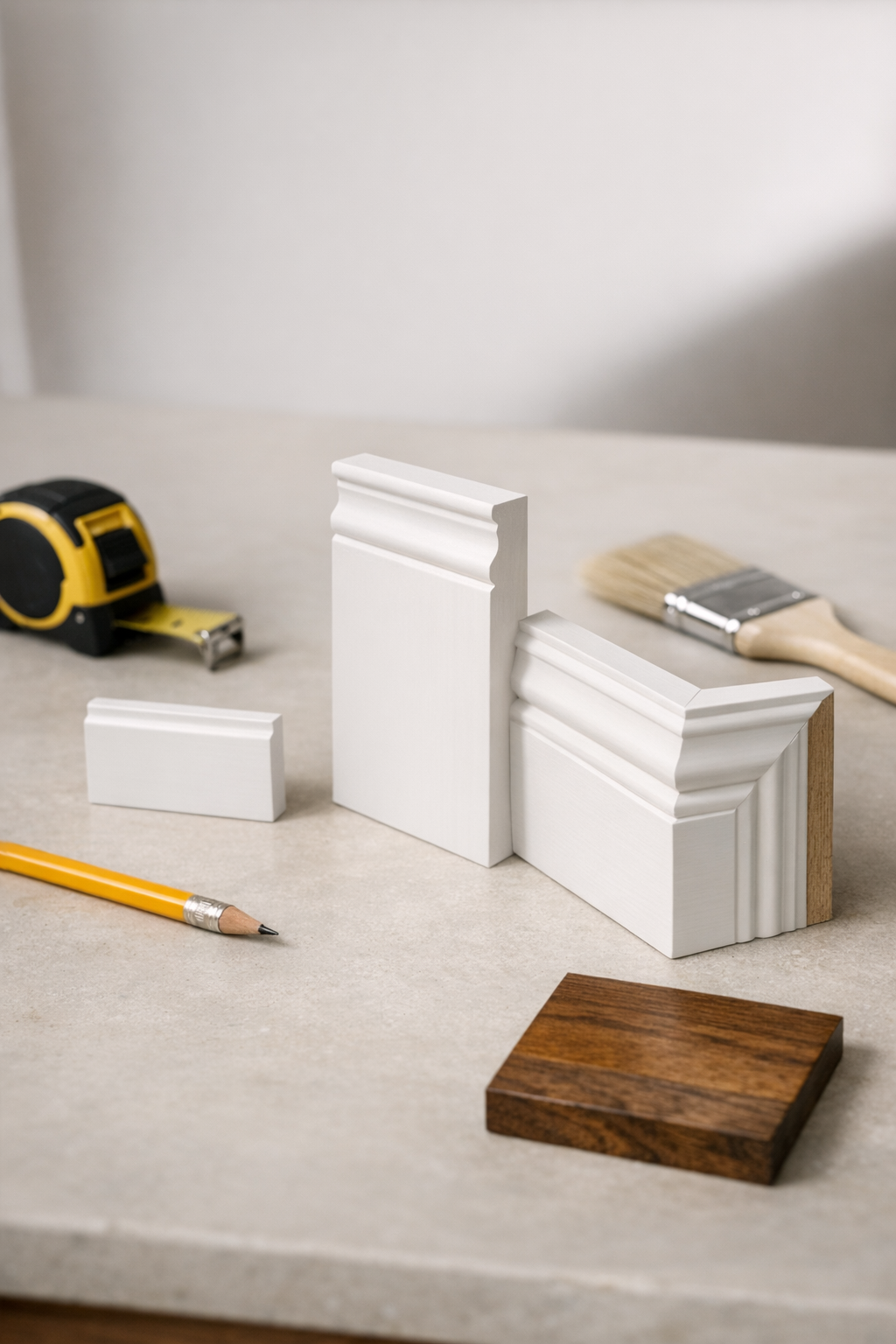
- Standard refresh package: This is the clean, practical option for trim packages for remodels where the goal is to replace worn, damaged, missing, or paint-heavy trim without changing the character of the room. It may include new baseboards, door casing, window trim, shoe molding, and paint-ready prep using a simple profile and consistent reveals. Choose it for a rental refresh, a bathroom update, a laundry room, or a remodel where the existing trim style still works. Avoid it if the room already has taller or more detailed trim nearby, because a basic profile can look undersized next to more substantial molding.
- Upgraded profile package: This option keeps the project structured but gives the room more presence. It may use taller baseboards, wider door and window casing, a more defined edge detail, coordinated shoe molding, and optional crown molding where the room calls for it. It fits a kitchen remodel, main-floor update, primary suite, or whole-home refresh where the trim should feel more intentional than builder-basic. Compared with a standard refresh, it usually involves more material, more layout attention, and more finish prep, so it belongs in the middle investment range rather than the simplest package level.
- Custom millwork package: Custom trim packages are built around a more specific design goal, such as historic restoration, a high-end redesign, matching unusual existing profiles, or adding specialty details that are not available as a simple off-the-shelf trim set. This level may include custom millwork, built-up crown, layered casing, plinth blocks, paneled openings, wainscoting, or stain-grade wood where the grain is part of the finished look. Choose it when the trim needs to carry the architecture of the space. Avoid it if the remodel budget is focused only on basic repair, because custom millwork adds design time, fabrication complexity, and more demanding finish expectations.
A helpful way to compare the three is to ask how visible you want the trim to be. Standard trim quietly cleans up the edges. Upgraded trim changes the feel of the room without turning every wall into a feature. Custom work becomes part of the design itself, especially when the material, profile, size, and finish are selected to match a specific style or period of home.
Matching Existing Trim vs. Replacing Trim Across the Remodel
The next choice is whether the new work should disappear into what you already have or intentionally reset the look. Matching existing trim means the package is built around the current profile, height, thickness, casing width, wood species, and painted or stained finish so the remodeled room does not call attention to itself. This works best when the adjoining rooms already have trim you like and the new pieces can line up cleanly at doors, hallways, or open transitions.
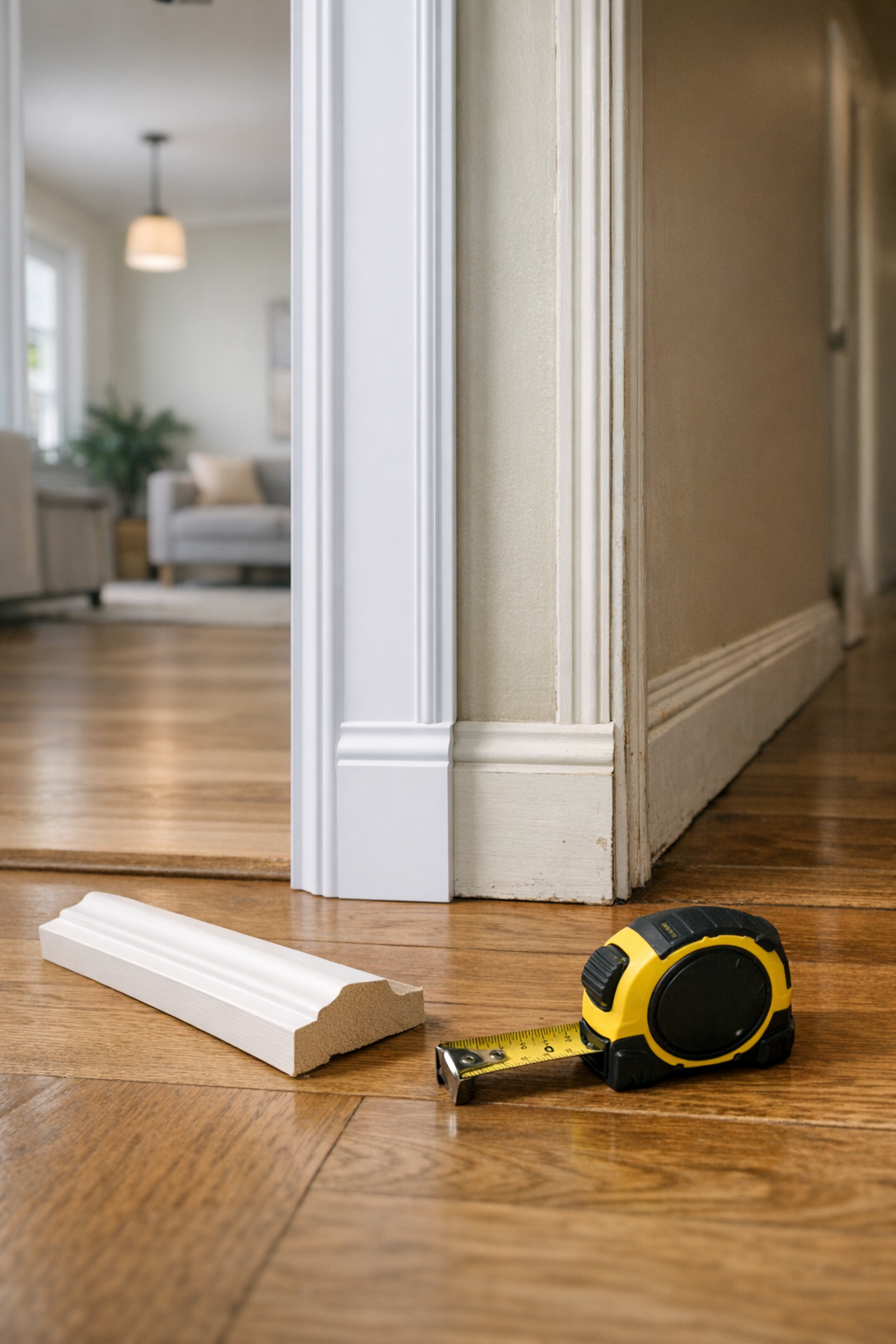
- Match what is there: A contractor will compare a sample piece or detailed measurements against available molding, including the face shape, back thickness, baseboard height, casing width, and reveal around doors and windows. This is a good fit for one-room updates, repaired openings, or remodels where the existing trim is still in good condition.
- Replace within the remodeled area: This option gives the new room a cleaner, more consistent finish without changing the whole house. It works when there is a natural stopping point, such as a cased opening, inside corner, hallway break, or flooring transition.
- Update adjacent spaces too: Broader replacement makes sense when the old and new trim would meet in a highly visible run, when casing widths do not align, or when stained species and color would be difficult to blend. In home remodel trim packages, this is often the difference between a room that looks newly patched and a space that feels planned.
A good decision point is the transition. If the eye can see old and new baseboards or door casings in the same view, small differences in thickness, edge shape, or finish become more noticeable. If the transition is hidden or separated by an opening, partial replacement can be a practical way to control scope while still getting a finished result.
Choosing Trim Materials, Profiles, and Finishes for Remodeled Rooms
Material choice is where the package starts to feel practical, not just decorative. MDF is a common paint-grade option when you want a smooth, consistent painted surface. Poplar is also often used for painted trim, especially when a crisper wood edge is preferred. Pine can suit painted or more casual stained looks, while oak is typically chosen when the grain is meant to show through a stain. PVC trim is most useful in moisture-prone areas where the room conditions matter as much as the profile.
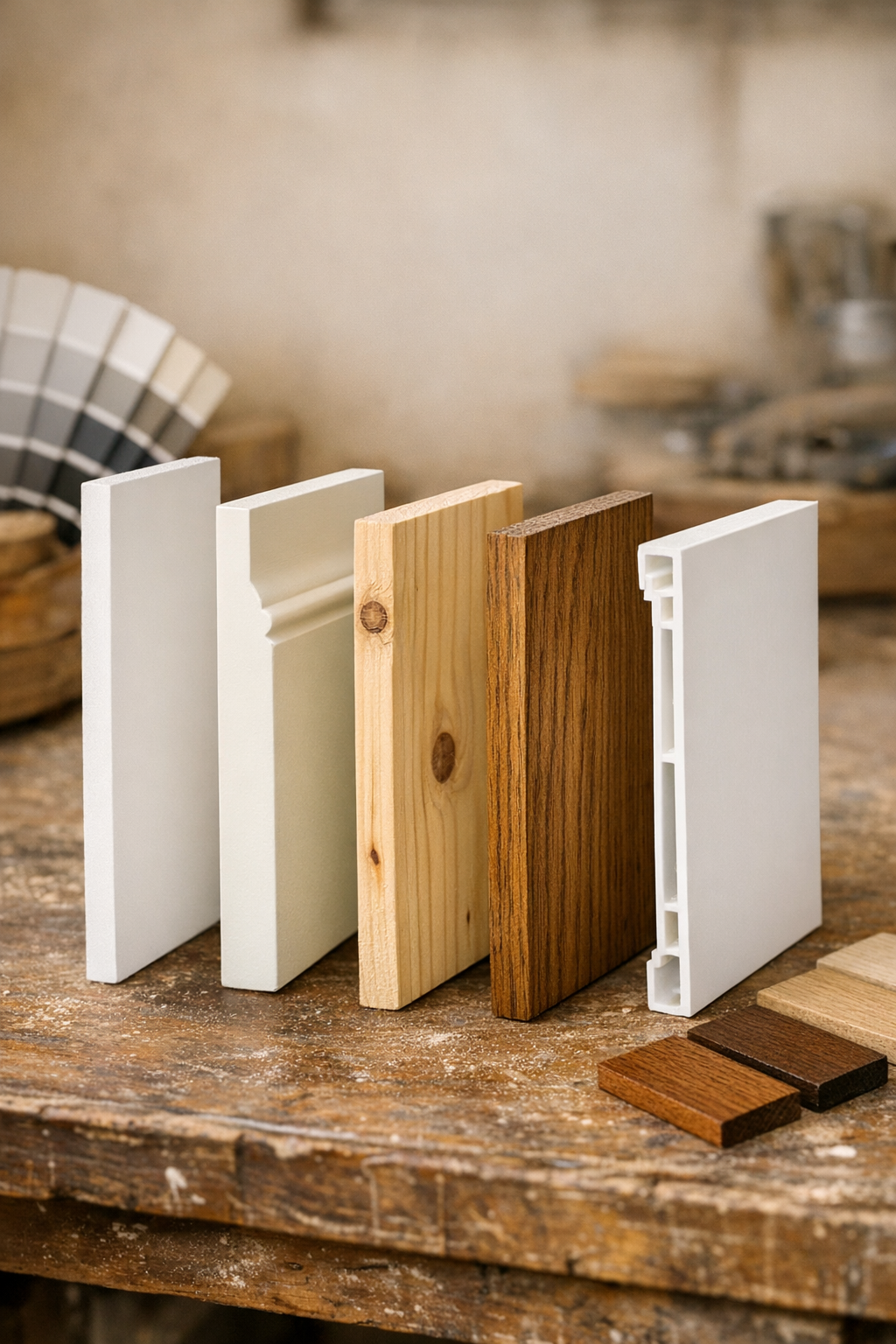
For bathrooms, basements, laundry areas, and some kitchens, the trim package should account for moisture exposure before the style is finalized. In main living areas, bedrooms, hallways, and dining rooms, the decision often leans more heavily on appearance: clean painted trim, visible stained wood grain, or a profile that matches nearby rooms. The key takeaway is simple: paint-grade and stain-grade choices are not just color decisions; they affect material selection, prep, and how forgiving the finished surface will be.
Profiles change the room's personality. Modern flat-stock trim uses simpler boards with minimal curves, so the lines feel cleaner and more current. Traditional built-up profiles combine shaped pieces or layered molding to create more shadow, depth, and detail. In remodel trim packages, this affects baseboard height, casing width, crown style, and how noticeable the trim becomes once furniture and lighting are back in the room.
Corner details are small, but they decide whether the installation looks sharp. Inside corners need clean intersections where walls meet. Outside corners need durable, aligned edges because they catch the eye and take more bumps. Mitered corners use angled cuts to turn a profile around a corner; when the profile is more detailed, those angles become more visible, so joint treatment should be part of the package conversation from the start.
Optional Add-Ons: Crown Molding, Wainscoting, Chair Rail, and Feature Walls
Decorative add-ons are where the trim plan can move from "finished" to "architectural." Crown molding finishes the wall-to-ceiling line and works best when the ceiling height, cabinet tops, window heads, and door casing leave enough visual breathing room. Wainscoting adds a lower wall treatment, often in dining rooms, entries, stairways, powder rooms, or hallways where the wall itself is meant to have more presence.
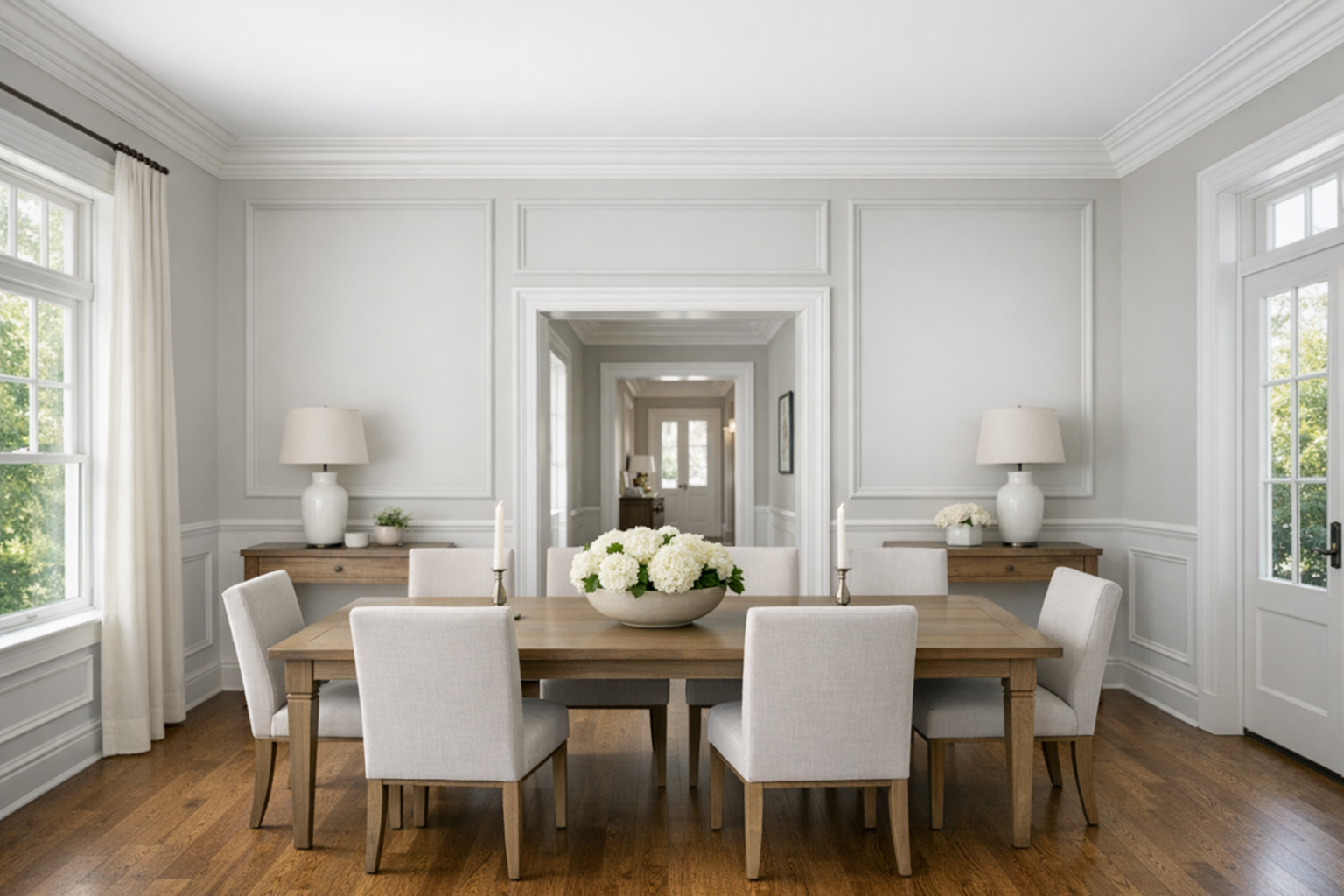
A chair rail is a horizontal molding that divides the wall and can stand alone or cap wainscoting. Picture-frame molding creates framed rectangles on the wall for a more formal look, while a feature wall may use vertical battens, panel molding, or layered millwork to create one focal surface. The practical difference is scale: a single rail is subtle, wainscoting changes the lower wall, and a feature wall becomes a design element.
These upgrades can be bundled into remodel trim packages or scoped as separate room-by-room add-ons. Room size, ceiling height, wall interruptions, window placement, outlets, and the desired style all affect how the layout should be proportioned, where joints land, and whether the add-on should match the base package or stand out intentionally.
How Trim Package Installation Fits Into the Remodeling Schedule
Scheduling works best when trim is planned before the room is ready for finish carpentry, not after everyone is packing up. Measurements are usually taken once wall surfaces, door openings, cabinet locations, flooring height, and window conditions are clear enough to size the pieces accurately. Standard profiles may be ordered or staged quickly, while custom profiles, stain-grade material, or specialty millwork need earlier decisions so the material is ready when the remodel reaches the finishing phase.
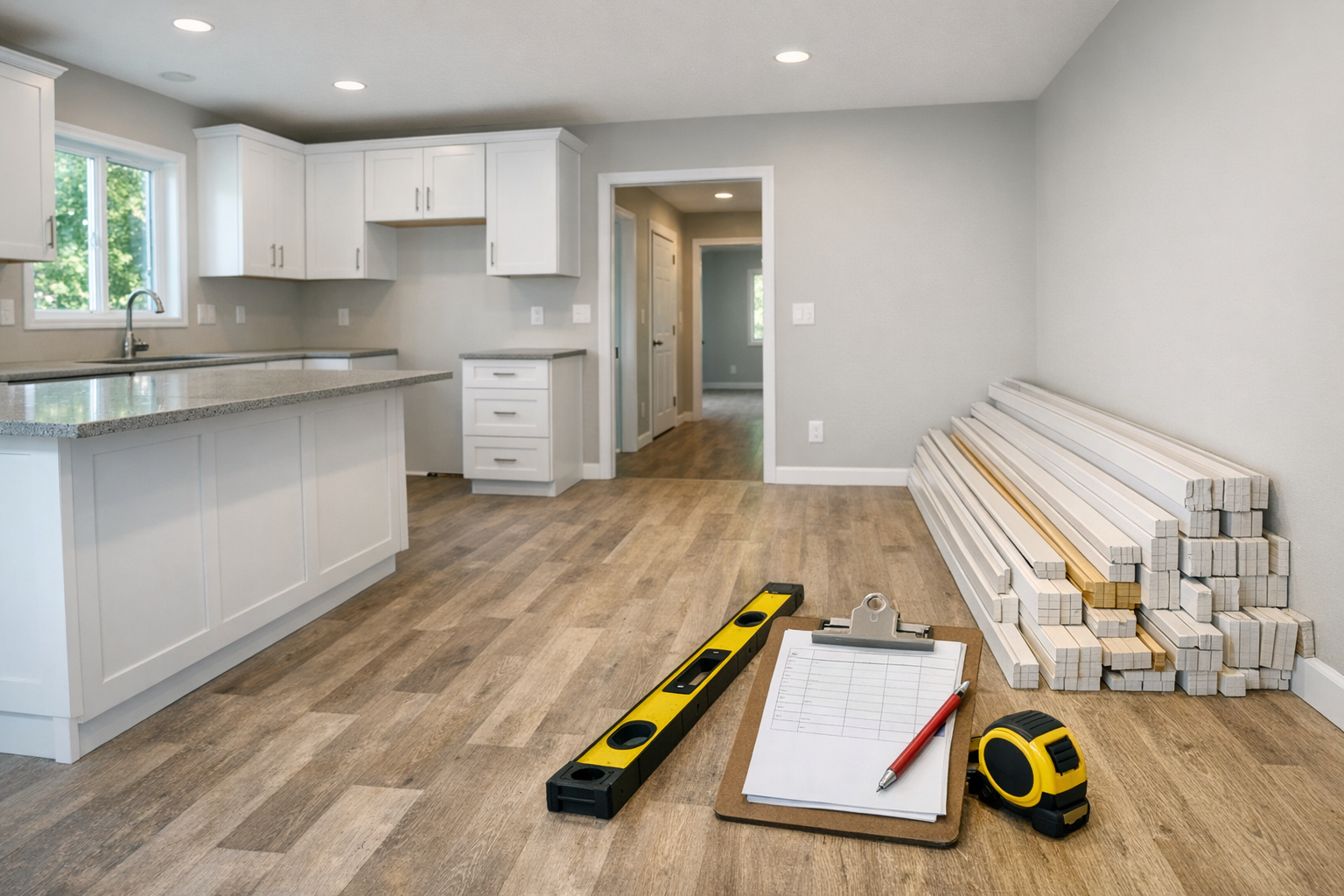
Trim package installation typically happens after drywall is finished and major flooring, doors, and cabinets are far enough along to establish clean edges. Caulking, filled nail holes, joint treatment, and final paint or stain planning come next, depending on whether the trim is paint-grade or stain-grade. Simple base and casing work may move faster than rooms with crown, panel molding, detailed returns, or many mitered corners. The schedule should account for room count, profile complexity, custom material lead time, and the finish standard you want at the end.
How to Start Choosing the Right Trim Package
Before the estimate, take photos of the current trim in each affected room, including close-ups of corners, floor lines, and openings. Note which rooms are included, where old and new trim will meet, and whether the goal is to match, upgrade, or transform the look. Scope affects how many edges need finishing; style affects profile height and casing shape; durability needs affect material choice in busy or moisture-prone rooms; and detail level affects whether simple trim, added molding, or custom trim packages make the most sense.
Also decide whether you prefer painted or stained finishes. Painted trim can create a clean, consistent look, while stain-grade trim puts more emphasis on the wood itself. If you are comparing remodel trim packages, schedule a consultation or measurement appointment so the package can be shaped around your rooms, transitions, finish goals, and the level of detail you want to see every day.
FAQs
What is included in a remodel trim package?
A remodel trim package can include old trim removal, baseboards, door casing, window trim, jamb extensions, shoe molding or quarter round, transition trim, caulking, and paint prep. It should define the visible trim pieces as well as finish details such as filled nail holes, joint treatment, paint-grade material, or stain-grade material.
What is the difference between standard, upgraded, and custom trim packages?
A standard refresh replaces worn or missing trim with simple profiles, consistent reveals, and paint-ready prep. An upgraded package uses taller baseboards, wider casing, more defined profiles, and optional crown molding, while a custom millwork package can include built-up crown, layered casing, plinth blocks, wainscoting, stain-grade wood, or specialty matched profiles.
What trim materials work best for painted finishes?
MDF is a common paint-grade trim choice because it provides a smooth, consistent painted surface. Poplar is also used for painted trim when a crisper wood edge is preferred, while PVC is useful in moisture-prone rooms such as bathrooms, basements, laundry areas, and some kitchens.
Should I replace all trim during a remodel or only trim in the remodeled rooms?
Replacing only the remodeled room can work when there is a natural stopping point such as a cased opening, inside corner, hallway break, or flooring transition. Updating adjacent spaces is better when old and new baseboards or casings will be visible together, because differences in thickness, edge shape, casing width, or finish become more noticeable.