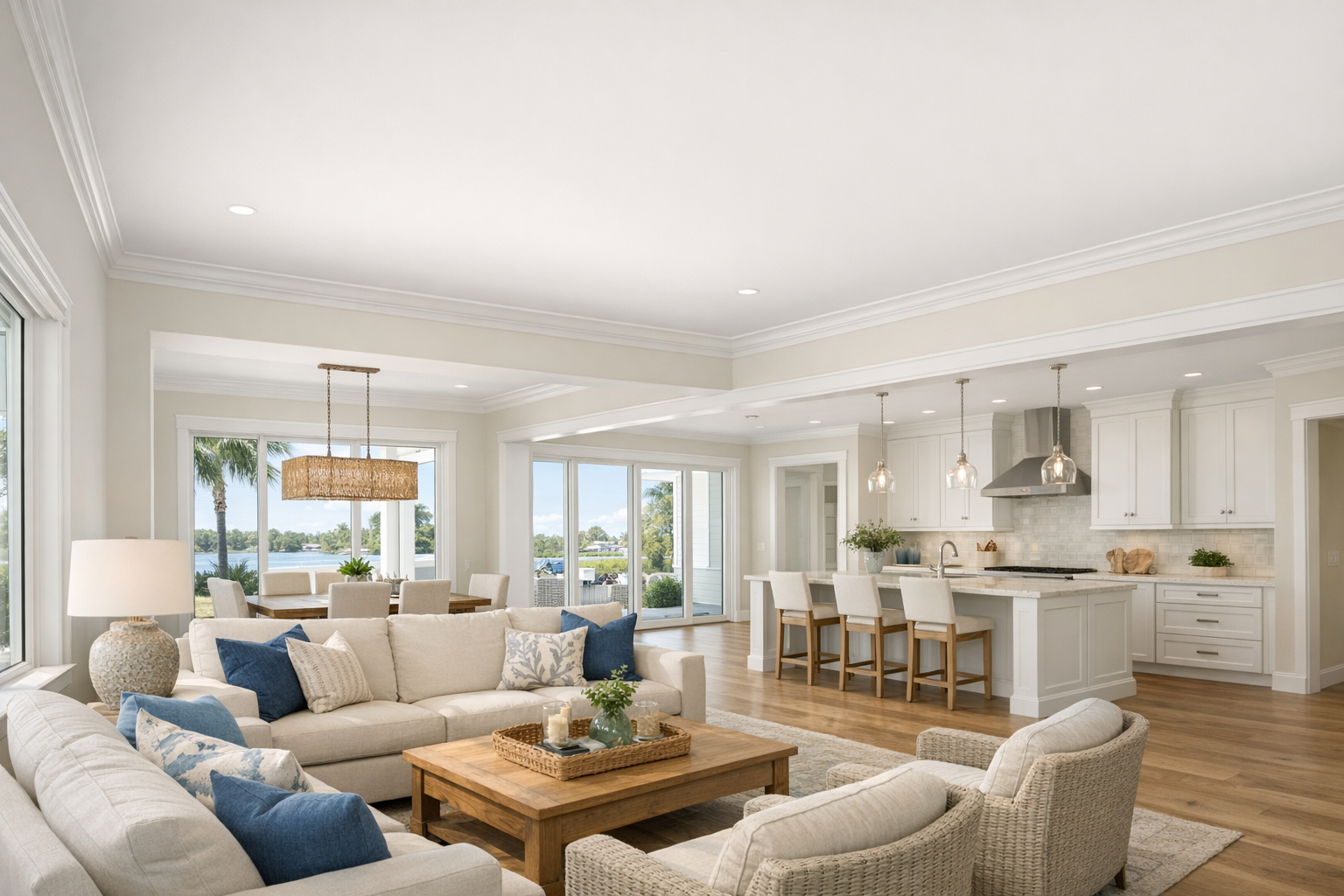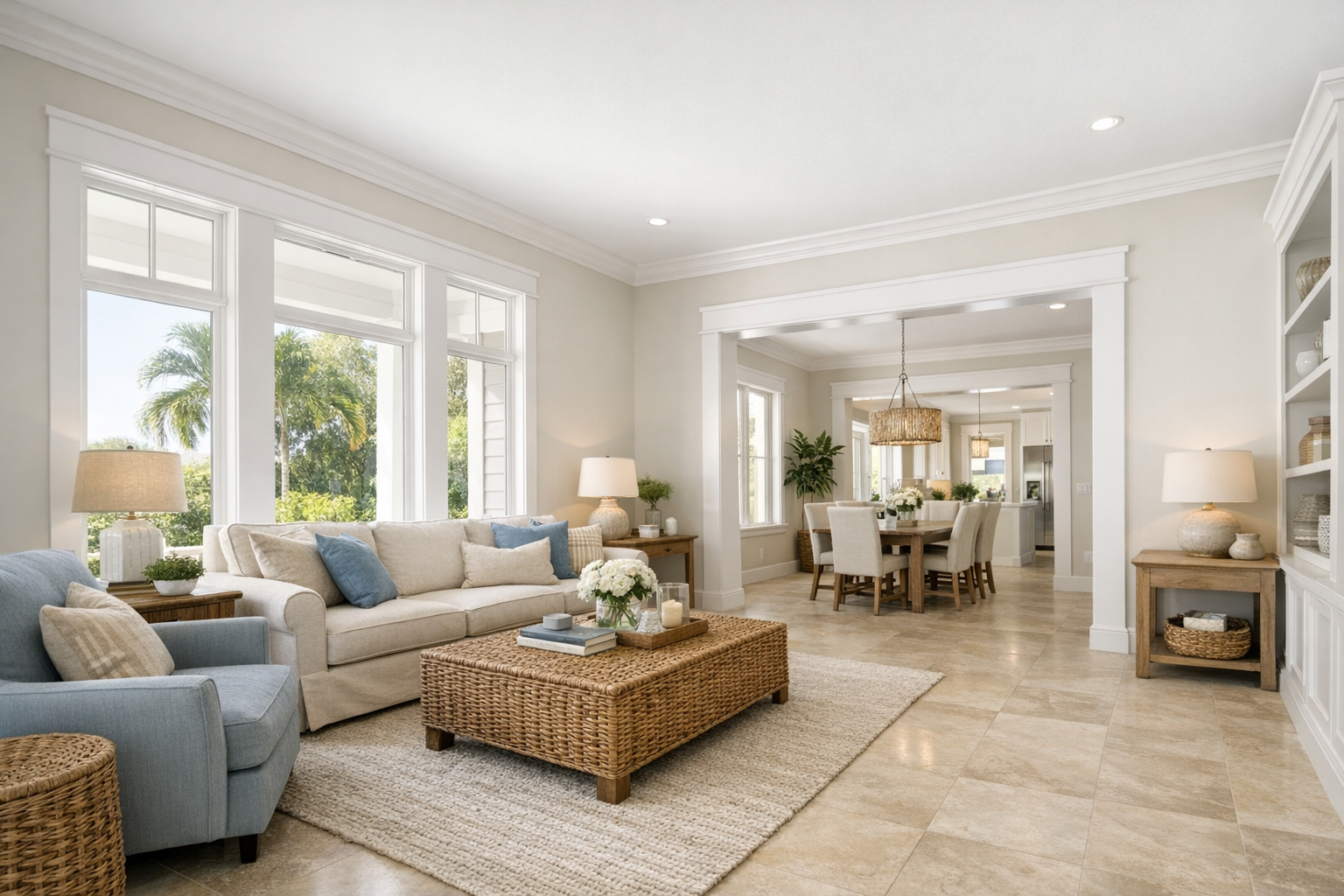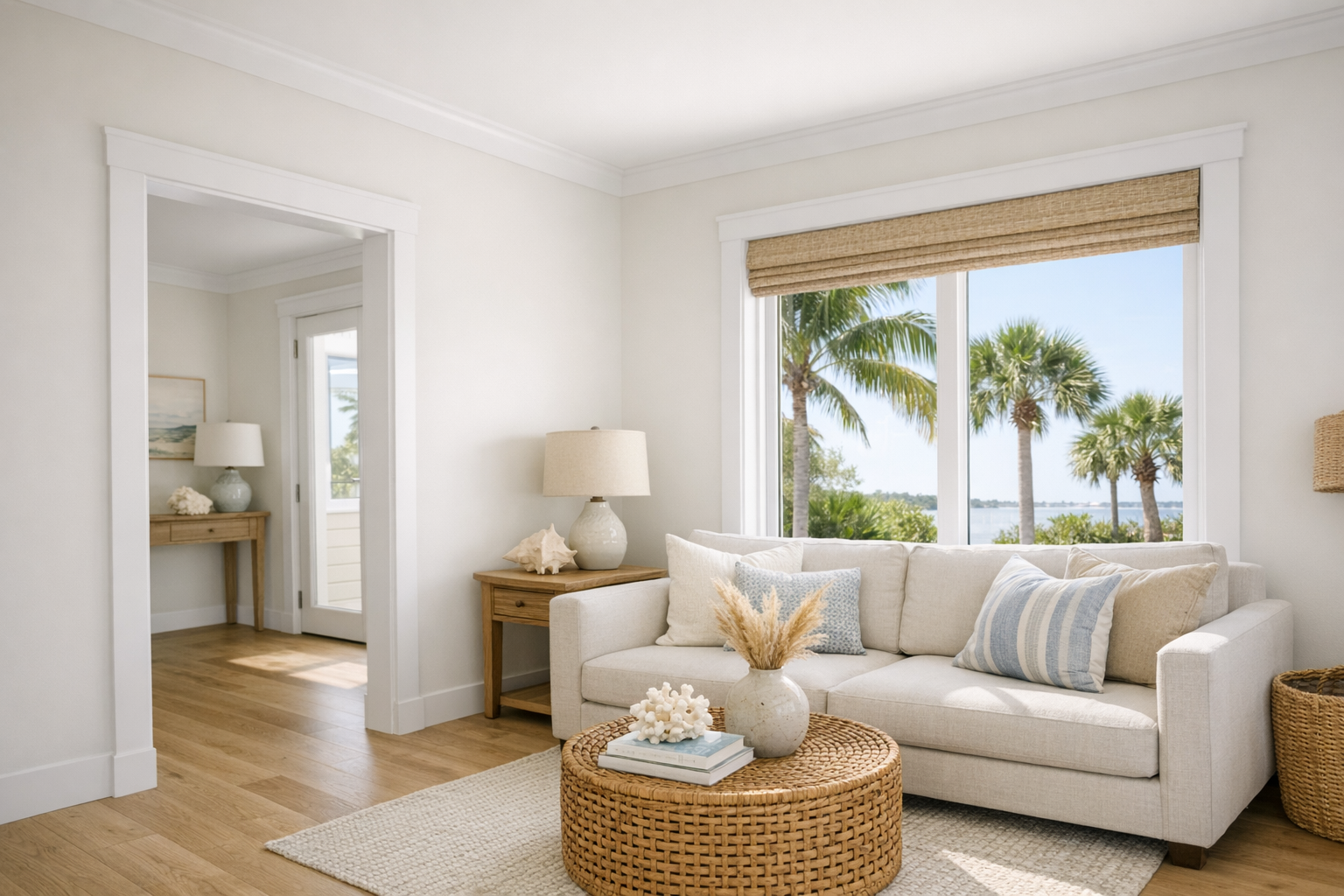
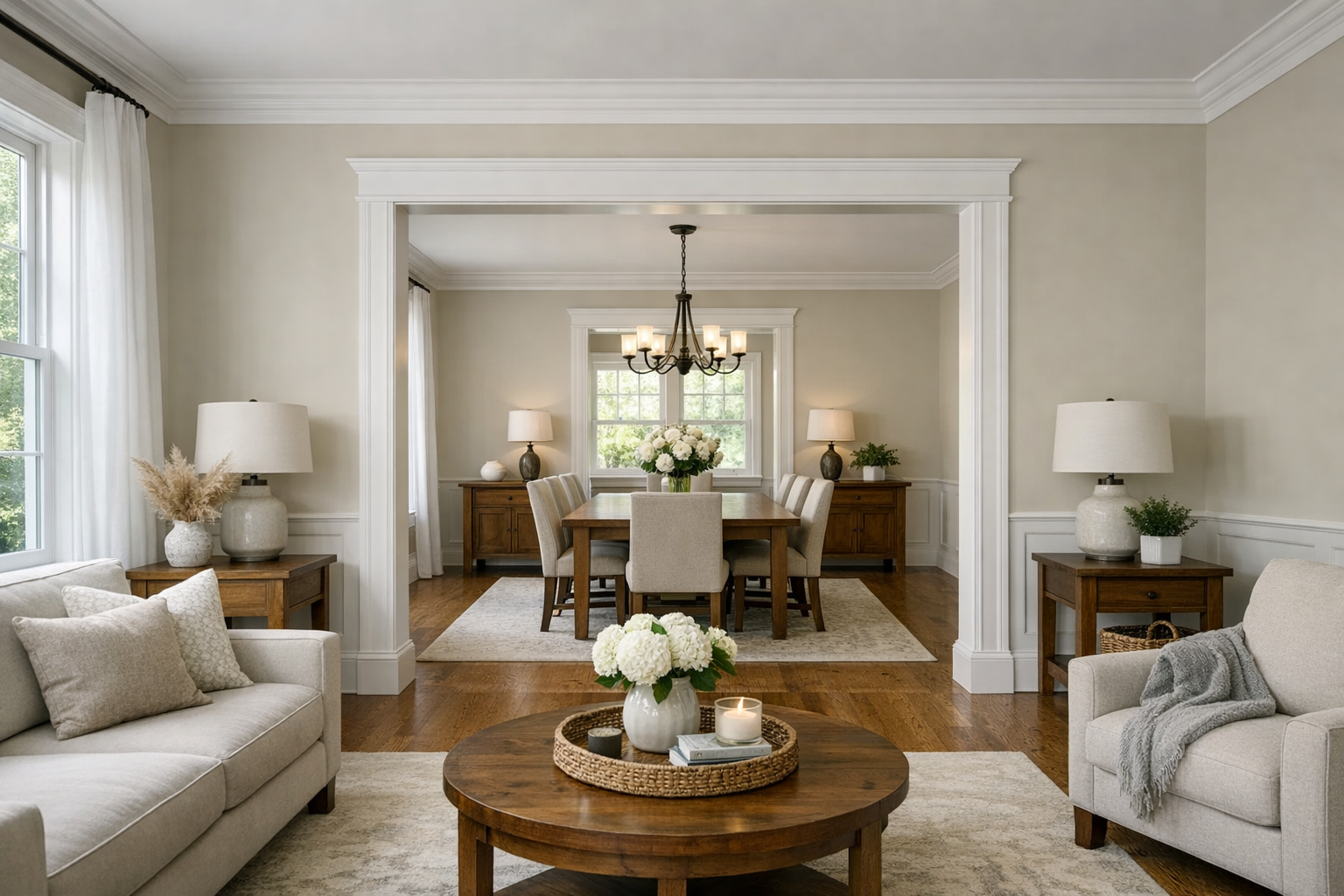

Some doorless openings do their job perfectly well but still look a little unresolved. A plain drywall return between a living room and dining room, or a foyer and main living space, can read as an empty cutout instead of a designed transition, especially when the surrounding rooms already have baseboards, crown, or detailed window and door casing.
That is where cased opening trim comes in. A cased opening is a doorless interior opening finished with trim around the edges, so the passageway gets a visual frame without adding a swinging door, pocket door, or new wall. The rooms stay open to each other, but the edge between them looks deliberate.
The difference is easiest to picture in before-and-after terms: before, the opening may be a flat drywall tunnel with vulnerable corners and no relationship to the home's other trim; after, the casing gives the passageway outline, depth, and proportion. It is a small interior trim detail, but it can make open rooms feel more finished, custom, and connected to the rest of the house.
This is not about changing the floor plan. It is about making an existing opening look like it belongs there, with the right scale, profile, and finish quality for the rooms it connects.
What a Cased Opening Is
Think of the opening as having two surfaces: the inside faces you pass through, and the flat wall faces you see from each room. In a cased opening, both are treated as finished parts of the room. The inside faces are usually wrapped with jamb-like boards, while the wall faces get casing around the perimeter, creating a defined edge instead of a raw-looking cut through the wall.
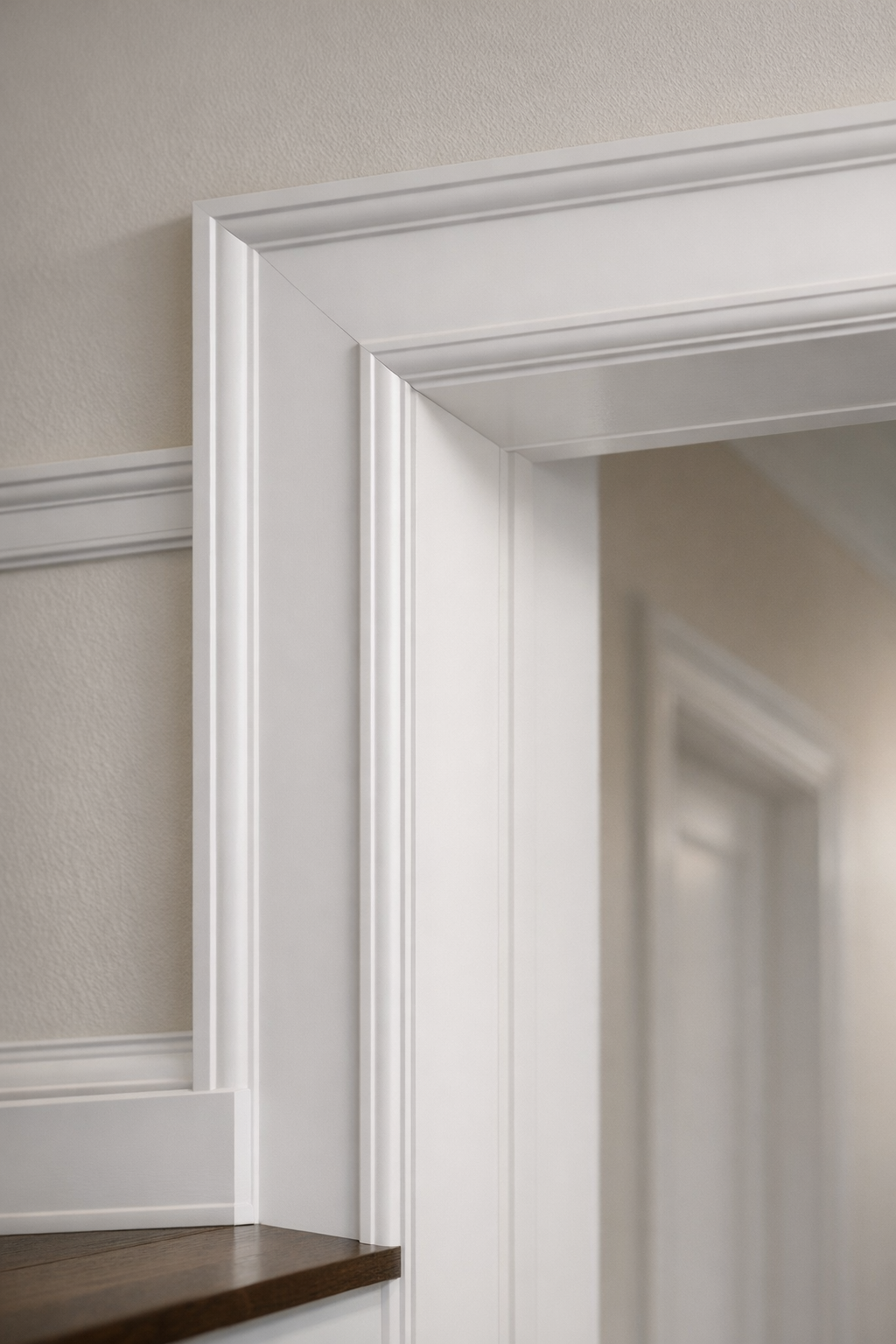
The main difference from a standard doorway is simple: there is no operating door. A regular doorway has hinges, a door slab, stops, and hardware. Cased openings borrow the finished trim language of a doorway, but they leave the passage open between spaces like a kitchen and hallway or a living room and dining room.
It also differs from a plain drywall return. A drywall return turns the wall surface into the opening and leaves the corners finished with drywall compound and paint. That can look intentional in very minimal interiors, but in homes with baseboards, window casing, and other trim, interior opening trim often makes the passage feel more connected to the rest of the house.
- Casing is the flat or profiled trim on the room-facing wall, framing the opening much like picture framing defines artwork.
- Jambs are the finished boards on the inside faces of the passage, so the opening has clean sides instead of exposed drywall returns.
- The header is the top horizontal trim area, and the side trim runs vertically down both sides; together, they give open doorway casing its outline.
- The reveal is the small, consistent step-back line between the jamb edge and the casing, a detail that helps the corners look deliberate rather than patched together.
Why Casing Makes Open Rooms Feel More Finished
The effect starts at the edge, not in the middle of the room. When casing outlines a doorless opening, your eye reads the passage as a designed frame rather than a leftover gap between two walls. That frame gives the transition a beginning and an end, so a living room can stay visually connected to a dining room while still feeling like its own space.
A plain drywall return can be clean, but it asks painted drywall corners to do all the visual work. In a busy opening between a kitchen and hallway, those corners are often the first thing people notice when the edge looks thin, flat, or unfinished. Doorless opening trim changes the read: the casing becomes the finished border, and the drywall no longer has to carry the whole transition by itself.
Casing also helps the opening speak the same design language as the rest of the house. If the nearby doors, windows, and baseboards have simple square trim, a matching square profile makes the opening feel connected. If the home has more traditional profiles, a similar casing shape keeps the passage from looking like it came from a different renovation. The takeaway is not that every piece must be identical, but that the trim around open doorway should look related to the trim already in view.
The best part is that this added definition does not close the rooms off. A trimmed passageway still lets light, conversation, and sightlines move through the opening; it simply gives the opening more presence. That is why the detail works especially well in open layouts where one large connected area needs subtle organization without adding doors, walls, or a heavier remodeling move.
Where Cased Openings Have the Biggest Impact
The biggest payoff usually comes where the opening is already part of the daily view. A living room to dining room opening, for example, is often seen from sofas, dining chairs, and nearby hallways, so a plain edge can feel more noticeable than it would in a back bedroom corridor. Adding cased opening trim gives that shared sightline a clear border and helps the two rooms feel related without blending into one long drywall plane.
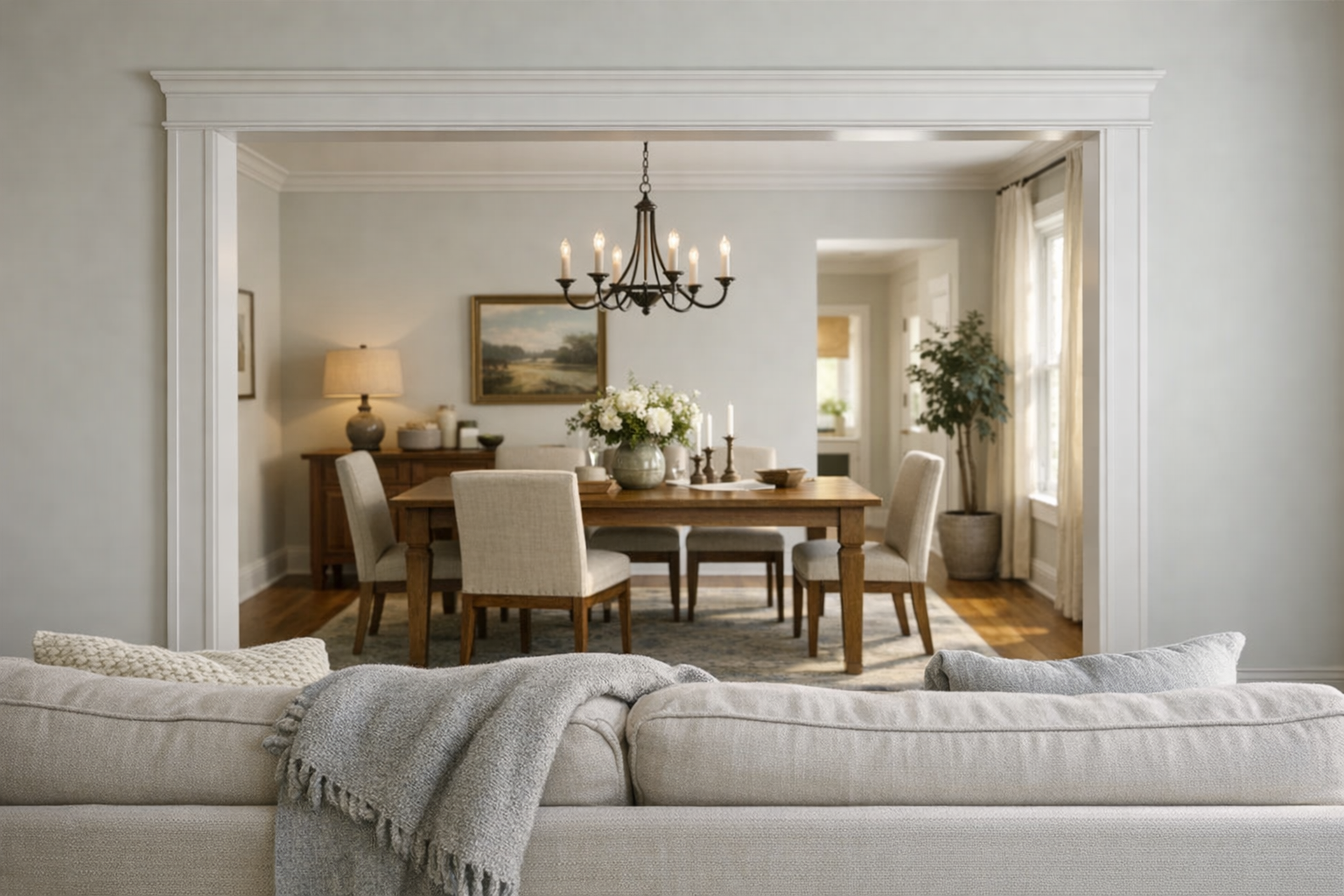
Kitchen-to-hallway openings are another strong candidate because they tend to be high-traffic and visually busy. Cabinets, appliances, flooring changes, and baseboards may all meet near that pass-through, so kitchen passageway trim can act like a tidy pause between the more functional kitchen zone and the circulation space beyond it. The effect is less dramatic if the opening is narrow, tucked around a corner, or rarely seen from the main rooms.
Foyer-to-living-room openings matter for a different reason: they shape the first read of the home. When the main room is visible from the entry, a framed transition can make the arrival feel more deliberate, almost like the house is presenting the next space instead of simply exposing it. In smaller foyers, the trim should still feel proportional so the entry does not become visually crowded.
Wide passageways benefit because scale can make an untrimmed opening look especially flat. Passageway trim adds visual weight to the span, which helps a broad room-to-room connection feel balanced rather than oversized. Openings visible from multiple rooms work the same way: the more angles you see them from, the more the finished edge contributes to the overall polish. In quiet secondary halls, the same detail can still look nice, but the transformation is usually more subtle.
Choosing a Trim Style, Profile, and Finish
Once you know which openings deserve attention, the style question is really about how loudly the trim should speak. The safest starting point is the trim already in the house: door casing, window casing, baseboards, and any crown nearby. Matching those pieces usually makes the opening feel original to the rooms, while choosing a cleaner new profile can make the passage feel more updated or intentionally simplified.
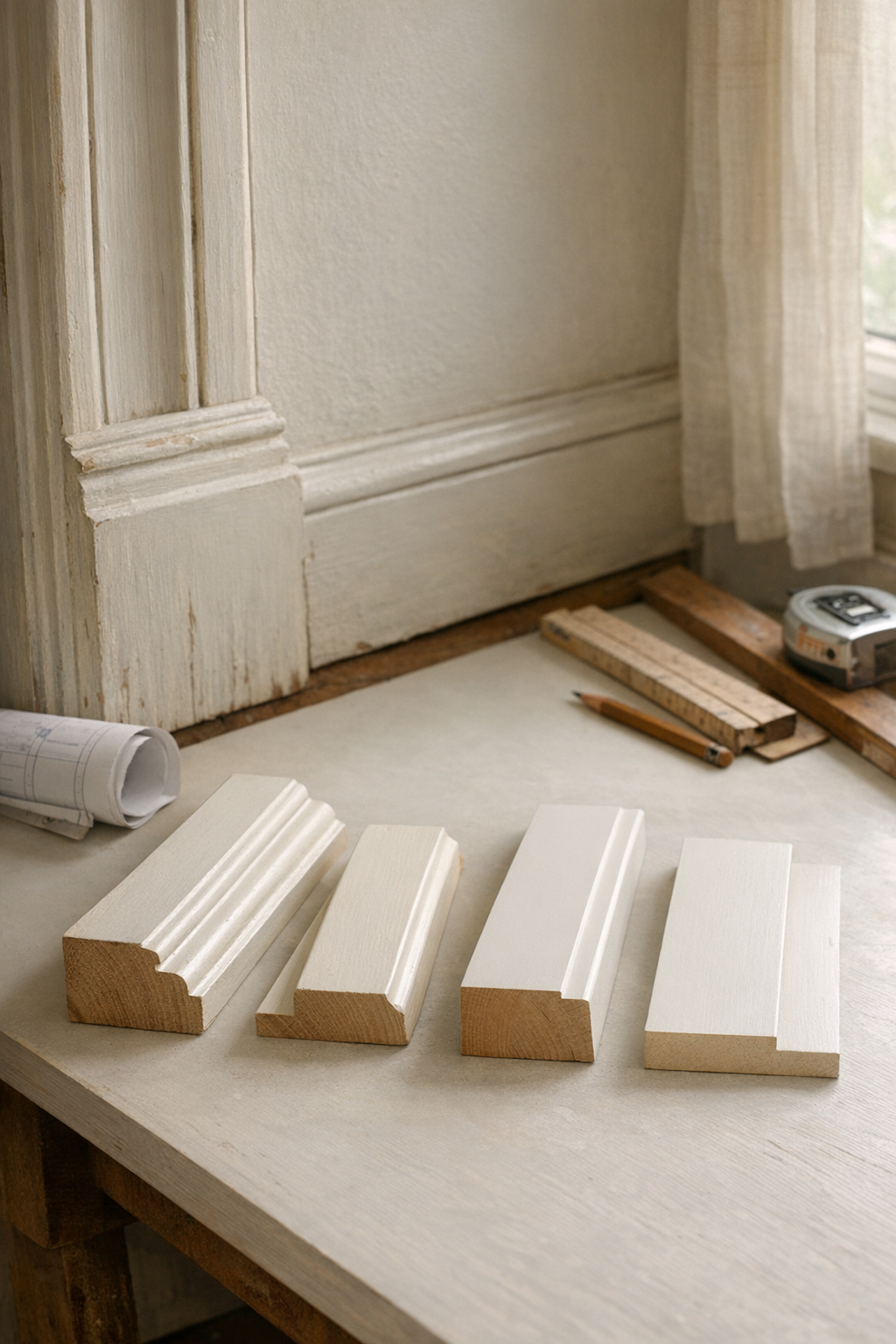
For a quiet look, flat modern casing keeps the edges crisp without adding much ornament. This works well when the surrounding rooms have simple baseboards, slab cabinet doors, or a generally cleaner style. More detailed profiles, such as colonial casing, have curves, steps, or shadow lines that read more traditional and pair best when other doors and windows already use similar shapes. Craftsman trim takes a different route: it is usually more squared-off, with wider flat boards and often a heavier top piece, so it feels substantial without looking curvy or ornate.
The finish changes the mood just as much as the profile. Paint-grade trim is meant to be painted, often in white or the same color as the surrounding casing, which helps the opening blend into an existing trim package. Stain-grade wood is selected to show grain, so it draws more attention and can make the passage feel warmer or more furniture-like. If the connected rooms already have painted baseboards and painted door trim, stained trim for cased openings can look intentional only when another wood element nearby helps it make sense.
Scale matters, especially on wide openings. A narrow passage between a hallway and kitchen may only need modest casing so it does not crowd switches, cabinets, or nearby corners. A broad living-room-to-dining-room opening can usually handle wider boards because the span needs more visual weight. A good signal is whether the trim looks related to the baseboards rather than thinner, weaker, or strangely oversized next to them.
Corner construction also affects style. Mitered corners meet at angled cuts and tend to suit profiled trim because the curves and shadow lines wrap continuously around the opening. Butt joints meet square, with one board running into another, and they fit especially well with flat or craftsman-style assemblies. Neither choice is automatically better; the right one is the joint style that matches the profile and makes the opening look deliberate from both rooms.
Cased Opening or Drywall Return: Which Looks Right?
The cleaner choice is not always the more finished choice; it depends on the room's design language. Drywall returns keep the wall surface wrapping straight into the passage, so the opening stays quiet and almost disappears. Casing does the opposite: it gives the passage a visible edge, adds a shadow line, and makes the transition read as part of the architecture.
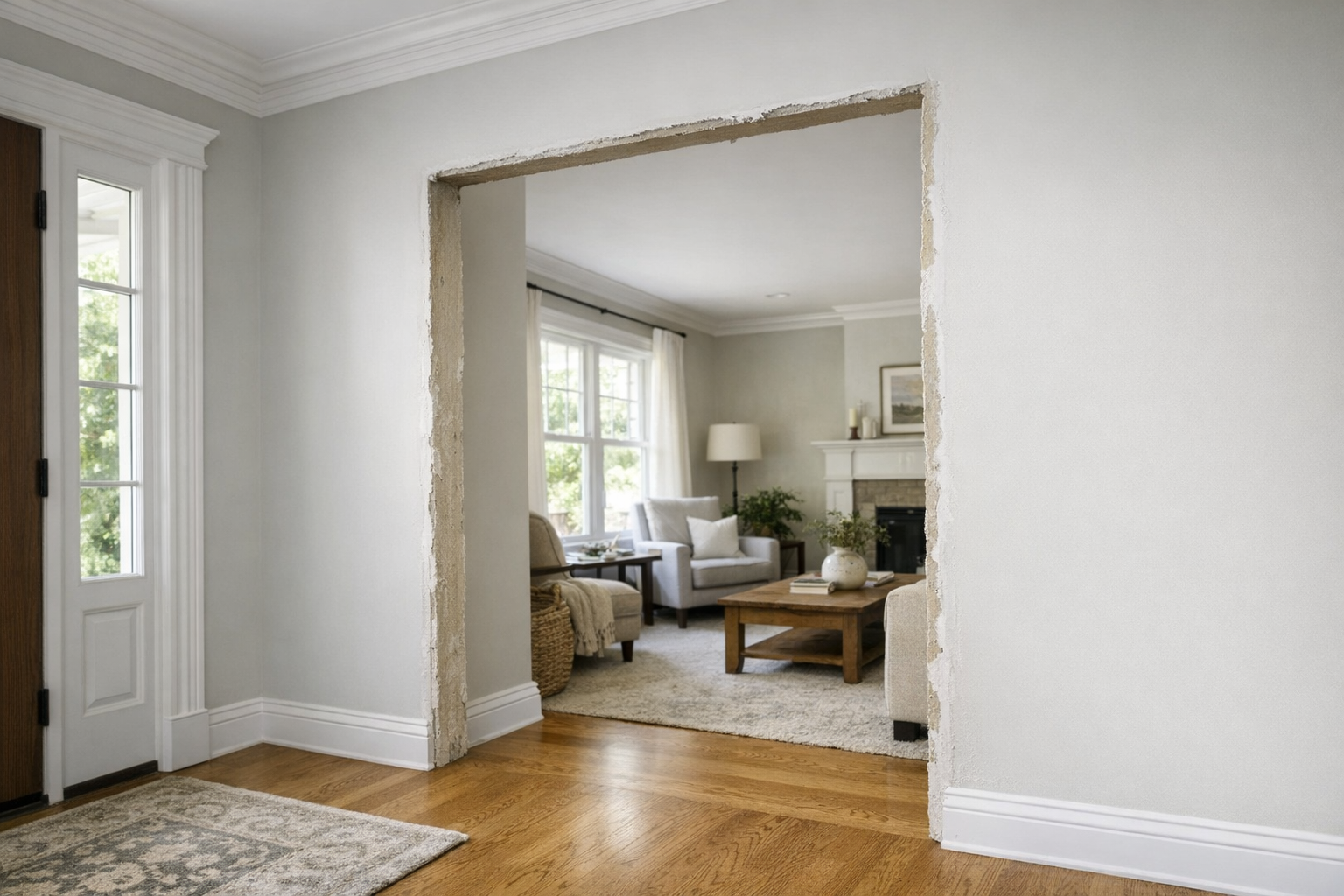
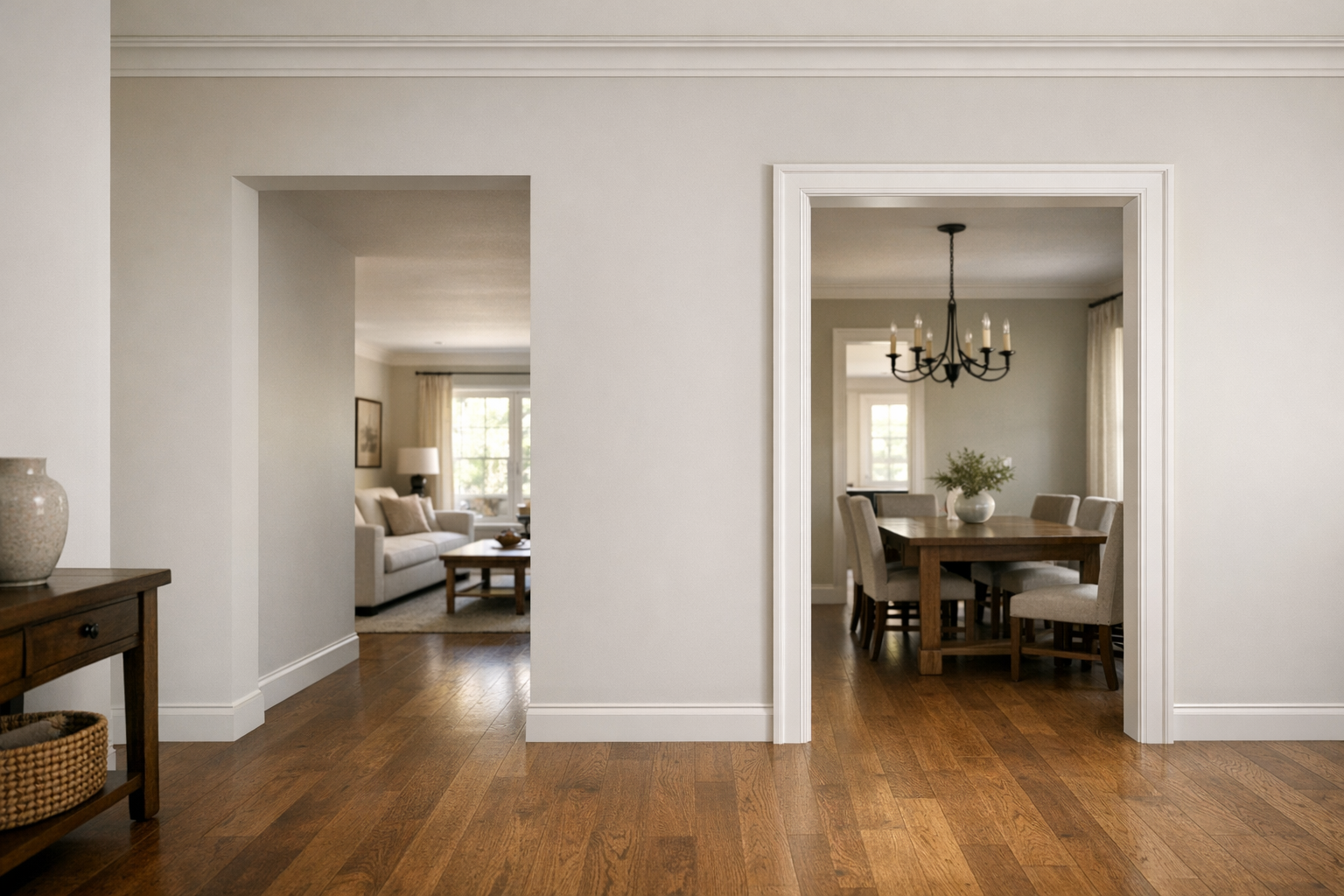
Drywall returns can look exactly right in ultra-minimal modern homes, especially when the whole space avoids applied trim. Picture smooth walls, flush doors, simple baseboards or no baseboards, slab cabinets, and very few profile changes. In that setting, adding cased opening trim may interrupt the calm, gallery-like look the room is trying to achieve.
Casing usually makes more sense when the home already has visible baseboards, door casings, crown molding, or detailed window trim. In that kind of interior, an uncased opening between a foyer and living room can feel like the one spot where the trim package stopped early. A framed passage helps the opening relate to the other finished edges nearby instead of looking bare beside them.
The weak signal to watch for is over-trimming. A narrow kitchen-to-hall opening, a short passage with switches close to the edge, or an opening squeezed between cabinets and a corner may not have enough visual breathing room for wide boards. In those cases, a slimmer profile, a simpler flat board, or even minimal trim can look better than forcing a heavy surround onto a small opening.
A useful test is to look at the opening from both rooms and ask what feels missing. If the surrounding room is intentionally plain, the drywall edge may be the right answer. If the opening looks thinner, flatter, or less resolved than the doors and windows around it, casing is probably the detail that will make the transition feel complete.
Details to Plan Before the Trim Goes On
Start with the measurements you will actually see: the span of the opening, the thickness of the wall, and the amount of flat wall left around it. Width affects proportion: a broad passage can usually carry a little more visual weight, while a tight hall opening may need a slimmer profile so the trim feels scaled to the space instead of squeezed in.
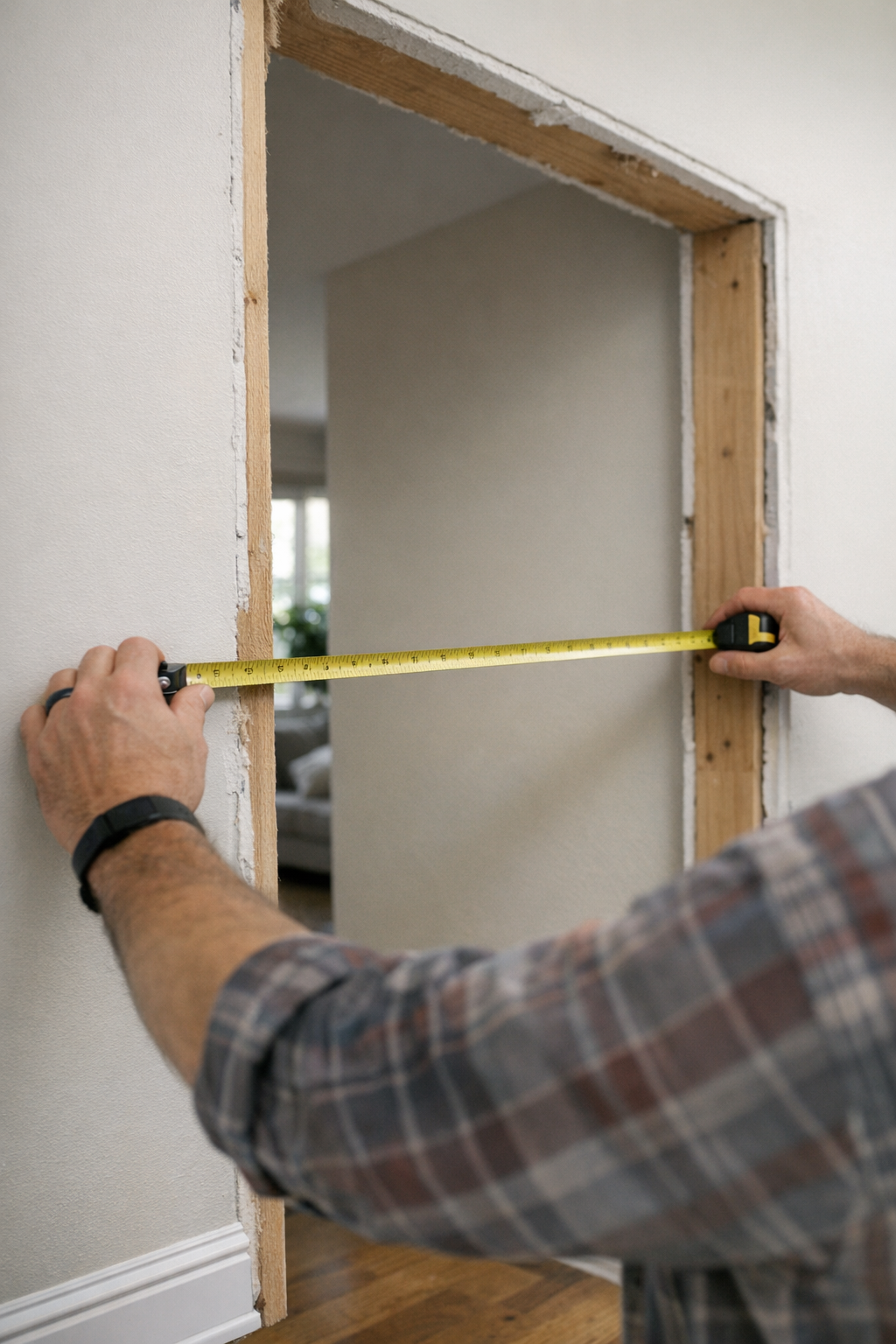
Wall thickness matters because the inside faces of the opening need to look even from front to back. If one side of the wall is thicker, bowed, or built up with old drywall layers, the jamb-like wrap has to account for that so the finished edge does not look twisted. Uneven drywall corners are also worth noticing early; casing can cover a lot visually, but the reveal, the small, consistent step between the inside edge and the casing, needs to stay even for the trim to look intentional.
The floor line is another place where good custom trim work shows. Baseboards can die cleanly into the side casing, wrap around it, or be cut with a small return, and each choice changes how polished the bottom of the opening feels. If flooring changes between rooms, the threshold should be planned with the trim so the bottom corners do not look like three separate details colliding.
Paint color can make the opening blend in or stand out. Matching the rest of the trim gives the passage the same rhythm as doors and windows nearby; painting it the wall color makes the profile quieter while still adding shape. Also look at adjacent openings from the same sightline. If a foyer has two visible passageways, trimming one and leaving the other bare can look accidental unless the difference is clearly tied to scale, style, or function.
How to Decide If This Detail Is Right for Your Home
Use the whole room view as the final test. This choice is mostly about style, layout, and how the connected rooms are used, so stand where you normally see the opening and compare it with the baseboards, door casing, window trim, and nearby finishes.
- Choose cased opening trim when the passage is prominent or wide, because the added frame gives the opening a more deliberate edge and helps an open layout feel defined without closing it off.
- Choose it when the home already has visible trim; open doorway casing can make an interior doorway without a door feel connected to the rest of the rooms instead of visually separate.
- Consider it when painted drywall corners look scuffed, thin, or unfinished, especially in living room, dining room, kitchen, foyer, or hallway transitions.
- Keep it simpler when the interior is intentionally trim-free, the opening is very tight, or a new profile would compete with cabinets, switches, or existing trim rather than complement them.
A Small Trim Choice That Makes Open Rooms Feel Complete
A cased opening is still a doorless passage, but it no longer has to look like an unfinished break in the wall. By giving the opening a defined edge, cased opening trim makes the transition feel cleaner, more connected, and more architectural without changing how the rooms flow.
The best candidates are the openings you notice every day: the wide view from the living room into the dining room, the kitchen-to-hallway pass-through, or the foyer opening that sets the tone for the main living space. From there, the decision is less about adding more trim everywhere and more about choosing the right fit: a profile that relates to existing baseboards and door casing, a width that suits the scale of the opening, and a finish that does not make nearby drywall corners look like an afterthought.
If an opening already feels balanced and intentionally minimal, leaving it plain can be the right call. But if the passage looks thin, scuffed, or disconnected from the rest of the room, passageway trim may be the small finish carpentry move that makes the whole view feel complete. Start by walking through your most visible room-to-room openings and asking which ones would look more deliberate with a clean frame around them.