
Beyond Basic Board and Batten: What Makes an Accent Wall Feel Custom
Start with the wall itself: a treatment feels custom when the pattern lines up with the room's scale, the furniture, and the focal point instead of floating on the surface. That is why the familiar batten-style wall shows up in so many accent wall conversations: it gives a flat surface depth, structure, and a more finished focal point. But it is only one way to get that effect. If you like the idea of a wall that feels designed rather than simply painted, there are plenty of feature wall ideas that change the mood of a room through texture, scale, line direction, material contrast, or built-in architectural detail.
The seven options ahead are not tiny tweaks to the same trim grid. A slat wall reads linear and modern, geometric trim creates movement, shiplap changes the wall through plank direction and spacing, picture-frame moulding feels more classic, full-height panels look more built-in, fluted panels add quieter texture, and mixed-material walls combine finishes for a more layered result.
As you compare these wall accent ideas, pay attention to three things: where the wall sits, how bold you want the pattern to feel, and whether the room needs warmth, formality, texture, or a stronger focal point. Bedrooms, living rooms, dining rooms, home offices, and entry areas can all handle accent moulding walls or other dimensional treatments, but the best choice depends on the room's proportions, furniture layout, and overall style.
1. Wood Slat Walls for Warmth, Rhythm, and Modern Texture
A good slat wall starts with the gap as much as the board: the spacing should look intentional from across the room, not like leftover trim pieces lined up on a wall. Wood slat walls use narrow repeated strips of wood or wood-look material set with even spacing over a backing surface. The strips can run vertically to draw the eye upward or horizontally to stretch the wall visually, which makes this style feel tighter and more contemporary than a traditional batten-style treatment. Instead of a familiar trim grid, the effect is closer to custom millwork or a furniture detail built into the room.
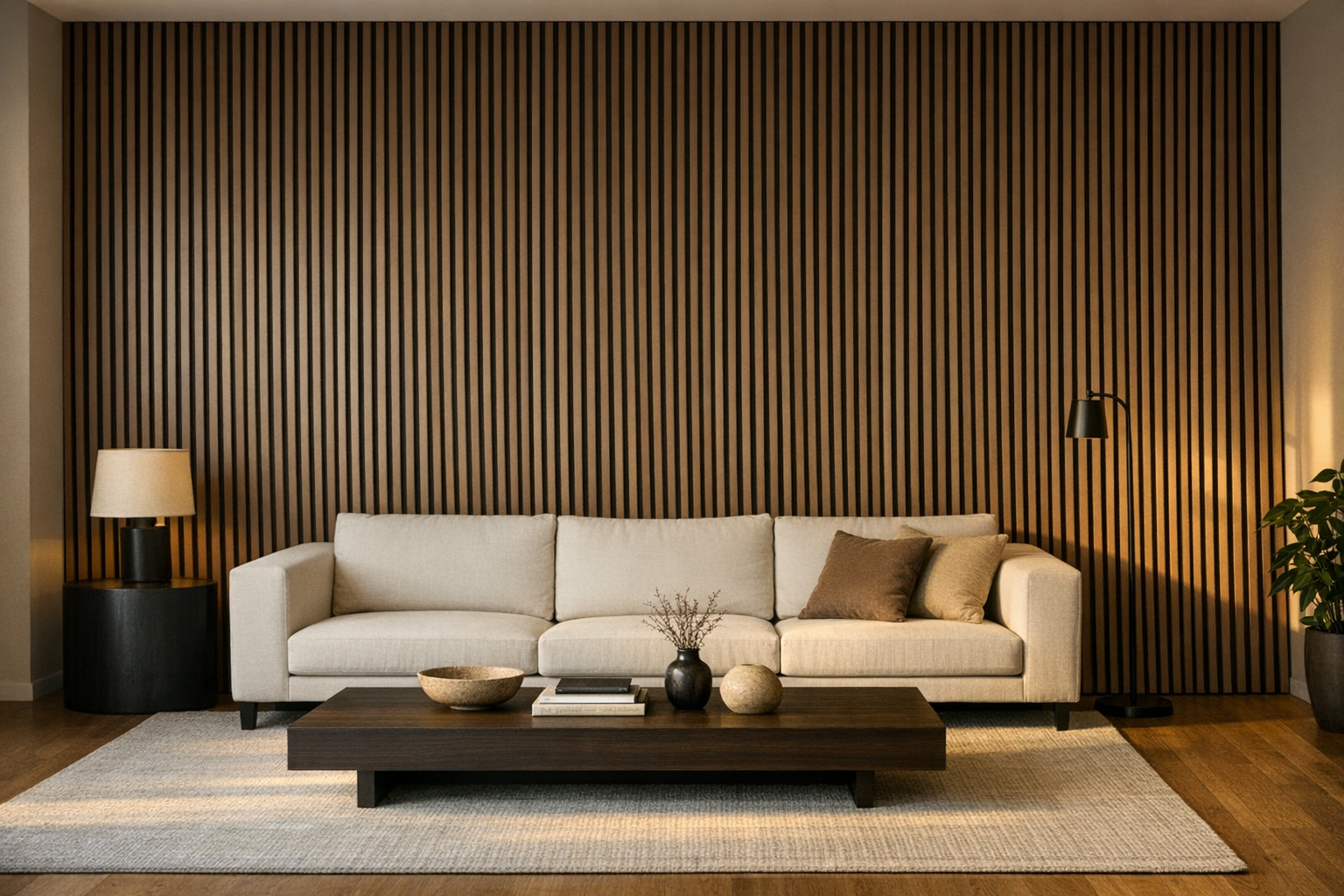
This is one of the strongest modern accent wall ideas for TV walls, headboard walls, entryways, home office backdrops, and living room focal walls because the repeated lines add texture without needing a busy pattern. Natural oak, walnut, or light wood tones lean warm and organic; painted slats feel more graphic and architectural. The backing color matters too: a dark substrate makes the gaps look deeper and more dramatic, while a tone-on-tone backing keeps the wall softer.
The main design decisions are slat width, spacing, direction, finish, and whether the wall needs an added backing layer. Slimmer wood slats with narrow gaps create a refined rhythm, while wider slats feel bolder and less delicate. You can also add acoustic felt backing for a softer, studio-like look, or wrap the slats around an outside corner so the feature wall feels intentional from more than one angle. If the room already has heavy wood floors, wood cabinets, and wood furniture, a painted or lighter-toned version may keep the space from feeling overworked.
2. Geometric Trim Walls for a Bold, Custom Pattern
If straight vertical battens feel too expected, geometric trim walls take the same basic idea of applied decorative moulding and push it into a more energetic pattern. Instead of evenly spaced uprights, the trim can form diagonal lines, angled grids, diamonds, asymmetrical layouts, or oversized polygon shapes. The result is less farmhouse-leaning and more modern, with movement built into the wall itself.
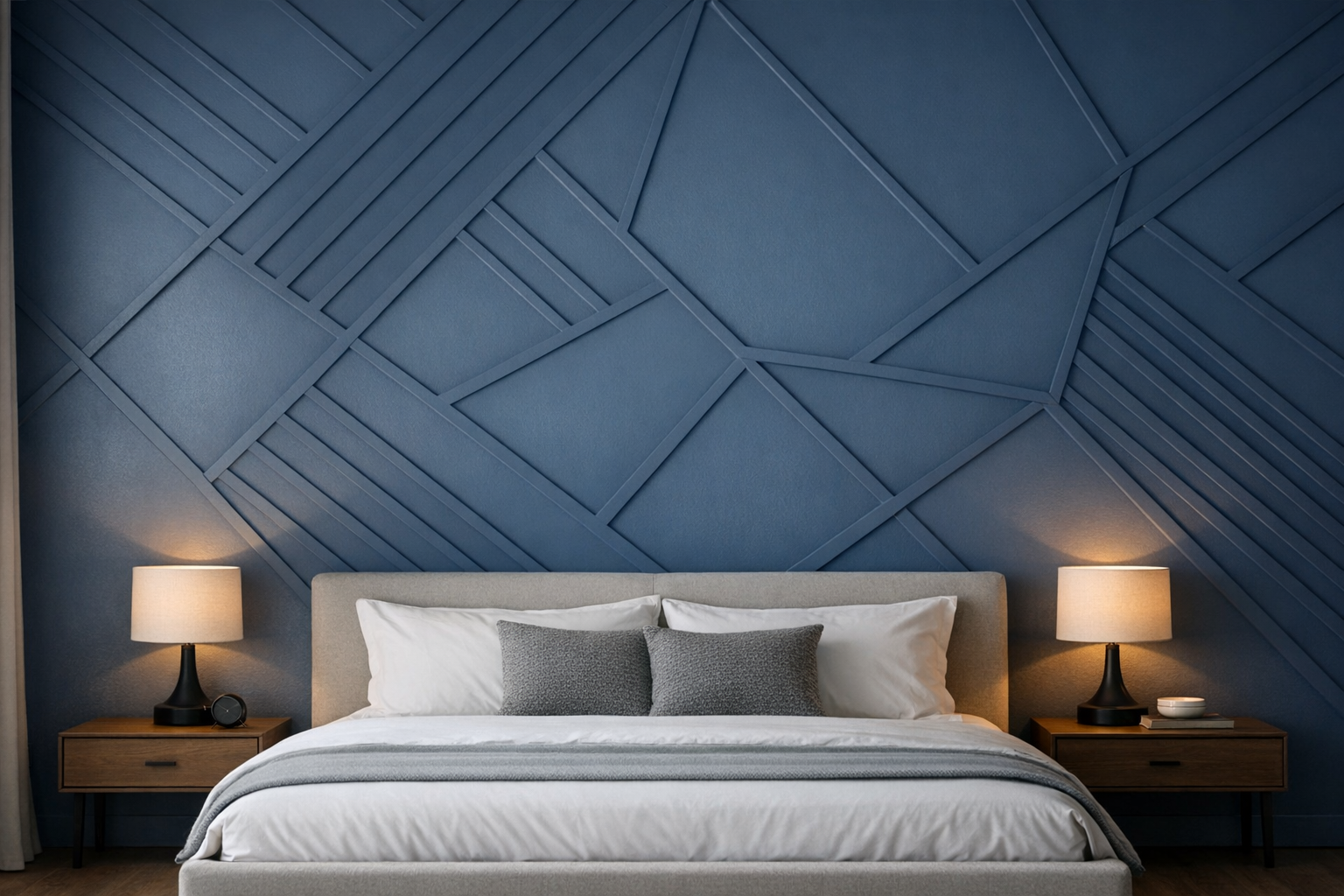
This style works best when the wall has a clear job: anchoring a bed, framing a dining room sideboard, adding interest to a stair landing, or giving a home office backdrop more presence. Because the lines naturally pull your eye across the surface, geometric trim walls are strongest as single-wall focal points rather than something wrapped around every wall in a room.
The trick is making the layout look intentional, not random. Larger shapes usually feel cleaner than lots of tiny repeated pieces, especially in bedrooms where a calmer backdrop matters. Align major angles with the headboard, desk, doorway, stair slope, or centerline of a piece of furniture so the pattern relates to the room instead of floating on its own. Watch for awkward cutoffs at corners, outlets, and switches; those small collisions can make even well-built accent moulding walls feel visually busy.
For the cleanest finish, consider painting the wall and trim one color so the pattern reads through shadow and dimension rather than contrast alone. A soft neutral keeps the look subtle, while a saturated green, charcoal, navy, or warm clay tone turns it into a stronger design statement. Compared with basic board and batten, the tradeoff is simple: more personality and movement, but also more planning before the first piece of trim goes up.
3. Shiplap Walls That Feel Fresh, Not Farmhouse-Generic
Shiplap earns its place on this list because it changes the wall through plank texture instead of applied trim shapes. Where board and batten creates a raised grid, shiplap walls create continuous seams that run horizontally or vertically, giving the room a calmer, more linear backdrop.
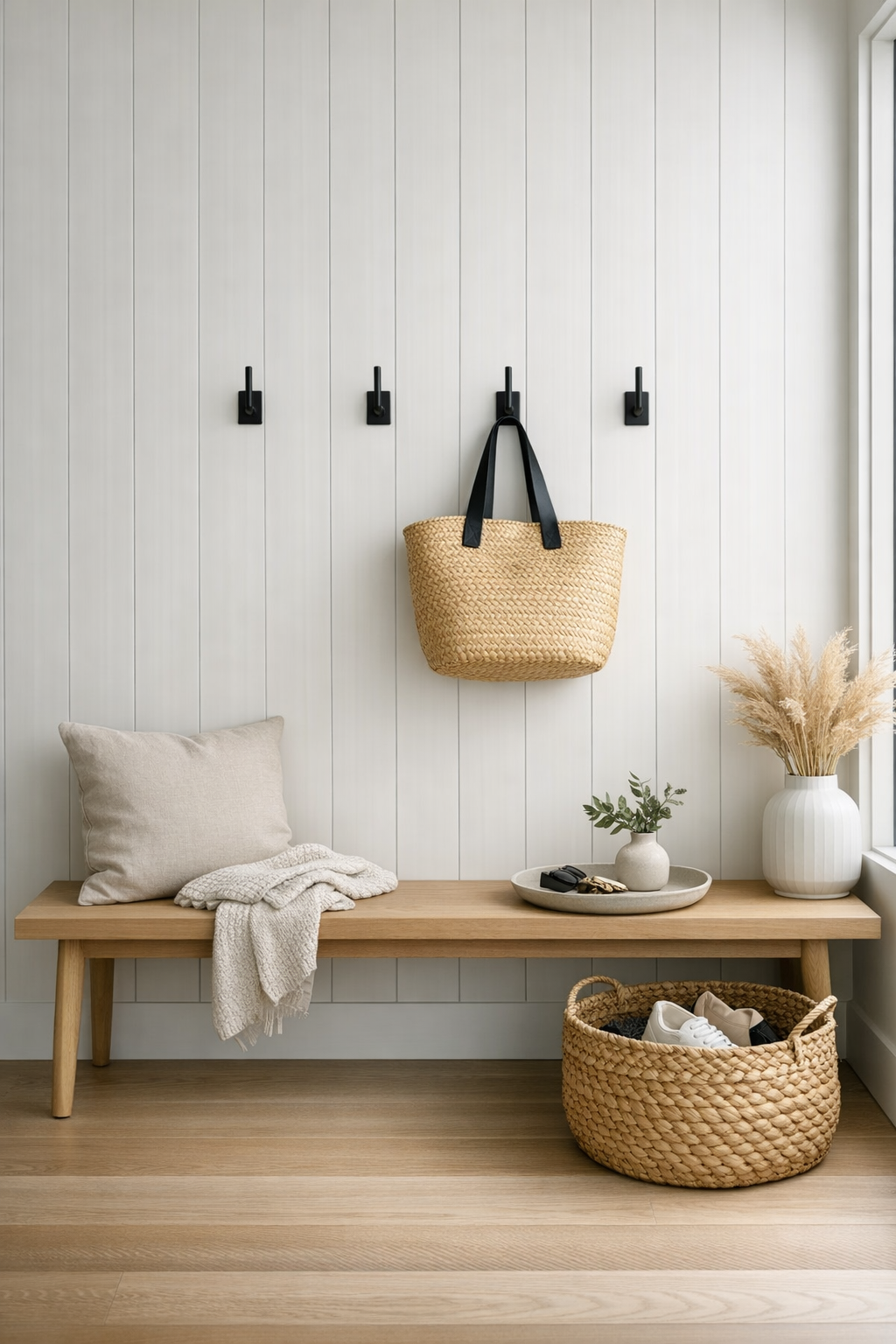
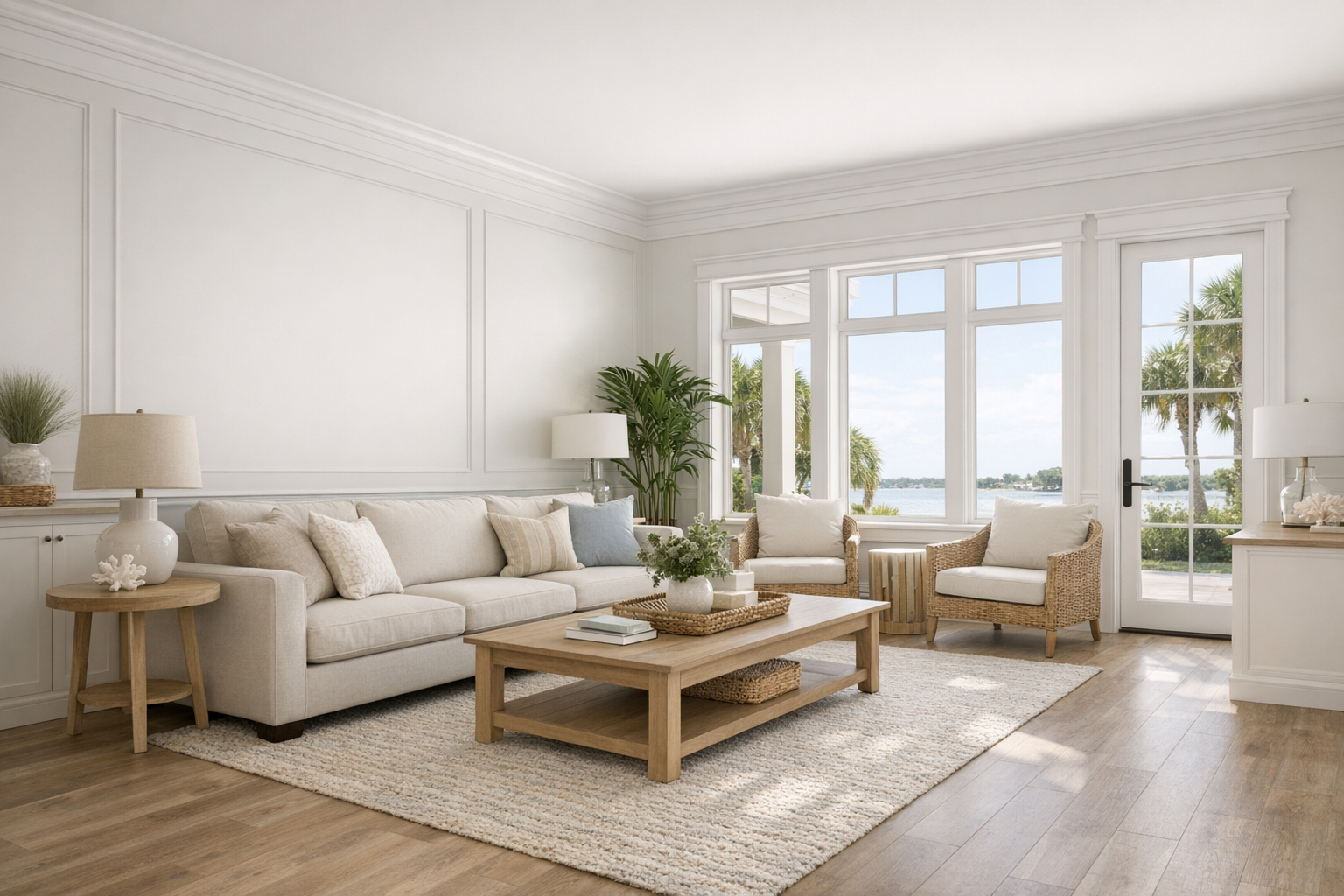
Horizontal shiplap is the familiar choice: it can make a bedroom, fireplace wall, mudroom, or powder room feel wider and more relaxed. Vertical shiplap shifts the look closer to vertical paneling, drawing the eye upward and feeling cleaner in transitional, coastal, or updated modern farmhouse spaces. Plank width matters, too. Wide planks read quieter and more architectural, while skinny planks create a tighter stripe effect with more visible rhythm.
Finish is what keeps the look current. Painted shiplap in white or cream still works when the trim is crisp and the wall is used with restraint, but deeper colors like navy, charcoal, olive, or warm taupe can make it feel more tailored. Natural or stained wood brings warmth, especially behind a bed or around a fireplace, as long as the grain looks intentional rather than overly distressed.
For the freshest result, use shiplap on one focal area, keep corners and end caps clean, and avoid wrapping every wall unless the room is meant to feel cottage-like or coastal from the start.
4. Picture Frame Moulding for Elegant, Architectural Detail
For rooms that want polish instead of plank texture, picture frame moulding brings the detail into neat wall panels. It is made from rectangular or square trim boxes applied to the wall, usually with consistent margins so the spacing feels balanced. Compared with board and batten, which leans on vertical battens and horizontal rails, this look creates framed panels that feel more classic, Parisian-inspired, transitional, traditional, or even a little glam.
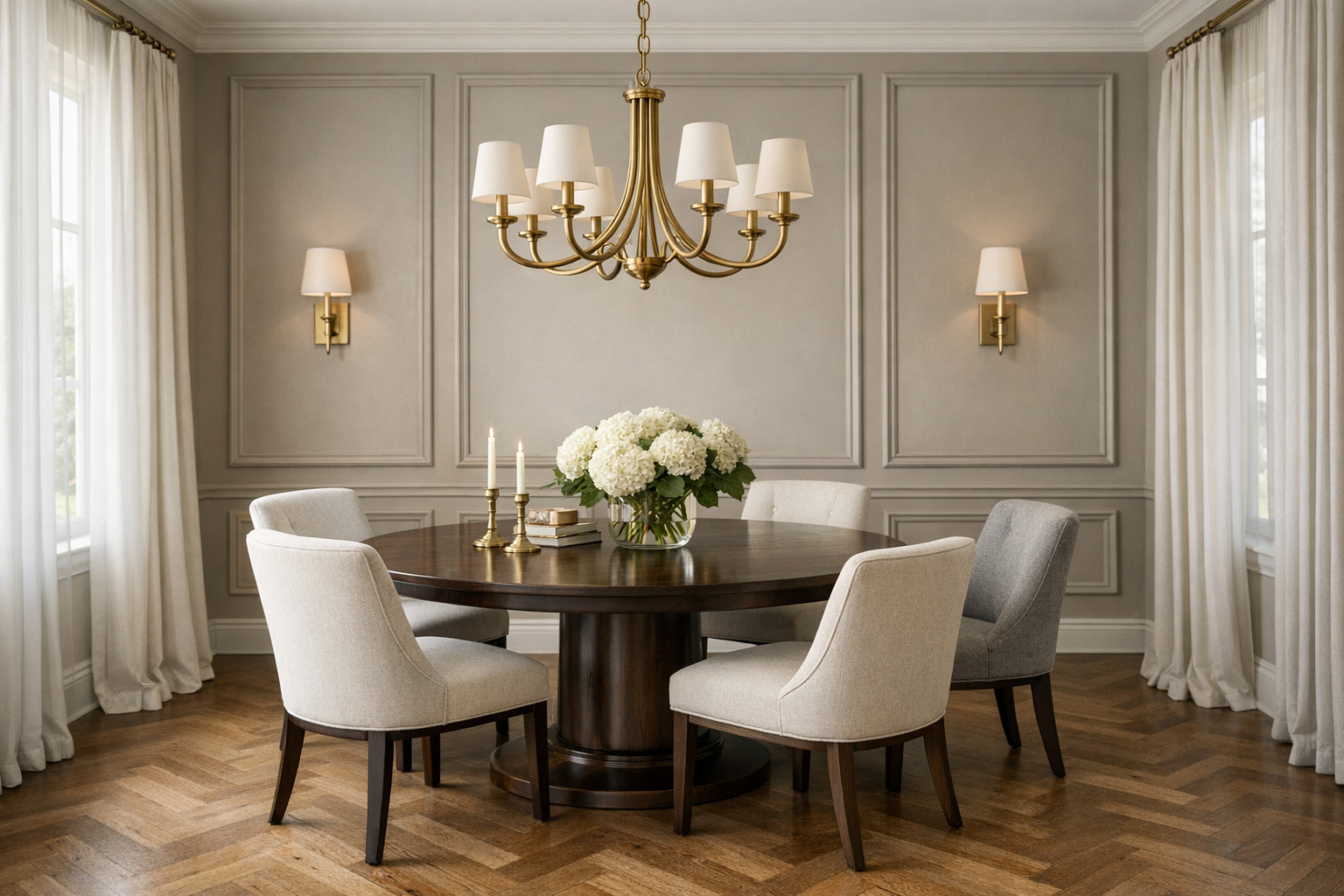
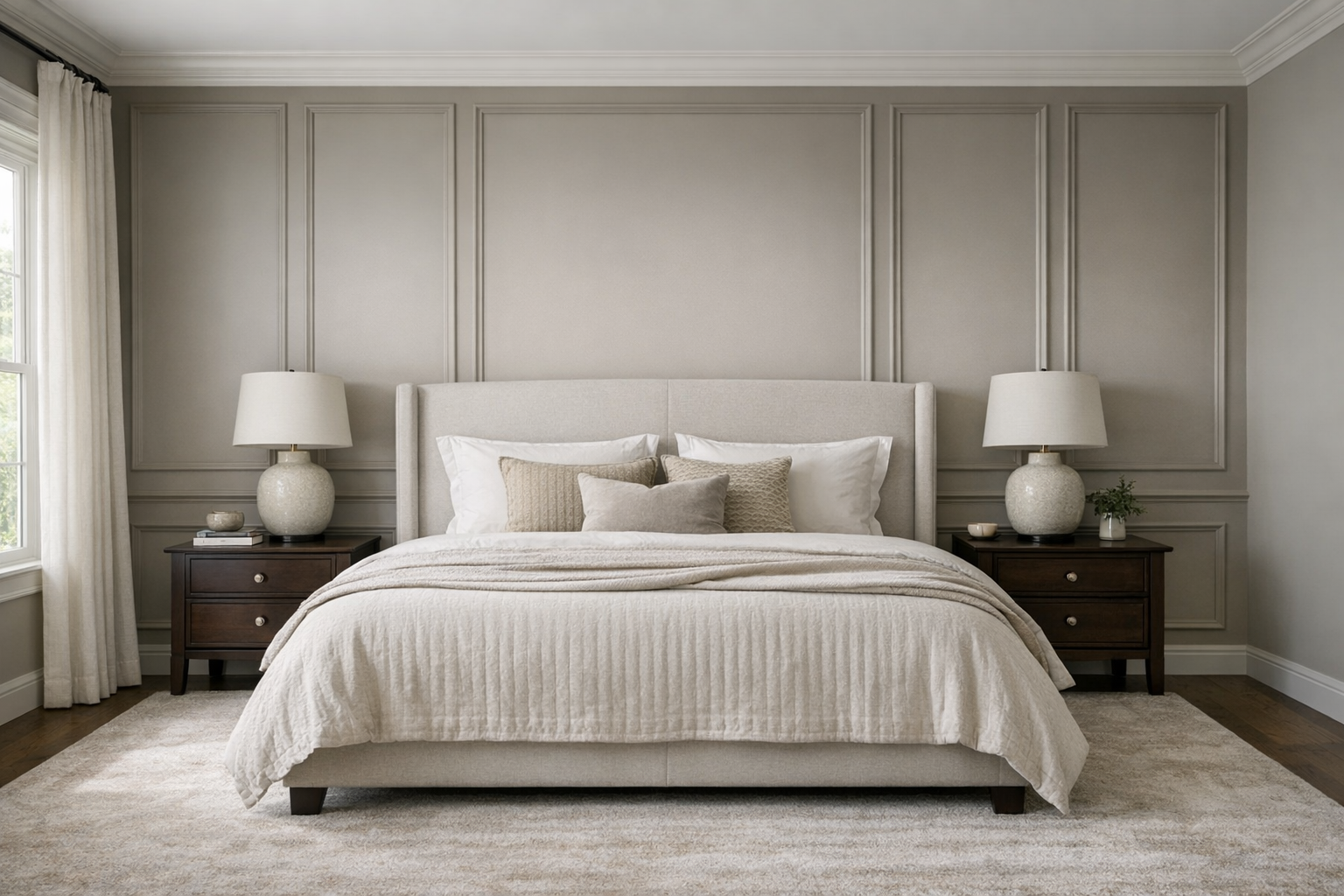
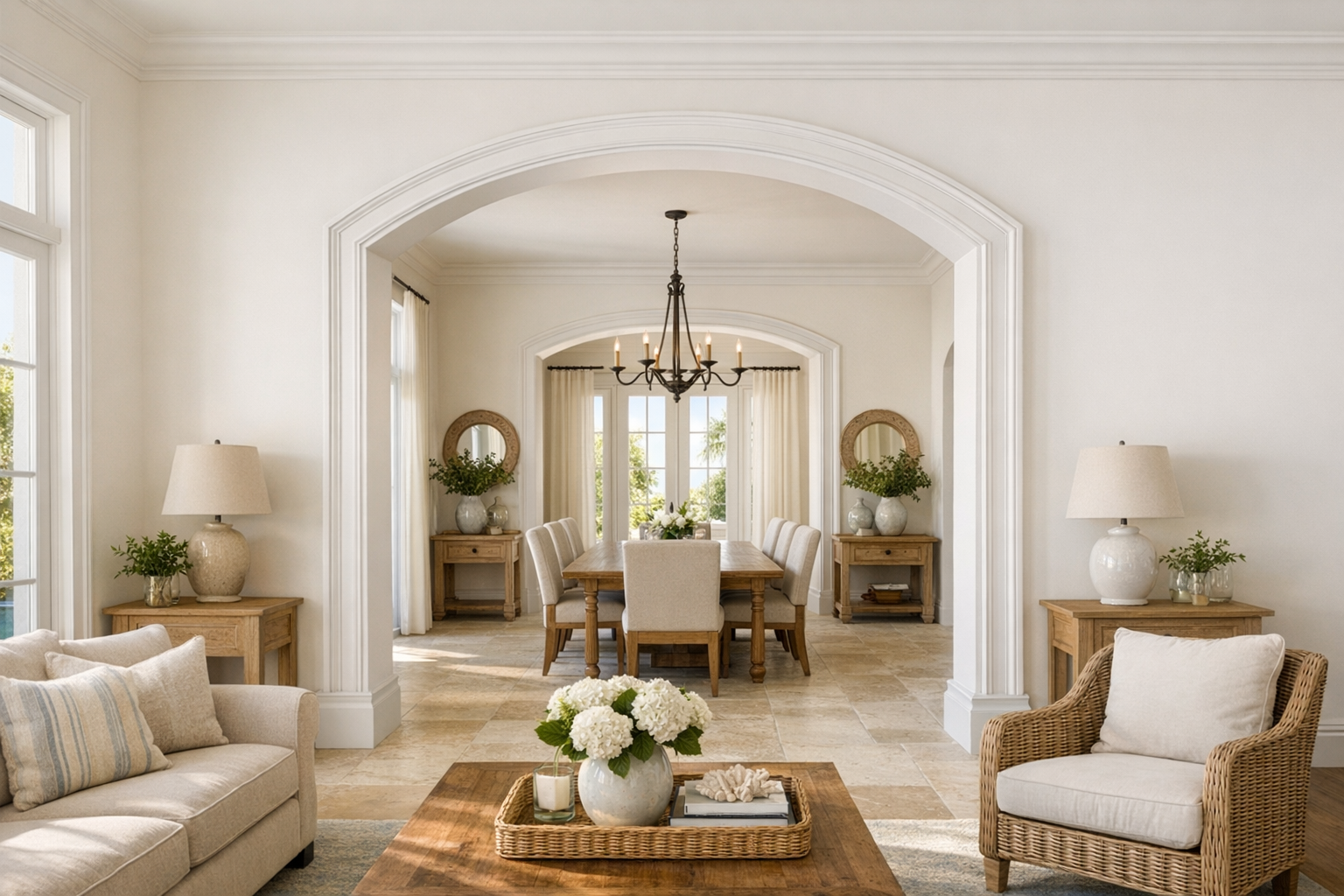
This is one of the best feature wall ideas for dining rooms, primary bedrooms, formal living rooms, hallways, and staircases because it adds architecture without demanding a bold pattern. In a dining room, the frames can sit above a sideboard or wrap the room below a chair rail. Behind a bed, larger panels can mimic the proportions of a tall headboard. In a hallway or stairwell, repeated boxes help long walls feel intentionally designed rather than empty.
The key is proportion. Strong accent moulding walls usually align with nearby furniture, doors, windows, or ceiling height instead of forcing identical boxes into awkward leftover spaces. For a richer layout, stack lower and upper frames with a chair rail between them, keep the painted trim and wall the same color for subtle shadow lines, or add wallpaper inside selected frames for pattern without covering the entire wall.
5. Full-Height Wall Panels for a Built-In, High-End Look
Scale is the move here: full-height wall panels use larger vertical sections that run from the baseboard to the crown, ceiling, or another deliberate stopping point. The taller format reads more like built-in architecture than a shorter rail-and-batten rhythm. When the panel heights and widths are proportioned well, the vertical emphasis can make a room feel taller, cleaner, and more finished.
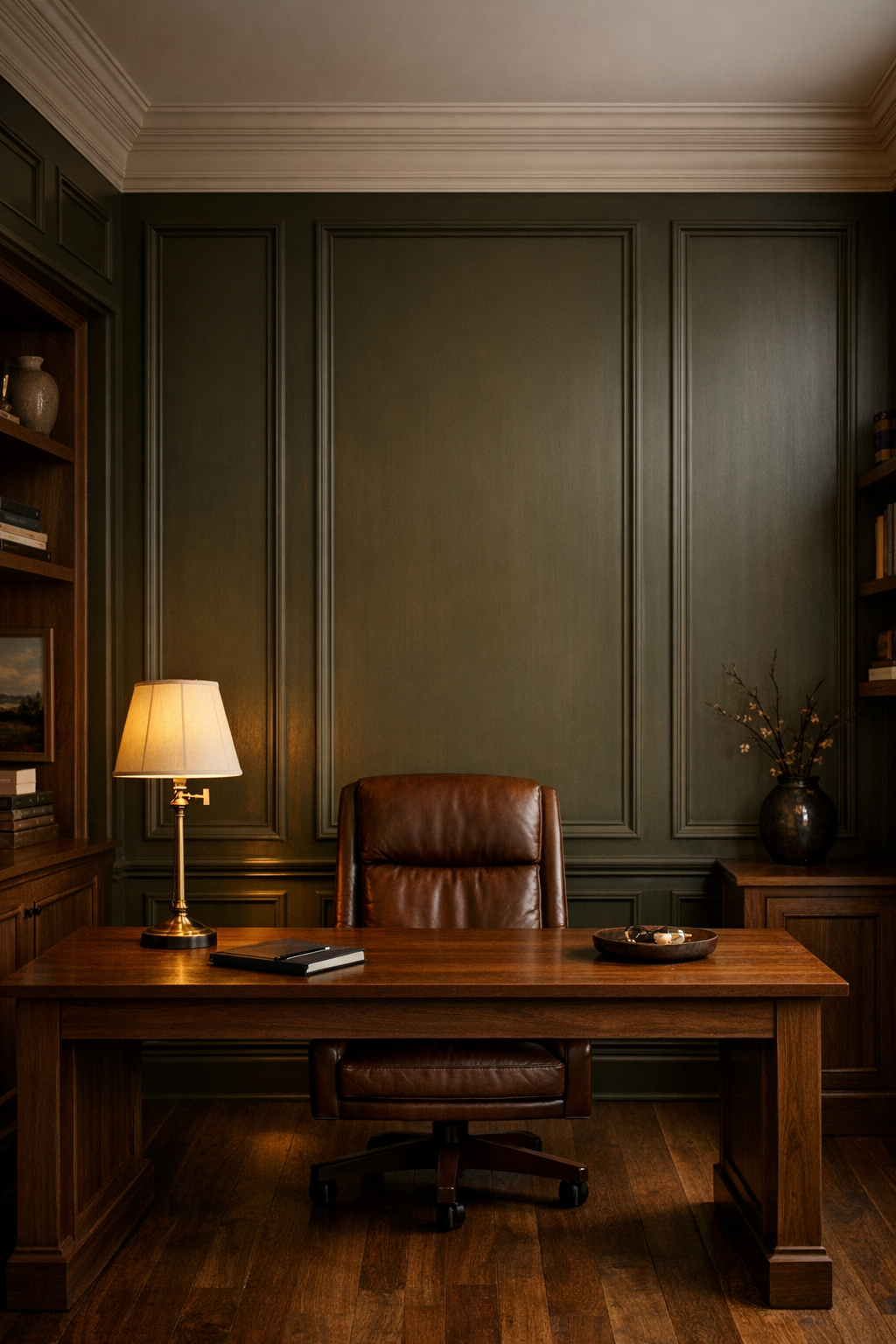
The panel style changes the mood. Flat panels create a smooth, contemporary surface with minimal shadow lines. Recessed panels have a center area that sits back from the surrounding trim, which feels classic without being overly ornate. Raised panels project forward and look more formal, especially in dining rooms or traditional living rooms. Simple modern rectangles are the most versatile option: tall, evenly spaced frames that give structure without a busy pattern.
This is a strong choice for primary bedrooms, living rooms, dining rooms, and entryways because those spaces can handle a more permanent, architectural focal point. Behind a bed, panels can line up with the headboard and nightstands. In a dining room, they can frame a buffet or centered light fixture. In an entry, they can turn a plain first impression into something more intentional.
The best layouts respect what is already in the room: ceiling height, baseboards, crown moulding, door casings, outlets, switches, and major furniture placement. A good signal is when panel breaks look aligned with the architecture rather than squeezed around it. Because full-height wall panels leave little room for sloppy spacing, uneven walls, tricky trim transitions, or integrated lighting can make this one of the feature wall design ideas better suited to professional measuring and installation.
6. Fluted or Reeded Panels for Subtle Texture Without a Heavy Pattern
For a quieter kind of dimension, fluted and reeded panels bring the focus down to shadow, touch, and fine repetition. Fluted panels typically read as narrow vertical grooves, while reeded panels have rounded ridges that feel a little softer. Either way, the wall becomes a textured wall treatment rather than a layout of applied trim, so it works well when you want detail without a bold grid or busy pattern.
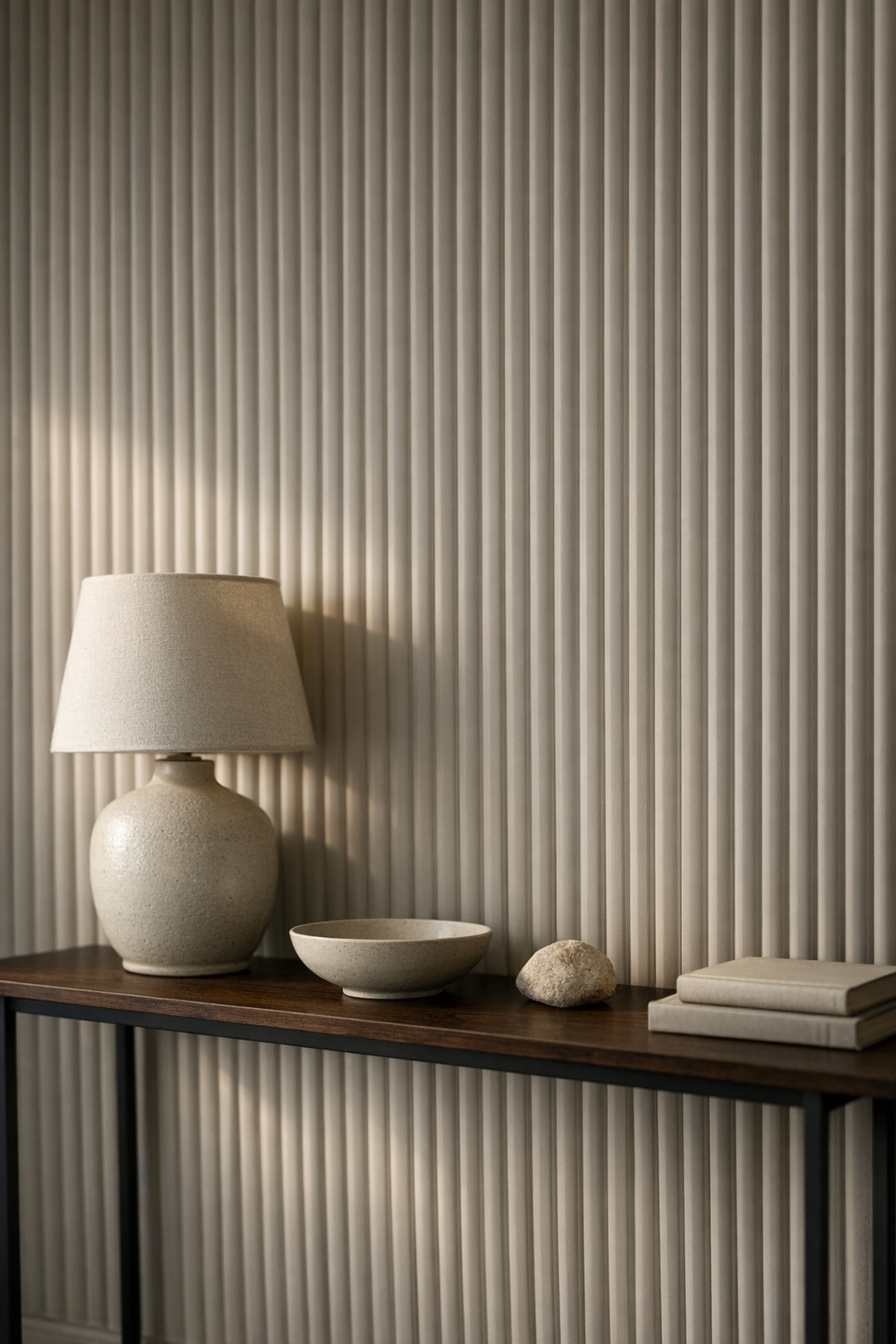
This is especially good for smaller focal areas: a bedroom headboard wall, the back of a home bar, a powder room vanity wall, a media wall, or a shallow alcove that needs more presence. In contemporary interiors, a natural wood finish can add warmth without visual clutter, while painted panels create a more seamless, architectural look. A half-wall application is another smart option if a full wall would feel too intense.
The best versions pay attention to seams and finish. Fine grooves can collect dust more than a flat wall, so very deep profiles may not be ideal behind messy work zones. For decorative wall ideas that feel layered, pair fluted panels with a stone counter, a mirror, picture lighting, or floating shelves so the texture supports the focal point instead of competing with it.
7. Mixed-Material Feature Walls That Combine Trim, Wood, Stone, Paint, or Shelving
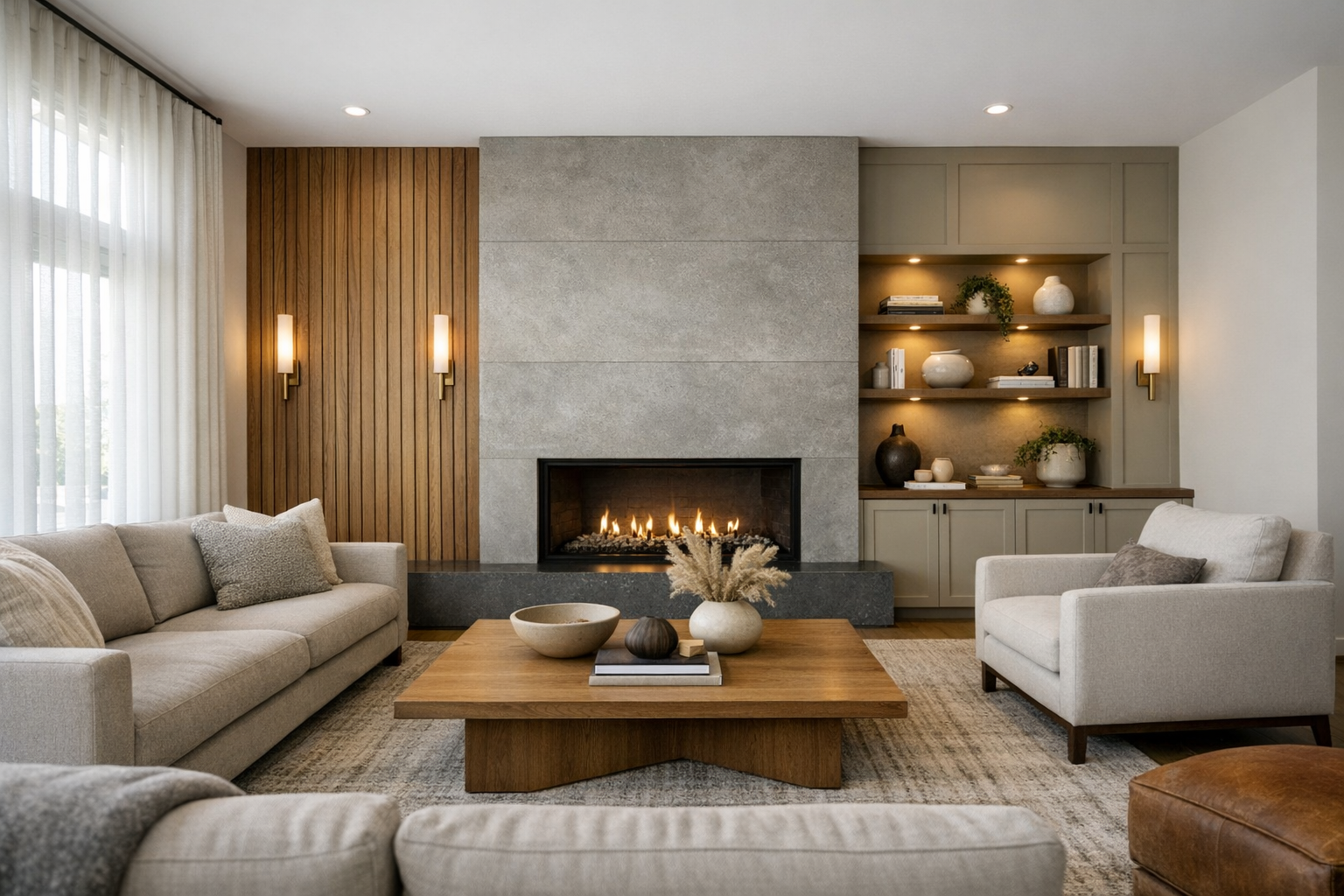
This is where the wall can start acting like furniture, art, and architecture at once. A mixed-material feature wall uses two or more elements, wood slats with stone, moulding with wallpaper, shiplap with fireplace tile, painted panels with integrated shelving, or panels with sconces, so it can add texture, storage, lighting, and a stronger focal point than a basic trim layout.
The best spaces are the ones that can handle a little more intention: a fireplace wall, media wall, built-in office wall, dining room, or large bedroom. Around a TV, slats or panels can frame the screen while shelves hold decor and equipment. In a dining room, moulding plus wallpaper can feel layered without needing bulky furniture. In a bedroom, painted panels with sconces can create a headboard effect and make the lighting feel planned instead of added later.
The tradeoff is that mixed-material walls need restraint. Pick one main material, one supporting texture, and one finish color that repeats somewhere else in the room, like the flooring, cabinet hardware, light fixture, or upholstery. Clean transitions matter, too: shelves should look built into the layout, stone or tile should have a clear stopping point, and trim should align with the objects it frames. This is also the point where custom accent wall installation can make sense, because outlets, TVs, shelving depths, and lighting placement all need to work together rather than compete for attention.
How to Choose the Right Accent Wall for Your Room
The easiest way to narrow the choice is to stop asking which wall treatment is "best" and ask what the room needs to feel resolved. Some feature wall ideas add quiet texture, some create formal architecture, and some are meant to coordinate with furniture, lighting, storage, or a major focal point.
- Match the wall to the room's role. Bedrooms often benefit from softer or more structured headboard walls, such as fluted panels, picture frame moulding, geometric trim, or full-height panels that sit neatly behind the bed. Living rooms can handle larger statements, including a mixed-material fireplace or media wall, or a broad slat layout that relates to seating and lighting. Dining rooms often suit picture frame moulding or full-height panels because those styles add architecture without fighting the table, chairs, and sideboard.
- Choose the texture level on purpose. Slat walls bring a modern, repeated line; fluted or reeded panels add finer shadow; shiplap gives a plank rhythm; geometric trim creates movement; picture frame moulding and full-height panels feel more tailored. If the room already has patterned rugs, busy upholstery, or dramatic stone, a quieter wall treatment may age better than a high-contrast pattern.
- Think about scope before style. A painted trim layout is a different kind of project than full-height panels, built-in shelving, tile, sconces, or a TV wall with multiple materials. The more the design interacts with outlets, lighting, shelves, panel breaks, or existing moulding, the more important careful measuring and layout become.
- Use scale as your filter. A narrow wall may look better with simple vertical texture, while a long blank wall can support larger panels or a more architectural grid. Good accent wall ideas usually line up with something already in the room: the bed width, fireplace, dining table, sofa, windows, doors, ceiling height, or existing trim.
The best choice is not always the trendiest one. Pick the treatment that fits your furniture placement, catches light in a flattering way, works with the trim you already have, and still feels like your style after the first "wow" moment. That is how bedroom accent walls, dining room panels, media walls, and entry features end up looking custom instead of copied.