
If your primary suite feels a little unfinished, a trim or moulding feature wall can give it a more custom look without changing the room's footprint. The wall behind the bed is usually the natural place to start because it already acts as the visual anchor; adding framed moulding, battens, slats, panels, or shiplap gives that surface depth and proportion instead of relying only on paint or artwork.
The difference between a bedroom accent wall with trim that looks polished and one that feels busy usually comes down to scale and layout. Tall ceilings can handle larger panels or full-height lines, while lower ceilings often look better with slimmer profiles and more breathing room. A king bed may need wider spacing or a stronger center section, while a smaller bed can be overwhelmed by heavy trim.
Profile and color also steer the style. Thin picture-frame moulding feels quiet and traditional, a crisp grid leans modern, vertical lines feel taller and more relaxed, and tone-on-tone paint keeps the effect soft. The bedroom trim ideas ahead use those choices in different ways so you can picture which primary bedroom accent wall fits your room, furniture, and mood.
1. Simple Picture Frame Moulding for a Quiet, Elegant Headboard Wall
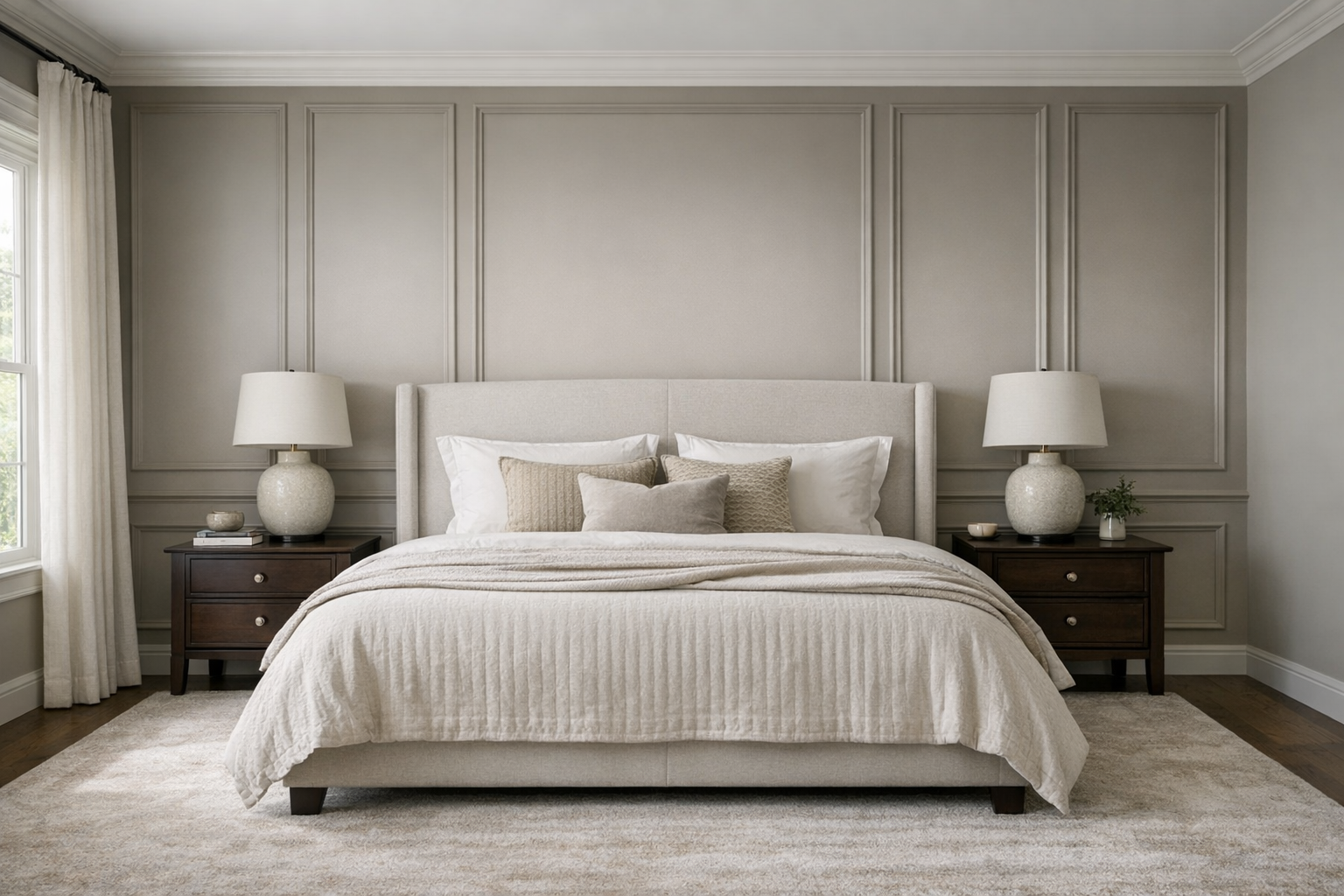
Picture frame moulding is the quietest place to start: slim trim pieces are arranged as clean rectangles on the wall, creating the look of framed wall panels without covering the whole room in heavy millwork. Behind a bed, it gives the primary bedroom accent wall a more architectural shape while leaving plenty of visual breathing room for an upholstered headboard, matching nightstands, lamps, and layered bedding.
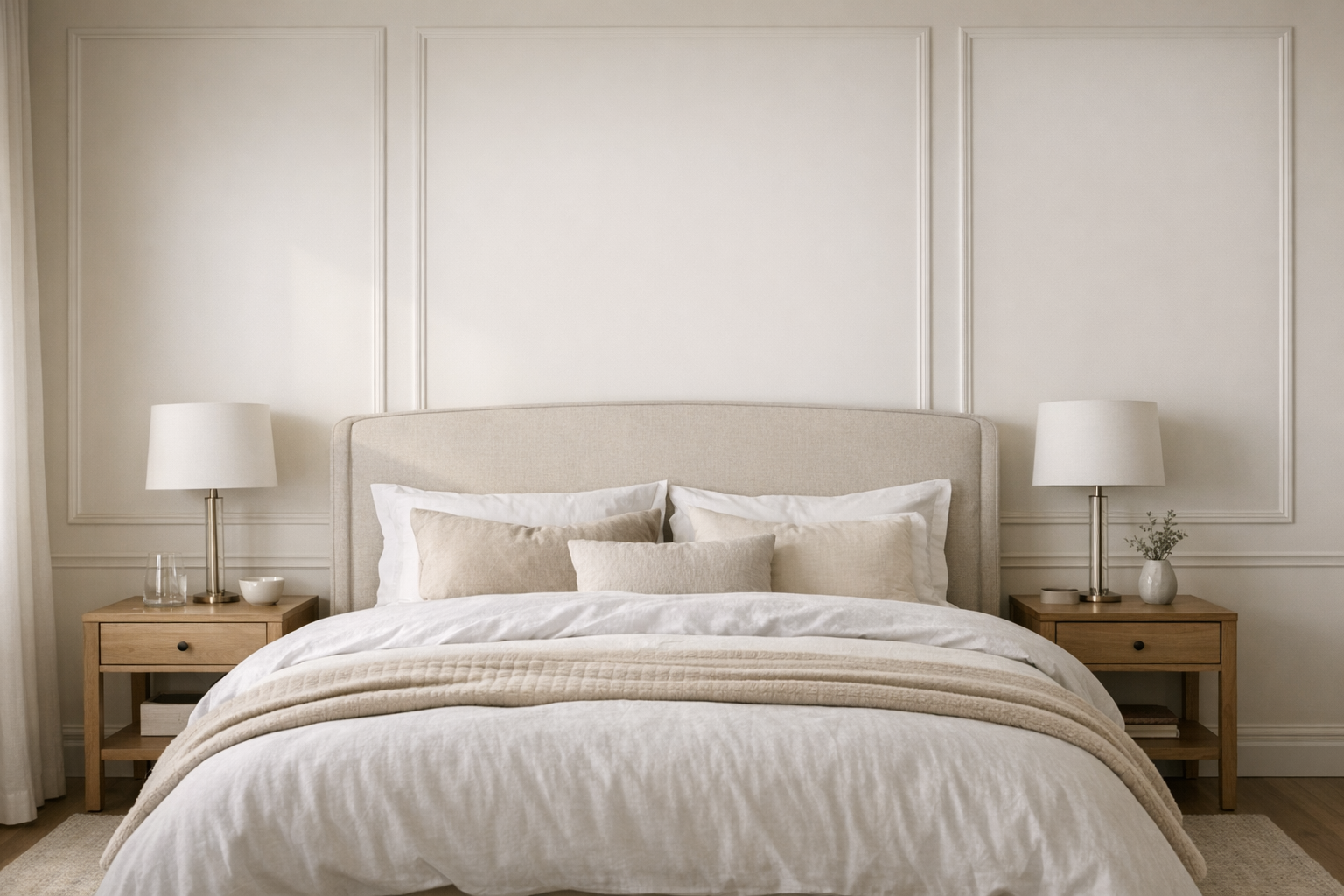
For the most balanced layout, treat the bed as the center point rather than simply dividing the wall into equal sections. A king bed often looks best with one wider center panel and narrower side panels, or three broad panels that line up with the headboard and nightstands. A queen bed can handle slimmer side spacing so the frames do not drift too far beyond the furniture. The good signal is simple: the moulding should feel connected to the bed grouping, not like a pattern floating behind it.
Keep the trim profile on the slim side if you want the refined version of this look. Narrow picture frame moulding reads softer and more elegant; chunkier wall panel moulding can start to feel formal or visually crowded in a smaller bedroom. Among bedroom wall molding ideas, this one is especially easy to pair with warm white, greige, dusty blue, or muted green paint because the detail comes from shadow and proportion rather than a loud contrast.
2. Classic Box Moulding for a Tailored Primary Suite
For a dressier take, box moulding uses repeated rectangular trim boxes to create a more structured, traditional rhythm than the simpler framed layout before it. On a primary bedroom accent wall, that repetition can make the bed wall feel tailored and hotel-like, especially when the boxes relate to the headboard, nightstands, doorways, and window placement instead of being spaced as a generic pattern.
The key is consistency. Keep the gap between boxes even, let the lowest trim work with the baseboard, and avoid squeezing tiny rectangles into awkward leftover spaces at the corners. If the room already has a chair rail, crown moulding, or substantial baseboards, the boxes should feel connected to those lines so the wall reads as one planned composition.
Because classic accent moulding walls have more repeated detail, tone-on-tone paint is usually the calmest choice for a bedroom. Paint the trim and wall the same soft white, greige, mushroom, navy, or muted green so the shadow lines do the work. High contrast can look sharp, but in a sleep space it can also make the wall feel busier than intended.
3. Board and Batten for a Relaxed but Finished Bedroom Accent
Board and batten brings a looser, more casual rhythm than box moulding because the emphasis is vertical rather than framed. A board and batten bedroom wall usually has narrow battens applied over a smooth wall or flat panel backing, then painted as one surface. That simple up-and-down pattern fits farmhouse, coastal, transitional, and casual primary bedrooms because it feels finished without becoming ornate.
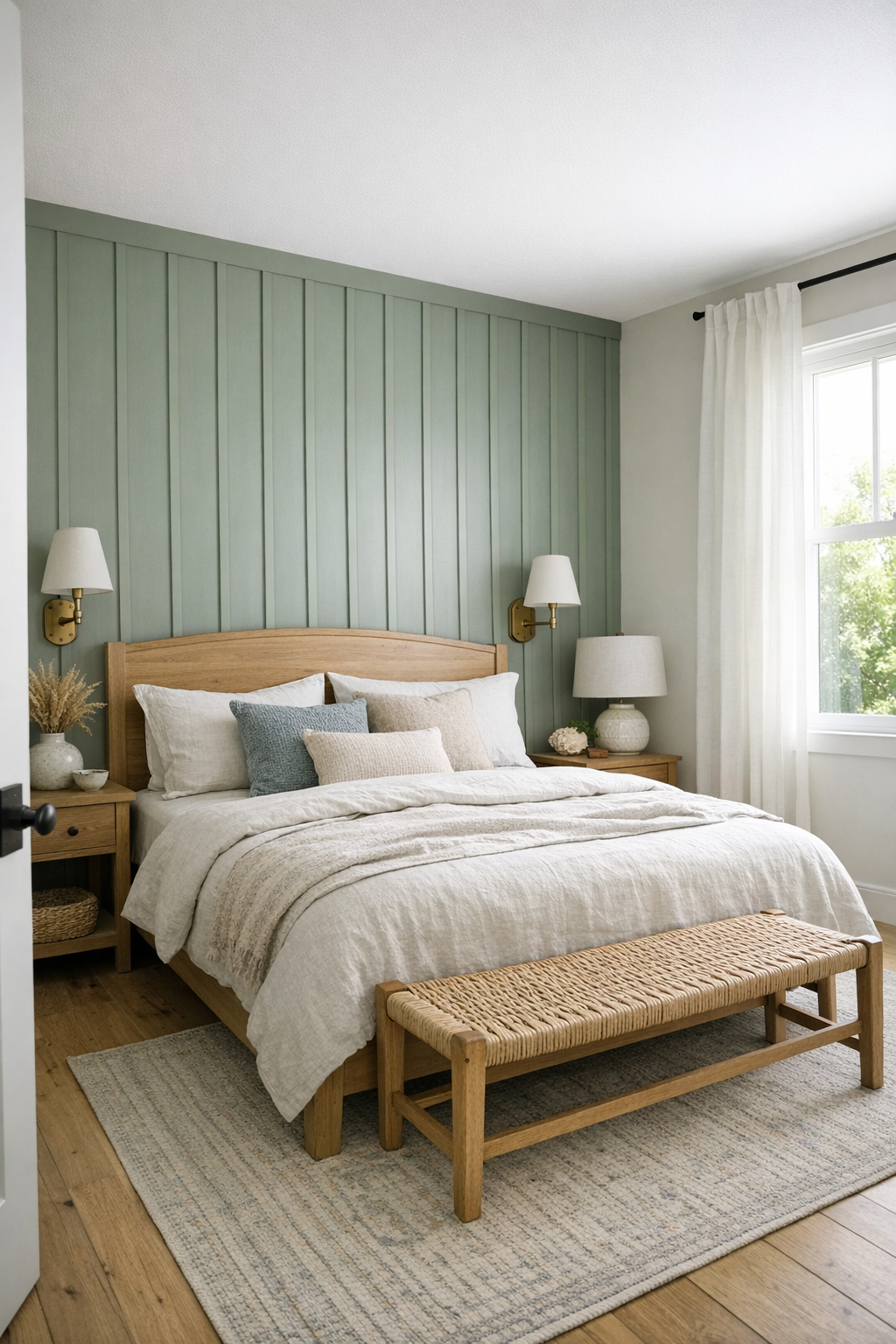
Height changes the mood. A half-wall version works more like wainscoting: it gives the bed wall structure while leaving the upper wall open for art, sconces, or a softer paint color. Full-wall board and batten is stronger and more architectural, and the vertical lines can make the ceiling feel higher because they lead the eye upward.
Spacing is the detail that keeps this from looking busy behind a bed. Narrow, closely spaced battens create more texture and a cottage-like feel, while wider spacing reads calmer and more modern because there are fewer vertical lines competing with the headboard, pillows, lamps, and nightstands. If the bed is large or the room is meant to feel restful, wider bays are usually the safer design choice.
4. Modern Grid Moulding for Clean Symmetry
Start by deciding whether the wall wants true squares or longer rectangles; that choice controls how calm or graphic the pattern feels behind the bed. A modern grid wall uses flat trim pieces running vertically and horizontally to create one continuous, crisp layout. It is still bedroom accent wall moulding, but it reads cleaner and bolder than a traditional framed-panel treatment because the lines act more like a graphic pattern than ornamental trim.
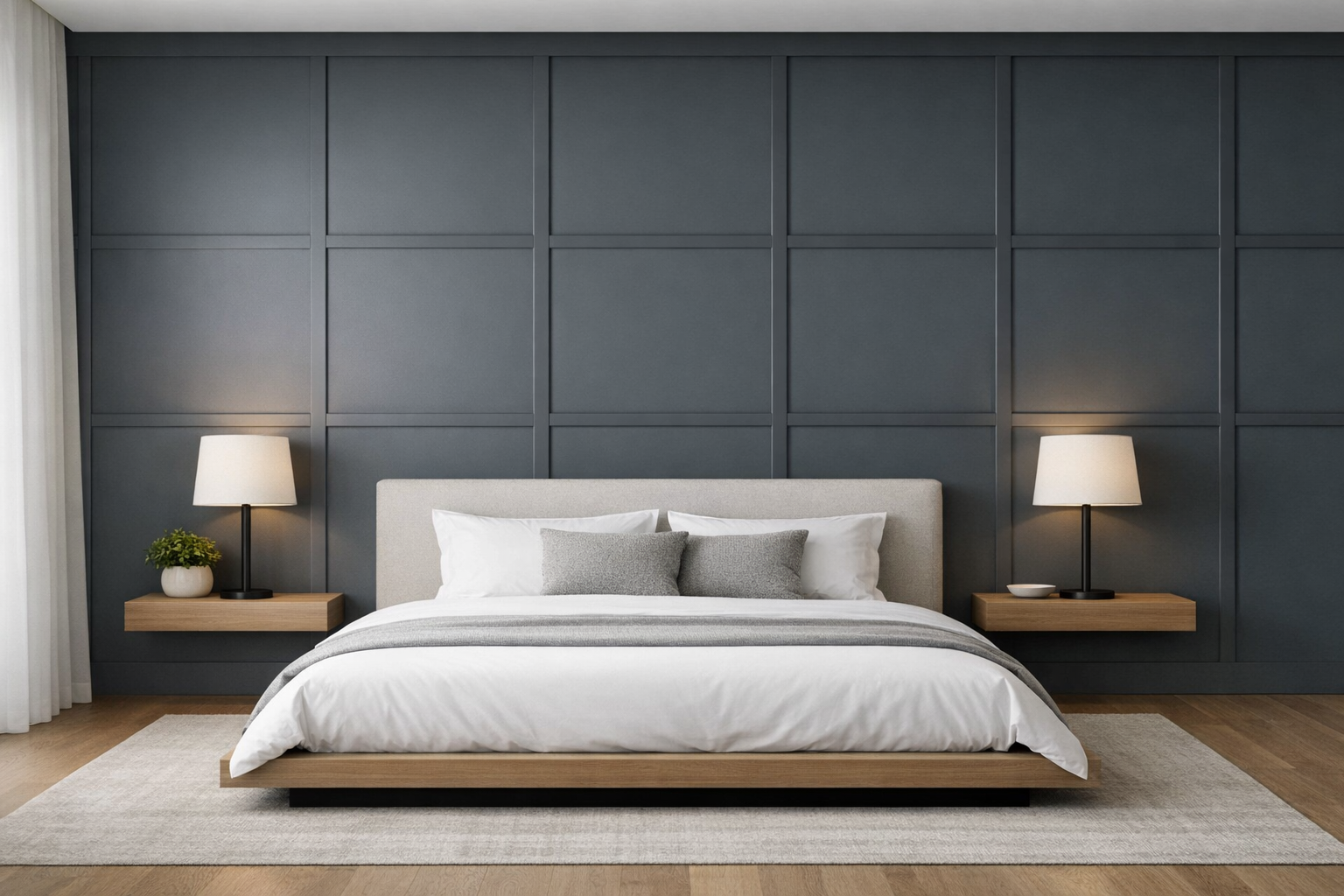
The best version starts with the bed as the anchor. Center the grid on the headboard first, then let the pattern work outward so the main verticals and horizontals feel connected to the furniture rather than randomly divided across the wall. On a wide wall, larger rectangles usually feel calmer; on a smaller wall, too many small squares can make the surface look busy behind pillows, lamps, and nightstands.
Before settling on the scale, look at interruptions: outlets, windows, sconces, and nightstand lamps. A strong grid looks intentional when trim lines clear those elements cleanly or frame them with breathing room. It looks weaker when a batten barely clips an outlet cover or stops awkwardly behind a lamp shade, so adjust the bay size early instead of forcing perfect squares everywhere.
5. Asymmetrical Geometric Trim for a Bold Contemporary Feature Wall
If the grid felt too orderly, asymmetrical trim is the version that breaks the lines loose. It uses diagonals, off-center sections, and irregular shapes to turn the bed wall into a graphic feature wall. Among geometric trim walls, this is the boldest choice because the movement is part of the design; it works best when you want the wall itself to feel like art rather than a quiet architectural backdrop.
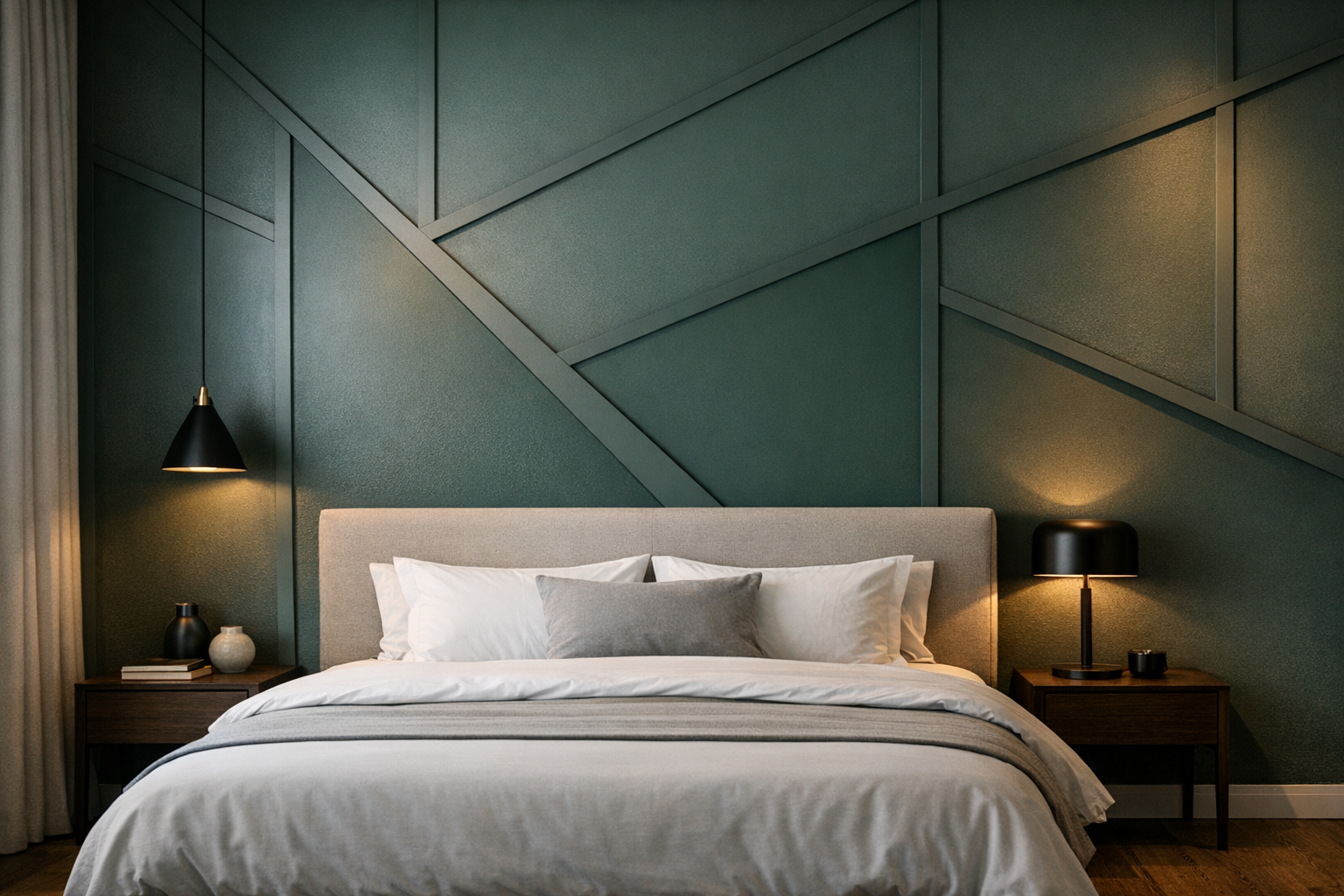
The elevated version usually has fewer, larger angles: one long diagonal crossing behind the headboard, a wide angled panel above one nightstand, or three broad shapes that relate to the bed's centerline. That larger scale gives the wall confidence and keeps the pattern readable once pillows, lamps, and bedding are in place. The weaker version is a maze of tiny triangles and short cuts, which can look restless behind a bed and make the room feel busier than intended.
Because angled bedroom trim ideas already bring so much motion, the surrounding choices should calm them down. Simple bedding, streamlined nightstands, and understated sconces or lamps help the pattern feel deliberate instead of competitive. A single paint color over the wall and trim is usually the easiest way to unify the shapes while still letting the shadow lines show.
6. Vertical Wood Slats for Warmth and Height
After the motion of angled trim, slim vertical slats bring the room back to a steadier rhythm. Each slat works like a narrow piece of vertical trim, adding texture and warmth without the formality of framed moulding. Because vertical lines guide the eye upward, this treatment can make the ceiling feel higher, especially behind a low platform bed, an upholstered headboard, or floating nightstands.
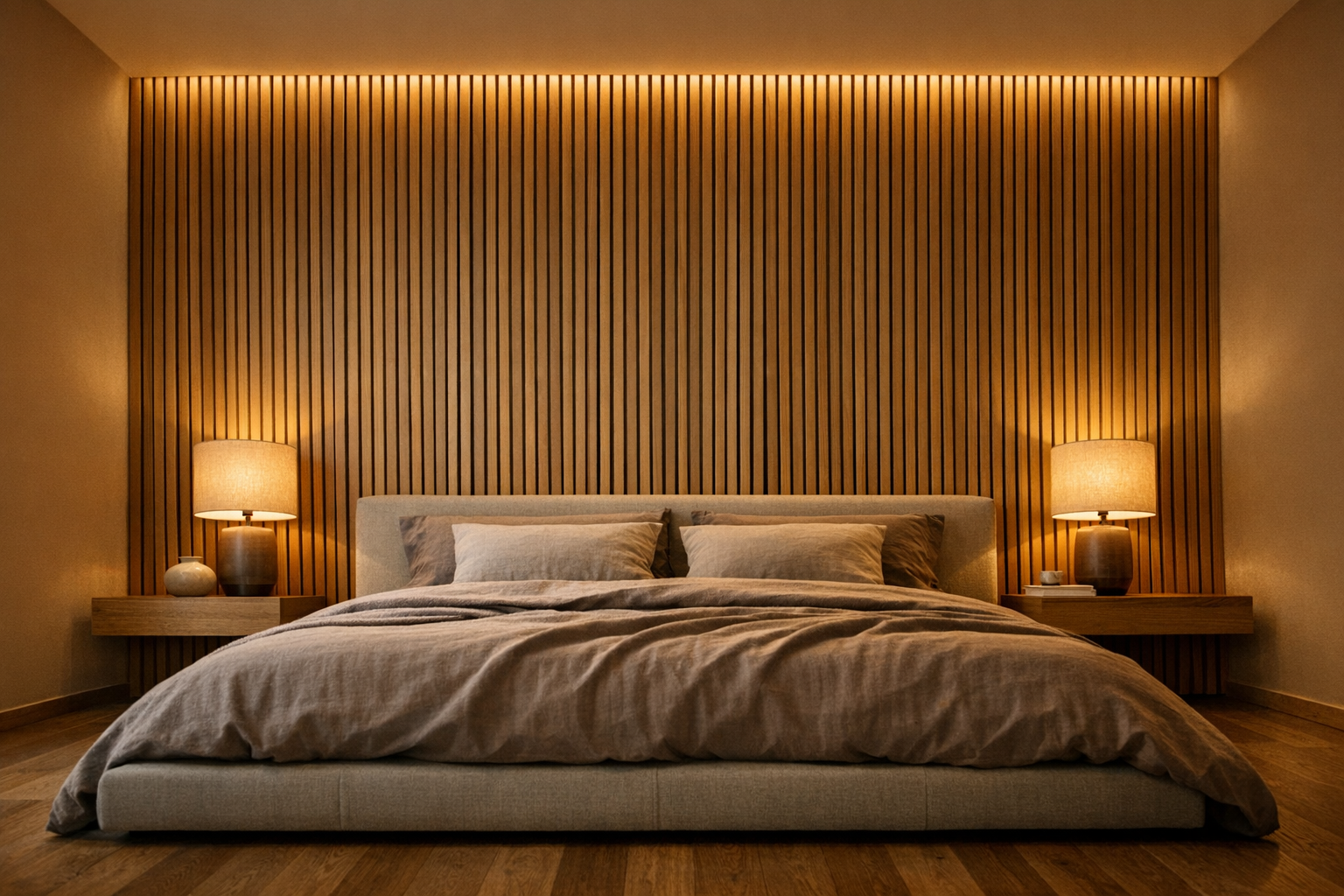
The finish sets the mood. Natural wood keeps the look warm and organic, which works beautifully in modern, Japandi, or spa-like bedrooms. A deeper stain feels moodier and more tailored, especially with linen bedding and simple black or brass lighting. Painted slats are the quietest option; they keep the texture but make the wall feel more integrated with the rest of the room. Narrow, reeded-style strips create a finer texture, while wider wood slats read cleaner and more architectural.
Spacing is what makes this look intentional. Equal gaps from one side of the bed wall to the other feel calm and designed; random spacing or awkward skinny end pieces can make the wall look improvised. For a polished primary suite, let the slats run full height or end at a crisp horizontal line, and consider how sconces, outlets, and nightstands interrupt the pattern before committing to the layout.
7. Shiplap with Finished Trim for a Softer Linear Accent
Shiplap feels most bedroom-appropriate when it is handled like finished interior paneling, not rough planks. Clean side returns, tidy baseboards, and a simple cap or edge trim help the wall read as intentional millwork, so it supports the bed, lamps, and artwork instead of becoming the loudest feature in the room.
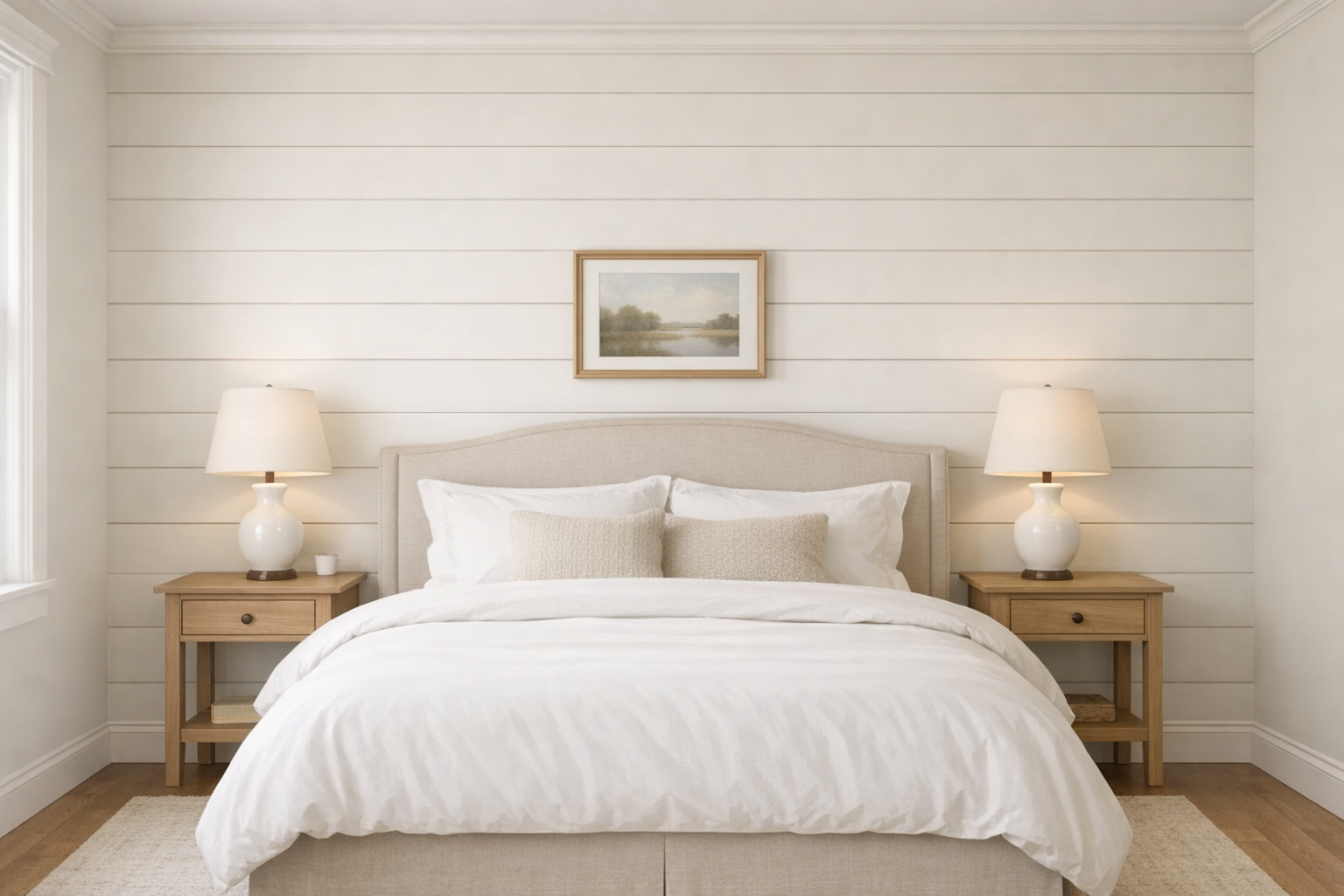
Orientation changes the effect. Horizontal boards create a gentle, layered backdrop that works well behind a wide upholstered headboard or a pair of substantial nightstands because the lines echo the furniture's width. Vertical boards feel a little taller and cleaner because the eye follows the seams upward, making them a better fit for lower beds, compact rooms, or spaces where you want a lighter, more modern linear accent.
For a calm primary bedroom accent wall, muted color matters as much as the boards themselves. A soft neutral paint, dusty green, warm white, pale taupe, or blue-gray keeps the texture visible without pushing the room into a rustic theme. The best signal is subtle shadow between the boards, not high contrast; if the seams, trim edges, and wall color all feel cohesive, the result looks serene rather than themed.
8. Full-Height Wall Panel Moulding for a Built-In Architectural Look
Full-height panels are the most architectural version of wall panel moulding: the trim runs from the baseboard up to the crown moulding or close to the ceiling, so the wall reads like built-in millwork instead of a decorative strip behind the headboard. That extra vertical scale is why this idea tends to shine in larger primary bedrooms, rooms with taller ceilings, or suites with a king bed that can visually hold its own against a more formal backdrop.
Panel width changes the mood. Broad, evenly spaced panels feel calm and upscale, especially behind a wide upholstered bed and substantial nightstands. Narrow panels create more repetition and can look elegant, but they also bring more lines into the room, so they work best when the bedding, lamps, and art are restrained. A strong layout usually centers one panel or a balanced pair of panels behind the bed, then lets the outer panels land cleanly near the corners instead of leaving skinny leftover slivers.
Compared with a partial-height treatment, full-height panels feel more permanent and custom because they engage the whole wall from floor to ceiling. For a polished primary bedroom accent wall, keep the paint unified and let the shadows, proportions, and ceiling height do the heavy lifting.
9. Tone-on-Tone Painted Trim for Subtle Depth
Sometimes the biggest shift is not the pattern but the way it is painted. A tone-on-tone trim wall uses the same color, or very close versions of one color, on both the wall and the moulding, so the profile stays visible through shadow instead of contrast. It can work on picture frames, box moulding, battens, grids, or panels, but it deserves its own spot because the color strategy can make the same trim layout feel crisp, calm, moody, or enveloping.
Soft whites are best when you want a light, airy bedroom with just enough architectural detail to frame the bed. Warm taupes and mushroom tones make accent moulding walls feel softer and more layered, especially with linen bedding, warm wood, or brass lamps. Muted greens bring a quiet, nature-inspired mood, while deep blues and charcoal create a more cocooned effect. Darker colors feel cozy rather than cramped when the trim pattern is simple, the bedding has contrast, and lamps or sconces wash light across the raised edges.
For the most restful primary bedroom accent wall, keep the finish subtle. A matte finish across both the wall and trim gives the color a soft, continuous look; a slightly different sheen on the moulding can make the lines stand out more. The takeaway: this is not a paint-only accent wall. The trim is still the feature, but the unified color lets the depth feel quiet, polished, and bedroom-ready.