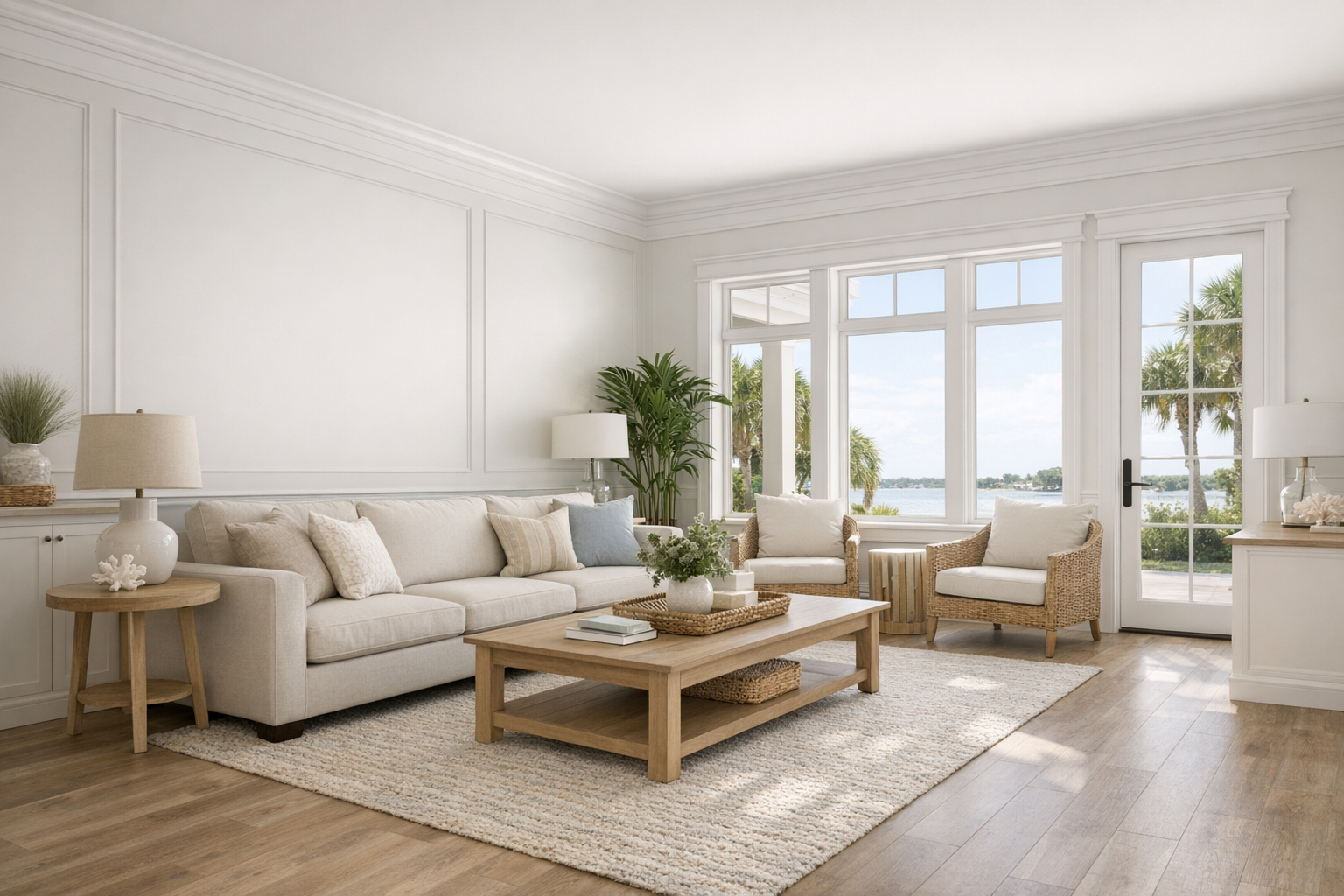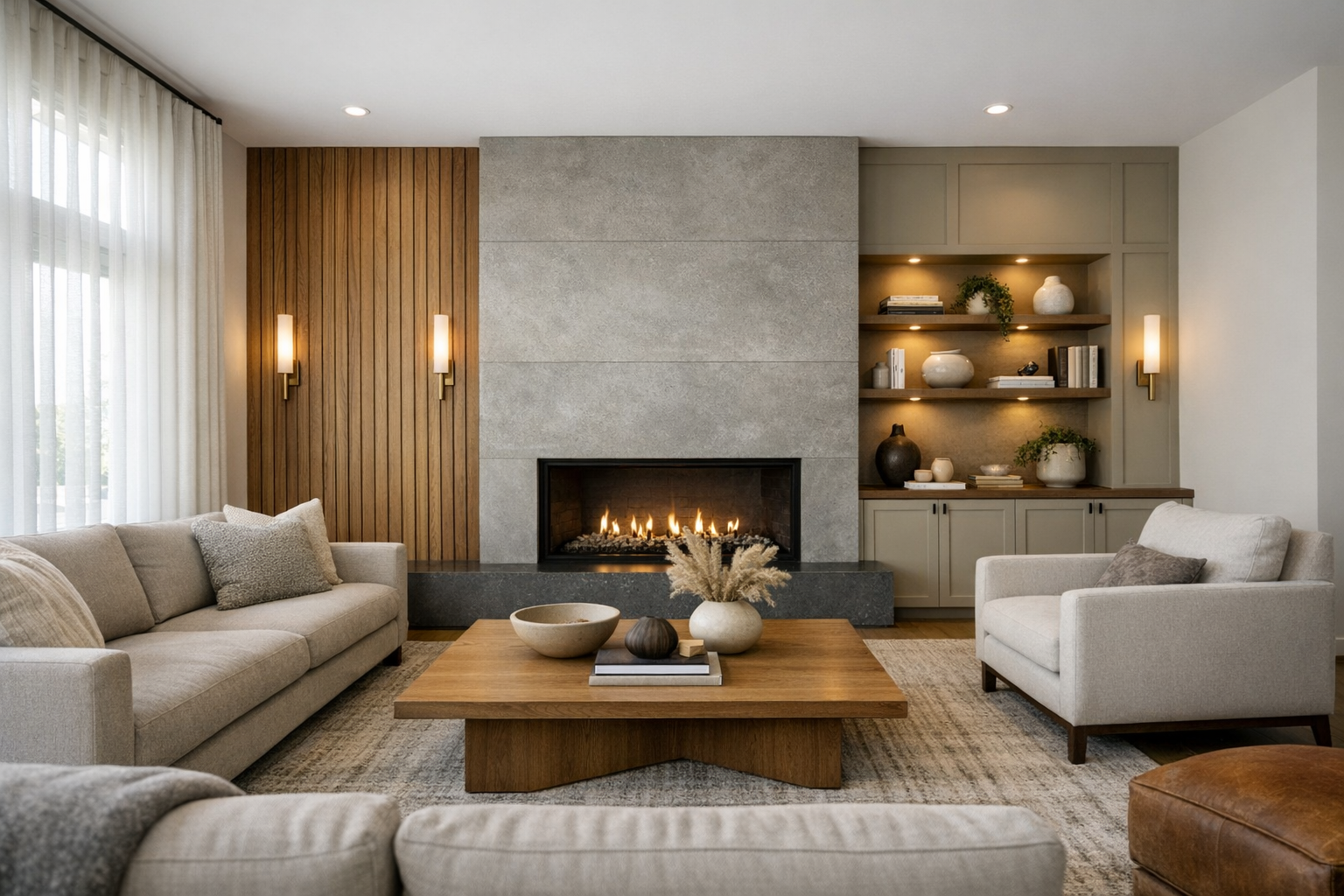
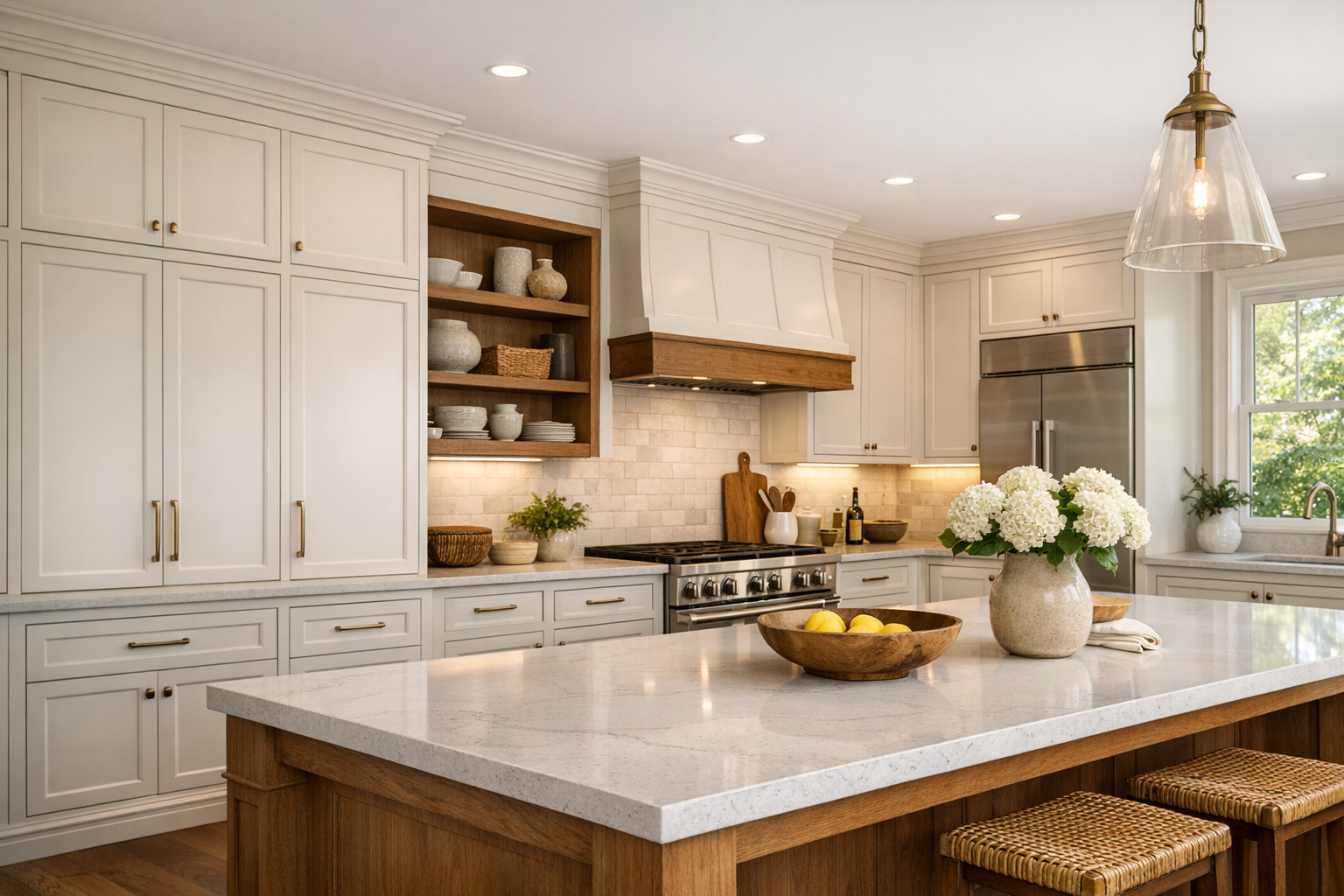

A cabinet can be useful, level, and full of storage and still look like it was simply set against the wall. The giveaway is usually at the edges: a shadow gap above upper cabinets, a narrow sliver beside a wall, an exposed cabinet side, or a base that stops short of the room's floor trim. Cabinet trim installation is the finish step that turns those loose edges into intentional transitions.
Think of trim as the bridge between the box and the room. At the top, it can help cabinetry meet the ceiling or nearby crown line. At the bottom, toe kick or base trim cleans up the floor connection so the cabinet run feels grounded instead of unfinished. Along the sides, small filler or scribe pieces hide the irregular places where straight cabinet boxes meet not-so-straight walls.
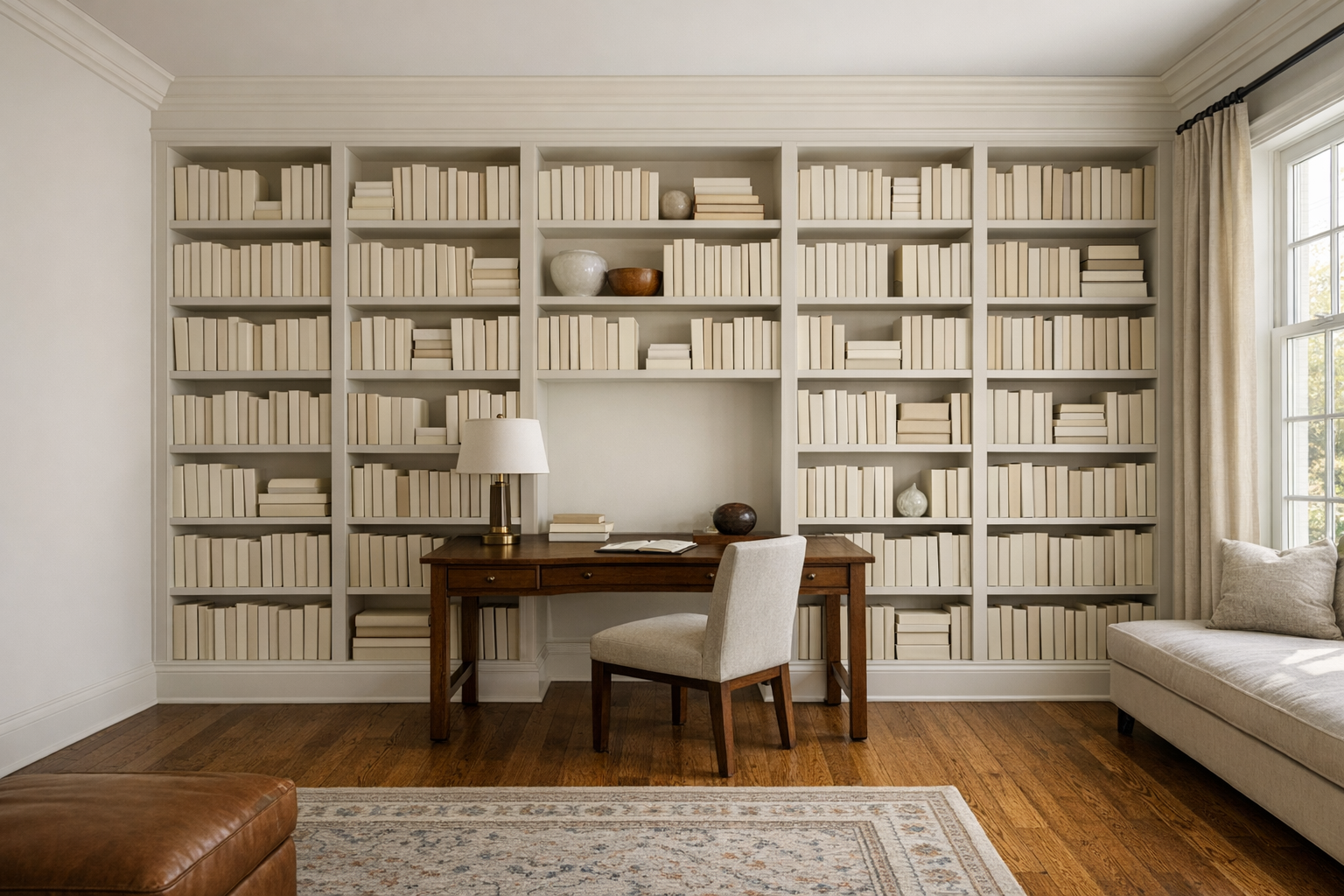
The same idea applies outside the kitchen. In a home office, trim can make separate shelving units read as one built-in wall instead of a row of boxes. In a living room, custom built in trim can give a media cabinet or bookcase thicker edges, stronger vertical lines, and a more furniture-like presence. The detail is doing visual work: framing, connecting, thickening, and balancing the cabinetry.
There is a limit, though. Trim can elevate good cabinet boxes and finish carpentry built ins, but it cannot rescue a poor layout, badly aligned doors, or proportions that feel wrong for the room. The best results happen when the cabinets already fit the space reasonably well, and the trim makes that fit look deliberate.
Cabinet Crown Moulding: Closing the Gap Between Cabinets and the Ceiling
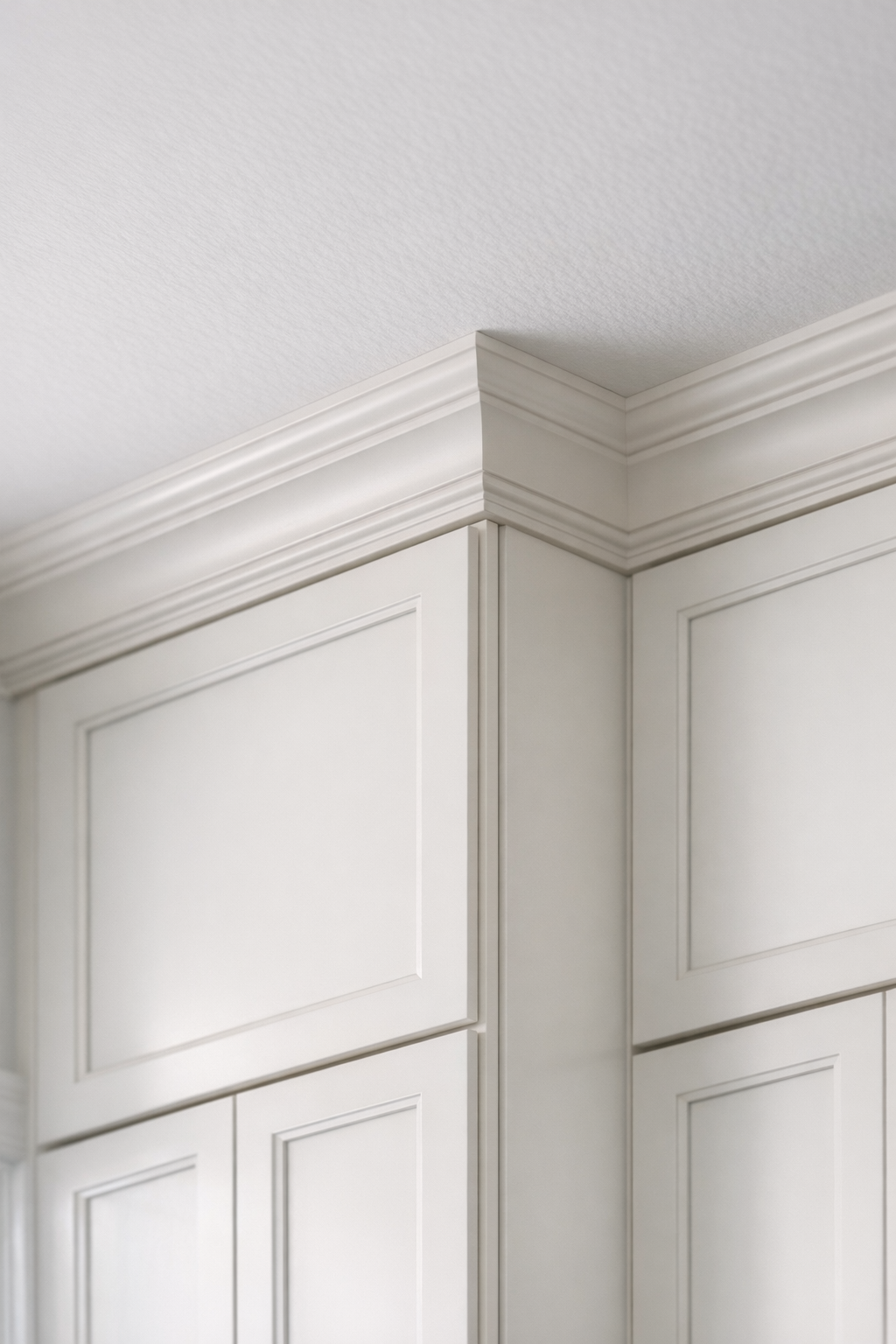
The top of an upper cabinet is where a kitchen often gives away its "builder-basic" side. When cabinets stop short of the ceiling, the eye reads the dark line above them, the dust-catching ledge, and the abrupt boxy ending before it notices the door style. Cabinet crown moulding changes that read by giving the run a finished cap and, when the layout allows, tying the cabinets into the ceiling plane.
Full-height crown is the cleanest version when the cabinets already reach close to the ceiling. The moulding spans the remaining space and makes the upper cabinets feel taller, more intentional, and less like a standard box size was chosen because it was available. The key is scale: a slim shaker door and an eight-foot ceiling usually want a quieter profile, while taller cabinets in a higher room can handle a deeper crown without looking top-heavy.
Stacked crown uses more than one piece, often a flat build-up plus a decorative crown, to create a thicker top line. It works well when the room has enough height for that added visual weight. A small riser plus crown is a related option: the riser is a flat board installed above the cabinet, and the crown sits on that riser so the trim can reach the ceiling without forcing an oversized profile. Both are useful kitchen cabinet trim upgrades when the goal is height and polish, not ornament for its own sake.
Crown is not always the right answer. If the ceiling is noticeably uneven, a detailed profile can make the changing reveal more obvious instead of hiding it. In a very tight modern design with slab doors, sharp lines, and minimal trim elsewhere, a plain flat filler or no crown at all may look cleaner than a traditional moulding. The good signal is simple: cabinet crown moulding should resolve the top edge, soften shadow lines, and improve proportion; if it makes the ceiling line look busier or crooked, a quieter cabinet trim upgrade is usually the better move.
Light Rail and Toe Kick Trim: Cleaning Up the Edges People Notice Up Close
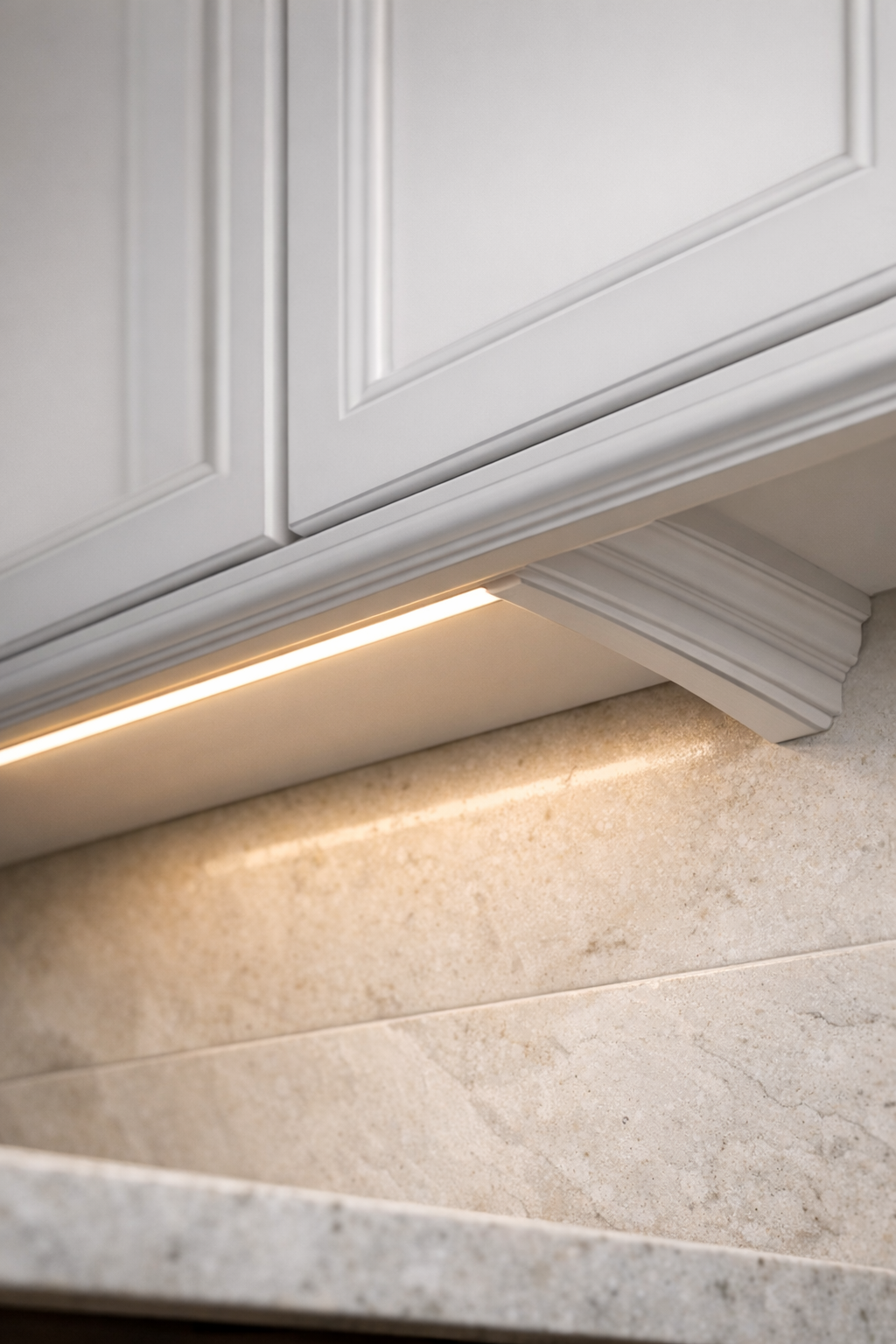
Eye level gets most of the design attention, but the underside of wall cabinets is one of the first places people notice when they stand at a counter. Light rail moulding is the small trim piece applied along that lower front edge. It gives the cabinet box a finished lip, helps shield under-cabinet lighting from direct view, and keeps the bottom of the cabinet from reading like a raw panel edge.
The best light rail moulding feels proportional to the door style above it. A simple square or eased profile works well with cleaner shaker or slab cabinetry, while a more shaped rail can suit a traditional kitchen with decorative doors. Too shallow, and it may not visually conceal much; too heavy, and the wall cabinets can start to look bottom-loaded. The takeaway is that this trim should quietly clean up the lower line, not become a second crown moulding upside down.
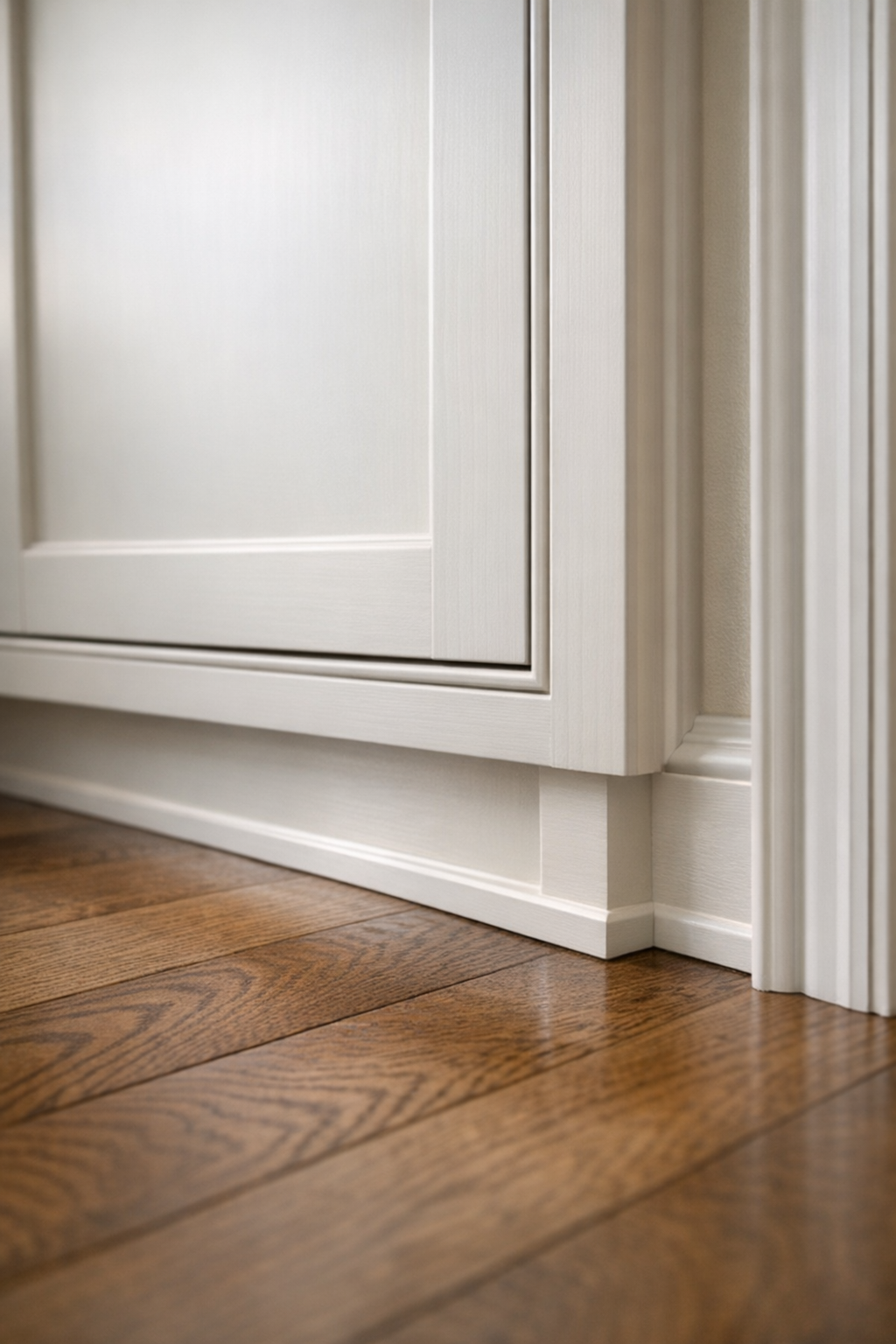
At the floor, toe kick trim does a similar job for base cabinets. The toe space may be recessed and dark, painted to match the cabinets, or dressed with a furniture-style base detail. A recessed black toe kick visually makes the cabinets float back from the floor; painted toe kick trim makes the run feel more continuous; a furniture-style base makes an island, mudroom cabinet, or office built-in feel more like a fixed piece of architecture.
This is especially noticeable on long cabinet runs and islands, where a wavy, scuffed, or unfinished base line can make even attractive doors feel less refined. A clean toe detail gives the eye one intentional horizontal line to follow, which is why it matters in kitchens, but also under office storage, window-seat drawers, and living room built-ins. In a thoughtful cabinet trim installation, the lower edges are not afterthoughts; they are part of what makes the whole piece feel settled into the room.
Filler, Scribe, and End Panels: Making Imperfect Walls Look Intentional
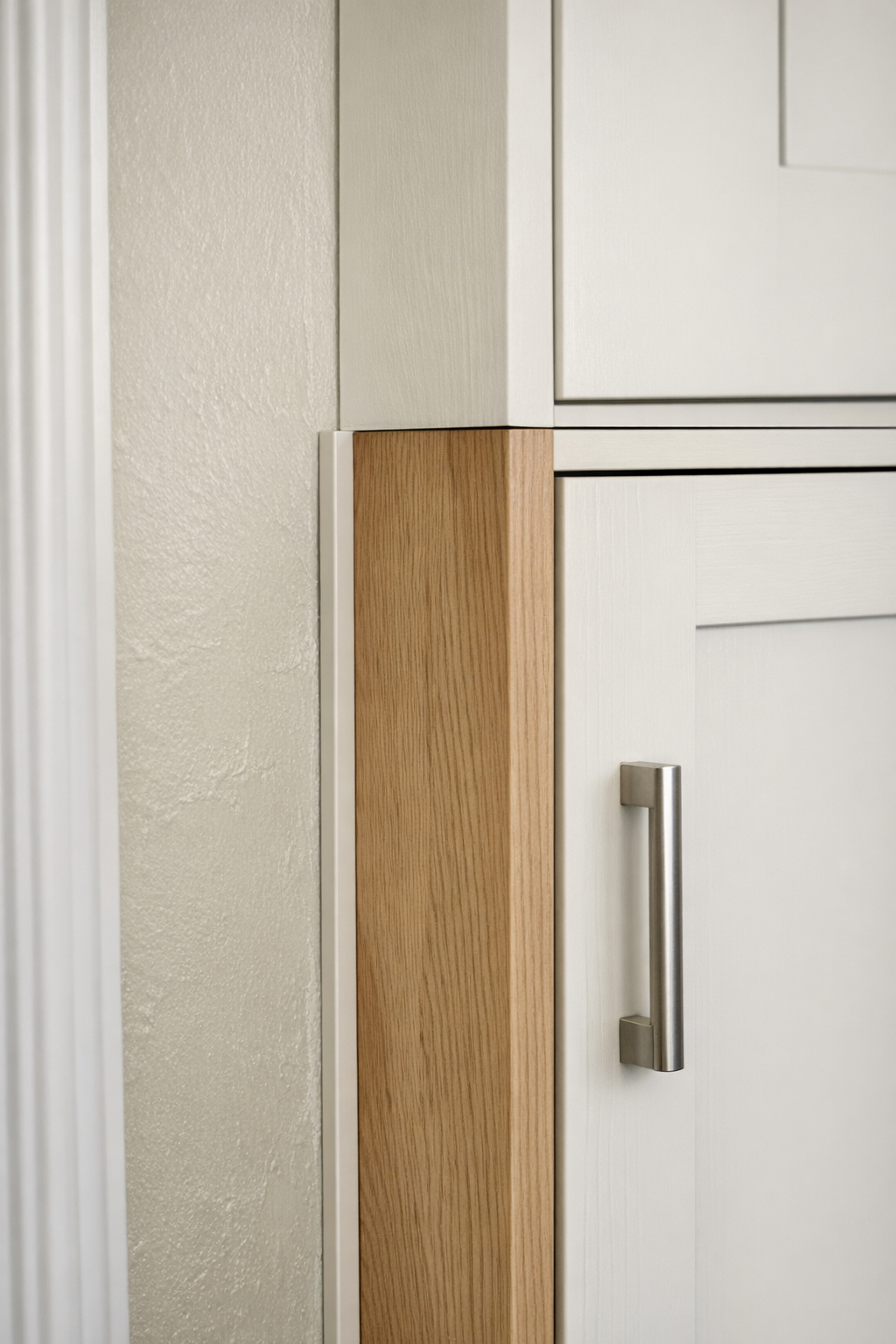
Walls are rarely as straight as cabinet drawings make them look, and this is where the narrow side details matter. Filler strips are flat pieces used between a cabinet and a wall, between two cabinet sections, or at the end of a run so doors and drawers have the clearance they need. In a kitchen, that might mean leaving enough space for a drawer to open beside a casing or appliance panel. In an office built-in, it might mean balancing the left and right sides so the shelving does not look jammed into one corner.
Scribe moulding handles a different problem. Instead of creating planned spacing, it covers the small uneven line where a cabinet, filler, or panel meets a wall that bows, waves, or sits slightly out of square. A good scribe line looks quiet: the trim follows the wall closely, the reveal stays slim, and the eye reads the cabinet as meeting the room cleanly. Filler trim is about layout and clearance; scribe moulding is about disguising the last little mismatch between straight cabinetry and imperfect surfaces.
Finished end panels solve the exposed-side problem. Without them, the side of a base cabinet, pantry, bookcase, or media cabinet can look like the side of a box that happens to be visible. A finished panel gives that side the same visual importance as the front, whether it is a plain painted slab, a shaker-style panel, or a more furniture-like detail. The practical takeaway is simple: any cabinet side you can see from the room deserves to be treated as part of the design, not as a leftover surface.
The line between polished and patched is proportion. A slim, consistent filler can make a run feel measured and intentional; a wide, random filler at one end can make the layout look like it missed the wall. Scribe moulding should hide minor irregularities, not become a chunky border around every cabinet. These details are strongest when they refine a solid plan, because trim can clean up visible edge and gap problems, but it cannot make poor measurements or awkward cabinet sizing disappear.
In Kitchens, Trim Upgrades Make Stock Cabinets Look More Planned
In a kitchen, the strongest upgrade is usually the way all the small lines relate to each other. Crown at the top, light rail under the uppers, toe kick trim at the floor, finished panels on exposed sides, and fillers at walls should look like parts of one plan. When kitchen cabinet trim upgrades are believable, the eye follows clean horizontal and vertical lines instead of noticing where one cabinet box stops and another begins.
On a long cabinet run, that might mean upper cabinets carried visually to the ceiling with a balanced crown, a light rail that gives the underside a finished edge, and a toe kick line that stays consistent from one base cabinet to the next. Around an island, the base trim matters even more because people see it from multiple sides. A plain back panel can feel temporary; a finished end panel with matching trim makes the island read more like furniture.
Refrigerator panels and range walls need the same discipline. A tall refrigerator side panel should feel aligned with nearby pantry or upper cabinet lines, not like a board added after the fact. Around a range hood or focal wall, custom cabinet trim works best when crown heights, side fillers, and lower rails line up with the surrounding cabinets so the appliance area feels framed rather than interrupted.
This is also where stock cabinetry and true custom cabinetry separate. Good cabinet finishing trim can make standard boxes look much more planned, especially when the finish matches, reveals stay even, and the trim scale fits the door style. But trim cannot fully overcome weak layout proportions, awkward cabinet sizes, or doors that do not align. Professional cabinet trim installation is less about adding more pieces and more about making every edge look intentional.
In Offices and Bookcases, Trim Turns Shelving Into Architecture
Home offices and reading rooms show this even more clearly because open shelves have so many exposed edges. A row of plain shelf boxes can look modular, even when it fits the wall. Built in shelving trim changes that read by wrapping those boxes with a visible frame, so the eye sees one composed bookcase wall instead of several separate units pushed together.
Face-frame trim is the front border applied over the cabinet or shelf box edges. The vertical pieces, or stiles, run between shelf sections and at the outside edges; the horizontal top rails and lower rails tie those verticals together. Thin strips make the shelving feel light and simple, while wider stiles and rails create thicker architectural lines that feel more like library millwork. The takeaway is scale: bookcase trim should be substantial enough to frame the openings, but not so heavy that the shelves look crowded.
Base trim and crown or cap trim do the anchoring work. A base detail lets the bookcase meet the floor the way built-in cabinetry would, especially when it relates to the room's existing baseboards. At the top, a crown, flat cap, or simple stepped rail gives the unit a finished stopping point. When those top and bottom lines feel connected to the room, built-in bookcases read as part of the architecture rather than freestanding furniture.
Shelf-edge details are the smaller version of the same idea. A thicker front edge on each shelf hides the raw shelf thickness, stiffens the visual line, and makes adjustable or fixed shelves look more intentional. Good execution also uses trim to cover seams where multiple bookcase boxes meet. A weak version leaves skinny shadow lines between units; a stronger version lets the stiles land over those joints so the whole wall feels planned as one piece.
In Living Rooms, Entertainment Center Trim Helps Media Walls Feel Balanced
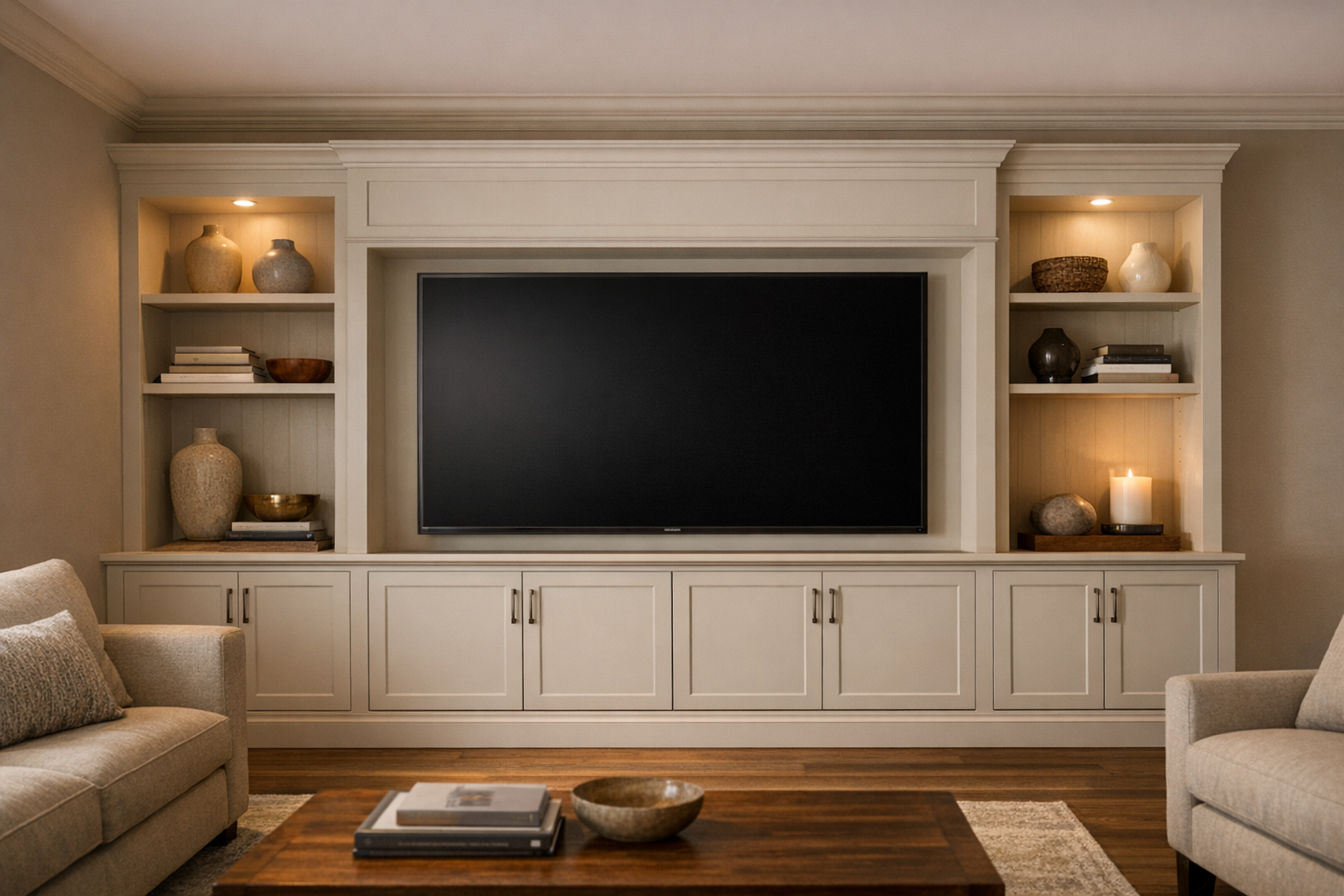
A living room media wall has one extra challenge: the television is a big dark rectangle, so the surrounding cabinetry has to look balanced without turning the screen into a picture frame that feels too heavy. Built in entertainment center trim helps by organizing the wall into clear zones: lower closed cabinets, the TV opening, side shelves, and any upper bridge or cap detail.
Around the TV, trim works best as a clean border rather than decoration for its own sake. A simple stile on each side of the screen can separate the TV bay from open shelves, while a top rail can align with the shelf openings or the upper cabinet line. Wider trim makes the wall feel more substantial and furniture-like; slimmer trim keeps a modern media wall lighter. The practical takeaway is to choose the trim weight based on the room: a traditional fireplace-adjacent built-in can usually handle stronger profiles, while a sleek TV surround often looks better with flatter, quieter lines.
Transitions matter just as much as the TV opening. Lower cabinets often carry the storage, while upper shelves create display space, and trim is what makes those separate pieces read as one composition. A vertical stile can hide the joint between a cabinet tower and shelf bay; a horizontal rail can mark the shift from closed doors to open shelving; built in shelving trim can repeat the same thickness on both sides so the wall does not feel lopsided.
Base and cap details finish the built-in without turning the section into a whole-room moulding project. A base trim line below the lower cabinets helps the unit meet the floor cleanly, especially near an existing fireplace hearth or adjacent wall base. At the top, a flat cap, modest crown, or stepped rail gives the entertainment center a stopping point and can hide small seams between cabinet components. Strong cabinet trim installation in a living room is easy to spot: the TV has breathing room, the shelves and doors align, and the media wall feels connected to the room instead of parked in front of it.
When Cabinet and Built-In Trim Is Worth the Upgrade
The upgrade is most compelling when the cabinets are already worth keeping, but the edges are doing them no favors. Good cabinet boxes with ceiling gaps, exposed sides, unfinished toe spaces, or small wall irregularities are strong candidates because trim is designed to clean up those transitions and help cabinetry connect more naturally to the room.
Stock and semi-custom runs often benefit because crown, fillers, end panels, light rail, and toe details can make separate units read as a coordinated plan. The checkpoint is alignment: if the door reveals are even, cabinet heights relate cleanly, and the trim scale matches the door style, cabinet moulding installation can look intentional rather than added on.
Built-ins made from multiple cabinet or shelf units are another strong use case. Face trim can hide the seams between boxes, while base and cap lines help shelving or media cabinetry feel anchored to the wall. This is where cabinet trim upgrades can make offices, libraries, and living rooms feel much more finished.
Weak candidates are the rooms where trim would be asked to cover a bigger problem. A poor layout, noticeably misaligned boxes, damaged cabinet fronts, or crooked door spacing should be corrected before trim becomes the focus, because moulding tends to emphasize lines and reveals. The same goes for a profile that clashes with the cabinet style: ornate stacked trim on very flat modern slabs can feel forced, while trim that is too thin on substantial traditional doors can look underpowered.
In short, cabinet trim installation is worth considering when it finishes an already sensible design. It is not a substitute for good proportions, straight installation, or cabinetry that is in sound condition.
The Right Trim Makes Built-Ins Look Planned, Not Added Later
The useful question at the end is not "Can trim make this look nicer?" but "Which edge is making the cabinetry look unfinished?" At the ceiling, crown or a simple cap can make the top line feel connected. Under wall cabinets, light rail finishes the lower edge. At the floor, toe kick trim cleans up the base. Along walls, filler and scribe details handle the little gaps and irregular lines that make cabinets feel pieced together.
That same thinking applies room by room. Kitchen cabinet trim upgrades work best when the crown, light rail, toe space, fillers, and exposed ends look like one coordinated package. In an office, built in shelving trim gives shelf boxes stronger face lines and helps separate units read as one bookcase wall. In a living room, base and cap details can help a media wall relate to the surrounding architecture instead of floating as a cabinet island on the wall.
The best results still depend on proportion, alignment, and restraint. Trim should finish a good cabinet layout, not distract from crooked spacing or force a decorative style that does not belong. But when the boxes are sound and the weak spots are mostly exposed edges, gaps, transitions, and scale, thoughtful cabinet trim installation can make kitchens, offices, bookcases, and living room media walls feel far more custom without necessarily replacing the cabinets themselves.