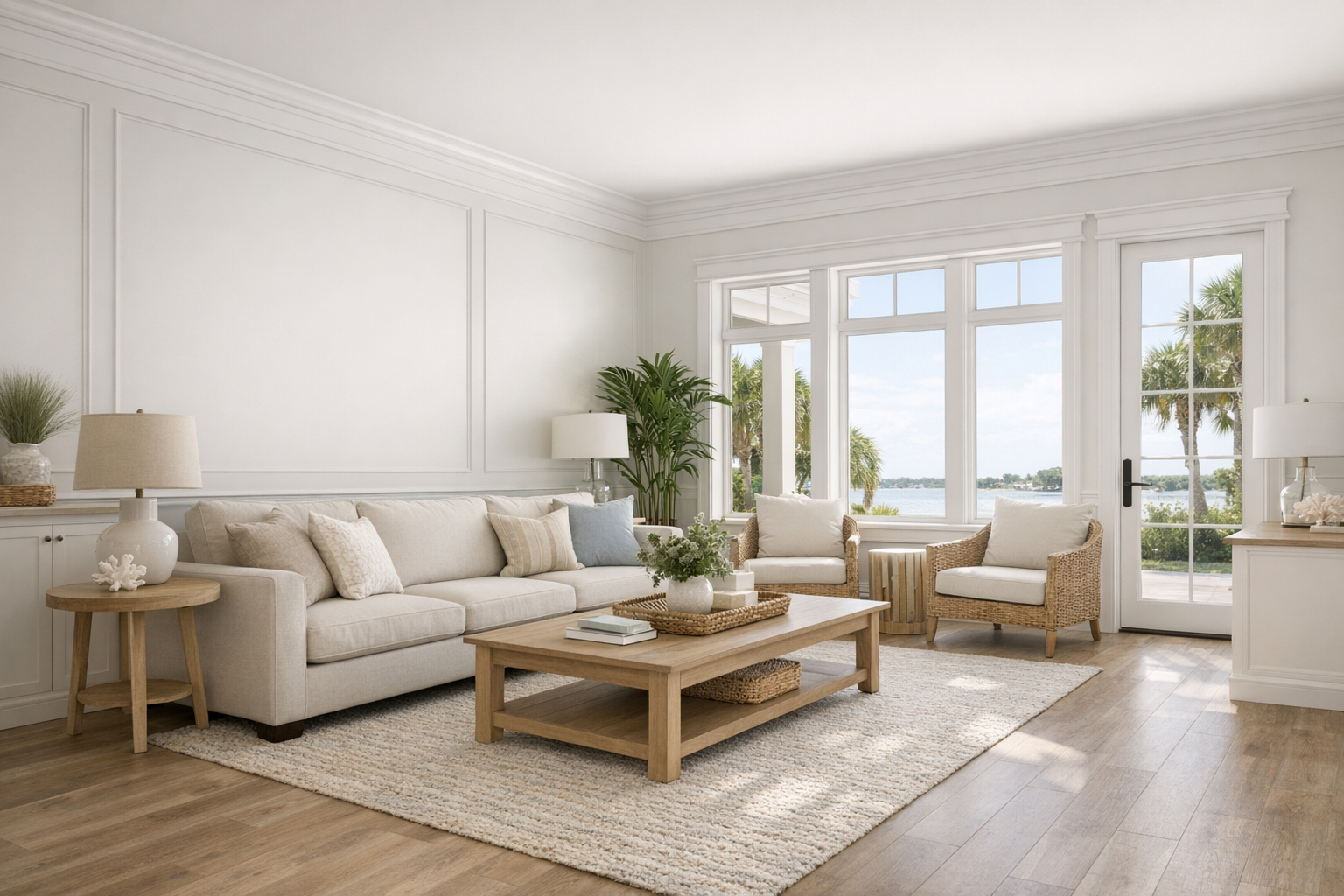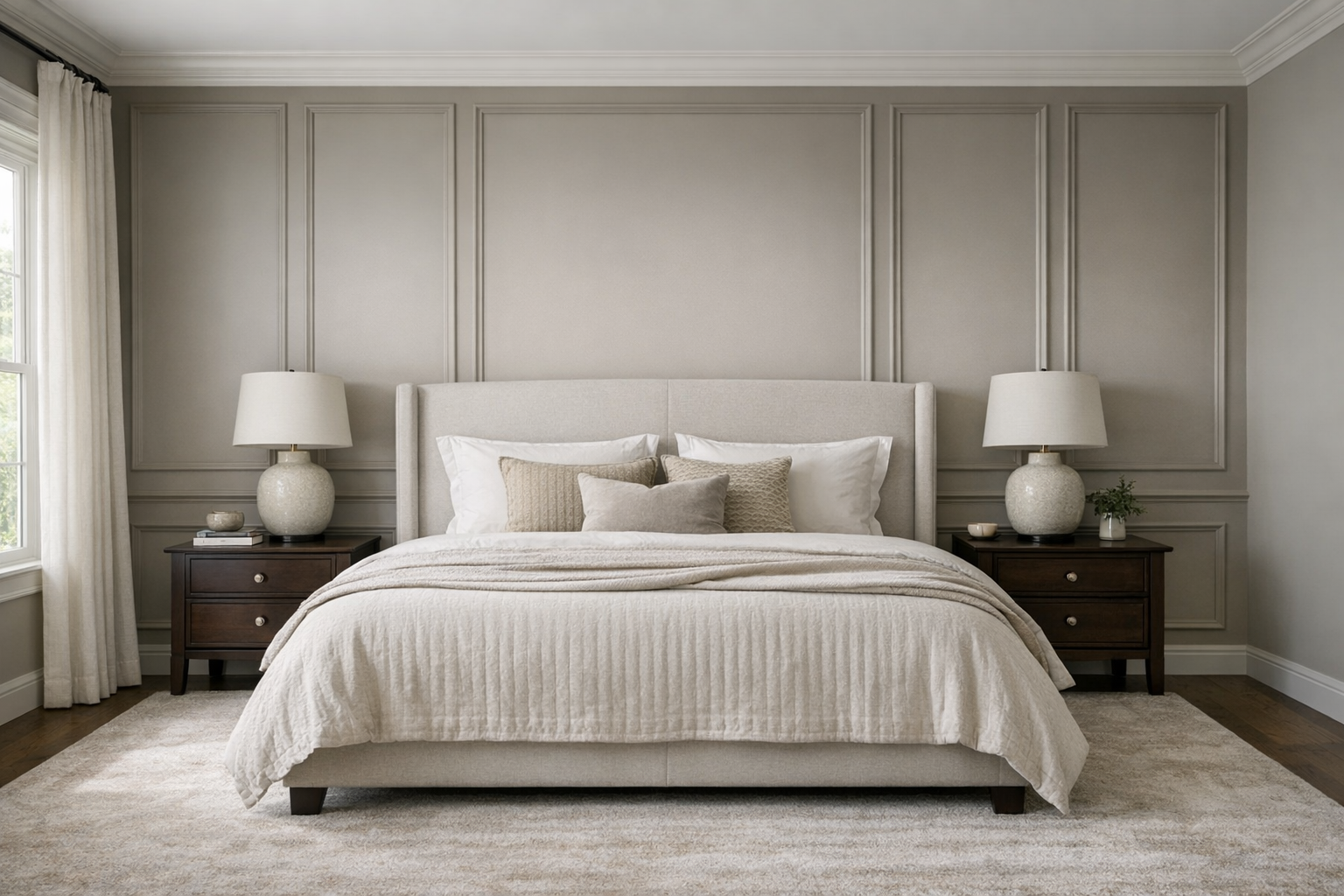
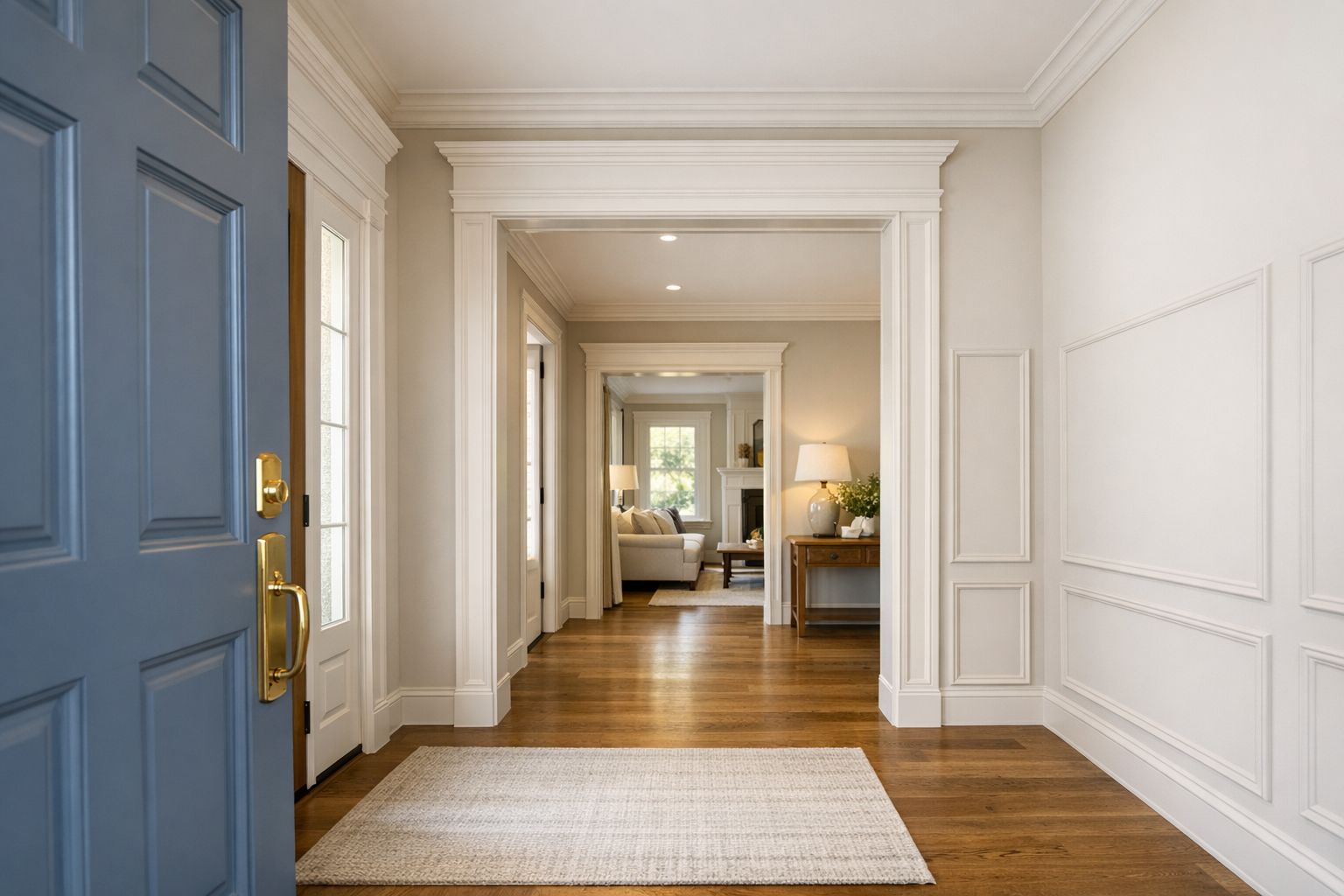

Trim is one of the quickest ways to make the first few steps inside a home feel intentional instead of unfinished. It gives the eye edges to follow: a front door feels framed, a hallway opening feels like a transition, a blank wall feels planned, and the line where the floor or ceiling meets the wall looks resolved.
In this guide, the focus is on interior entryway trim: casing around the inside of the front door, trim around passageways, wall moulding, baseboards, crown, and other details that shape the room itself. It is not about porch columns, exterior front-door surrounds, rugs, mirrors, hooks, or general entryway decor. Those pieces matter, but trim changes the architecture of the space.
The best entryway trim ideas start with four practical choices. Scale is about size: a narrow entry usually needs slimmer, cleaner profiles, while a taller foyer can handle more visual weight. Sightlines are what you see first from the open door, so the trim directly across from the entry often matters more than a hidden corner. Home style keeps the upgrade from looking random; a Craftsman entry, a modern condo, and a traditional foyer call for different profiles. Formality decides the mood: crisp casing and taller baseboards can feel subtle, while layered moulding or panel details create a more dressed-up arrival.
Upgrade the Interior Door Casing Around the Front Door
The first trim choice to look at is the inside surround of the front door, because it sits directly in the arrival sightline. Standard narrow casing can disappear, especially beside a substantial door, sidelights, or a tall ceiling. A wider profile gives the door more visual weight, almost like a frame around artwork, and helps the entry feel settled instead of builder-basic.
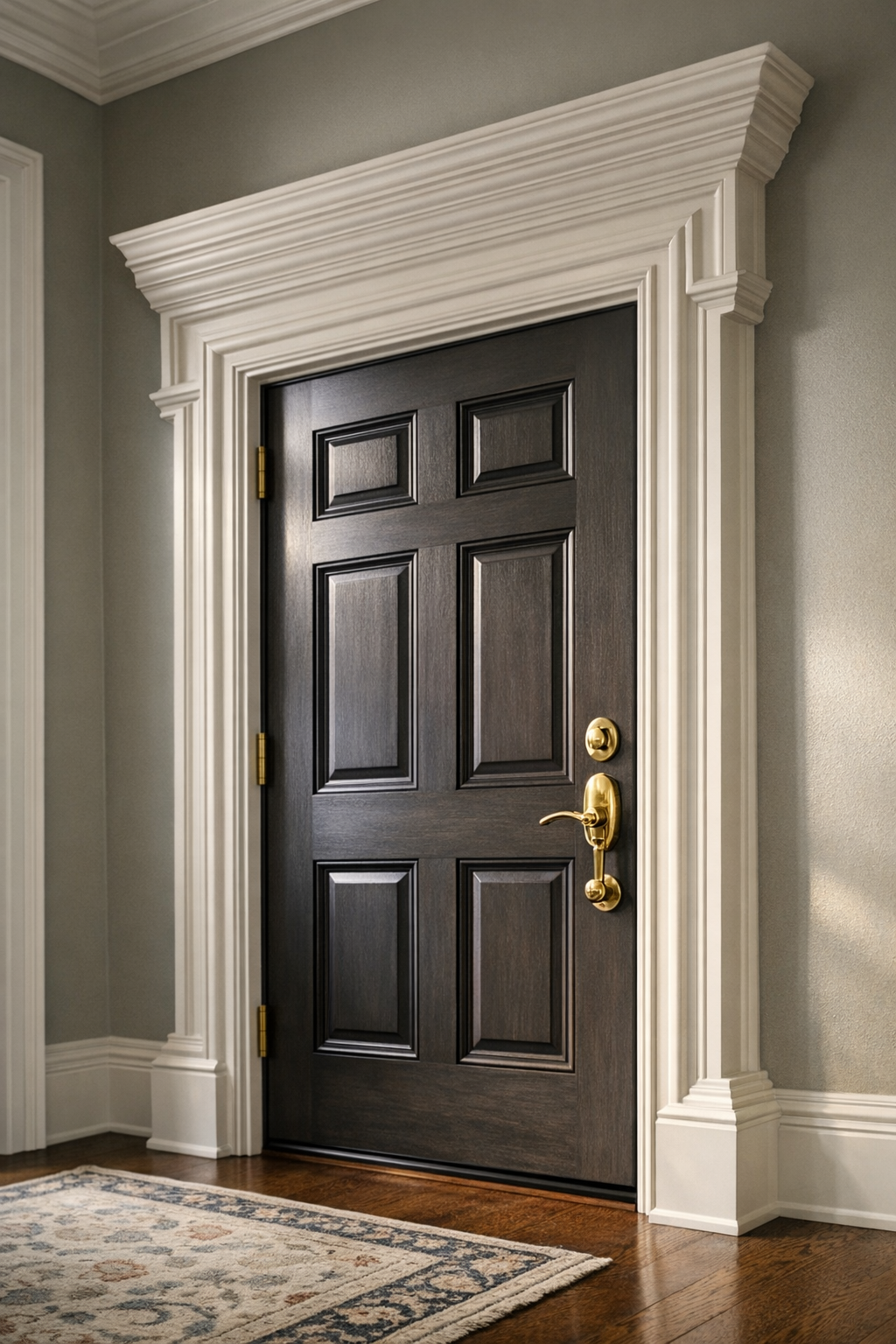
For a clean upgrade, choose flat or lightly eased casing that is wider than what you have now but not overly decorative. This works especially well in modern, transitional, or small entryways where the goal is definition, not drama. If the foyer is larger or the home has traditional details nearby, layered profiles can add depth: a backband, small bead, or stepped edge creates a shadow line that reads more finished from a distance.
Plinth blocks are square or rectangular blocks at the bottom of the side casing, where the trim meets the baseboard. Rosettes are decorative corner blocks at the top corners. Both can be useful door casing ideas for older homes, cottage-style entries, or historic-inspired foyers because they make the surround feel assembled and architectural. In a very simple home, though, they can look like decoration added after the fact unless other trim details share the same language.
A simple Craftsman-style surround is another strong option: flat side boards, a thicker head casing, and sometimes a small cap above the door. It feels structured without being fussy, which makes it one of the more flexible front entryway trim ideas. Keep the casing slimmer and cleaner if the foyer is tight, the ceiling is low, or the door is close to a corner; heavy trim in those conditions can make the space feel crowded rather than polished.
Frame the Next Room With Cased Opening Trim
Look past the front door and notice the next opening your eye lands on: the wide pass-through to a living room, the arch toward a dining room, the hall leading deeper into the house, or the wall edge near the stairs. Cased opening trim is the casing installed around an opening that does not have a swinging door. A doorway with door casing frames the door slab and jamb; a cased opening frames the passage itself, turning a plain drywall edge into an intentional transition.
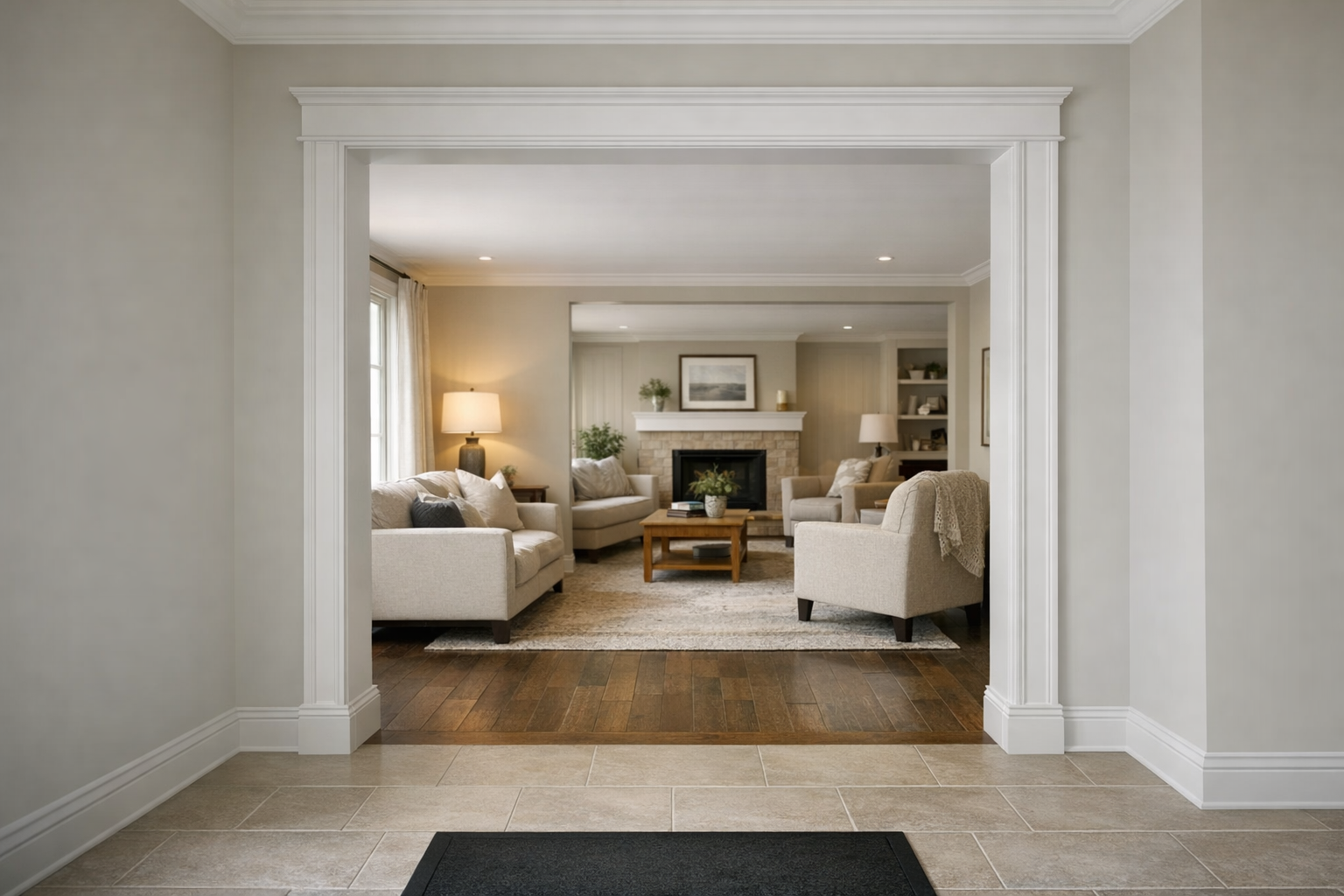
This matters because entryways are often small, so the view beyond them does a lot of design work. If the opening into the next room is trimmed, guests see a finished frame instead of a raw-looking gap in the wall. Simple flat stock gives the opening a clean outline and works well in modern, minimalist, or casual homes. It is also a good choice when the front door casing is already strong and you do not want the passageway trim competing with it.
For a more traditional look, use layered casing with a backband, small bead, or built-up head piece. This adds depth and shadow, which can make a larger foyer or formal dining-room opening feel more architectural. The tradeoff is visual weight: if the opening is narrow, close to another doorway, or squeezed beside a stair rail, a heavy profile can make the wall feel busy.
A good rule is to match nearby door casing when the entry has several openings in view and you want a consistent rhythm. Choose a simplified version when the opening is extra wide, arched, or directly across from decorative front-door trim. That way the transition feels polished without making every edge shout for attention.
Add Decorative Wall Moulding Where Blank Walls Need Structure
A blank wall beside the door, along the stairs, or across from the entry can handle more than paint if the rest of the trim already has some presence. Decorative wall moulding adds shallow lines directly to the wall, so the surface starts to read like part of the architecture instead of leftover space.
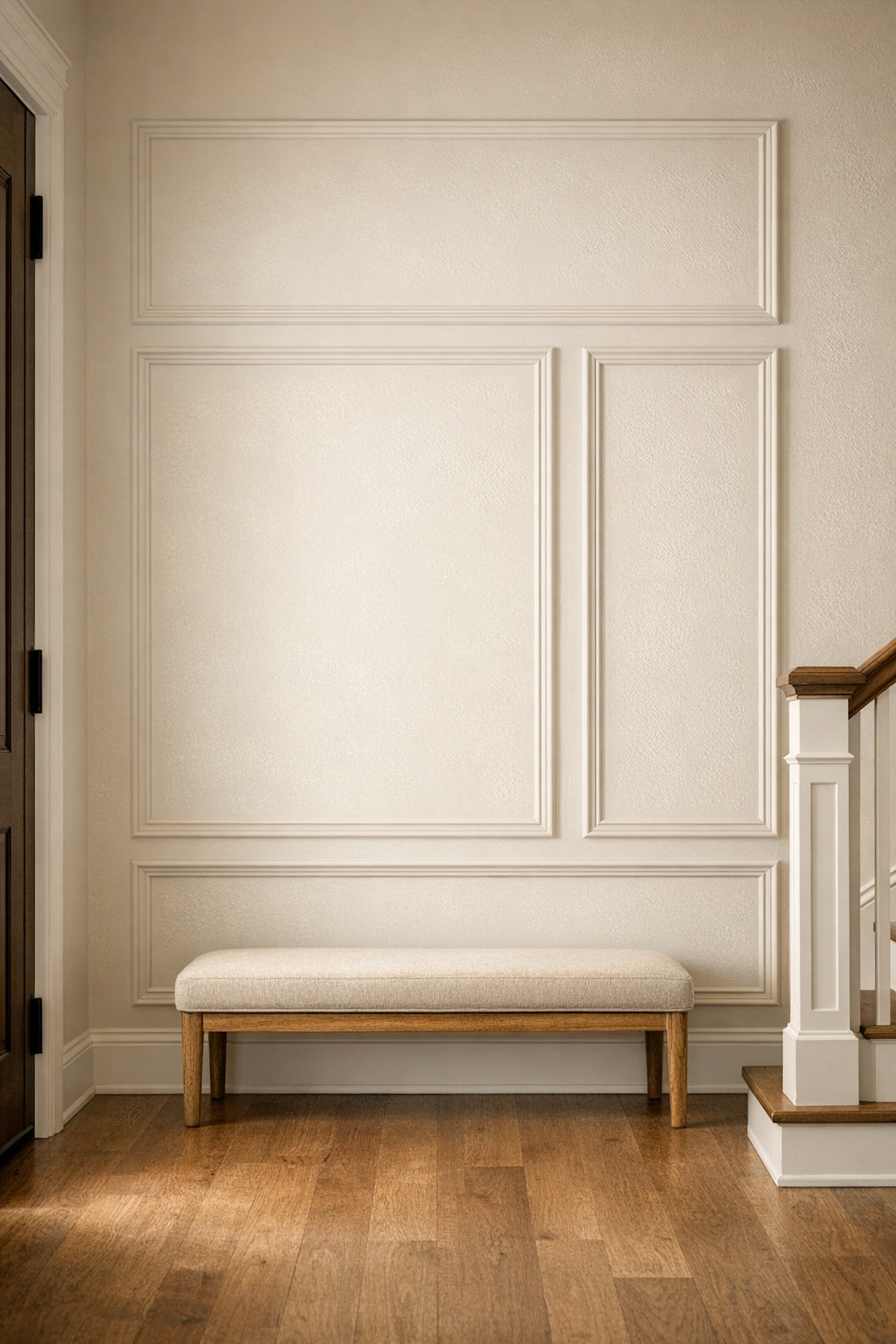
Picture frame moulding is the easiest version to recognize: thin trim pieces form rectangles on the wall, much like empty frames. It works especially well on a single blank wall near the front door because it gives that wall a focal point without adding furniture or taking up floor space. Keep the boxes generous rather than tiny; a few larger rectangles usually look calmer than a grid of small ones in a compact foyer.
Panel moulding is similar, but it often feels a little more formal because the rectangles are arranged as a full wall composition. A panel moulding entryway can look beautiful in a two-story foyer, on a tall stair wall, or around a landing where there is enough height for the pattern to breathe. Taller vertical panels draw the eye upward, which can help a lower wall feel less squat, while oversized panels can quiet a large, busy wall by organizing it into fewer shapes.
Shadow box layouts use applied moulding to create repeated "boxes" with clear spacing between them. The moulding sits on top of the drywall rather than being recessed, so the effect comes from raised edges and the shadows they cast. In a narrow hall-style foyer, use fewer boxes with slim profiles; too many outlines can make the walls feel chopped up. In a larger entry, a more even rhythm can connect the door wall, stair wall, and passageway without making every surface compete.
The best test is whether the spacing looks deliberate from the doorway. If the boxes crowd light switches, squeeze around vents, or stop awkwardly near a corner, simplify the layout. Strong wall moulding should make the entry feel composed at a glance, not like a puzzle fitted around obstacles.
Use Wainscoting, Chair Rail, or Board and Batten for a More Grounded Entry
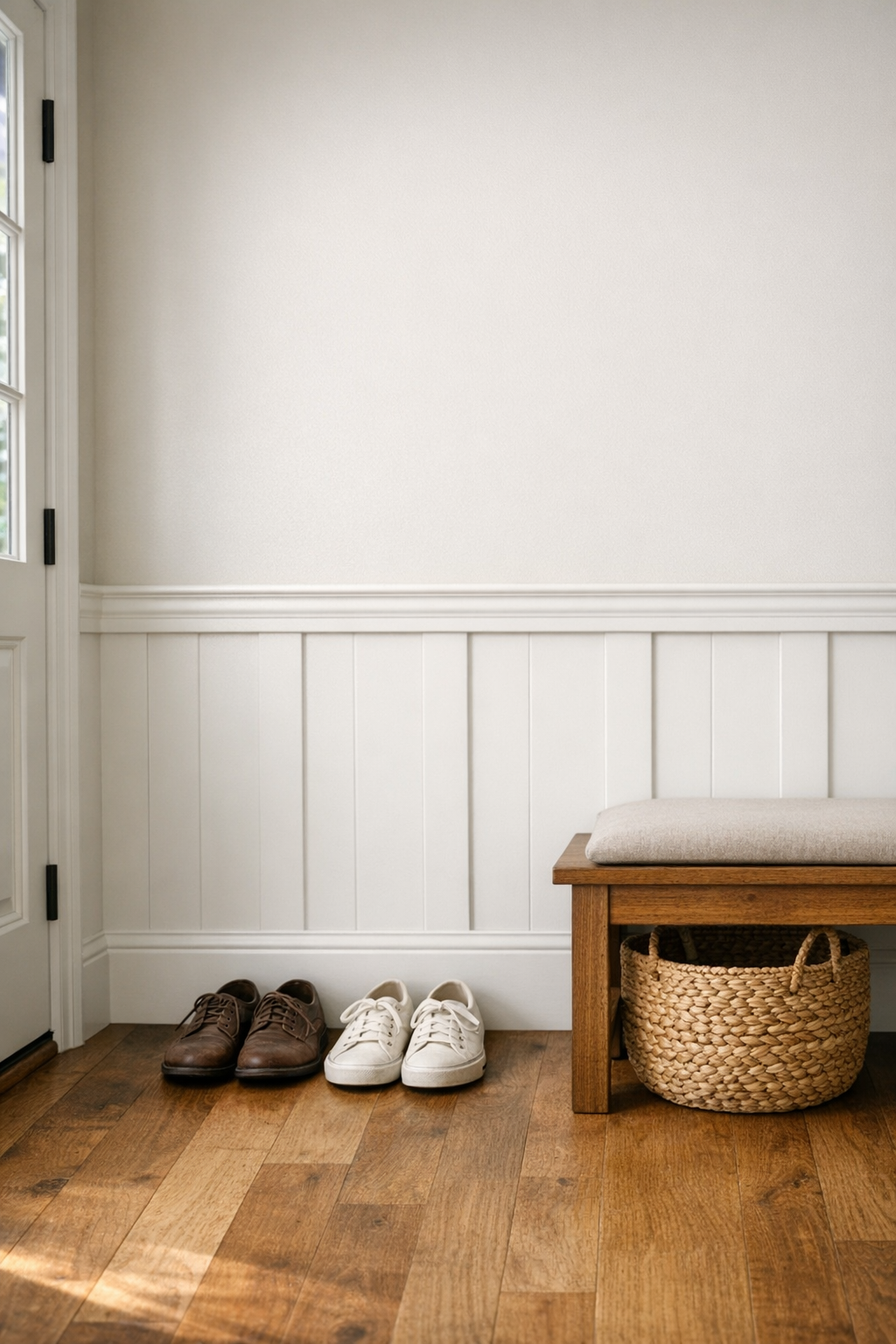
Where a wall gets brushed by bags, shoes, and daily traffic, a mid-wall treatment can make the entry feel sturdier instead of just decorated. Wainscoting is the broad category: trim and panels applied to the lower portion of the wall so the bottom half has more visual weight. In an entry, that "grounded" look is useful because it keeps the room from feeling like tall blank drywall sitting on a thin edge.
Classic wainscoting ideas usually lean more formal, especially raised or recessed panels with crisp rails and stiles. They suit traditional, colonial, and transitional entries where the door casing and nearby openings already have some detail. The takeaway: choose this route when you want the foyer to feel dressed and architectural, but keep the panel sizes calm in a small entry so the wall does not look busy.
A chair rail entryway is a lighter version. The chair rail is the horizontal trim line; below it, you can use paint, simple panel moulding, beadboard, or flat panels to create separation. This works well when you want definition without committing to a full paneled wall. It can feel classic with raised lower panels, cottage-like with beadboard, or transitional with a clean painted lower section.
Board and batten has a different rhythm. Instead of formal rectangles, it uses vertical battens over a flat wall or panel surface, creating clean up-and-down lines. That makes it a natural fit for craftsman, farmhouse, casual transitional, and even modern entries when the battens are slim, evenly spaced, and painted the same color as the wall. Compared with raised panels, board and batten feels more structured than ornate.
Height changes the whole mood. A lower one-third treatment feels traditional and easy to live with; a taller two-thirds version feels more dramatic and can make a narrow entry feel wrapped and intentional. A full-height board and batten accent wall works best on one clear wall, not every surface, because the vertical lines can quickly become too much in a tight foyer.
Make Baseboards Feel Like Part of the Design
Sometimes the quietest trim line is the one that makes everything above it look more deliberate. Entryway baseboards create the bottom edge of the room, covering the transition between wall and floor while giving the eye a clean stopping point. In a small foyer where picture-frame moulding or full wainscoting would feel crowded, upgrading the baseboard can be enough to make the space feel finished.
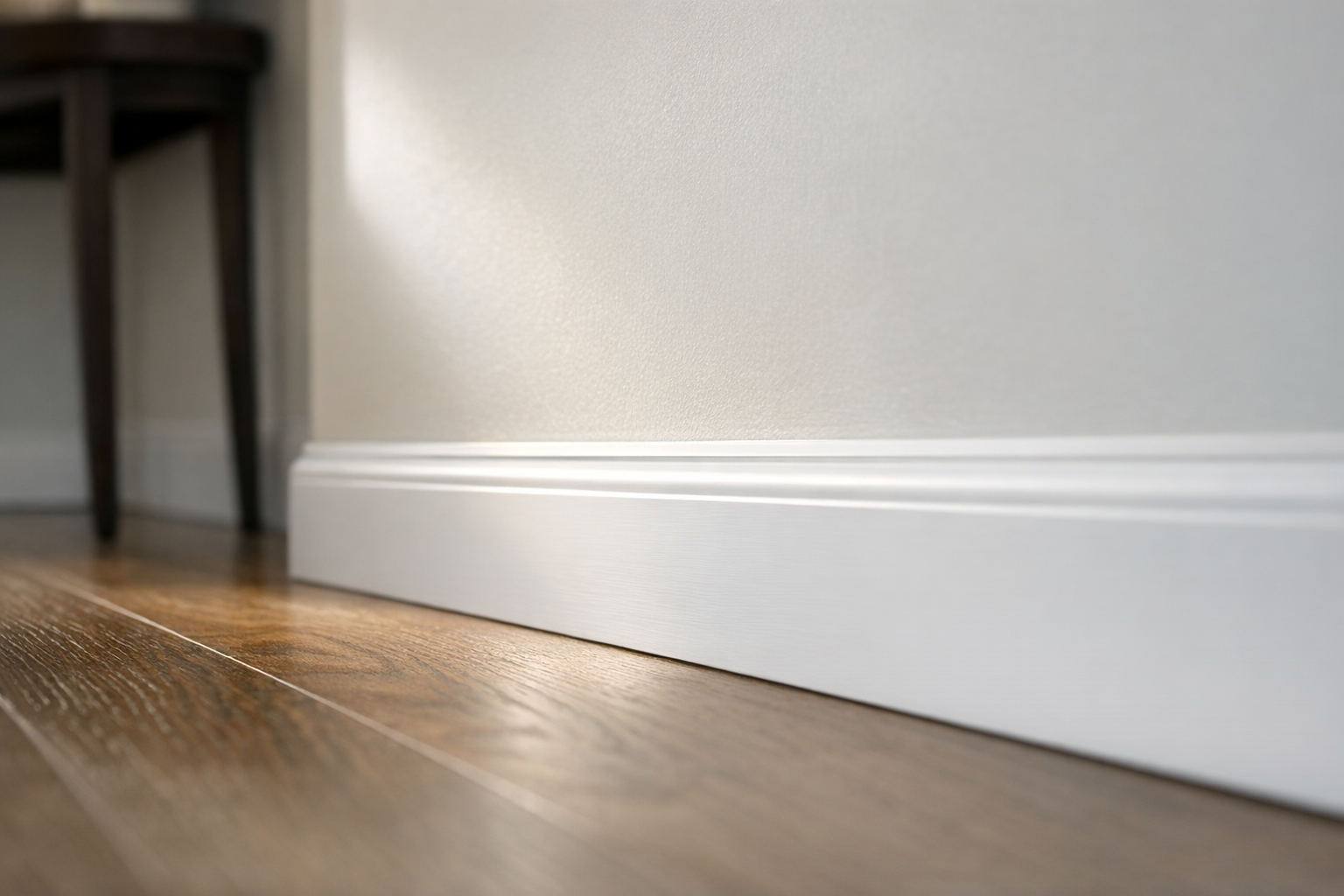
Taller baseboards add visual weight near the floor, which works well when the front door casing, passage trim, or stair trim already has some substance. A flat board with a small eased edge feels clean and modern; a more shaped profile feels traditional. The tradeoff is proportion: in a narrow entry or a room with low ceilings, very tall or ornate baseboards can make the wall feel shorter and heavier than it is.
A base cap is a small moulding added along the top of a plain baseboard. It is useful when the existing board is sound but too simple, because it gives the base a more finished silhouette without replacing everything. Shoe moulding sits at the floor line and helps soften small gaps where flooring meets the baseboard. For a neat result, keep these profiles related to the nearby casing: simple with simple, detailed with detailed. Paint-grade trim is especially forgiving here because the baseboard, cap, and shoe can read as one continuous piece once painted.
Consider Crown Moulding When the Ceiling Can Support It
At the top of the room, the question is not "Should every entry have crown?" but "Does the ceiling line need a finish?" Crown moulding bridges the wall and ceiling, so it works best in a defined foyer where the entry reads as its own small room rather than just the first few feet of a hallway. In that setting, it can make the space feel capped and complete, especially when the front door casing, cased openings, and baseboards already have a traditional or transitional profile.
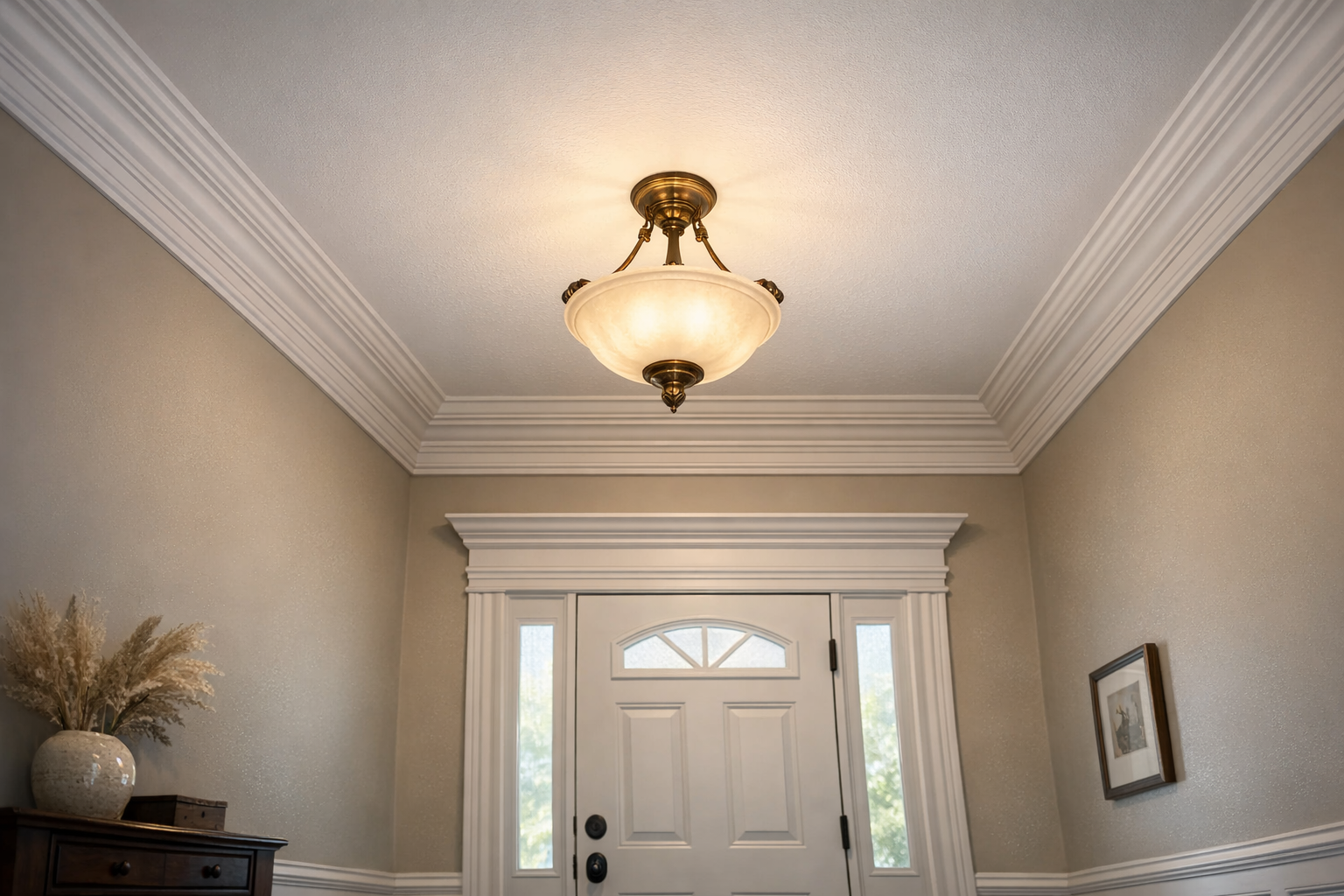
Scale matters more here than formality. A taller entry can usually handle foyer crown moulding with a little projection and shadow, while a compact entry with modest ceiling height may look better with no crown at all. If the profile is too tall or too ornate, the ceiling can feel visually pushed down, which is the opposite of the open, welcoming effect most entries need.
A simple cove is the lighter option. It has a smooth, curved shape rather than a layered, carved look, so it softens the ceiling edge without announcing itself. That makes it useful in homes that lean modern, minimal, or casual. The takeaway: match the amount of detail overhead to the casing below and the rooms nearby. If the adjoining living room has substantial crown, carrying a related profile into the entry can feel cohesive. If the rest of the house uses clean flat trim, a heavy crown may feel like it belongs to a different home.
Choose Profiles, Color, and Finish So the Entry Connects to the Home
The easiest way to make trim feel collected instead of pieced together is to pick a "family" of shapes before picking individual pieces. Flat, square-edged profiles read cleaner and more modern; eased edges feel casual and transitional; layered curves, beads, and backbands lean more traditional. The goal is not to make every board identical, but to make the front door casing, passage openings, baseboards, wall moulding, and any crown look like they belong to the same house.
Thickness matters just as much as style. A chunky front door surround beside thin baseboards can look top-heavy, while delicate wall panels next to oversized Craftsman casing can feel under-scaled. A good signal is a repeated visual weight: substantial casing can pair with taller baseboards, while slim casing usually wants simpler base caps and lighter panel moulding. This is where entryway trim ideas succeed or fall apart, the pieces need to relate across the whole first sightline.
Color and finish decide whether the trim blends in or becomes a feature. Paint-grade trim is designed to be painted, so it gives you the most flexibility if you want crisp white, soft greige, deep charcoal, or a tone-on-tone wall treatment. Stain-grade wood is chosen for visible grain and warmth, so it works best when the entry connects to other wood elements, such as stairs, flooring, interior doors, or built-ins. Mixing painted trim with stained wood can look intentional, but only if one finish clearly leads and the other supports it.
Also be honest about precision. Simple casing swaps, base cap additions, and straightforward shoe moulding are usually less fussy than built-up headers, full panel layouts, or stain-grade work where every joint and grain change is more visible. For interior trim installation, the design takeaway is simple: the more layered, symmetrical, or natural-wood the treatment is, the less forgiving it will be. If the entry has uneven walls, tight corners, or several openings close together, a cleaner profile may actually look more polished than an elaborate one forced into a difficult space.
Start With the Trim That Shapes the First Sightline
Instead of planning every trim upgrade at once, stand at the open door and rank what your eye meets first. If the door surround feels thin, start there. If the view leads straight through a plain opening, clean up that frame. If the wall opposite the entry looks empty, a restrained panel layout may do more than another piece of furniture. In a compact entry, even a modest baseboard upgrade can create a sharper edge without crowding the space.
Build outward only when each layer earns its place. Front door casing and visible passage trim usually carry the first impression; wall moulding and baseboards refine it; crown moulding is optional and works best when the foyer is defined enough for a finished ceiling line. The strongest entryway trim ideas are not the most elaborate ones, they are the ones scaled to the room, connected to the home's style, and edited enough to feel intentional the second someone walks in.