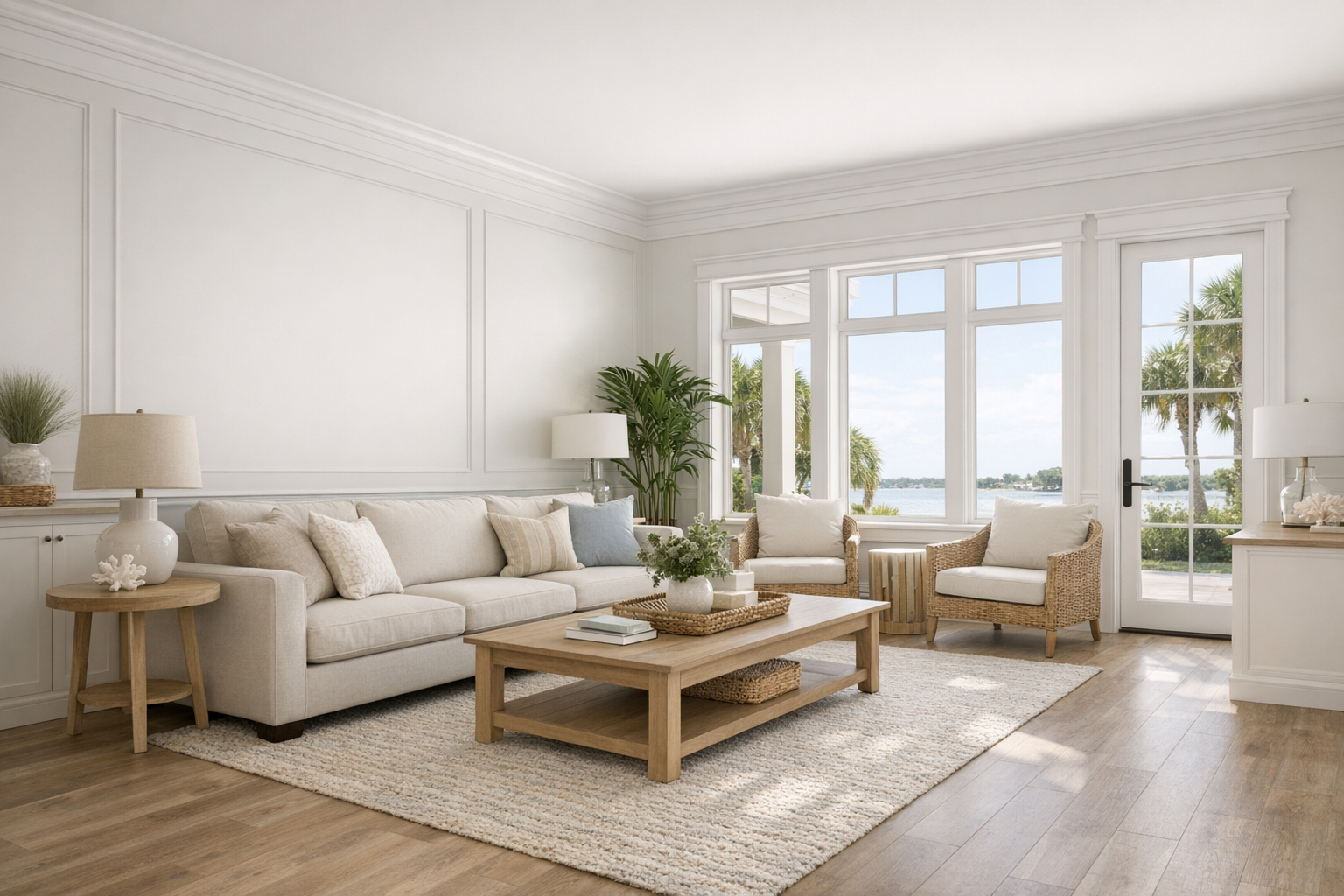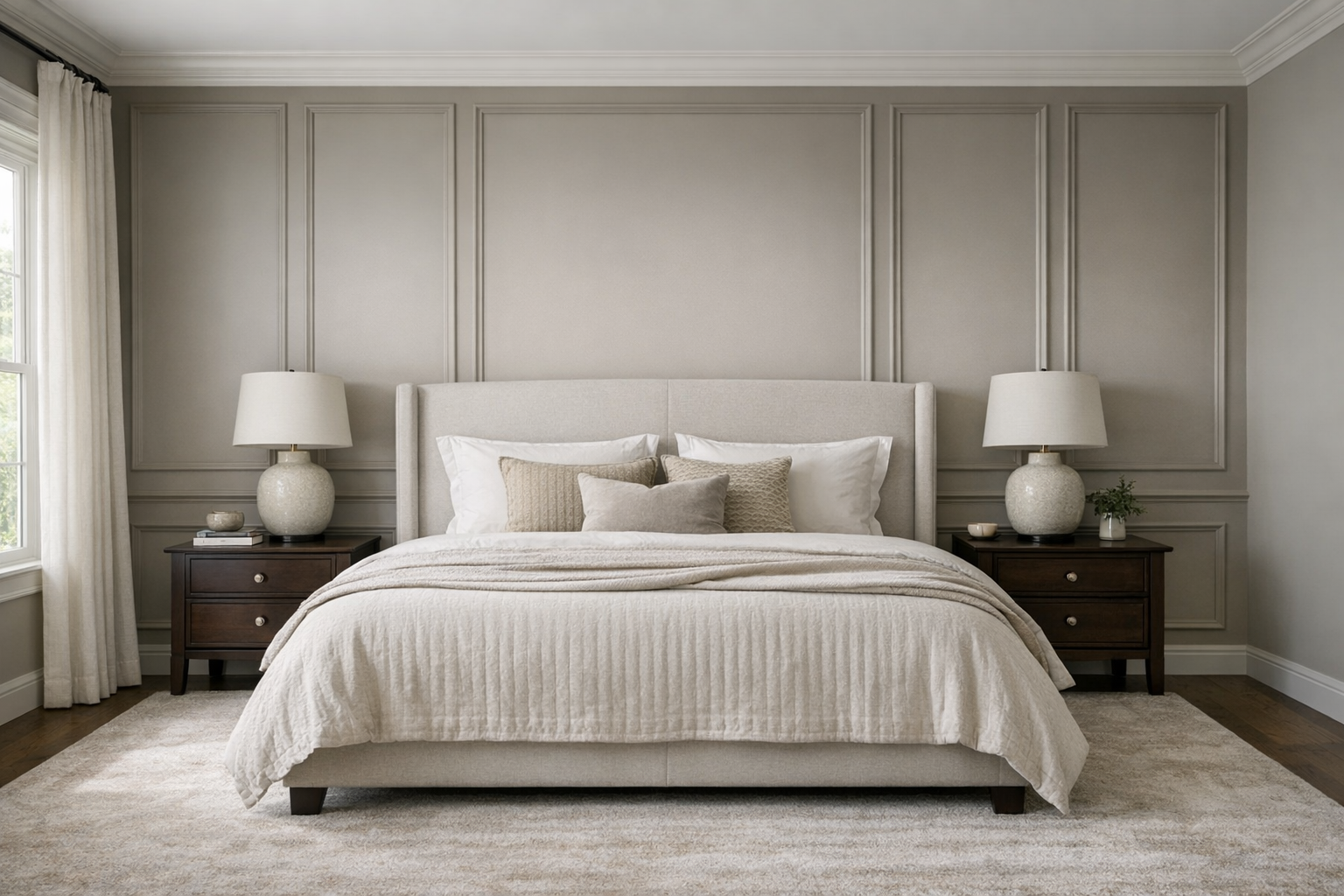
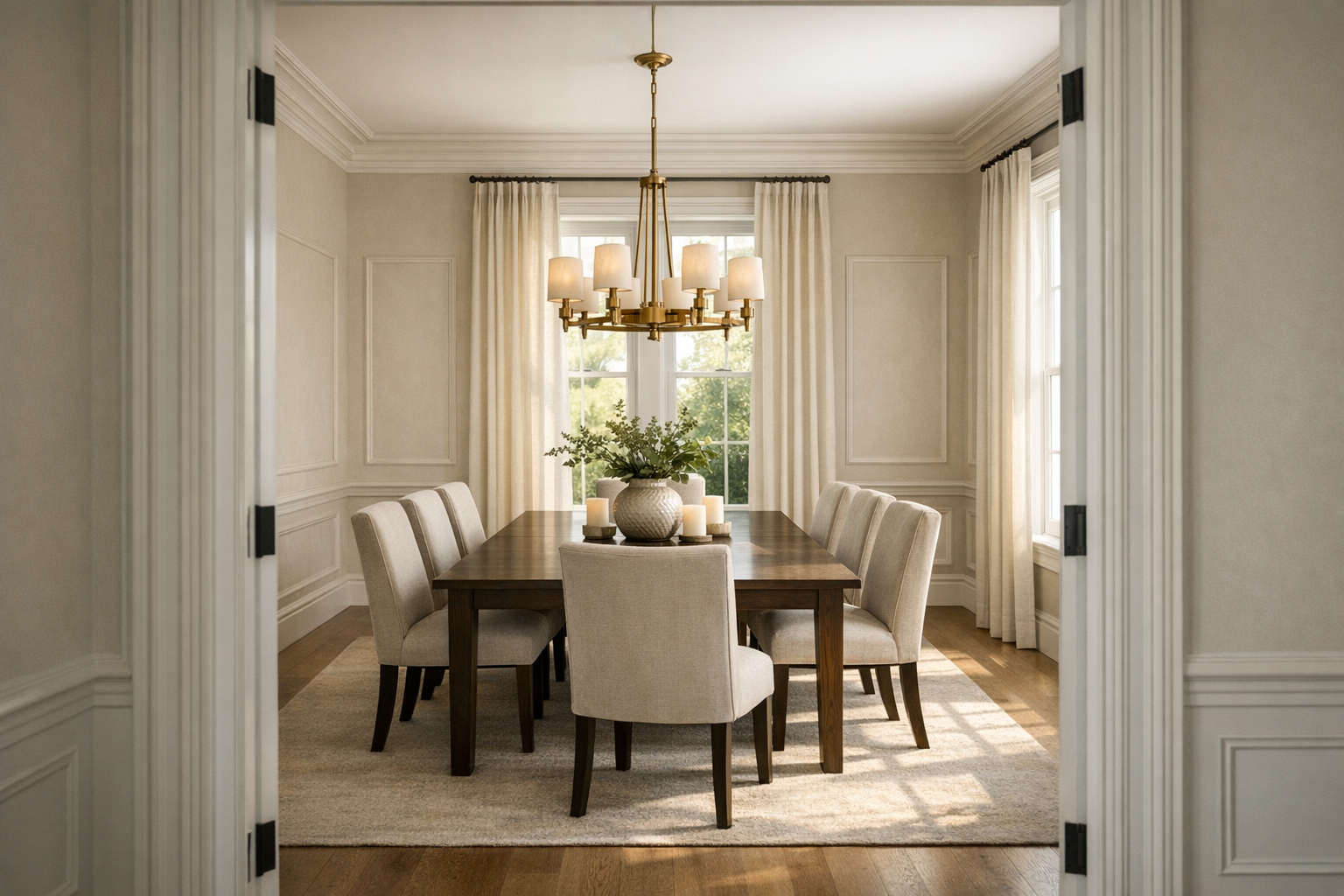

The most useful dining room trim ideas start with a simple question: what should the room feel like before anyone notices the moulding? Trim can make plain walls feel more architectural, but the polished effect usually comes from hierarchy, not from covering every surface. One main gesture, supported by quieter details, gives the room structure while still leaving space for the table, chairs, lighting, artwork, and wall color to breathe.
That is the difference between elegant dining room trim and trim that feels busy. Proportion controls how heavy the detail appears. Alignment keeps panels, rails, and openings from looking random. Finish decides whether the trim reads as contrast, texture, or a subtle shadow line. Negative space matters just as much: a clean stretch of wall around moulding can make a simple profile look intentional, while too many stacked details can flatten the room into visual noise.
Think of the options as different levels of presence. A chair rail is a single horizontal band with a practical wall-protection history, so it adds quiet structure. Crown, baseboards, and casing frame the room without requiring full wall panels. Layered combinations can work beautifully, but they are best suited to spaces with enough size, ceiling height, or traditional character to carry the extra detail.
Start With Scale: How Much Trim Can the Room Actually Carry?
Before choosing a profile, look at how much visual weight the room can absorb. Trim scale is the relationship between the moulding and everything around it: ceiling height, wall width, openings, baseboards, furniture, and lighting. A tall, open dining room can usually carry layered trim more comfortably than a compact breakfast-style dining area, where the same treatment may feel crowded.
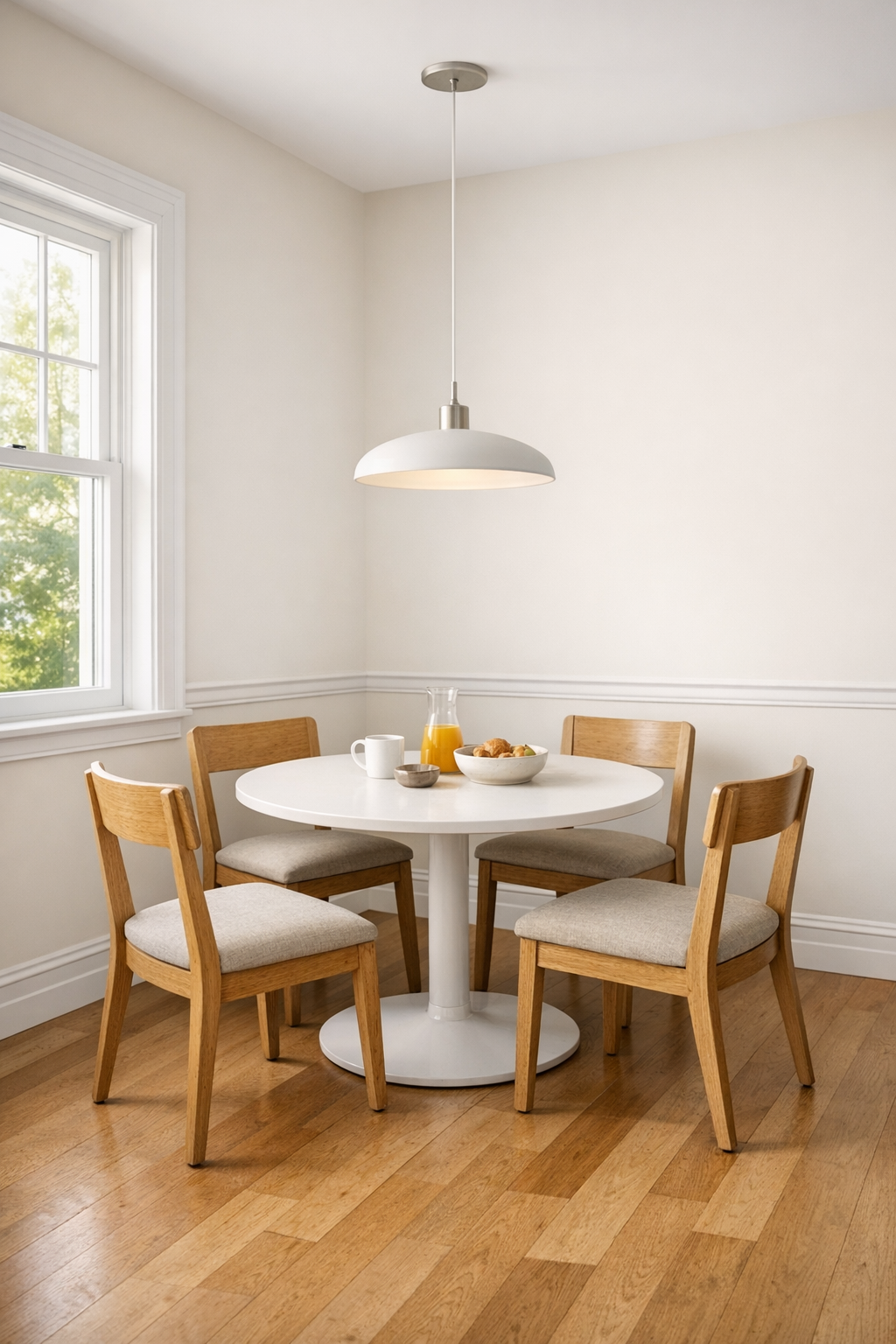
- Ceiling height changes the vertical balance. Higher ceilings give chair rails, wainscoting, crown, and full-wall panels more room to breathe. Lower ceilings usually look better with simpler profiles, lower-contrast finishes, or one horizontal detail instead of stacked trim from floor to ceiling.
- Wall length affects panel rhythm. Long, uninterrupted walls can handle repeated rectangles or larger decorative wall moulding. Short walls broken up by doors, windows, or built-ins need more restraint because narrow panels and crowded corners make the layout look forced rather than intentional.
- Baseboards and casing set the room's starting point. Baseboards frame the floor line, while door and window casing frame openings. If those pieces are slim and plain, very deep wall moulding can overpower them; if they already have substance, a quieter wall treatment may be enough.
- Furniture mass matters. A heavy table, tall china cabinet, large buffet, or dramatic chandelier already gives the room strong focal points. In that setting, cleaner panel spacing and fewer trim layers keep the walls from competing with the pieces that should lead the room.
A good test is to scan the wall proportions before imagining the finished paint color. Do the panels have comfortable margins around outlets, corners, artwork, and sconces? Does the moulding line up with windows, chair backs, or the top of a buffet? Consistent alignment makes trim look built-in; random breaks make even expensive profiles feel busy.
The warning signs are usually visible early: skinny panels squeezed beside a doorway, crown that looks heavier than the window casing, wall moulding that leaves no place for art, or profiles so ornate that the dining table feels like it is sitting inside a showroom display. When in doubt, wider spacing and simpler profiles tend to read more current, more relaxed, and less formal than dense grids with multiple raised edges.
Use a Chair Rail When You Want Quiet Structure, Not a Formal Statement
If chair backs, a buffet, or window sills already create a strong lower zone, a chair rail can turn that line into a deliberate design feature. It is a narrow moulding band that runs around the room, with roots in protecting walls from chair backs, which is why it feels especially natural in a dining room. As a trim move, it is one of the lighter options: enough definition to give the wall structure, but not as visually weighty as wainscoting or full-wall paneling.
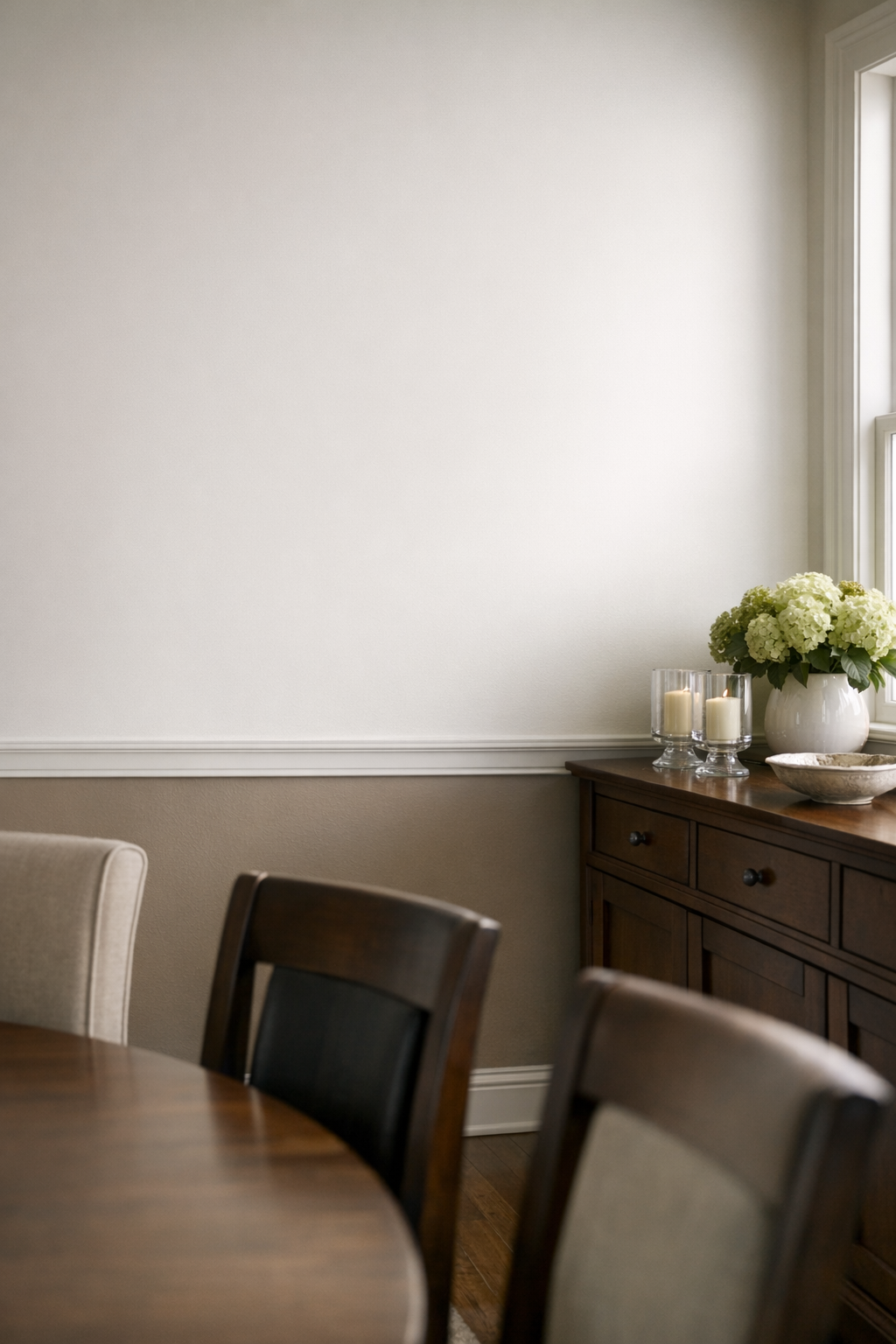
Rail height is the detail that decides whether the chair rail looks intentional or tacked on. Placing it blindly at the exact middle of the wall often splits the room into two equal blocks, which can feel awkward rather than graceful. A better approach is to let the room lead: the rail should relate to chair backs, window sills, buffet height, or the lower third of the wall so it feels connected to the dining furniture and architecture.
The finish changes the mood. Painting the rail the same color as the wall gives you a subtle shadow line, which works well in casual or smaller dining rooms. Two-tone walls make the rail more visible: a deeper color below and a softer color above can feel grounded, while a sharp dark-and-bright contrast can make the band look dated or overly decorative if the rest of the room is quiet.
For chair rail installation, the design decision matters more than the drama of the profile. A slim or moderately shaped rail usually looks cleaner than a thick, bulky one, especially if the baseboards and casing are simple. The weak signs are easy to spot: a rail that crashes into window trim, cuts awkwardly behind chair backs, or sits so high that the lower wall feels heavy. When the line feels calm from every seat at the table, it is doing enough.
Choose Picture Frame Moulding for Elegant Walls That Still Feel Light
Picture frame moulding is the next step up when a single rail feels too spare but full wainscoting would be too much. Instead of building out the lower wall with panels, it uses applied rectangular frames on the wall surface, creating rhythm through repeated shapes, slim shadow lines, and clean alignment. The practical takeaway: you get architectural detail without adding the visual bulk of raised panels.
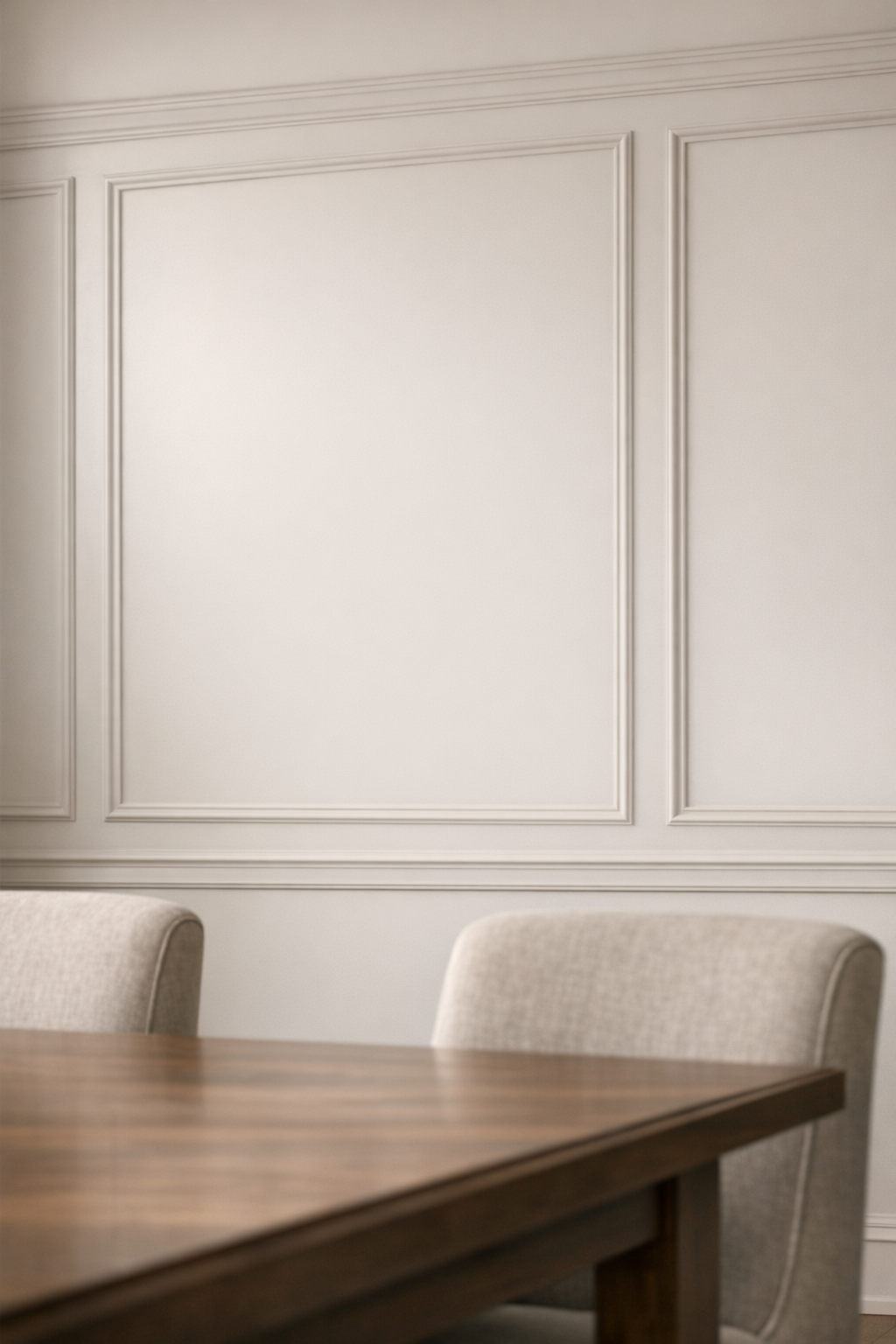
This treatment works especially well on long blank dining room walls because the frames give the eye a pattern to follow. A wide center panel behind a buffet, two balanced panels flanking a doorway, or a taller panel centered under a sconce can make the wall feel planned rather than filled. The strongest layouts usually relate to something already in the room: window casing, door openings, a sideboard, artwork, or the centerline of the table.
The mood depends on scale. In a casual dining area, keep the boxes larger, the moulding slimmer, and the spacing generous so the wall still feels relaxed. In a transitional room, picture frame moulding can run from baseboard to near crown height with simple, evenly spaced panels. In a more formal dining room with enough height and wall length, smaller stacked panels can work, but only if the room has the proportions to carry the added detail.
A good layout has breathing room at the corners, above baseboards, below crown, and around openings. A weak one gives itself away with skinny leftover boxes beside doors, panels that almost touch window trim, or frames that fight the placement of art and sconces. If the wall already has busy wallpaper, oversized artwork, carved furniture, or many openings, simplify the panel count or use box moulding on just one feature wall instead of wrapping the whole room.
Try Dining Room Wainscoting When the Room Can Handle More Architecture
Wainscoting asks more of the room because it turns the lower wall into a built architectural zone, not just a line or a surface pattern. In a dining room, that can be beautiful when the table, chairs, and sideboard need visual grounding. The key distinction is weight: dining room wainscoting feels more permanent and furniture-like than an isolated chair rail or applied wall panel moulding, so it should be treated as the main trim gesture rather than one more layer.
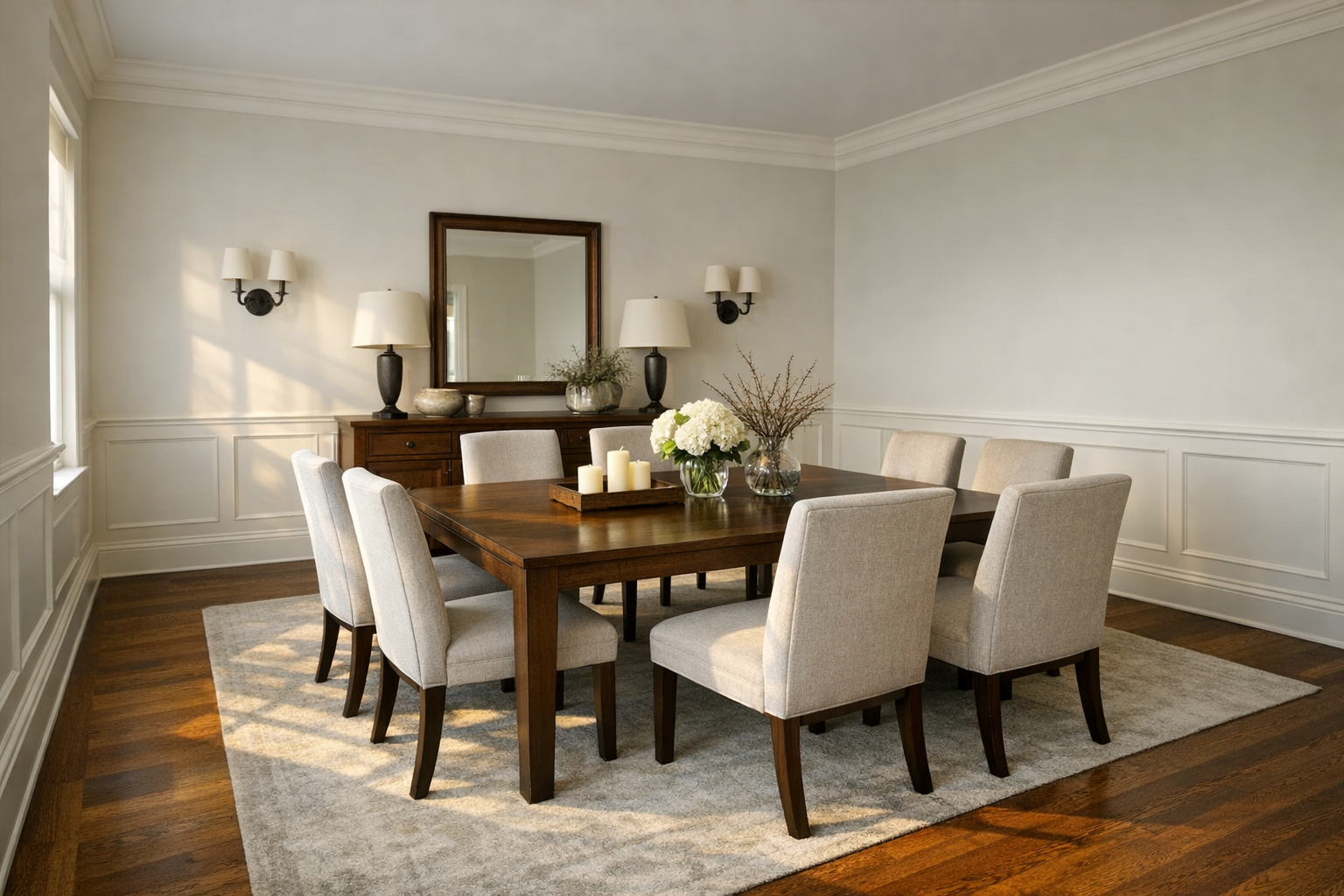
Flat-panel wainscoting is usually the quietest version: recessed or framed panels with simple lines, good for refined traditional, transitional, or modern rooms depending on the profile. Raised-panel wainscoting has more depth and shadow, so it reads more formal and traditional, especially in a formal dining room with taller ceilings. Beadboard uses narrow vertical grooves, which gives a cottage, farmhouse, or relaxed breakfast-room feeling. Board-and-batten uses wider vertical boards or battens, creating a cleaner, more linear rhythm that can feel casual, modern, or slightly craftsman depending on spacing and paint color.
The best rooms for dining room wainscoting usually have enough ceiling height and wall length for the lower treatment to breathe. Strong baseboards help it look anchored, while simpler upper walls keep the room from feeling divided into too many competing zones. A good signal is that the wainscoting height relates comfortably to the backs of the chairs, the sideboard, and the lower edge of windows instead of slicing awkwardly through them.
What makes it feel overdone is rarely the idea of wainscoting itself; it is the stack-up. Very tall panels in a compact room can make the walls feel short. Ornate raised profiles under busy wallpaper can turn every surface into a focal point. Too many rails, caps, and shadow lines can compete with window casing and door trim. For a calmer result, choose one wainscoting style, keep the profiles consistent with the rest of the room, and let the upper wall stay quieter.
Upgrade Crown, Baseboards, and Casing Before Adding More Wall Detail
Sometimes the sharper move is to clean up the room's edges before adding another pattern to the wall. Baseboards define the floor line, while door and window casing frames the openings; together, they act like the room's outline. When those pieces are thin, mismatched, or visually weak, even beautiful wall moulding can look like it is floating. Strengthening this framing layer can make the dining room feel tailored with much less visual activity than a full panel layout.
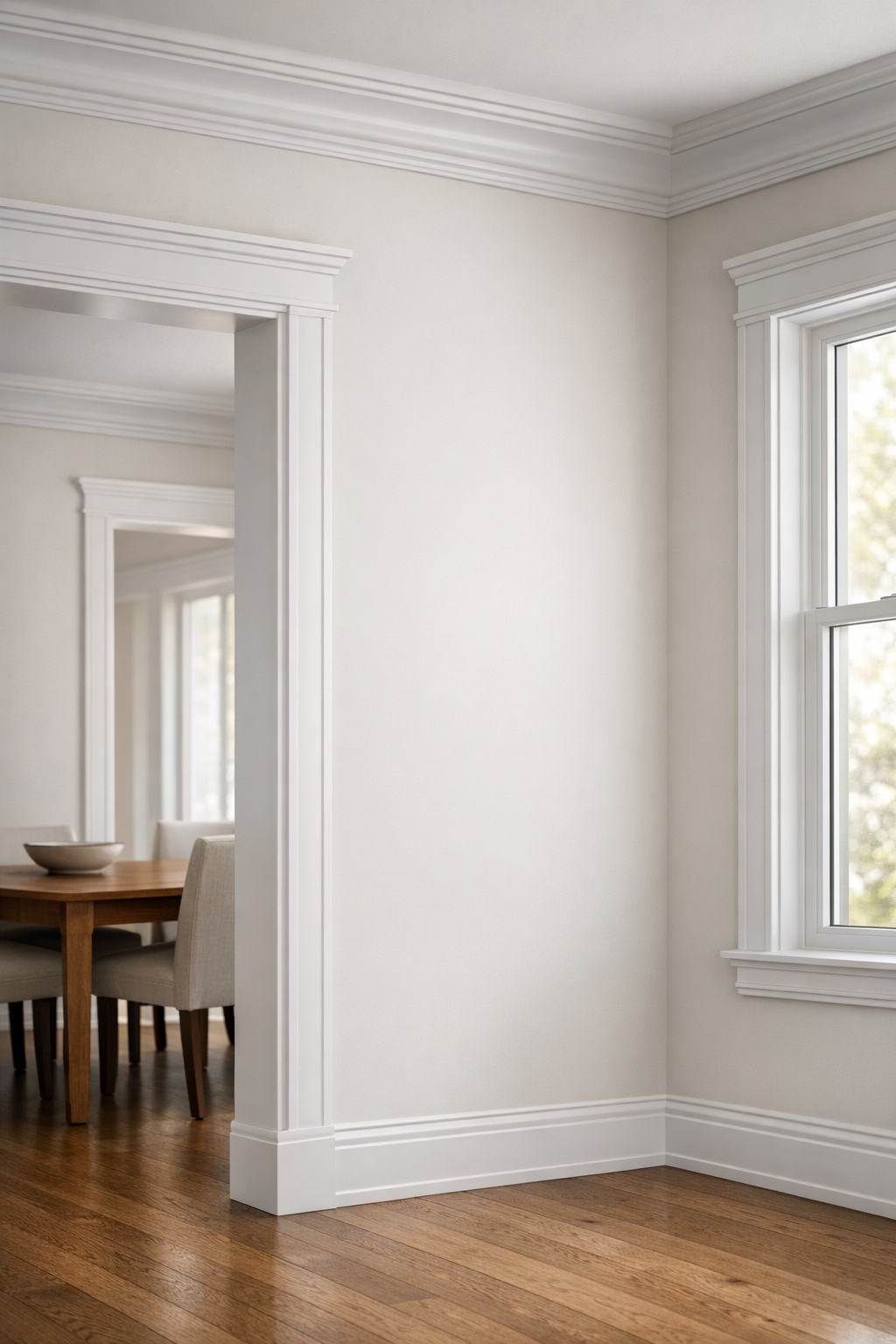
Dining room crown moulding works best when the ceiling has enough height for a top edge to feel intentional rather than compressed. A simple crown is a good fit for traditional or transitional rooms, or for a plain dining room that needs a clean transition where the wall meets the ceiling. The practical difference is subtle but important: crown finishes the upper boundary of the room, while wall panels create pattern across the wall surface.
Crown can also be the right detail to skip. In a very low-ceilinged dining area, a strongly minimalist room, or a space where ceiling beams or a statement light fixture already dominate, another line at the ceiling can feel forced. In those rooms, better baseboards and cleaner casing often give you the finished effect without making the ceiling feel busier or lower.
For a polished foundation, coordinate the trim profiles rather than matching every piece exactly. A taller but plain baseboard can pair well with simple flat casing; a more traditional casing can handle a crown with a small curve or step. What matters is that the thickness, level of detail, and style family feel related. A weak signal is chunky crown over skinny window trim, or ornate door casing beside ultra-flat modern baseboards with no shared language.
The takeaway for this layer of dining room trim ideas is to let perimeter trim do quiet work first. If the room already has chair rail, picture frame moulding, or wainscoting, keep crown, baseboards, and casing simpler so they support the main feature instead of competing with it. If the walls are staying mostly plain, these edge details can become the upgrade on their own.
Use Color and Finish to Keep Trim Elegant Instead of Busy
Paint can either quiet the profile or turn every edge into an outline. White trim is the crisp, classic route: it sharpens chair rails, casing, crown, and panel moulding against colored walls, which can make the room feel more traditional and clearly detailed. The tradeoff is contrast. If the wall treatment already has many boxes, rails, or shadow lines, bright white can make every piece announce itself.
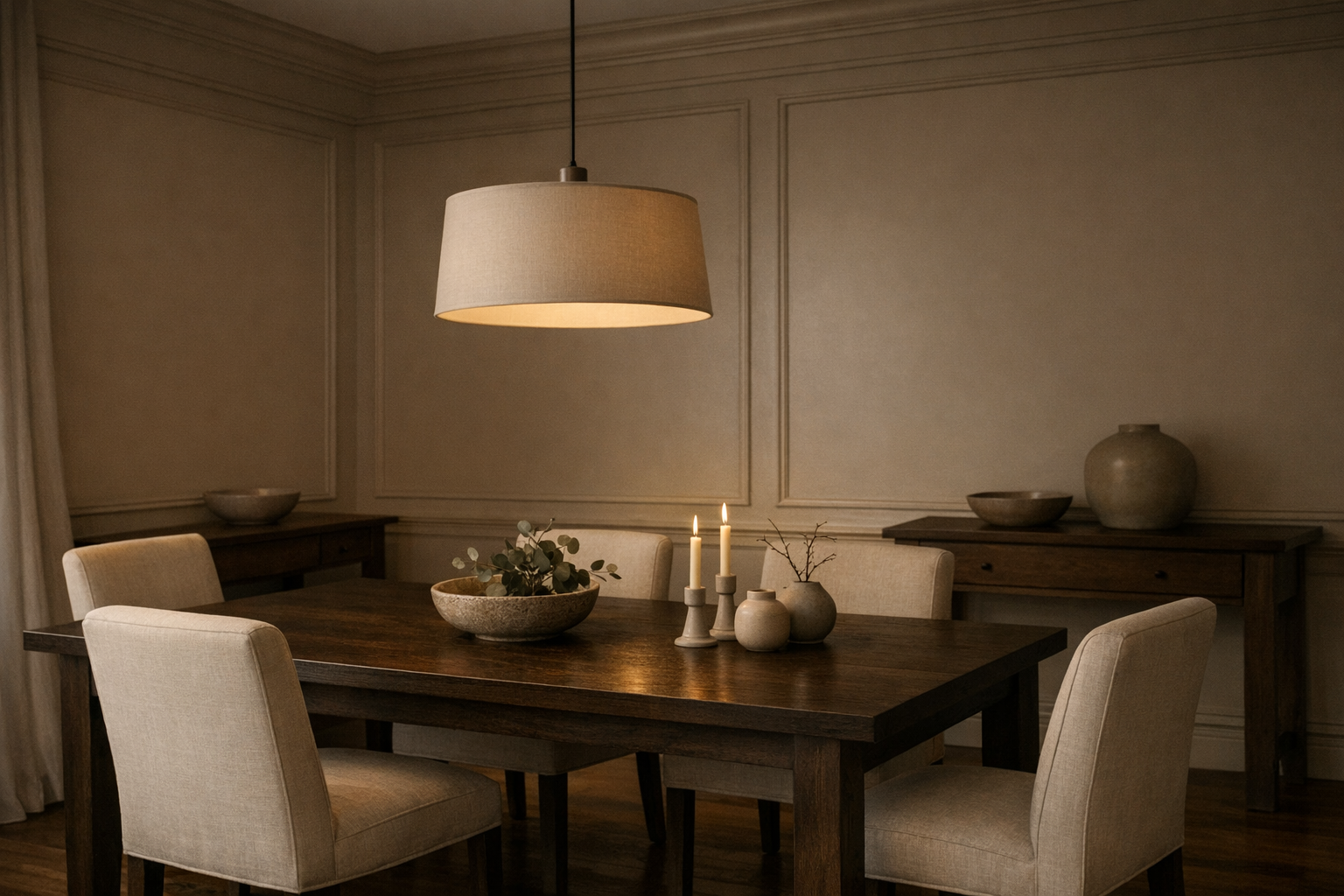
Painting the walls and trim the same color does the opposite. It lets picture frame moulding, wainscoting, or full-wall panels read through shadow rather than strong color contrast, so the effect feels softer, more modern, and less formal. This is especially useful when you want detailed dining room trim ideas to feel architectural, not decorative for its own sake.
Subtle contrast sits between those two choices. Think warm white trim with a pale greige wall, or a slightly deeper lower wall below a chair rail. Two-tone walls can work well when the dividing line has a purpose, but the colors should be close enough that the rail does not become the loudest feature in the room.
Dark trim is the dramatic option. Charcoal, deep green, navy, or espresso-painted moulding can make a dining room feel intimate and tailored, especially in a larger or more traditional space. In a small room, though, high-contrast dark lines around every panel can make the walls feel busier, so it usually works best with simpler profiles and fewer layers.
Stained wood brings a different kind of polish. Stain-grade trim shows the grain rather than hiding it, so it feels warmer and more architectural when it relates to the floor, table, chairs, sideboard, or built-ins. Paint-grade trim is better when you want a cleaner color story or when the profiles need to blend into the wall. For sheen, aim for polished but livable: satin or semi-gloss usually feels refined, while a very glossy finish can look more formal and highlight uneven surfaces.
How to Combine Trim Details Without Overdoing the Room
A useful way to edit the room is to pick an anchor detail first, then decide what is allowed to support it. The anchor is the trim move people notice as the room's architecture: a chair rail, picture frame moulding, wainscoting, or a full-wall panel layout. Supporting details are quieter pieces that finish the composition, such as cleaner baseboards, simple crown, casing that matches the profile, or a controlled paint contrast.
- For a small or casual dining room, keep the combination light: chair rail plus a subtle upper-lower paint shift, or picture frame moulding plus upgraded baseboards. These choices add structure without adding many horizontal breaks or heavy shadow lines, so the walls still feel open around the table.
- For a modern or relaxed room, use flat profiles, same-color wall moulding, clean casing, and little or no crown. The trim still gives the wall depth, but the reduced contrast and simpler edges keep the room from feeling traditionally formal.
- For a larger or more traditional dining room, wainscoting with simple crown can work well, and panel moulding above may also make sense if the profiles are coordinated. The difference is capacity: taller ceilings and longer walls give each layer enough negative space to read separately instead of stacking into visual noise.
The best dining room wall trim ideas usually share alignment. Panel edges should relate to windows, door casing, a sideboard, sconces, or the centerline of the table when possible; random divisions make even expensive moulding look busy. A good signal is that the trim feels planned before furniture is added. A weak signal is a leftover narrow panel squeezed beside every opening.
Use trim scale as the final edit. If the table, chandelier, art, wallpaper, or wall color already has strong presence, choose fewer profiles and wider spacing. If the room is plain and generously sized, one additional supporting detail can give it polish. The simplest principle behind all dining room trim ideas is this: let the trim support the table, lighting, and walls, not compete to become the main event.
Choose Trim That Makes the Room Feel Finished, Not Overworked
The final test is whether the trim still lets the room read clearly from the doorway. If your eye understands the table, light fixture, openings, and wall treatment in one calm pass, the hierarchy is working. If it jumps from rail to panel to crown to casing with no resting space, the room is asking too many details to be important at once.
Use the lightest idea that solves the room's problem. A chair rail gives a horizontal break without much weight. Picture frame moulding adds repeated shape while keeping the wall surface visually light. Dining room wainscoting creates a stronger lower-wall architecture, so it belongs in rooms with enough height and wall length to carry it. Crown, baseboards, and casing finish the edges and may be all a simpler room needs.
For the most balanced dining room trim ideas, make the order of decisions simple: proportions first, main trim gesture second, finish last. Choose one dominant feature, let the supporting profiles share a similar language, and use paint or stain to either soften the detail or make it crisp. The goal is not to prove how much moulding the room can hold; it is to make the architecture feel intentional, appropriately scaled, and quietly complete.