
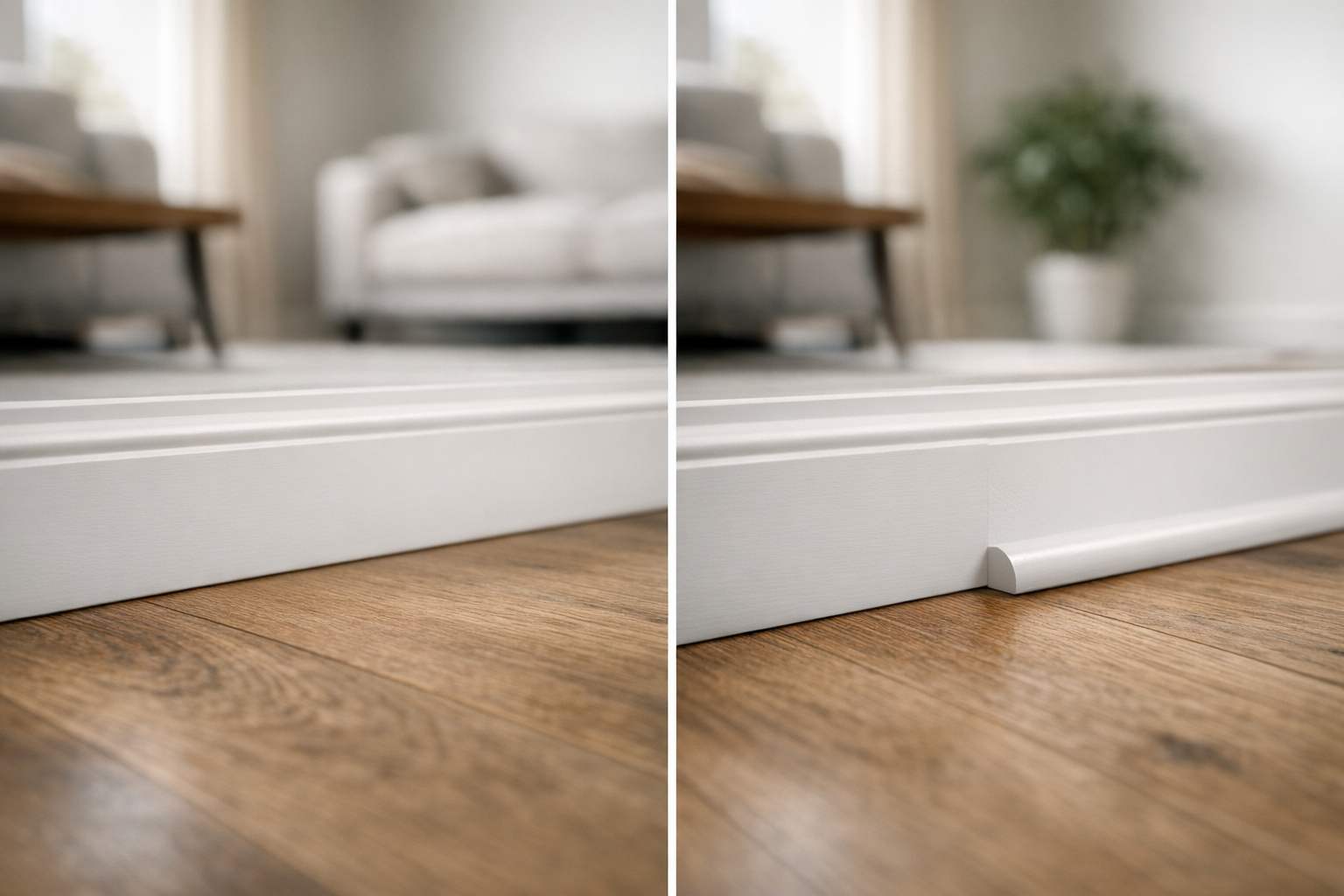

Look at the bottom of the baseboard: if there is a shadow line, small gap, or slightly wavy edge where the floor meets the wall, that is the spot these trim pieces are meant to finish. Both pieces are small strips used at that floor-to-wall joint, but they are not interchangeable in appearance: one can read as a slim, tucked-in detail, while the other can look rounder and more noticeable.
That little joint matters because floors and walls rarely meet in a perfectly straight, perfectly tight line. A trim detail can cover small gaps, soften uneven wall lines, and make the baseboard feel intentionally finished instead of simply stopping above the floor. The tradeoff is visual weight: the more trim you add, the more the eye notices the outline around the room.
There is no universal "best" choice for these floor trim details. The right answer depends on the size of the gap, the shape and height of the baseboard, the room style, the flooring material, moisture exposure, and whether the project allows a cleaner baseboard finishing approach with no added strip at all. This comparison focuses on those practical and visual decisions, not just how the pieces are installed.
What Shoe Moulding and Quarter Round Actually Are
Start by picturing the trim in cross-section, because the shape is the real difference between shoe moulding and quarter round. Shoe moulding, also called base shoe, is usually a slimmer profile that sits tight to the bottom of the baseboard and projects only a modest distance onto the floor. It is often taller than it is deep, which makes it read more like a small vertical extension of the baseboard than a separate rounded bead.
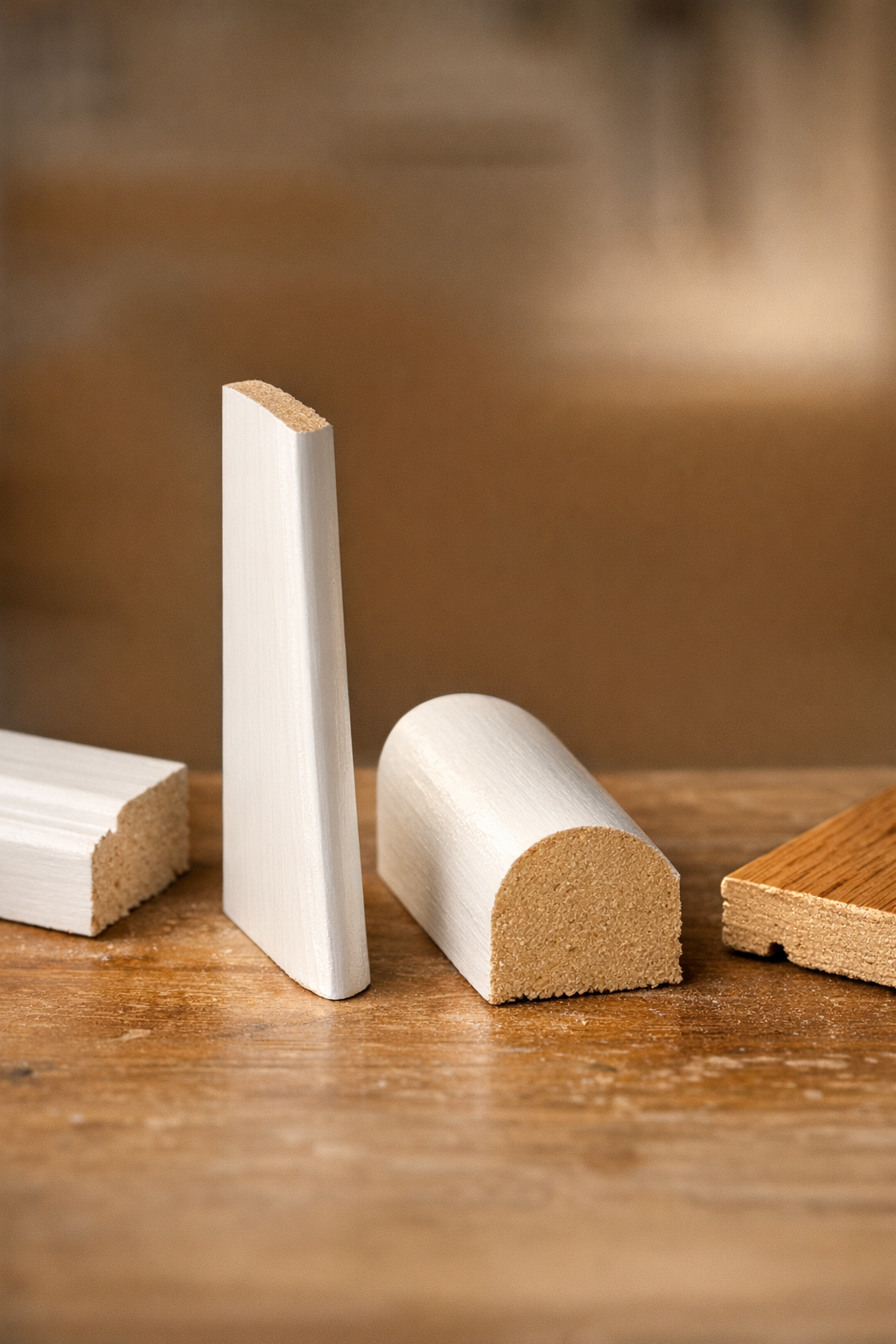
Quarter round is closer to what its name suggests: a true or near quarter-round profile, like one quarter of a circle. Because the curve is fuller and the depth is often similar to the height, it tends to look more rounded from across the room. That extra visual fullness can be useful when the trim needs to cover more at the floor line, but it also makes the detail more noticeable.
Both pieces are installed at the same general location, where the flooring meets the baseboard, and both can conceal a gap or a slightly uneven transition. The practical distinction is how they do it: base shoe usually gives you a neater, tucked-in edge, while quarter round creates a softer, more pronounced curve along the perimeter.
There is also a third option: no small trim at all. In a baseboard-only finish, the baseboard itself meets the flooring cleanly, so the room does not get an added strip at the bottom. That look depends more heavily on the gap, the straightness of the floor line, and how the baseboard is set, because there is no shoe or quarter round piece to hide irregularities. The takeaway is simple: in the shoe moulding vs quarter round decision, you are really comparing slim added trim, fuller rounded trim, and the cleaner but less forgiving baseboard-only approach.
How They Look: Slim and Tailored vs Rounded and Noticeable
Across the room, the biggest difference is visual weight. Shoe moulding tends to disappear more easily because its slimmer face reads as part of the baseboard instead of a separate border. That makes it a strong fit with taller baseboards, flat square-profile baseboards, and rooms where you want the floor line to look finished but not busy.
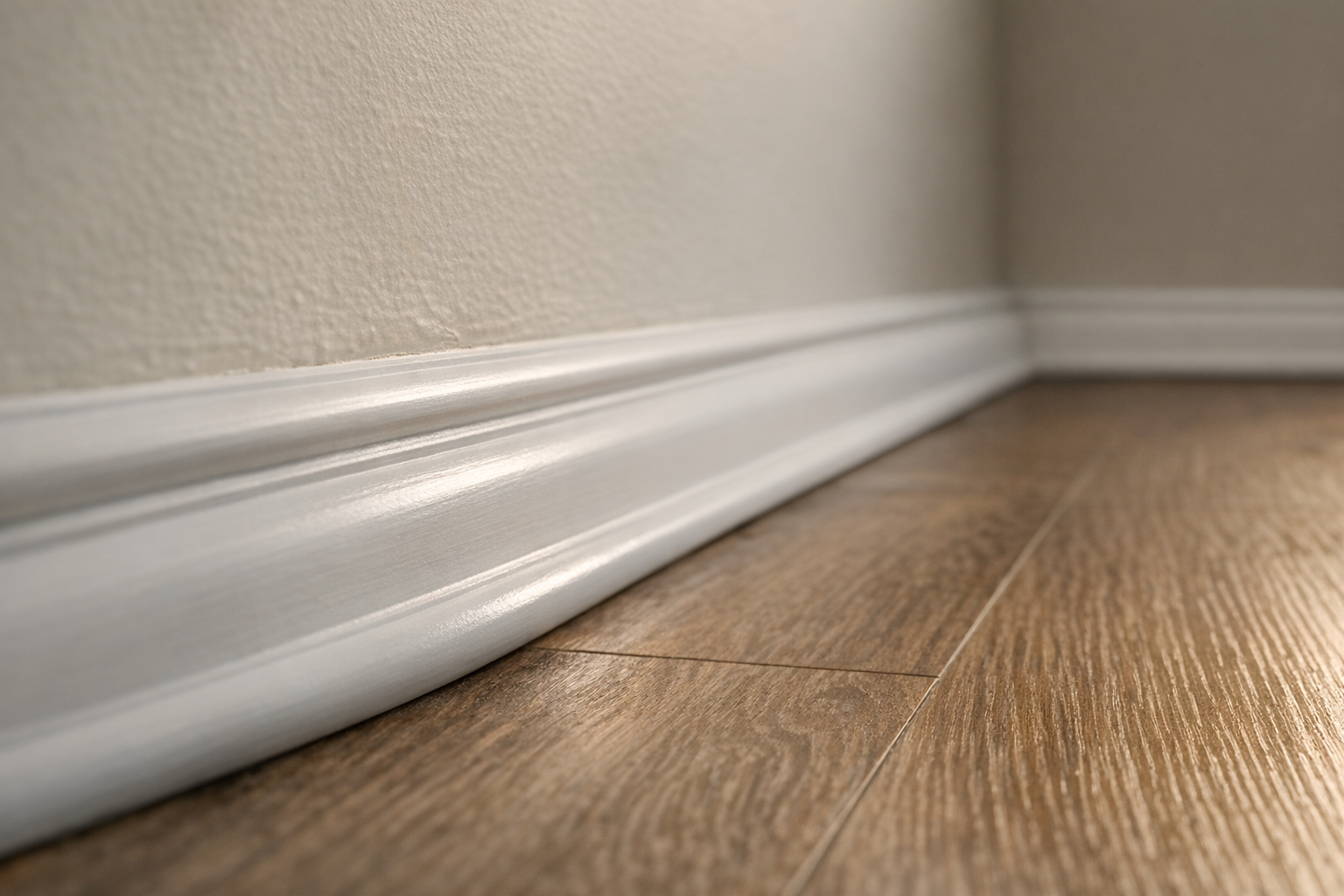
Quarter round asks for a little more attention. Its fuller curve creates a softer, more rounded shadow line, which can look right at home in traditional rooms, older houses with rounded trim details, or spaces where the baseboards already have curves and decorative contours. In those settings, the rounder profile can feel intentional rather than added-on.
Baseboard style is the checkpoint. A tall, simple baseboard usually pairs better with the quieter look of shoe moulding. An ornate or older baseboard may tolerate quarter round better because the extra curve echoes the existing trim language. If the baseboard is short and plain, either added strip can become more noticeable, so the choice should follow the room's style rather than a blanket rule about floor shoe moulding vs quarter round.
Finish color changes the effect, too. Paint-grade trim that matches the baseboard usually blends into one continuous painted edge. Stained wood trim can stand out more, especially if it contrasts with painted baseboards or a lighter floor, so it should look deliberate. And when the floor edge and wall line are clean enough, a baseboard-only finish is often the most minimal option because there is no extra strip competing for attention.
Function: What Each Trim Can Hide at the Floor Line
The practical job starts at the cut edge of the floor. Even a well-installed room can have small spaces where the flooring, wall, and baseboard do not meet in one perfect line, and both trim options are meant to cover that gap or slightly uneven transition so the floor line looks intentional.
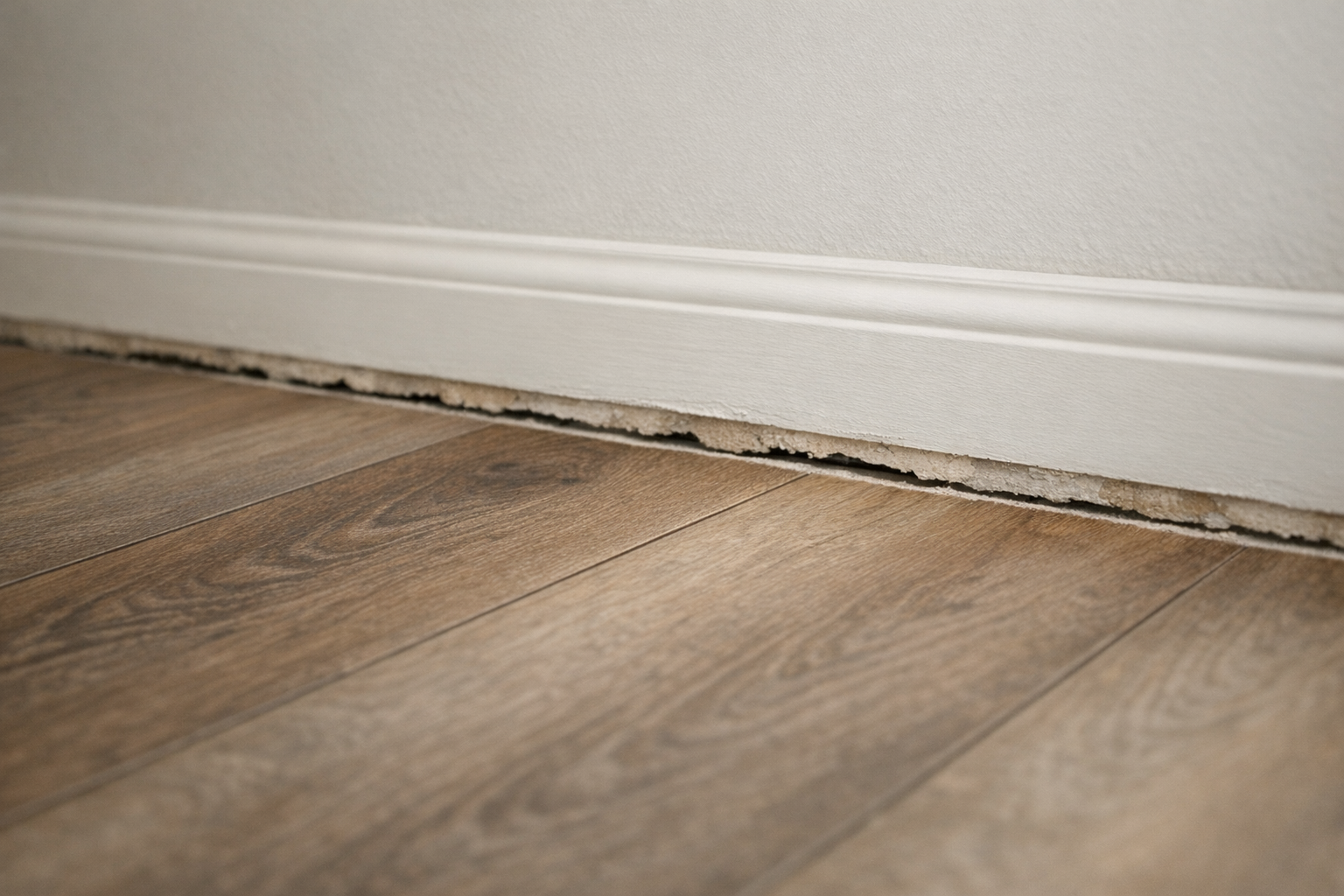
A flooring expansion gap, a slightly wavy wall, or a baseboard that does not sit tight to the floor can all create a shadow at the perimeter. Shoe moulding handles many typical shallow gaps because it sits close to the baseboard and projects just enough over the floor edge to hide the line without adding much bulk.
Quarter round can cover a little more depth because its fuller radius reaches farther out onto the floor. That is the useful distinction in quarter round vs shoe moulding: quarter round may be more forgiving when the gap is a bit deeper, while shoe moulding often gives a cleaner result when the gap is modest and the goal is to keep the baseboard from looking heavier.
Caulk has a smaller role. On paint-grade trim, a neat caulk line can close a hairline joint between the trim and baseboard or soften a tiny paint shadow, but it should not be treated as the main way to hide a flooring expansion gap or a floor cut too far from the wall.
The red flags are gaps that change dramatically from one wall to the next, flooring edges that disappear too far under the trim line, crumbling drywall at the bottom of the wall, or baseboards that move when touched. In those cases, neither profile is really "the fix"; the better takeaway is that the floor edge, wall surface, or baseboard position needs attention before the trim choice can look finished.
Best Fit by Flooring Type: Tile, Wood-Look Tile, LVP, Laminate, and Hardwood
Flooring material narrows the choice because each floor creates a different kind of edge at the wall. Ceramic tile and porcelain tile are hard, fixed surfaces, so the finish often depends on how cleanly the tile was cut and how straight the wall line is. If the tile edge is neat and the baseboard can sit down over it cleanly, a baseboard-only finish or slim shoe moulding can look crisp. If the cuts vary or the wall waves, quarter round may hide more, but it will also look more pronounced.
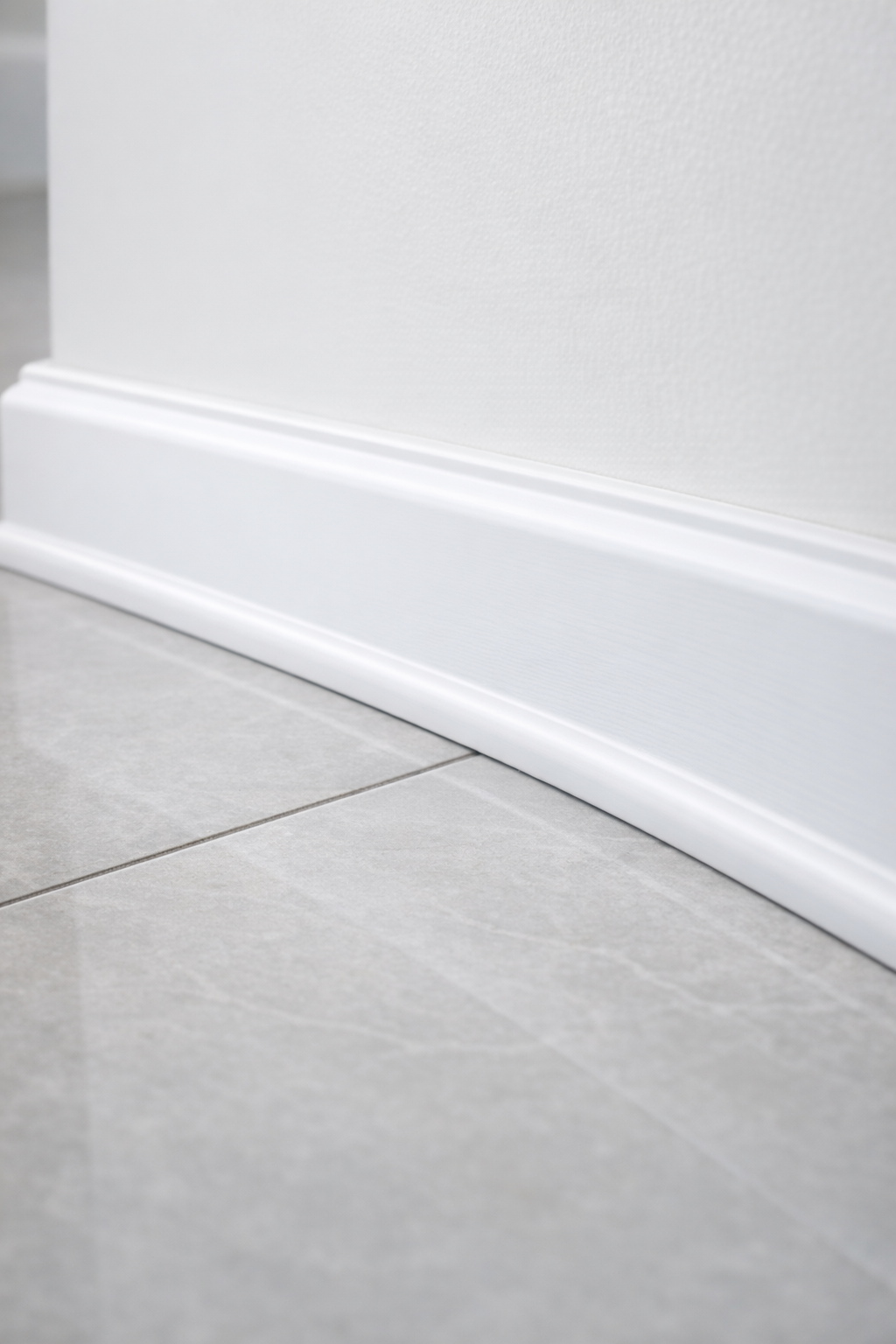
Wood-look tile usually benefits from restraint. Because the floor already imitates planks, a slimmer painted shoe moulding often keeps the room from looking over-trimmed, especially beside simple white baseboards. Quarter round can still work when the room has older rounded trim details or a larger perimeter gap, but the rounded profile may draw attention to the border instead of letting the tile read like a continuous floor.
Luxury vinyl plank and laminate flooring are common places to see added trim because floating floor installations often need perimeter expansion space. That space is not a flaw; it is part of how the floor edge is allowed to sit at the room boundary. Shoe moulding is usually the cleaner choice when the gap is modest, while quarter round is the more forgiving option when the existing baseboards stayed in place and the new floor edge needs a little more coverage.
Hardwood and engineered hardwood bring a similar trim question because wood floors can change slightly with indoor conditions. The takeaway is not that one profile is automatically "for wood," but that the edge detail should cover the needed space without making the baseboard look bulky. Stained shoe moulding can blend with wood flooring, painted shoe moulding can blend with painted baseboards, and quarter round makes sense when the gap or existing trim style calls for a fuller edge.
Wet or humid rooms add another practical filter: the bottom edge should look sealed, intentional, and easy to maintain. In those areas, a clean tile-to-baseboard line with a neat caulked transition may look better than adding a small wood strip just to fill space. Across all flooring types, the biggest installation checkpoint is whether the baseboards are staying or being removed and reset. If they stay, shoe moulding vs quarter round becomes the cover-up decision; if they come off and go back after the floor, a cleaner baseboard-only finish may be within reach.
Material and Finish: Paint, Stain, Wood, MDF, or PVC
The profile is only half the story; the finish decides whether the strip disappears into the baseboard or reads as a separate border. Paint-grade shoe moulding is often painted the same color and sheen as the baseboard, which creates one continuous painted edge. Stained trim works differently: it usually looks best when it intentionally matches wood flooring, stair parts, door casing, or existing stained baseboards rather than floating as a random third color.
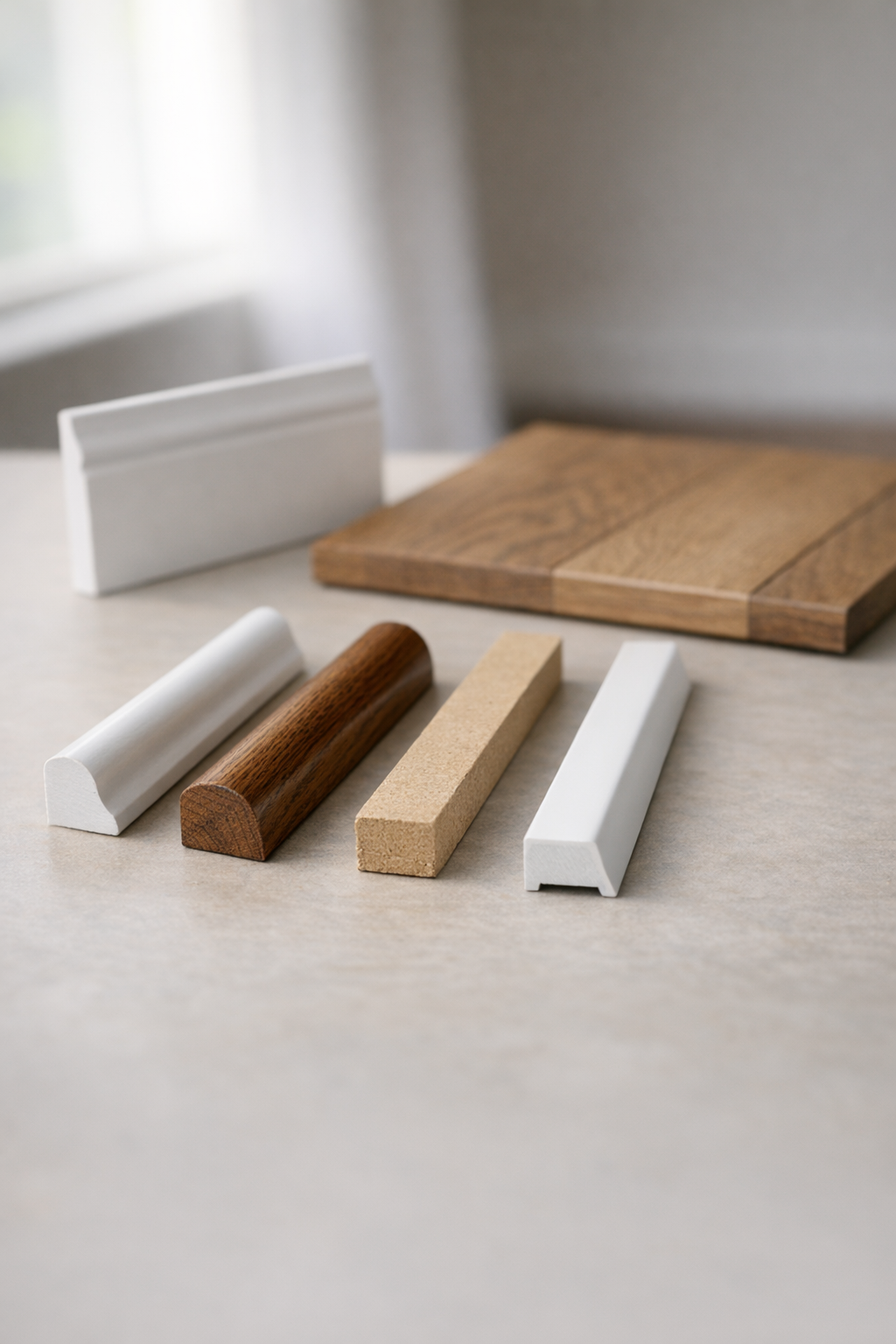
MDF trim is a smooth, paint-grade option used for many interior baseboard details because it takes paint evenly and does not show wood grain. Its tradeoff is moisture: in bathrooms, laundry rooms, kitchens, and humid coastal homes, repeated wet mopping or small leaks can make the bottom edge vulnerable. It is usually a stronger fit for dry painted rooms than for spaces where the trim may sit near standing water or damp tile edges.
Solid wood trim is the more flexible finish choice because it can be painted or stained. If you want the small trim to match oak, maple, or another stained wood detail, solid wood gives you that option; if you want it to blend into white baseboards, it can be painted instead. The tradeoff is movement: wood can expand or contract with humidity changes, so neat joints and a stable indoor environment matter more.
PVC trim is useful where moisture resistance is the priority, especially around bathrooms, laundry rooms, kitchens, exterior-adjacent entries, and coastal or humid climates. Visually, it can be a little less natural than painted wood unless the cuts, nail filling, caulk lines, and paint finish are handled carefully. In the shoe moulding vs quarter round decision, PVC does not change the profile logic; it changes how well the finished edge tolerates damp conditions.
Installation Conditions: When to Add Trim, Reset Baseboards, or Go Baseboard-Only
Installation conditions often decide what looks possible after the design preference is clear. If the old baseboards stay in place while new flooring goes in, the installer usually has to leave or manage a perimeter joint at the wall, and that joint often needs a small trim piece afterward. In that situation, shoe moulding installation gives a tighter, slimmer cover line, while quarter round installation reaches farther onto the floor and looks more rounded.
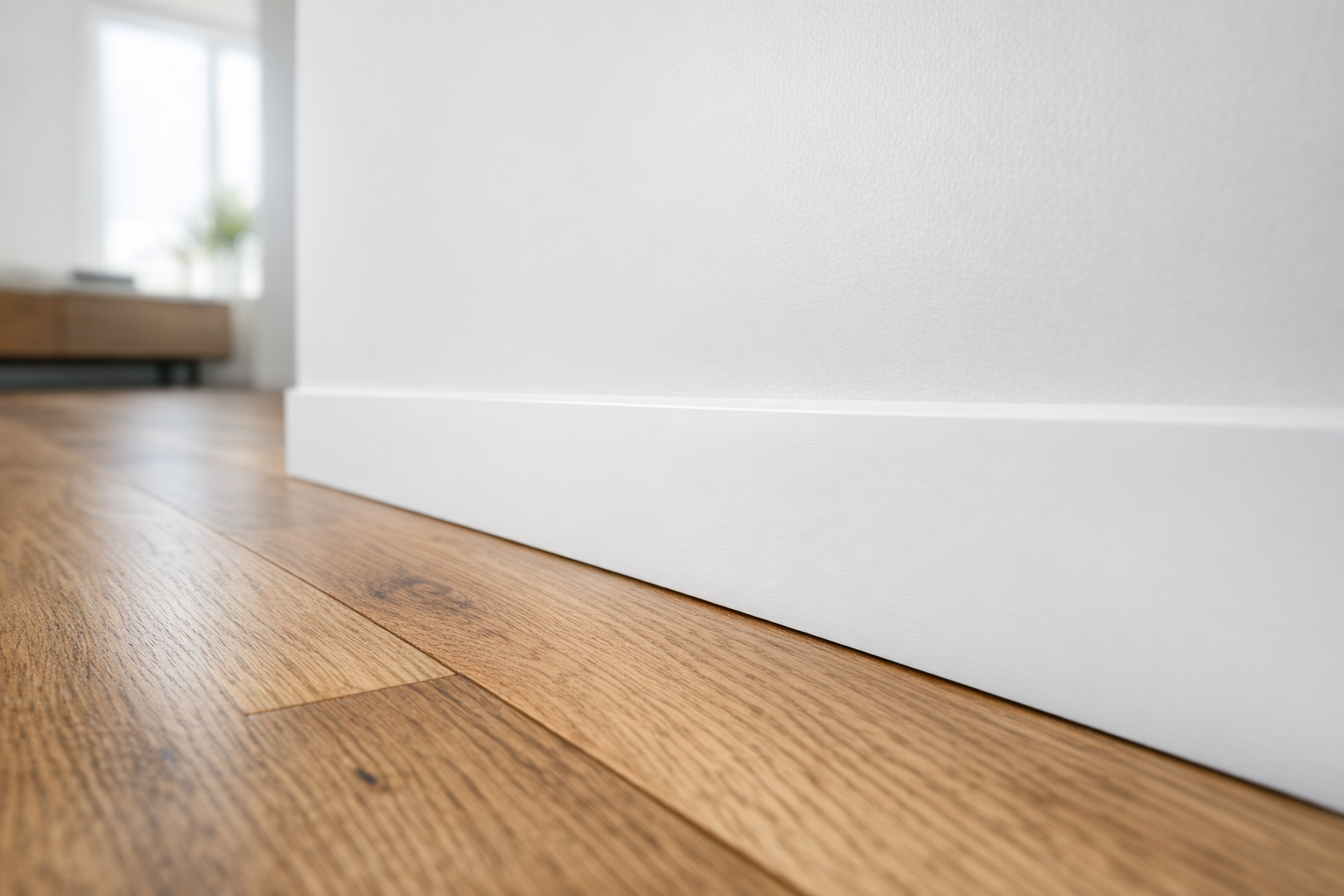
Removed baseboards change the outcome. When flooring is installed first and the baseboard trim is reset or replaced afterward, the baseboard can sit down over the cut edge of the floor. That is the cleanest path to a baseboard-only finish, especially when the flooring cuts are neat and the wall-to-floor line stays consistent around the room.
Uneven walls and wavy floors push the decision back toward added trim. A baseboard may touch the floor in one spot, then hover slightly in another, creating a shadow line that paint alone will not make disappear. Shoe moulding can soften small variations without adding much bulk; quarter round can hide a deeper or more inconsistent edge, but it projects more into the room and becomes a stronger visual border.
Baseboards that sit too high are another clue. If the gap below the baseboard is narrow and even, shoe moulding may make the floor line look intentional. If the gap is taller, irregular, or left from a flooring height change, quarter round may cover more, though the fuller profile can make short baseboards feel busier.
For shoe moulding vs quarter round, the practical takeaway is simple: leaving existing baseboards in place often means adding a small trim detail; removing and reinstalling baseboards creates the best chance for a cleaner baseboard-only look. Labor, material choice, room shape, and site conditions can all affect the final installation decision and cost.
How to Choose the Right Floor Trim Detail for Your Home
A simple way to decide is to rank what matters most in that specific room: how much edge needs to be covered, how quiet or noticeable you want the trim to look, and whether the baseboard style already points in a traditional or more streamlined direction.
- Choose shoe moulding when you want the floor line to feel subtle. It is the better fit when the gap is moderate, the baseboards are taller or more modern, and you want the added strip to read like a small extension of the baseboard instead of a separate rounded border.
- Choose quarter round when the room can handle a softer, fuller edge. It makes sense with older rounded trim, shorter traditional baseboards, or a slightly larger floor-line gap because its rounder profile reaches farther onto the floor and becomes more visible.
- Choose a baseboard-only finish when the flooring and baseboards can be planned together tightly enough that no extra strip is needed to hide the transition. This is the cleanest-looking option, but it is less forgiving if the wall line, floor cuts, or baseboard height leave a visible shadow.
Before making the final call, walk the room and use a short checklist: gap size, baseboard height and profile, floor material, moisture exposure, paint or stain preference, and desired visual weight. A tall square baseboard with a neat floor edge usually points toward shoe moulding or baseboard-only finishing. A room with vintage casing, rounded details, and a more forgiving perimeter may point toward quarter round.
The real answer to shoe moulding vs quarter round is not that one is always more correct. Shoe moulding is usually the tailored choice, quarter round is usually the softer and more noticeable choice, and baseboard-only is the cleanest choice when the installation conditions support it. Match the trim to the room, the flooring edge, and the baseboards, and the detail will look intentional rather than patched in.