

For homeowners, condo owners, vacation rental managers, and remodelers, trim installation in Siesta Key is the finish work that turns a room from "almost done" into intentionally finished. This service covers professional finish carpentry for coastal properties, condos, rentals, and remodeled interiors where the final lines need to look clean, consistent, and suited to the space.
Interior trim is the wood, MDF, PVC, or composite detail that frames the edges of a room: baseboards along the floor, casing around doors and windows, crown molding at the ceiling, chair rail on the wall, wainscoting for lower-wall detail, and custom trim for feature areas. Each piece has a visual job. Baseboards close the gap between flooring and walls, casing defines openings, crown molding softens the wall-to-ceiling transition, and wall trim can add structure to otherwise plain surfaces.
Professional trim work matters because small finish details are easy to see in bright coastal interiors, from beach cottages to high-rise condos overlooking the Gulf. Strong workmanship shows up in tight joints, even reveal lines around openings, smooth caulk lines, properly set nails, and transitions that do not look patched together. During an estimate, the goal is to match the trim style, material, and installation approach to the property, the room, and the level of finish the owner wants.
Interior Trim Services Available
A flooring project is one of the clearest times to plan new trim, because the baseboard choice affects how the entire room meets the new surface. Other requests often come from updated doors, replacement windows, a refreshed bedroom, or a living area that needs more character, with the work ranging from standard profiles to custom accent layouts fitted to the room.
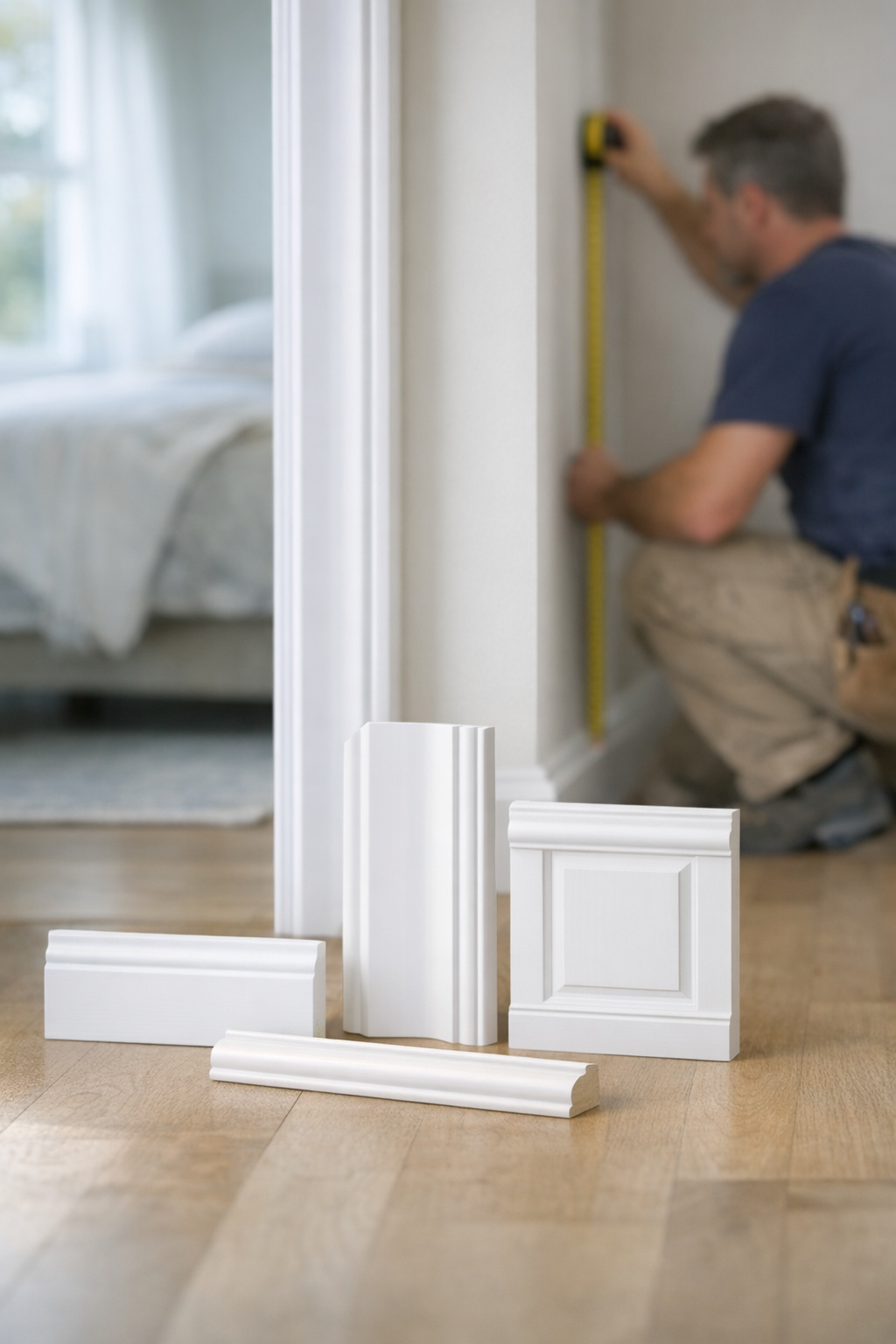
- Baseboard installation: Baseboards are commonly installed after new flooring because they cover the wall-to-floor edge and give the room a finished perimeter. A taller baseboard can make a room feel more substantial, while a simpler profile keeps the look clean for condos, rentals, and casual beach interiors.
- Crown molding installation: Crown molding finishes the ceiling line in living rooms, dining areas, primary bedrooms, and other rooms where the owner wants a more polished transition. The profile matters: small crown reads subtle, while larger layered crown creates a more formal look and needs careful fitting at corners.
- Door casing installation: Casing frames interior doors so the opening looks intentional instead of unfinished. It is often requested with new interior doors, room updates, or trim style changes, and the key visual checkpoint is an even reveal around the jamb.
- Window casing: Window trim sharpens the edge around updated or existing windows and helps the opening match the rest of the room. Clean corners and consistent trim width keep the window from looking pieced together.
- Chair rail and wainscoting: Chair rail adds a horizontal detail line, while wainscoting builds out the lower wall with panels or trim patterns. These are often chosen for dining spaces, entries, hallways, and bedrooms that need more architectural detail.
- Custom accent trim: Feature walls, grid patterns, picture-frame molding, and other custom layouts are measured and built around the wall itself rather than pulled from a standard room package. This is the better fit when the goal is a focal point instead of basic edge trim.
When requesting an estimate, it helps to share which rooms are involved, what changed in the space, and whether you prefer a standard trim profile or a custom detail. That gives the installer a clearer starting point for measuring, selecting materials, and planning clean transitions between rooms.
Trim Materials That Make Sense for Humid Coastal Interiors
In a bathroom, laundry area, or ground-level entry, the material decision matters before the profile decision because damp air and wet shoes can be harder on trim than a dry bedroom. Beach-area interiors can also deal with humidity, salt air exposure, and air-conditioning cycles, so the right material is usually chosen room by room rather than assuming one product fits the entire property.

- MDF trim: MDF is a paint-grade engineered material with a smooth surface, so it works well when the goal is crisp painted baseboards, casing, or crown at a practical price point. Its limitation is moisture sensitivity, so it is usually a better fit for dry, conditioned rooms than for bathrooms, laundry areas, or entry points where dampness is more likely.
- Solid wood trim: Wood trim is the choice to consider when a homeowner wants a stained finish, visible grain, or a more traditional material. It can create a rich look, but it also needs careful selection, acclimation, and finishing because natural wood can react to interior moisture changes.
- Finger-jointed wood: Finger-jointed material is made from shorter wood pieces joined into longer boards. It is commonly used for painted trim because it can be straighter and more cost-conscious than stain-grade solid boards, but the joints are meant to disappear under paint rather than be featured.
- PVC trim: PVC is a moisture-resistant option that can make sense near bathrooms, laundry rooms, ground-level entries, or other areas where painted trim may see more damp exposure. The tradeoff is appearance and feel: it is not selected for natural grain or stained finishes, so it should be matched to the room's style expectations.
A good material recommendation balances room conditions, desired finish, budget, and the trim profile itself. Painted rooms often allow more material flexibility, while stained rooms narrow the choice toward wood that looks good uncovered; either way, the finished result still depends on clean fitting, consistent joints, smooth caulk lines, and transitions that look intentional.
Why Professional Trim Installation Changes the Finished Look
The eye usually catches the small misses first: a baseboard that waves with the floor, a casing reveal that narrows on one side of a door, or crown molding that looks tight in one corner and open in the next. Basic attachment gets trim on the wall; skilled trim carpentry in Siesta Key is about making those lines look measured, balanced, and intentional in rooms that are rarely perfectly square.
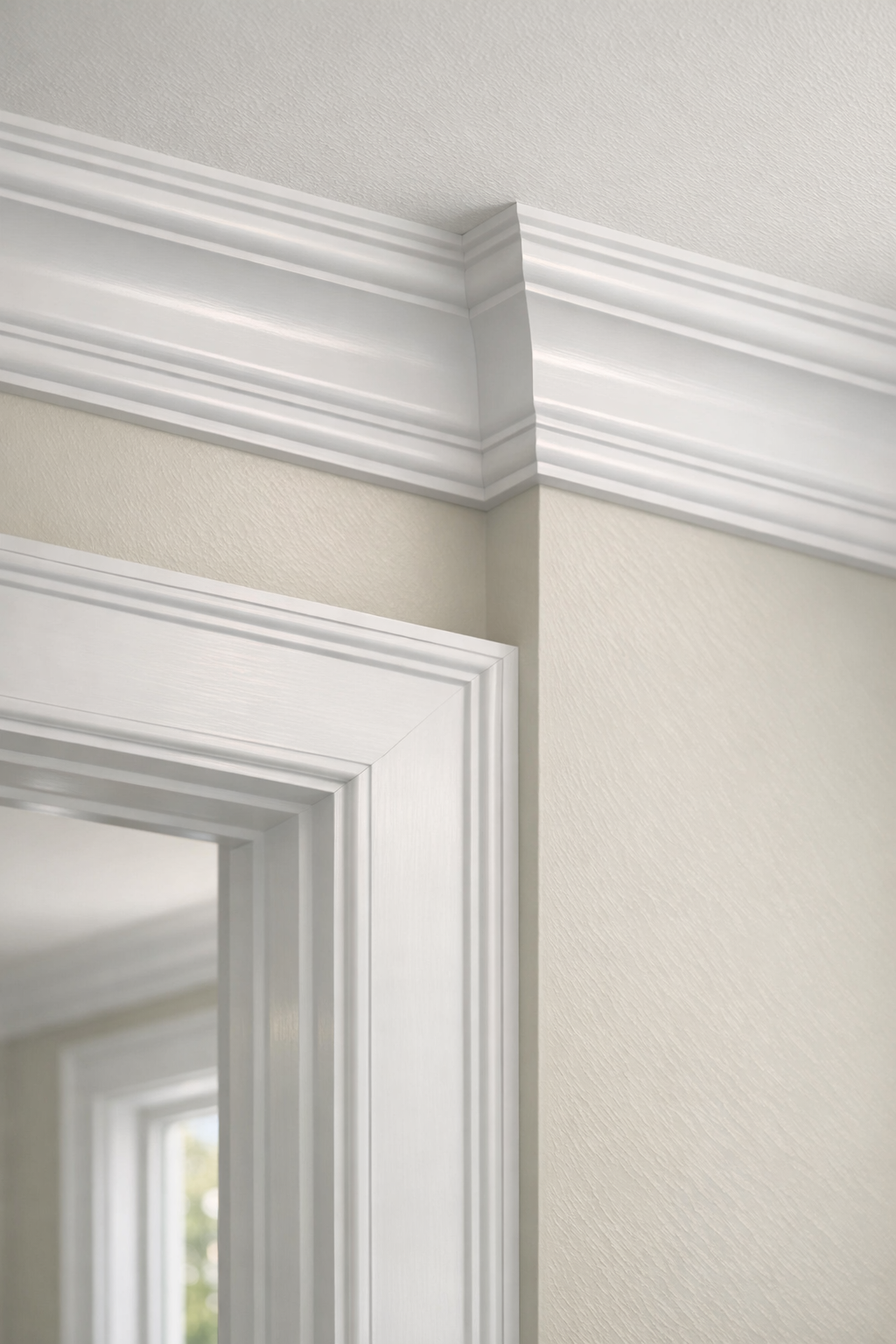
Accurate measurements and clean cuts set the tone before the first board is fastened. Mitered corners are angled cuts that meet at outside corners, while coping is a shaped inside-corner cut that can help one profile fit into another when walls are slightly out of square. The practical difference is visible: weak cuts leave gaps and uneven profiles, while well-fit joints look continuous once they are nailed, caulked, and painted.
Good installation also controls the details around the trim, not just the trim itself. Level reveals keep the exposed edge around doors and windows consistent, smooth caulk lines soften tiny wall irregularities without looking heavy, and properly set nails prevent bumps from showing through the finish. Smart seam placement matters too; long runs are planned so joints land where they are less noticeable rather than drawing attention across a main wall.
This is especially important after flooring changes, window or door updates, or room-by-room remodeling, where old surfaces and new materials meet. A professional installer adjusts transitions at floors, ceilings, corners, openings, and adjoining rooms so the finished space looks complete instead of patched together.
Matching New Trim to Existing Doors, Windows, and Rooms
When new trim needs to blend into an older room, the match is about more than finding a similar board at first glance. Profile is the shape of the molding face, height affects how strong the trim looks on the wall, thickness controls how it meets door frames and window frames, and reveal lines determine whether the casing looks evenly framed around the opening.
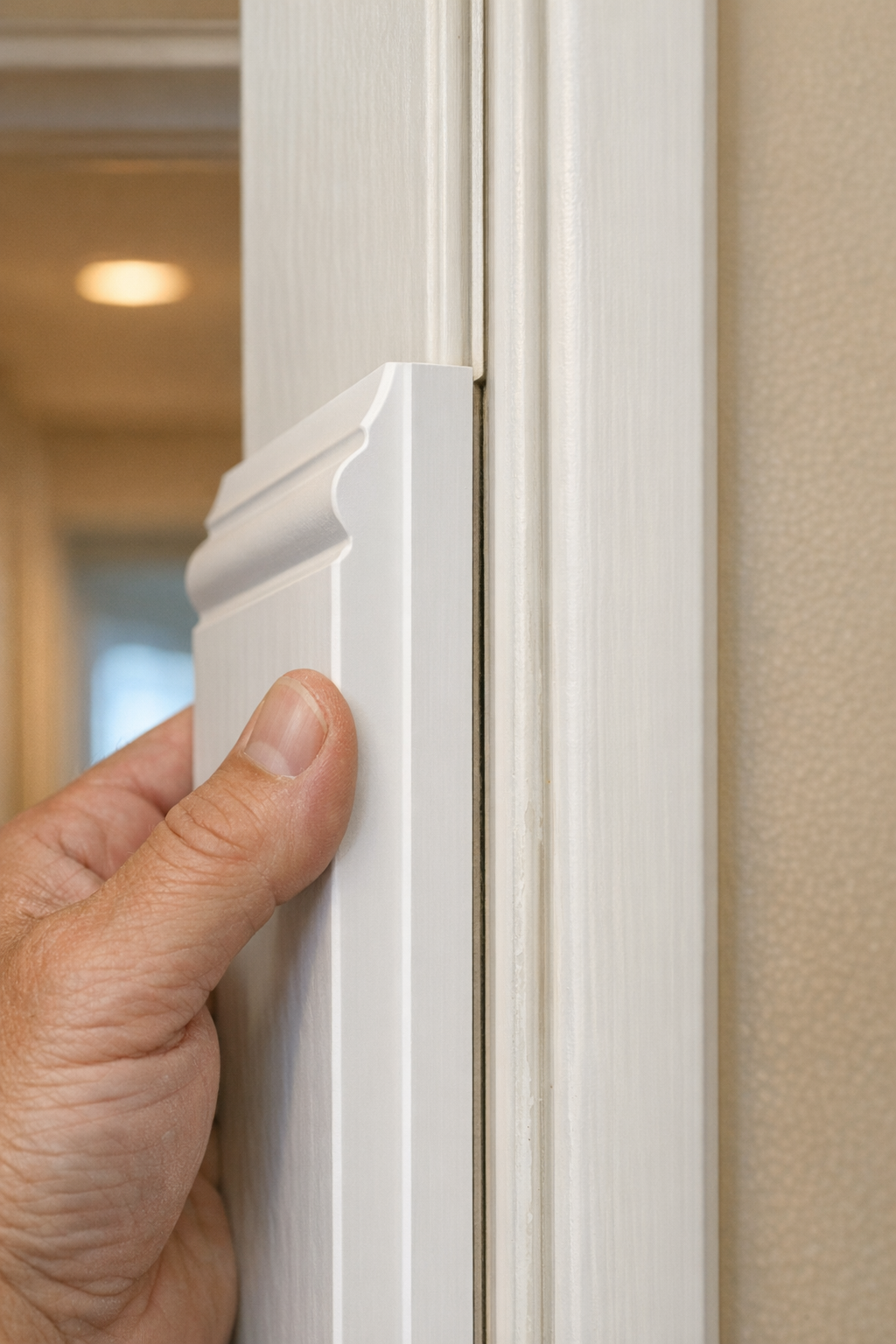
An exact match may be possible when the existing baseboards, casing, or crown profile is still available and the finish is painted. A close match is more realistic when the original trim is older, custom milled, stained, or slightly worn from years of paint layers and repairs. In those cases, careful door casing installation can still look intentional if the heights, outside edges, and paint finish are coordinated.
Room-to-room transitions are often the deciding point. If one bedroom is being updated, a close match to the hallway may be enough. If a living room, dining area, and entry share open sightlines, replacing trim throughout the connected area can create the cleanest result because the eye reads one continuous style instead of several almost-matching pieces.
What to Expect During a Trim Installation Project
A good project starts by narrowing the scope before anyone orders material. During the estimate request, a trim installer in Siesta Key will typically want to know which rooms are involved, whether the work includes baseboards, crown, casing, chair rail, wainscoting, or custom trim, and whether the project is tied to new flooring, doors, windows, or a larger remodel.

The consultation and measurements turn that scope into a workable plan. Measurements help define how much trim is needed, where transitions occur, and whether existing trim should be removed or worked around. Old trim may come out when the goal is a cleaner full-room update, a different height or profile, or a better fit after flooring changes; it may stay when the new work only needs to extend or blend into an existing area.
Style and material decisions are usually made before scheduling so the finished lines look intentional. Paint-grade trim is trim meant to be painted rather than stained, which makes it a practical choice when the priority is a smooth, uniform color and clean caulked seams. Stain-grade trim puts more emphasis on the visible wood grain, so matching species, tone, and finish becomes more important.
Scheduling should also account for related trades. Interior trim installation in Siesta Key often works best after flooring, door, or window work is far enough along for accurate fitting, while painting may happen after installation so nail holes, seams, and final touch-ups can be finished cleanly.
On installation day, the work areas are prepared, trim is professionally fitted, and the final walkthrough focuses on visible finish details: tight joints, consistent reveals, smooth caulk lines, properly set nails, and clean transitions from room to room. That review is the homeowner's chance to look at the trim in normal light and confirm the project is ready for paint or final touch-up.
What Affects Trim Installation Cost and Timing in Siesta Key
Cost and timing usually come down to how much fitting the project requires. A single-room baseboard installation after new flooring is a different scope than multiple bedrooms, hallways, and an open living area with casing, chair rail, or wainscoting. More rooms mean more measurements, cuts, transitions, and finish prep, especially where old and new surfaces meet.
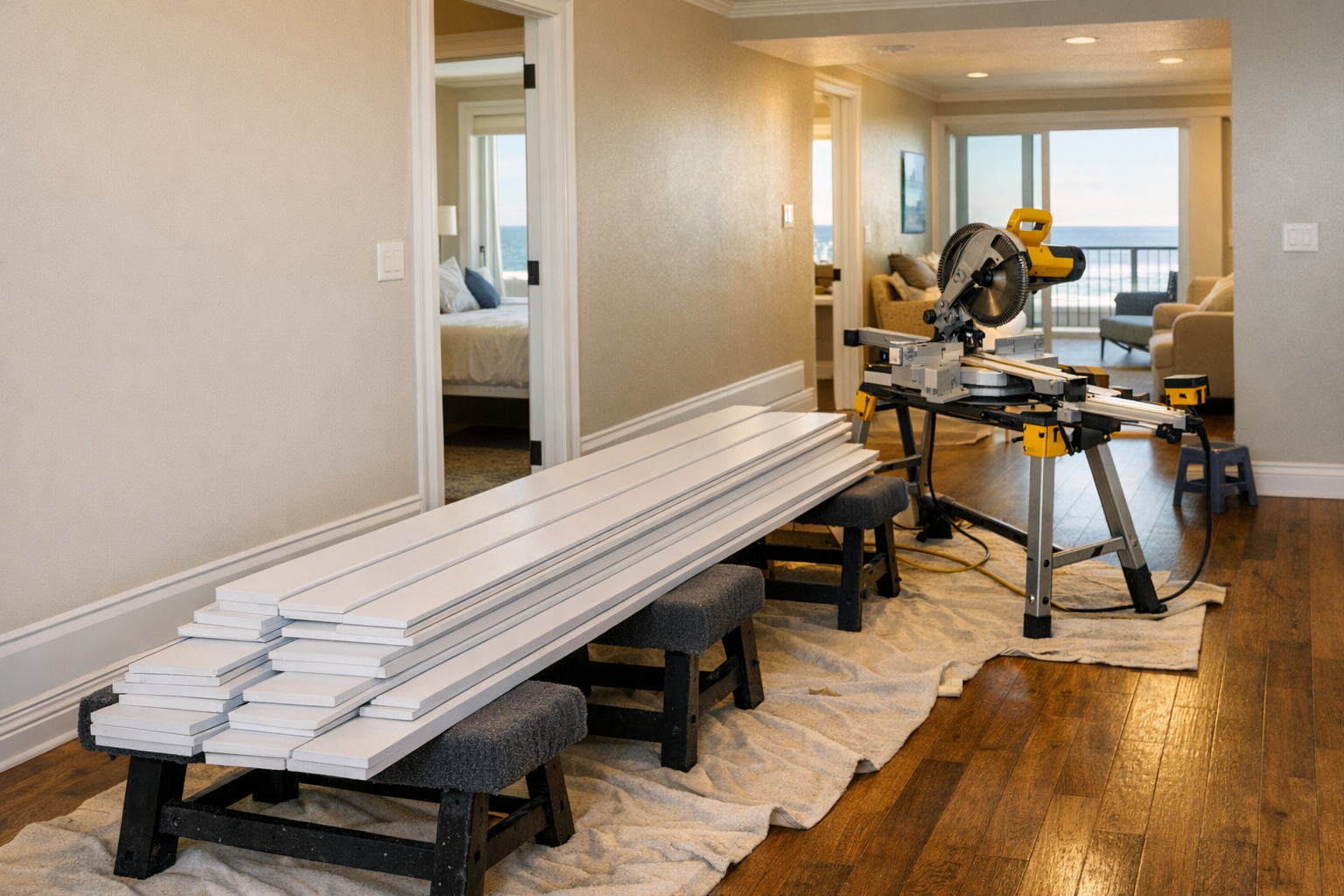
Trim type also matters. Flat or simple profiles are generally more straightforward to fit, while crown molding installation involves ceiling lines, wall angles, and corner work that can take more layout time. Taller ceilings, detailed profiles, layered trim, and custom accent layouts can add complexity because each joint has to line up cleanly and look intentional from normal viewing angles.
Material choice can affect both the estimate and schedule because paint-grade, stain-grade, PVC, composite, and moisture-resistant options are handled and finished differently. Wall condition matters too: wavy drywall, uneven floors, damaged corners, or old adhesive behind removed trim can require extra prep before new molding sits correctly.
For Siesta Key trim installation, access can be part of the planning. Condos, high-rise buildings, rental properties, limited parking, elevator use, and association rules can influence material delivery and workday coordination. Projects tied to flooring, painting, door replacement, or a larger remodel may also need scheduling around other trades.
The most accurate way to price the work is with a site-specific estimate. Photos are helpful for a first conversation, but room measurements, trim selections, removal needs, access details, and finish expectations give the clearest picture of the project scope.
Request a Trim Installation Estimate in Siesta Key
For the cleanest first estimate, describe the property and the exact trim locations before choosing dates. Share whether it is a single-family home, condo, association-managed unit, remodel, or vacation rental, then note whether you need baseboards at the floor, crown at the ceiling, casing around doors or windows, chair rail on the wall, wainscoting on lower wall areas, or custom trim for an accent or matching detail.
It also helps to note whether old trim is still in place, whether new flooring has already been installed, and whether the work needs to coordinate with doors, windows, painting, or a larger renovation. Photos can start the conversation, but measurements, access details, trim style, and finish expectations make the estimate more precise.
To schedule, call, send a request form, or ask for a consultation with a trim installer in Siesta Key. The goal is a clear scope, practical material direction for the property, and a finish carpentry plan that fits the room, the schedule, and the way the property is used.
Plan trim installation in Siesta Key, FL
Compare the broader Trim Installation service details, then use the Siesta Key, FL service area page if you want the local overview. When you are ready, request a trim installation estimate with the rooms, trim goals, and photos that help explain the scope.
FAQs
What types of trim can be installed in a Siesta Key home?
Interior trim options include baseboards, crown molding, door casing, window casing, chair rail, wainscoting, and custom accent trim. Baseboards finish the wall-to-floor edge, casing frames doors and windows, and crown molding finishes the ceiling line.
What trim material works best for humid coastal homes in Siesta Key?
PVC trim works best in damp areas such as bathrooms, laundry rooms, and ground-level entries because it resists moisture. MDF is better for dry, conditioned rooms, while solid wood is used when a stained finish or visible grain is desired.
Do I need to remove old trim before new trim installation?
Old trim is usually removed when the project involves a full-room update, a new trim height or profile, or a better fit after flooring changes. Existing trim can stay when the new work only needs to extend or blend into the current room layout.
How much does trim installation cost in Siesta Key?
Trim installation cost depends on the number of rooms, trim type, material choice, wall condition, removal needs, and access details. Crown molding, tall ceilings, detailed profiles, wainscoting, and custom accent layouts require more layout and fitting time than simple baseboards.
How do I choose between matching existing trim and replacing trim throughout a connected area?
Matching existing trim works well when the profile is still available, the finish is painted, and the update is limited to one room. Replacing trim throughout connected spaces such as a living room, dining area, and entry creates a cleaner result when open sightlines would reveal several almost-matching profiles.