

For homeowners, condo owners, remodelers, and property managers, trim installation in Longboat Key is a finishing step that can make an interior feel complete instead of almost done. It is the detail work that gives a room cleaner edges, sharper transitions, and a more intentional look.
Interior trim finishes the meeting points between floors and walls, walls and ceilings, and the openings around doors and windows. Baseboards cover the floor line, crown molding softens or dresses up the ceiling line, and casing frames doors and windows so those openings look finished rather than exposed.
Longboat Key properties often call for trim that looks polished while holding up to coastal living. In a full-time residence, seasonal condo, remodeled unit, or managed property, the right finish carpentry helps protect the visual quality of the space and keeps details consistent from room to room.
Good trim work should look straight, tight, and deliberate: even reveal lines, clean corners, smooth caulk lines, and profiles that match the style of the interior. Weak trim work tends to show gaps, uneven joints, wavy runs, or mismatched pieces that distract from otherwise well-finished walls, floors, doors, and windows.
Interior Trim Work Available
Start by looking at the edges that changed most recently: a new floor line, a refreshed doorway, a bare window opening, or a wall that needs more architectural detail. The right scope may be one room, a full condo, a remodeled living area, or selective replacement where older molding no longer matches the space.
- Baseboard installation finishes the lower edge of the wall where it meets the flooring. It helps the room look cleaner after new tile, wood, luxury vinyl, or carpet is installed, and it can be simple and low-profile or taller and more decorative depending on the interior style.
- Crown molding installation adds a finished transition where walls meet the ceiling. Smaller crown can give bedrooms or hallways a subtle finished edge, while larger profiles are often used in living rooms, dining areas, and primary suites for a more formal look.
- Door casing installation frames interior door openings so the drywall edge is covered and the doorway feels complete. The casing profile should relate to the baseboard, because mismatched thicknesses or styles can make even a freshly painted room feel pieced together.
- Window casing works the same way around window openings, giving the window a cleaner border and helping it feel integrated with the rest of the wall. In rooms with multiple windows, consistent casing width and reveal lines make a noticeable difference.
- Chair rail is a horizontal molding installed partway up the wall. It can separate paint colors, add detail to dining rooms or hallways, or create a visual break on tall walls without committing to full wall paneling.
- Wainscoting adds decorative lower-wall treatment, often using panels, rails, stiles, or applied molding. It gives entryways, powder rooms, dining spaces, and feature walls more depth than a plain painted surface.
- Replacement molding is useful when existing trim is damaged, outdated, poorly fitted, or removed during remodeling. For coastal properties, replacement is also a chance to choose a profile and finish approach that better supports durability and a cleaner long-term appearance.
Choosing Trim Materials for Humidity, Salt Air, and Everyday Wear
Material choice is where the same profile can become a very different long-term decision. In a humid coastal setting, trim is not just about the shape on the wall; it is also about how the material responds to moisture, paint, cleaning, everyday bumps, and the level of finish you want to see up close.
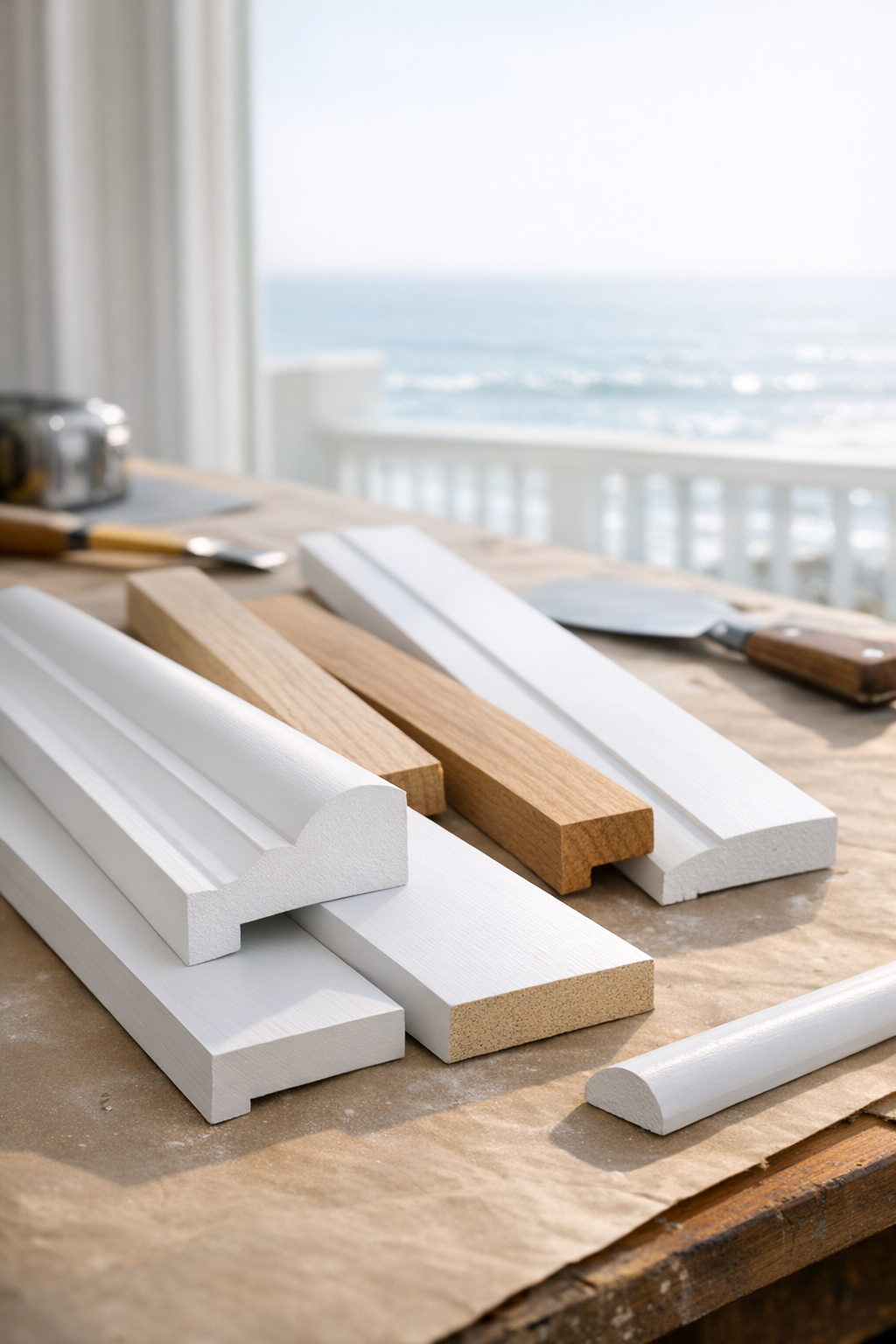
- Paint-grade MDF trim is a smooth, engineered option often chosen when the goal is a crisp painted finish without visible wood grain. It can work well in dry, climate-controlled rooms, especially for simple baseboards, casing, and crown profiles. Its limitation is moisture sensitivity, so it is usually less appealing near damp floors, leak-prone areas, or spots where swelling would be hard to hide.
- Finger-jointed pine is made from shorter pieces of pine joined together into longer trim boards. It is typically used as a paint-grade material and can be a practical middle ground for many interiors. Compared with MDF, it has real wood fibers and can handle some jobsite handling better, but the joints are not meant to be showcased with stain.
- Solid wood molding gives a more traditional carpentry feel and is available in many profiles. It can be painted or, if the species and grade are appropriate, finished to show natural character. The tradeoff is that wood can move with changes in humidity, so careful acclimation, fastening, and finishing matter.
- Stain-grade wood is selected for appearance, not just shape. The grain, color variation, and joint layout are part of the finished look, which means cuts, returns, and matching pieces need extra care. It is usually a better fit when the room already has stained doors, cabinetry, beams, or built-ins.
- PVC trim is a synthetic option often considered where moisture exposure is a bigger concern, such as bathrooms, laundry areas, entry points, or rooms near sliders. It is not the same as wood under a saw or paintbrush, so profile selection, fastening, and finishing expectations should be discussed before installation.
- Composite or moisture-resistant trim can offer another paint-grade choice when the project needs more moisture tolerance than standard MDF trim but a different look or handling profile than PVC trim. These products vary, so the practical takeaway is to match the material to the room, not just to the sample profile.
For trim installation in Longboat Key, the best material choice often comes down to location, finish style, and how the space is used. A formal living room with painted crown may call for a different product than a bathroom baseboard, a condo hallway, or a sunlit room with doors opened often to coastal air. Good planning keeps the trim looking intentional instead of forcing one material to do every job.
Why Professional Trim Installation Matters
The right board still needs a careful hand once it reaches the room. Professional finish carpentry is the difference between trim that simply covers an edge and trim that makes floors, walls, ceilings, doors, and windows look intentionally finished.

A careful trim installer in Longboat Key starts with accurate measuring because small errors multiply around a room. Clean cuts help each piece land where it should, while mitered corners join two angled pieces so the profile wraps neatly around an inside or outside corner. A strong signal is a corner that closes tightly without a heavy smear of filler; a weak signal is a corner that looks open, crushed, or out of line with the next piece.
Returns, joints, and reveals matter just as much. A return is the small finished end that brings a molding profile back into the wall instead of leaving a raw cut exposed. Seamless joints are places where two lengths meet with minimal visual interruption after filling and finishing. Reveal lines are the consistent margins around doors, windows, and casing; when they wander, the opening can look crooked even if the door or window itself is square.
Proper fastening also affects durability. Trim should be secured firmly enough to stay flat against the wall without split edges, proud nail heads, or loose sections that move when cleaned or bumped. Smooth caulk lines then bridge small wall gaps without becoming the main feature. In coastal homes and condos where finish quality and durability both matter, these details help the work hold its appearance longer.
For property managers, that level of workmanship can also reduce repeat visits for visible gaps, loose pieces, or paint touchups. For homeowners, it means the final paint or stain has a better surface to show off, not a series of problems to hide.
Trim for Remodels, Replacements, and Matching Existing Molding
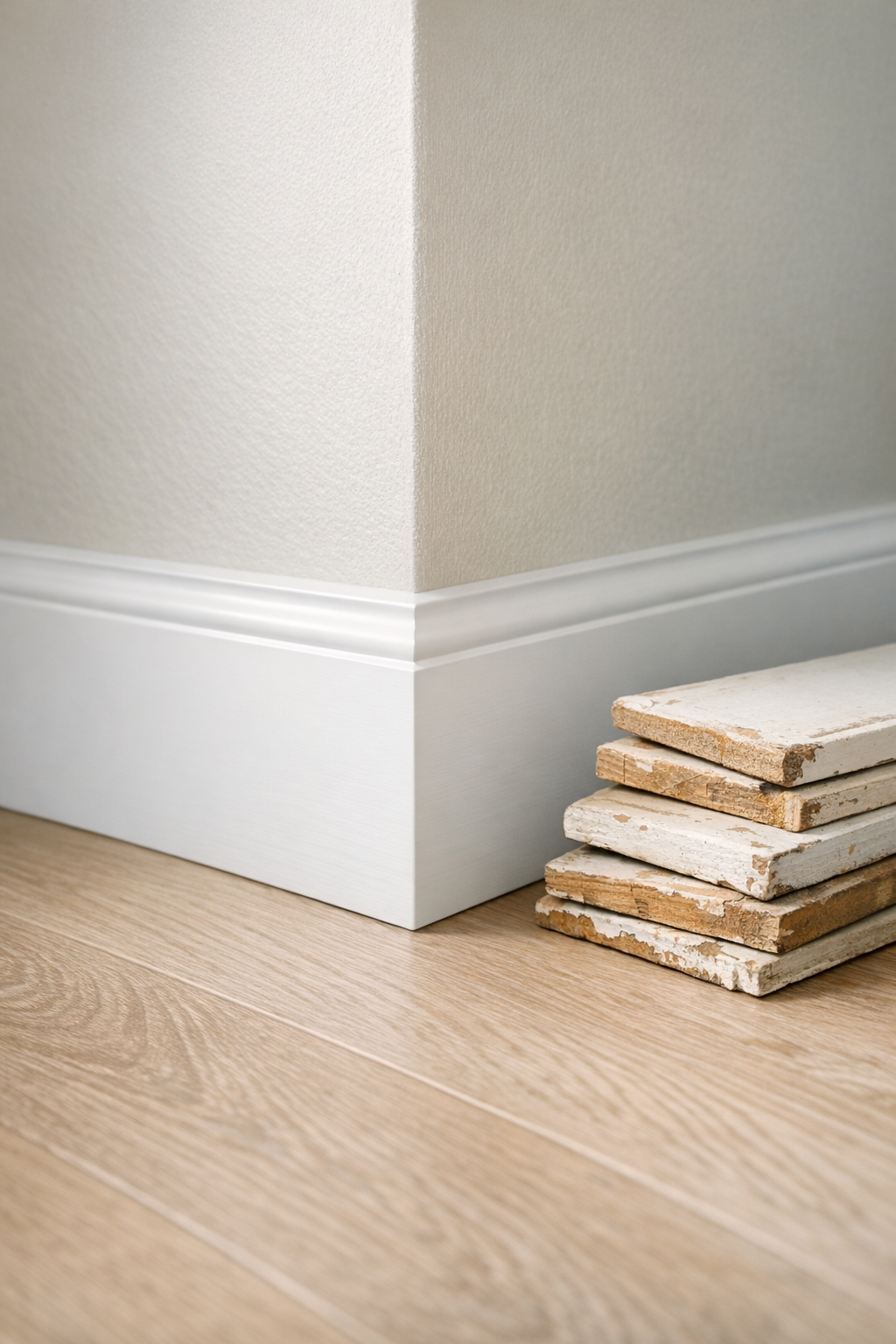
Remodel work often exposes trim that no longer fits the room. New flooring can leave baseboards sitting too low, too high, or visibly scarred after removal, which is why baseboard replacement is common after tile, hardwood, luxury vinyl, or carpet changes. The goal is to reset the floor-to-wall line so the finished room looks planned instead of patched.
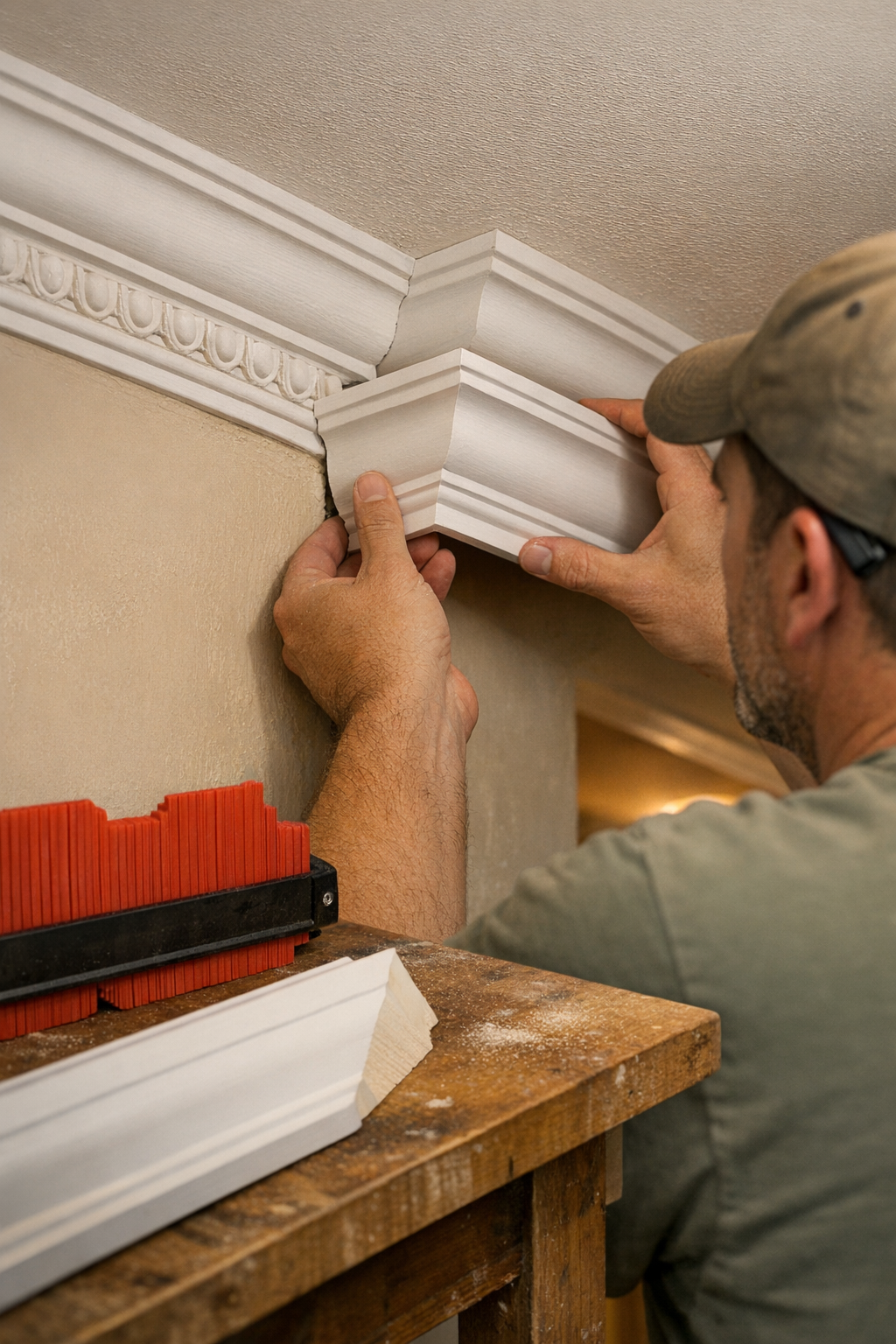
Replacement trim also makes sense when existing pieces are water-stained, swollen, cracked, dented, or simply outdated compared with the rest of the interior. Crown molding replacement may involve removing a damaged run, continuing a profile into a remodeled area, or changing the ceiling detail in one room so it better suits updated cabinets, paint, lighting, or wall finishes.
Matching existing molding starts with the profile: the shape, height, thickness, and edge details that make one baseboard, casing, or crown style different from another. If a close stock profile is available, it can help a new section blend into older rooms. If the old profile is unusual or discontinued, custom trim installation Longboat Key projects may use a carefully selected near match, a transition point at a doorway, or a wider update so the difference feels intentional.
The main decision is whether to match or modernize. Matching is usually best when only one section is damaged and the surrounding trim still looks good. Modernizing makes more sense when several rooms have worn, mismatched, or undersized molding, because a whole-room or whole-area baseboard replacement can create cleaner lines than trying to blend old and new piece by piece.
Trim Installation for Condos and Property Managers
Managed units add another layer to trim work: the installation has to improve the space without creating unnecessary disruption for owners, guests, tenants, or maintenance teams. For condos on Longboat Key, vacation properties, and investment residences, that often means planning the work around access windows, elevator or hallway use, furniture placement, and the next scheduled occupancy.

Longboat Key trim installation for managed properties can be handled as a targeted repair, a turnover upgrade, or part of a larger remodel. A targeted repair might replace swollen baseboard in one bedroom or damaged casing around a door. A turnover upgrade may involve new baseboards throughout a unit before fresh paint. Remodel coordination is different because trim may need to wait until flooring, cabinets, or drywall repairs are far enough along for accurate fitting.
Clean job setup matters in occupied and furnished spaces. Floors, nearby walls, furniture, and traffic paths should be protected before cutting, fastening, caulking, or touchup work begins. A good signal is a work area that stays organized, with trim cuts planned before materials are carried through finished rooms. A weak signal is loose debris, uncovered flooring, or fresh molding installed before dusty work nearby is complete.
For property managers, clear coordination helps reduce repeat visits. Trim can be scheduled alongside painters, flooring installers, cabinet installers, or general remodel contractors so the finished lines are not damaged by later work. In a rental or vacation unit, the practical goal is simple: complete the needed baseboard, casing, crown, or decorative molding work within the available access period and leave the residence ready for cleaning, inspection, or the next trade.
What to Expect From the Trim Installation Process
Once access and timing are set, the project begins with a room-by-room look at the areas receiving trim. During the estimate, measurements are taken, existing walls and openings are reviewed, and style preferences are narrowed down: taller baseboards for a more updated look, simple casing for clean door and window lines, or crown and decorative molding where the room needs more detail.

Material and finish choices are part of that same conversation. Paint-grade trim is intended to be painted, so filled nail holes and smooth caulked seams help create a continuous finished line. Stain-grade trim is selected for visible wood character, so the profile, grain, and joint layout matter more because the finish will not hide as much.
If old trim needs to come out, removal is planned before new pieces are fitted so damaged sections, rough wall edges, or flooring transitions can be addressed. Installation then focuses on consistent reveals, aligned corners, secure fastening, and clean transitions around floors, ceilings, doors, and windows.
Before the job wraps up, nail holes are filled, paint-grade seams are caulked where appropriate, and painting or staining is either completed as part of the scope or coordinated separately. A final walkthrough gives you a chance to review the trim installation, note touchups, and make sure the finished lines look clean from normal viewing angles.
Trim Installation Cost Factors in Longboat Key
A one-room baseboard touchup and a whole-condo molding package should be estimated as different scopes. That is the practical way to discuss trim installation cost in Longboat Key: room size, linear footage, and the number of doors, windows, wall runs, or ceiling lines all shape the amount of material and labor involved.
Profile complexity also matters. A simple, square-edged baseboard is typically more straightforward to cut and fit than layered crown, built-up molding, or detailed casing with more joints, returns, and visible transitions.
Material choice changes the scope as well. Paint-grade MDF, finger-jointed pine, solid wood, stain-grade wood, and moisture-resistant composite options differ in appearance, preparation needs, durability goals, and finishing expectations, especially in coastal rooms where finish quality and material selection matter.
Other cost factors include removing old trim, repairing rough wall edges, working around uneven floors, filling nail holes, caulking paint-grade seams, and painting or staining. Condo access, elevator use, parking, furniture protection, and tight scheduling windows can also affect how the job is planned.
For the clearest estimate, be ready to share the room count, photos, approximate measurements, trim type, material preference, and whether finishing is included. An exact quote for baseboard installation, crown, casing, or custom trim installation Longboat Key properties may need should be based on the actual rooms, openings, conditions, and schedule.
Schedule a Trim Installation Estimate
Photos of gapped baseboard corners, casing that stops short, uneven crown joints, or molding damaged during flooring work can help shape the first estimate. Professionally installed trim can make baseboards, casing, crown, and decorative molding look intentional instead of pieced together.
Longboat Key homes, condos, and managed properties also benefit from choosing trim with coastal conditions in mind. The estimate is a good time to talk through where the trim is going, what finish you want, and whether the room calls for a standard paint-grade option, a more detailed profile, or a material better suited to moisture-prone areas.
Call to discuss trim installation in Longboat Key, request an estimate, or send project photos if you want a faster first look. Helpful details include the room or unit location, the trim areas involved, any condo access requirements, and whether painting, staining, or old trim removal should be included.
Plan trim installation in Longboat Key, FL
Compare the broader Trim Installation service details, then use the Longboat Key, FL service area page if you want the local overview. When you are ready, request a trim installation estimate with the rooms, trim goals, and photos that help explain the scope.
FAQs
What types of trim can be installed in a Longboat Key home?
Common interior trim options include baseboards, crown molding, door casing, window casing, chair rail, wainscoting, and replacement molding. These trim types finish floor lines, ceiling lines, door and window openings, and decorative wall areas.
Can new trim be matched to existing molding?
New trim can often be matched by comparing the existing profile shape, height, thickness, and edge details. If the original molding is discontinued, a close stock profile, transition point at a doorway, or wider trim update can make the change look intentional.
What should good trim installation look like?
Good trim work should have straight runs, tight mitered corners, consistent reveal lines, secure fastening, smooth caulk lines, and clean returns where molding ends. Poor installation often shows gaps, uneven joints, wavy runs, loose pieces, or mismatched profiles.
Do you install trim in condos on Longboat Key?
Trim installation for Longboat Key condos can be planned as a targeted repair, turnover upgrade, or part of a remodel. Condo projects often need coordination around access windows, elevator or hallway use, furniture protection, and upcoming occupancy.
Is MDF, wood, or PVC trim better for coastal homes?
MDF gives a smooth painted finish but is more moisture sensitive, so it is better for dry, climate-controlled rooms. Solid wood offers a traditional look but can move with humidity, while PVC or moisture-resistant composite trim is better for bathrooms, laundry areas, entry points, and rooms near sliders.