

Trim installation in Casey Key is about more than adding decorative pieces to a room. In coastal homes, interior trim helps create the clean lines that make walls, ceilings, doors, and windows feel finished, while the material choice and detailing influence how well those lines hold up in a humid environment.
This service page is for homeowners who want precise, professional finish carpentry in Casey Key, not a step-by-step DIY tutorial. Good trim work shows in details you can see up close: tight miters, even reveals around doors and windows, smooth caulk lines, properly filled nail holes, flush transitions, and profiles that look intentional from room to room.
As you move through the page, you'll see what Casey Key trim installation can include, how different trim types shape the look of a room, why coastal material selection matters, and what to expect when requesting professional help. Whether the goal is a subtle refresh or a more detailed remodel upgrade, the focus stays on careful planning, accurate fitting, and a clean finished result.
What Our Trim Installation Service Includes
A good scope begins with field measurements, layout decisions, and material coordination. That means checking wall lengths, inside and outside corners, door and window openings, ceiling lines, and transition points before trim is cut, so the finished pieces align with the room instead of fighting uneven surfaces.

- Cutting and fitting are handled with the finished view in mind. Good installation shows in tight mitered corners, clean cope joints where profiles meet, consistent reveals around doors and windows, and trim that sits flush instead of rocking, gapping, or stepping out at transitions.
- Fastening is done to hold the trim securely while keeping the surface ready for finishing. Nail holes are filled, edges are sanded as needed, and joints are prepared so paint or stain can create a clean final surface rather than highlighting rough spots.
- Caulking and finish prep are part of the detail work, not an afterthought. Smooth caulk lines help close small wall-to-trim gaps, while overfilled seams, smeared caulk, or uneven sanding are signs of weaker workmanship.
- The scope can include new trim in an unfinished or redesigned room, replacement of worn or outdated pieces, matching existing profiles, or custom trim work during Casey Key remodels when doors, flooring, cabinets, or wall layouts have changed.
The practical takeaway is simple: trim work is not just putting boards on a wall. It is a sequence of measuring, layout, cutting, fitting, fastening, filling, sanding, and finish preparation that determines whether the room looks crisp once the final coat is applied.
Why Quality Trim Matters in a Finished Interior
A finished room often reads from the edges inward. Baseboards give the wall-to-floor line a deliberate ending, casing frames doors and windows so openings look intentional, crown molding softens or emphasizes the ceiling line, and wall trim can add architectural detail without changing the room's footprint.
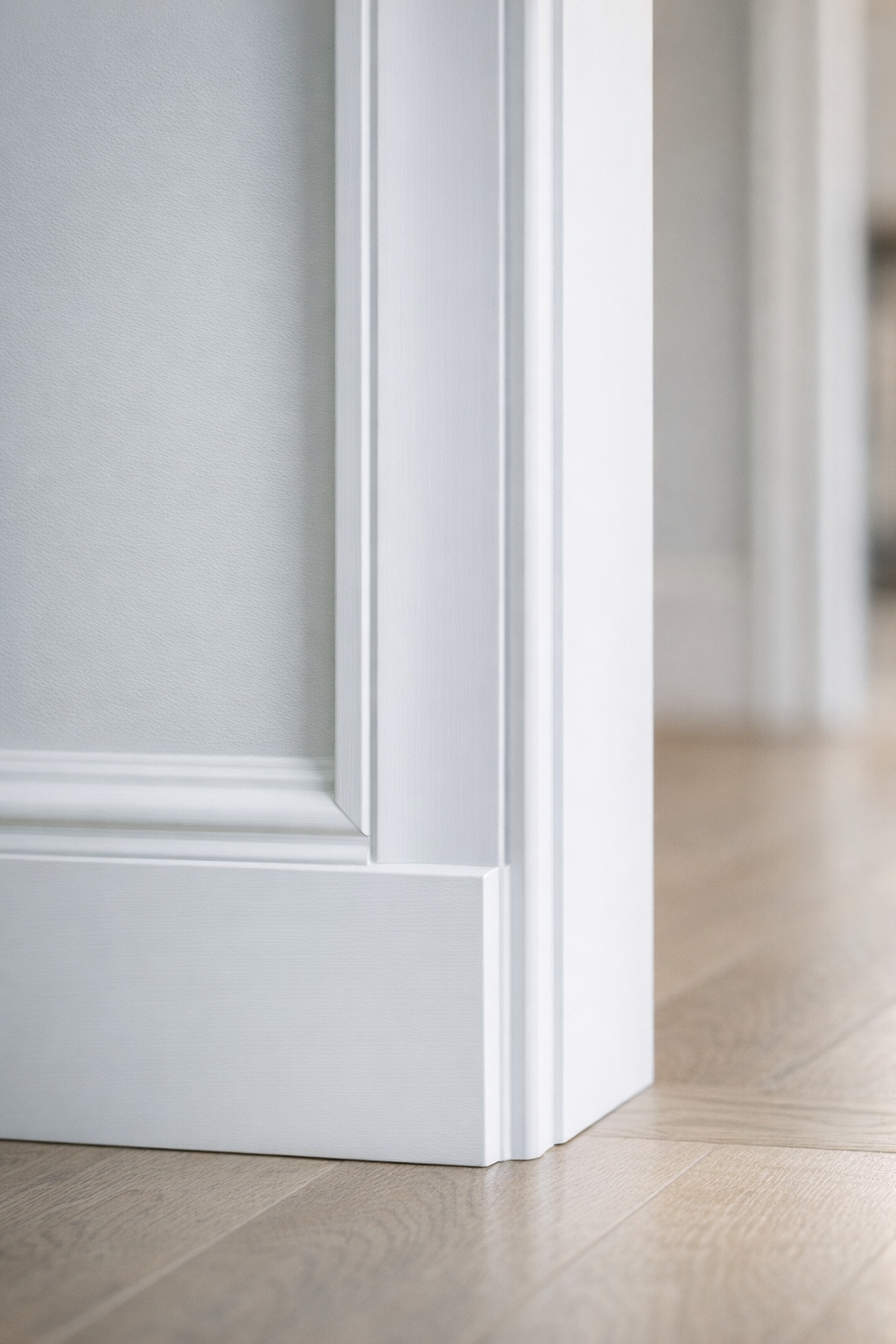
Each trim type changes the room in a different way. Simple flat profiles can support a clean, modern interior, while more shaped or layered profiles can reinforce a traditional coastal look. The goal is not just ornament; it is clean lines, balanced proportions, and seamless transitions where floors, walls, ceilings, doors, and windows meet.
Quality also shows in what you do not notice. Strong trim installation in Casey Key should leave tight joints, consistent reveals around openings, matched profiles from one area to the next, smooth caulk lines, and flush transitions. Weak work tends to draw the eye for the wrong reasons: open miters, uneven corners, thick caulk smears, visible nail holes, or trim that looks mismatched after a remodel.
In a coastal home, those details matter even more because interior finishes are often part of a larger design investment. Well-planned trim helps the room feel settled and intentional, whether the homeowner wants understated lines or a more detailed, custom finish.
Types of Interior Trim We Can Install
The right profile depends on the edge, opening, or wall surface you want to finish. A project can focus on one room, carry a matching profile through several spaces, or add more detailed millwork where a remodel needs a more complete finished look.

- Baseboards: Baseboard installation finishes the line where walls meet floors and helps protect the lower wall from everyday contact. Short, simple profiles keep the room understated, while taller or layered baseboards make the floor line feel more substantial.
- Crown molding: Crown molding installation finishes the transition between wall and ceiling. Smaller crown works well for cleaner interiors, while larger built-up profiles can make living rooms, dining areas, entries, and primary suites feel more architectural.
- Door casing: Door casing installation frames interior door openings and sets the reveal around the jamb. The key difference is proportion: narrow casing can disappear into a simple design, while wider casing gives doors more presence.
- Window casing: Window casing frames the inside edge of a window opening and can be matched to door trim for a consistent room. Clean returns, even reveals, and profile matching are the details that keep windows from looking patched-in.
- Chair rail and picture-frame molding: Chair rail creates a horizontal break on the wall, while picture-frame molding forms decorative rectangles below or above it. These details are common in dining rooms, hallways, stair areas, and formal spaces where the wall needs more depth.
- Wainscoting and accent wall trim: Wainscoting adds a paneled lower wall treatment, while accent wall trim can create grids, boxes, or linear patterns across a feature wall. Layout matters because uneven spacing is much more noticeable than the trim itself.
- Custom millwork details: Custom interior millwork can include layered trim assemblies, matched replacement pieces, built-up headers, panel details, or transitions that tie new work into existing molding. The practical goal is a finished detail that looks intentional rather than added after the fact.
Trim Materials for Coastal Florida Conditions
Material choice is where appearance and long-term upkeep start to overlap. In a Casey Key home, coastal humidity can affect how trim holds paint, how joints stay tight, and whether edges remain crisp over time, so material selection should be matched to the room, finish style, and exposure level instead of treated as a one-size-fits-all choice.
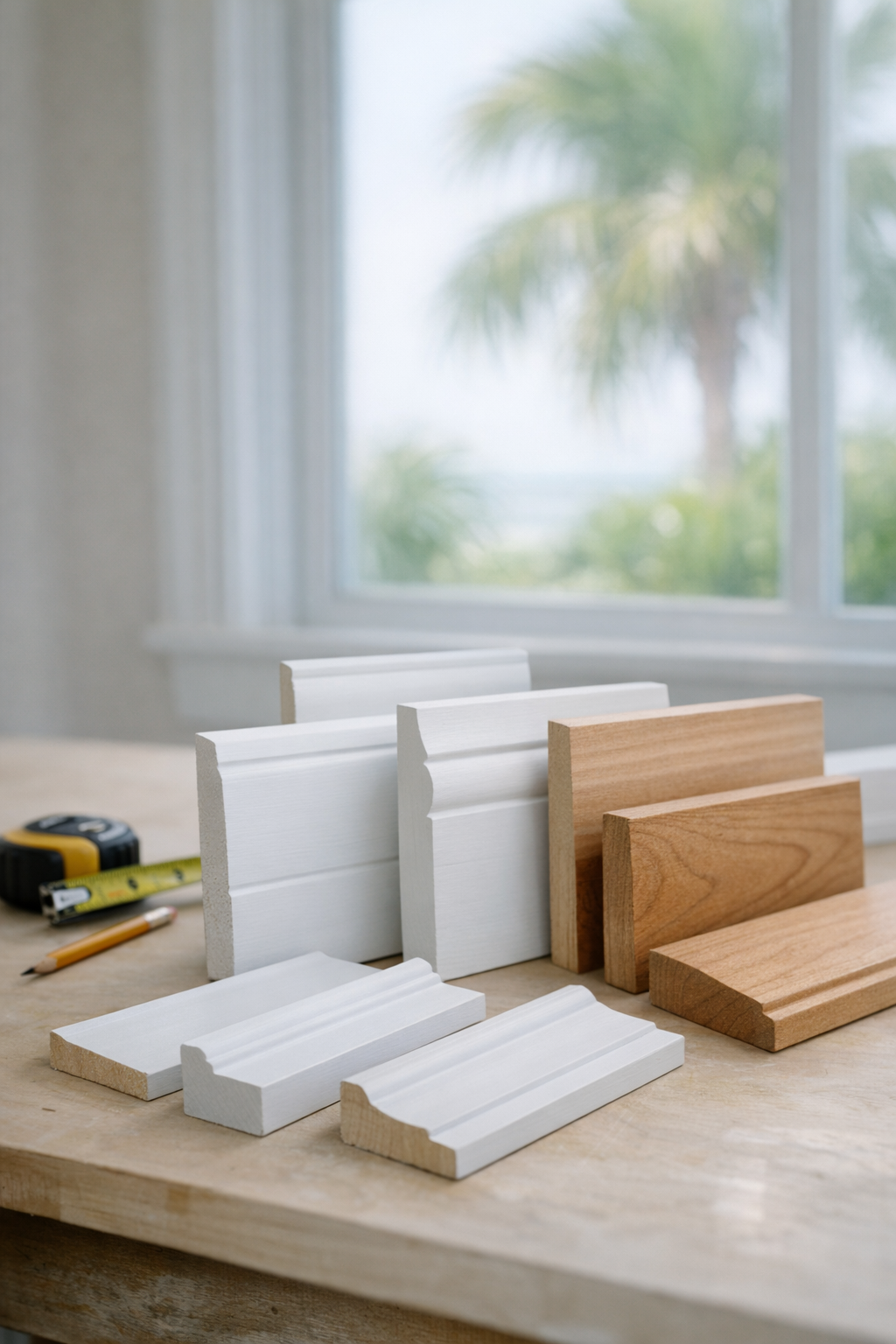
- MDF trim: MDF trim is a manufactured, paint-grade option with a smooth surface that can work well for clean interior profiles in dry, well-conditioned spaces. The tradeoff is that it needs careful cutting, fastening, sealing, and finishing, especially at ends and joints, because weak prep can show later through swelling, fuzzy edges, or paint breakdown.
- Solid wood trim: Solid wood offers a traditional feel and can be used for paint-grade or stain-grade work. It is a good fit when the homeowner wants natural grain, sharper profile detail, or a stain finish, but it can move with changing conditions, so tight fitting, stable material, and proper finishing matter.
- PVC trim: PVC is one of the moisture-resistant materials often considered for areas where humidity or incidental moisture is a bigger concern. It is usually selected for durability over wood-like grain character, so the finish goal should be discussed before choosing it for highly visible interior details.
- Paint-grade trim: Paint-grade material is chosen to be coated, not showcased as raw wood. It gives flexibility with color and can create a very clean finished look when nail holes are filled, seams are sanded, caulk lines are smooth, and the final paint film is consistent.
- Stain-grade trim: Stain-grade material puts the wood itself on display, so grain match, clean cuts, and careful handling become more visible. It can be beautiful in the right room, but it is less forgiving than painted trim because filler, mismatched pieces, and rough sanding are harder to hide.
For trim installation in Casey Key, the best material is usually the one that fits the location and the finish expectation. A powder room, waterfront entry, formal dining room, and primary suite may not all call for the same product, even if the profiles are meant to look related.
Trim Replacement, Matching, and Remodel Upgrades
Older trim does not always need to come out. Repair may be enough when the issue is limited to a small gap, a loose section, minor nail holes, or a short damaged piece that can be blended back into the existing run. Trim replacement is usually more practical when moisture has softened the material, boards have warped, the profile no longer matches nearby molding, heavy paint buildup has buried the detail, or a previous installation left uneven reveals and rough transitions.
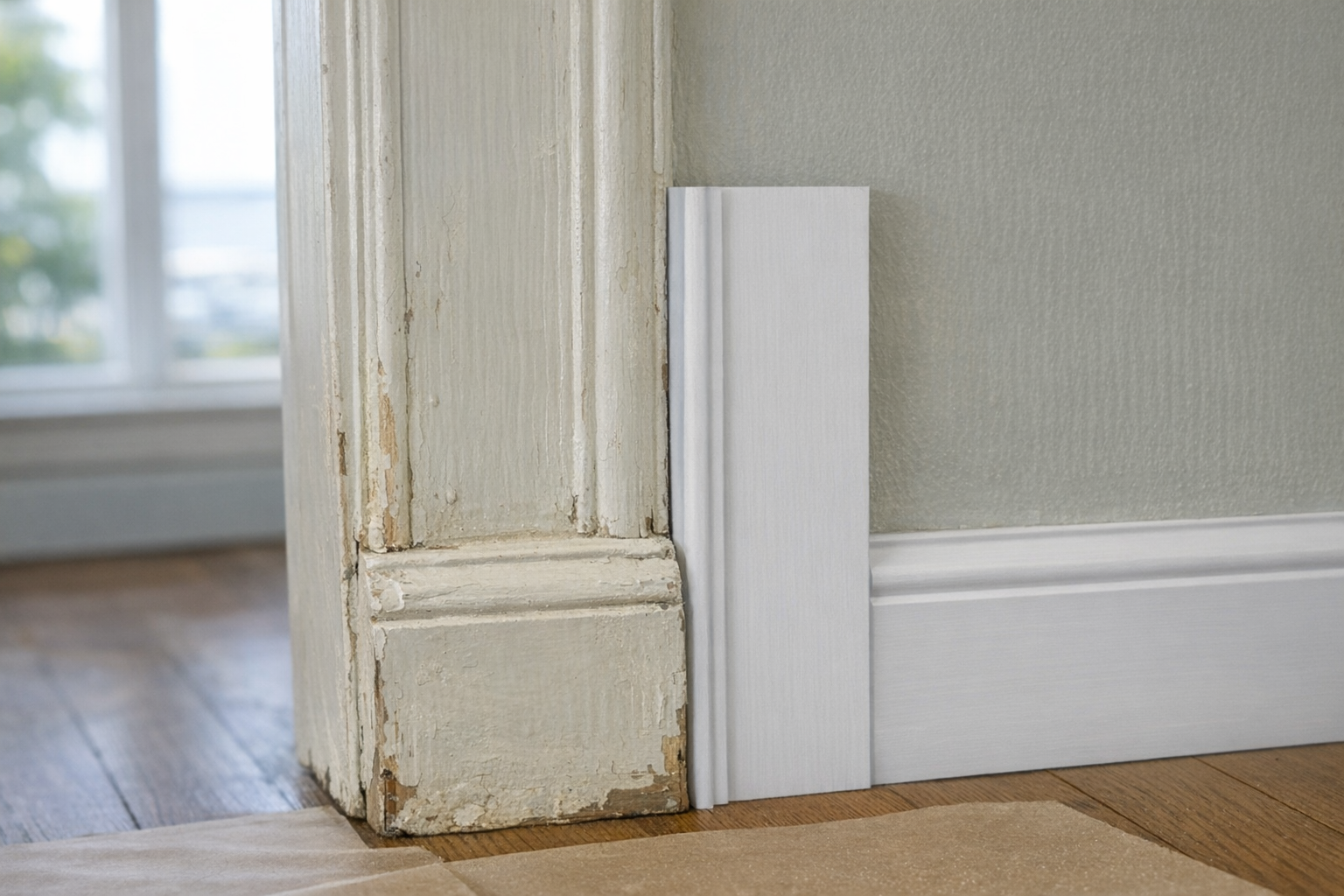
Profile matching means comparing the existing trim's height, thickness, edge shape, reveal, and finish so new pieces look intentional beside old ones. When an exact match is feasible, the goal is a quiet blend. When it is not, a trim contractor in Casey Key can help coordinate a cleaner change, such as replacing one full wall run, carrying a new casing style through a room, or using a planned transition instead of a near-match that looks accidental.
Remodel upgrades are also a good time to coordinate trim replacement with new floors, doors, cabinetry, wall treatments, or fresh paint. Basic builder-grade profiles can be swapped for taller baseboards, more substantial casing, crown molding, or custom trim installation Casey Key homeowners want for a more finished room. The quality signals stay the same: tight miters, consistent reveals, flush transitions, smooth caulk lines, and properly filled nail holes.
What to Expect From a Professional Trim Installation Project
After the scope is narrowed, the project typically moves into measurements, profile selection, and layout planning. A trim installer in Casey Key will look at room count, wall and ceiling lines, openings, transitions, and any existing molding that needs to be matched. Profile selection is the choice of trim shape, height, and proportion; a taller baseboard changes the room's visual weight, while a simpler casing keeps the focus on the opening rather than the trim itself.

Scheduling comes next, along with a realistic discussion of how involved the work will be. A small room or straightforward replacement may move quickly, while whole-home trim packages, detailed crown, wainscoting, or custom work usually take longer. Timing can shift based on room count, material availability, wall conditions, finishing needs, and the complexity of the finish carpentry details.
During installation, the focus is on accurate cuts, secure fastening, clean joints, and finish preparation. Good communication should continue if uneven walls, out-of-square corners, or profile-matching issues show up once work begins. Before the project wraps, the space should be cleaned and reviewed with you so details like tight miters, consistent reveals, smooth caulk lines, filled nail holes, and flush transitions can be checked in normal room lighting.
Request Trim Installation Help for Your Casey Key Home
Start by gathering a few project details before you reach out: which rooms are involved, whether the work is new trim or replacement, the trim style you have in mind, and any areas where existing molding needs to be matched. Photos are helpful, especially for corners, doorways, windows, floor transitions, or damaged sections.
From there, request help for your Casey Key home and expect a practical conversation about material selection, layout, precise cuts, and the finish you want the room to carry. Careful planning up front helps the final trim look intentional, with clean lines and detailing suited to a coastal home.
Plan trim installation in Casey Key, FL
Compare the broader Trim Installation service details, then use the Casey Key, FL service area page if you want the local overview. When you are ready, request a trim installation estimate with the rooms, trim goals, and photos that help explain the scope.
FAQs
What types of trim can be installed in a Casey Key home?
Interior trim options include baseboards, crown molding, door casing, window casing, chair rail, picture-frame molding, wainscoting, accent wall trim, and custom millwork details. These can be installed in one room, carried through several spaces, or coordinated as part of a remodel.
What trim materials work best in coastal Florida homes?
Coastal Florida trim materials should be chosen based on humidity, finish style, and room exposure. MDF can work in dry, well-conditioned spaces, solid wood is useful for sharper profiles or stain-grade work, and PVC is often considered where moisture resistance is a bigger concern.
How long does trim installation usually take?
A small room or straightforward trim replacement may move quickly, while whole-home trim packages, detailed crown molding, wainscoting, or custom work usually take longer. Timing depends on room count, material availability, wall conditions, finishing needs, and finish carpentry complexity.